

An independent review has concluded that the destruction of 40 theatre logbooks potentially linked to disgraced surgeon Sam Eljamel stemmed from weak internal systems rather than any deliberate attempt to conceal information. NHS Tayside published the findings and confirmed it has accepted all 15 recommendations, setting out an action plan to address the failures identified.
Eljamel led the neurosurgery department at Ninewells Hospital in Dundee until he was suspended in December 2013 following harm caused to dozens of patients, some of whom were left with life-altering injuries. He resigned the following year and is understood to now be working in Libya.
What did the investigation conclude?
The review found that the logbooks were destroyed in July 2025, even though a do-not-destroy notice tied to the ongoing public inquiry into Eljamel's conduct had been in force since October 2024. Investigators attributed the breach to disorganised record-keeping rather than intentional wrongdoing.
Although the destruction breached the DND notice directive, the investigation concluded no malicious intent and noted that all information contained in the logbooks is also available through existing clinical systems.
Among the systemic problems cited were patchy staff awareness of the notice, absence of clear guidance on how long theatre logbooks should be kept, no single person accountable for their retention, and a mistaken belief that documents relevant to the inquiry had already been gathered centrally.
How was the destruction discovered?
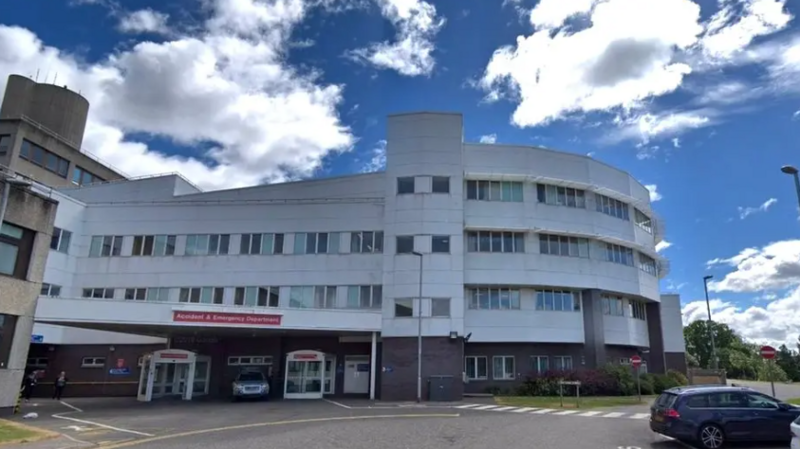
The loss only became apparent when officers working on Operation Stringent, the criminal probe into Eljamel's clinical practice, asked to see the logbooks in August 2025 and NHS Tayside realised they no longer existed. The health board later confirmed publicly that the records had been destroyed at Ninewells Hospital during a July 2025 office clear-out, when staff tidying a neurosurgery department office found the logbooks and sought guidance from the Health Records department.
According to the report, there was "conflicting evidence about what advice was actually given" at that point, much of it rooted in confusion over what the logbooks contained and who was responsible for their upkeep. Staff were ultimately told the standard eight-year retention policy applied, after which the logbooks - spanning 1995 to 2013 - were bagged as confidential waste and taken away.
The matter first became public when it emerged during a hearing of the Eljamel Inquiry in November 2025. Joanna Cherry KC, representing the patients' group, told the inquiry that destroying logbooks covering nearly two decades "beggars belief."
Why wasn't the do-not-destroy notice followed?
The report found that NHS Tayside relied on its internal "Vital Signs" staff bulletin to circulate the notice in November 2024, but that this channel was ill-suited to conveying a message of such importance. Investigators described the bulletin as "high-volume" and "mixed-purpose," sometimes carrying as many as eight posts in a single day, with staff recalling unrelated items such as tips for driving in icy conditions appearing alongside more critical updates.

The Vital Signs was not targeted to areas that were specifically relevant to Eljamel i.e. neurosurgery theatre.
The review also noted that NHS Tayside had no formal do-not-destroy policy in place at the time, despite the fact that the same logbooks had previously been retrieved to respond to Freedom of Information requests submitted in 2024 and 2025. Investigators further criticised the scope of NHS Tayside's own internal inquiry into the incident, pointing out that it interviewed only clinical staff directly involved in disposing of the records - largely those focused on frontline patient care - without examining whether executive or management-level staff had properly ensured the notice was understood and acted upon across relevant teams.
How does this connect to other scrutiny of NHS Tayside?
The logbooks controversy adds to a series of setbacks for NHS Tayside in handling information related to the Eljamel case. Scotland's information commissioner separately ruled that the health board wrongly withheld information requested about a report into the surgeon, ordering a revised review to be completed by 17 September 2026.
The health board has also taken steps aimed at supporting former patients more broadly, having earlier reset the three-year legal time bar that would otherwise have restricted when Eljamel's former patients could pursue compensation claims, a move campaigners described as a landmark victory as the public inquiry continues.
What is NHS Tayside doing in response?
The health board published the independent review, carried out by the firm AAB, in full and accepted all 15 recommendations on 17 August 2026, according to NHS Tayside. The review examined how the theatre logbooks tied to the neurosurgical service at Ninewells Hospital were lost and set out an improvement programme intended to run from August 2026 onwards.
NHS Tayside chief executive Nicky Connor said the health board accepted the report's conclusions without reservation.
The report's findings are clear: this should not have happened – and we wholeheartedly accept that.
Connor went further in apologising directly to those affected.
On behalf of NHS Tayside, I want to offer a sincere and unreserved apology to former patients, families and everyone affected by the loss of these records.
We recognise that for many people these logbooks form part of their personal story.
We understand that learning these records were destroyed will have caused distress and frustration.
The review found no evidence of deliberate wrongdoing or malicious intent; however, it did identify shortcomings in the systems and arrangements that existed at the time.
As an organisation we must learn from this to prevent it happening again.
Per NHS Tayside's published statement, the action plan is built around strengthened governance, clearer lines of accountability, improved processes for preserving records, and organisation-wide assurance measures designed to prevent a repeat of the failures identified.
What happens next?
The health board says it will now move to implement the action plan and improvement programme following publication of the review, according to NHS Tayside. Among the key recommendations is the appointment of a single executive with responsibility for compliance with do-not-destroy notices, alongside a move away from relying solely on the Vital Signs bulletin as the main channel for critical communications.
Separately, the Eljamel Inquiry itself is due to resume its evidential hearings, having previously revised its timetable. The next scheduled evidential hearings are set to begin in the week commencing 7 September 2026 and are expected to run over four weeks, according to the Eljamel Inquiry, which also held a procedural hearing on 14 May 2026.
Key Facts
- 40 theatre logbooks covering 1995 to 2013 were destroyed at Ninewells Hospital in July 2025, despite a do-not-destroy notice in place since October 2024.
- The independent review, carried out by AAB, found no malicious intent but identified systemic failures in communication and record-keeping.
- NHS Tayside published the review and accepted all 15 recommendations on 17 August 2026.
- The loss was discovered after Operation Stringent officers requested the logbooks in August 2025.
- The Eljamel Inquiry's next evidential hearings are scheduled to begin in the week commencing 7 September 2026.


