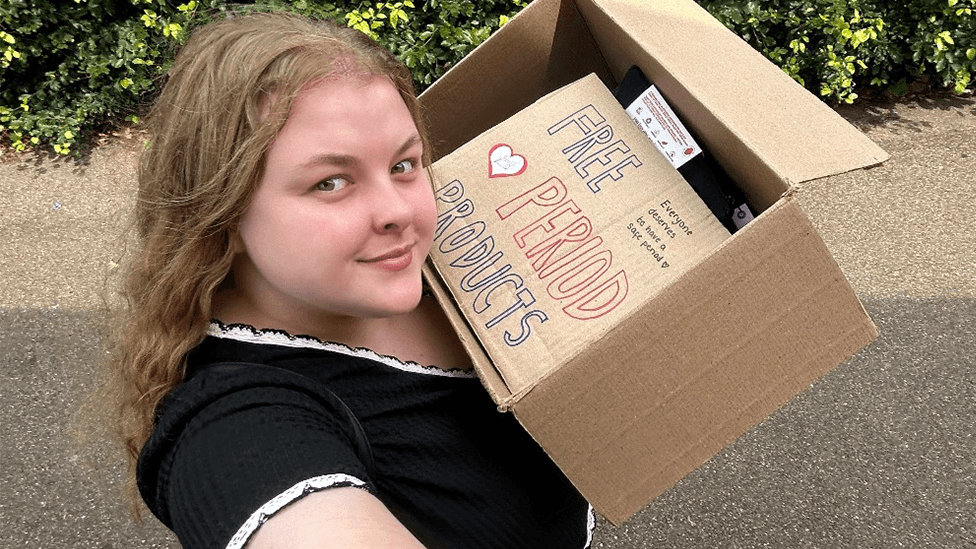
When Irene Breen received notification in January 2025 that Instagram was removing advertisements for her company's pregnancy pillows, she struggled to understand the reasoning. The platform later explained during a conversation with Meta, Instagram's parent company, that the issue centred on a single word: "pregnancy".
"We had to scrub the word from our entire website… from the product name,"Breen explained.
"We had to remove all our URLs which had pregnancy in them and rename them all."Though the restrictions were eventually lifted, the process consumed 10 months of negotiations with Meta, leaving her business with substantial financial losses during that period.
Meta declined to address individual cases but told the BBC that while companies may promote wellness, sexual health and reproductive products and services, certain restrictions exist to prevent negative experiences across different countries and cultures. However, the company's enforcement of these policies has drawn criticism from multiple sectors.
Who is experiencing these restrictions?
The problem extends far beyond paid advertisers. Women's health creators, charities and educators report that their content faces removal, sensitivity filters or suppressed reach—a phenomenon known as "shadowbanning". The campaign group CensHERship, which monitors allegations of women's health content suppression, surveyed nearly 200 creators, clinical providers, health brands, charities and educators in a report last month. The findings were striking: 96% reported experiencing restrictions in some form.
Sensitivity filters heavily blur posts, requiring users to press a button before viewing, and are typically applied to graphic imagery including nudity or violence. Yet women's health organisations say these filters are being applied inappropriately to educational and medical content.

How is artificial intelligence contributing to the problem?
Dr Carolina Are, a digital criminologist at the London School of Economics who studies social media moderation of women's content, explains that platforms frequently deploy artificial intelligence to identify posts that might violate guidelines. However, this automated approach creates significant problems. The algorithm can misidentify content and then perpetuate those errors by storing and repeating previous incorrect decisions. Compounding this issue, platforms typically communicate through automated messages, preventing users from challenging decisions or providing context.
What specific cases have charities documented?
Athena Lamnisos, chief executive of gynaecological cancer charity Eve Appeal, described how certain hashtags simply fail to appear on Instagram.
"One of the hashtags, unbelievably, was #vaginalcancer."The charity posted what it describes as a clearly labelled anatomical diagram discussing vulval cancer and encouraging people to check for changes, lumps and bumps. Instagram removed the post. When Eve Appeal appealed the decision, it was initially rejected, but the post eventually reappeared—behind a sensitivity filter.
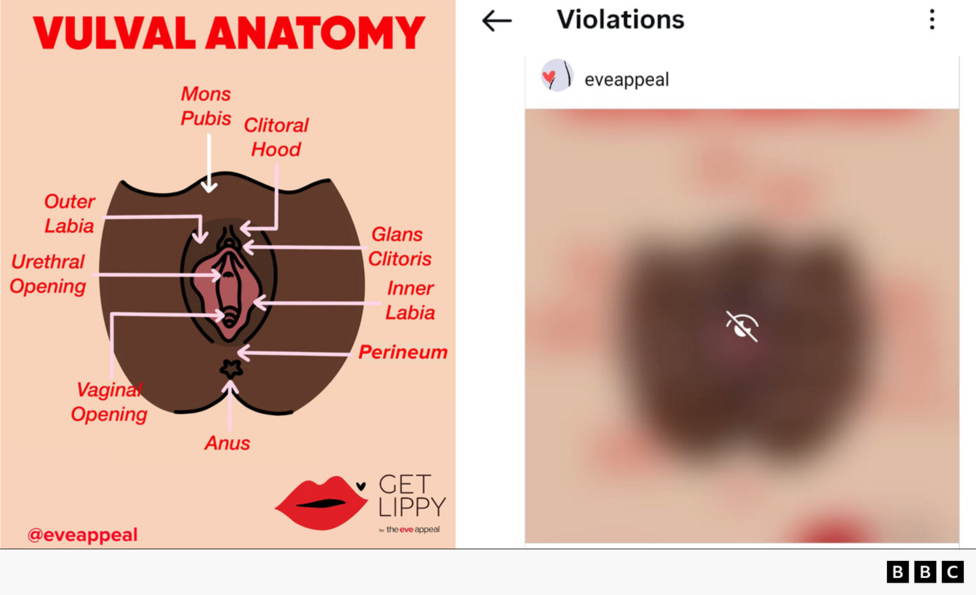
According to Eve Appeal's public account, the charity's educational vulval-anatomy post was removed again in May 2026 and restored with a sensitive-content warning, with the appeal initially rejected and the account receiving a warning. Additionally, the organisation notes that Instagram concealed a September 2025 post featuring NHS GP Dr Aziza Sesay demonstrating a crochet vulva for checking signs of vulval cancer. The #VaginalCancer hashtag itself was hidden in July 2023 before being reinstated following a petition.
Lamnisos stressed that it would not be an exaggeration to characterise this situation as preventing "life-saving health information" from reaching those who need it most. Despite raising these concerns directly with Meta, the problems have persisted.
Deirdre O'Neill, from fertility test company Hertility, encountered a comparable issue when Meta removed a Facebook and Instagram video featuring a woman discussing her endometriosis.
"She doesn't sell our services, she doesn't talk about Hertility, she simply describes her pain,"O'Neill said. Meta classified the video as political content, a categorisation that baffled the company.
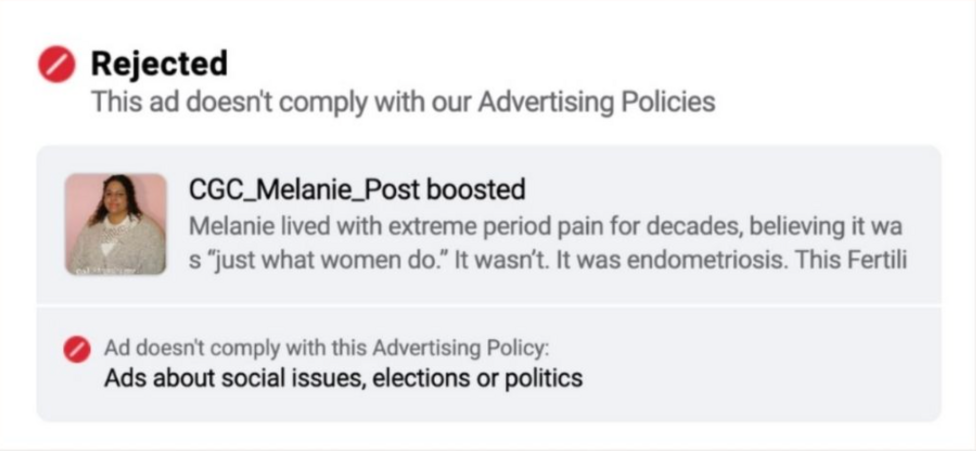
When asked about the cases involving Eve Appeal and Hertility, Meta did not comment specifically but reiterated that it permits women's health content on its platforms and is consulting with women's health organisations to enhance its systems.
What challenges exist on other platforms?
O'Neill reported that attempting to advertise on TikTok has become
"like an obstacle course"for Hertility.
"It's so much resource to try and put something forward that it ends up not being worth our time, because everything gets appealed, flagged, removed,"she said. Hertility has subsequently abandoned its advertising efforts on the platform.
TikTok responded by noting that while certain content cannot be promoted on the For You feed, the platform maintains transparency about posts falling into this category and allows creators to appeal. The company added that millions of women share health stories on TikTok, including through hashtags such as #Period and #Endometriosis.
How are creators responding to these restrictions?
CensHERship's research reveals a troubling trend: the proportion of respondents engaging in self-censorship as a result of shadowbanning increased from 53% in 2025 to 65% in 2026. This self-censorship takes various forms—using euphemistic terms such as "seggs" instead of "sex", employing asterisks or emojis, and avoiding certain topics entirely. According to a 2026 CensHERship white paper, 95% of nearly 200 women's health organisations, charities, creators and brands surveyed experienced censorship or restrictions, with only 2% satisfied with platforms' responses.
Clio Wood, co-founder of CensHERship, characterised this trend as "really damaging".
"Women's health historically has been surrounded by shame and guilt… and we are just reinforcing [that],"she said. Dr Are reinforced this concern, noting that platforms' policies "tend to be incredibly broad, whereby more often than not, nudity is conflated with sexual activity".
The consequences extend to public health. Wood shared accounts from individuals who said:
"The only reason I found out about my vulval cancer was because Eve Appeal posted about those symptoms, and then I researched it and could ask my doctor the right questions."When such content is suppressed, these potentially life-saving discoveries become impossible.
Are platforms taking action?
Wood noted that since founding CensHERship in 2024, she has observed social media companies beginning to recognise this as an issue requiring engagement. However, significant gaps remain between policy and practice.
"It's all very well the policy saying XYZ content is allowed, but if the algorithm is still flagging all of that content and suppressing it, that's where the problem comes in,"she explained.
"I think within the platforms those departments are very siloed - so what we would love is for those conversations to be much more holistic."
In November 2025, the Center for Intimacy Justice filed a complaint with the US Federal Trade Commission alleging that Meta continued to reject women's sexual-health advertisements, with the report indicating that half of surveyed respondents had experienced advertising account suspensions. Meta's published ad policy does permit advertisements for sexual and reproductive health or wellness products, including contraception and family planning, though it requires targeting people aged 18 or older and prohibits ads focused on sexual pleasure.
What happens next?
Eve Appeal has submitted its May 2026 Instagram-post case to Meta's Oversight Board, which reviews a limited number of appeals. The organisation has not announced a scheduled decision date for the review.