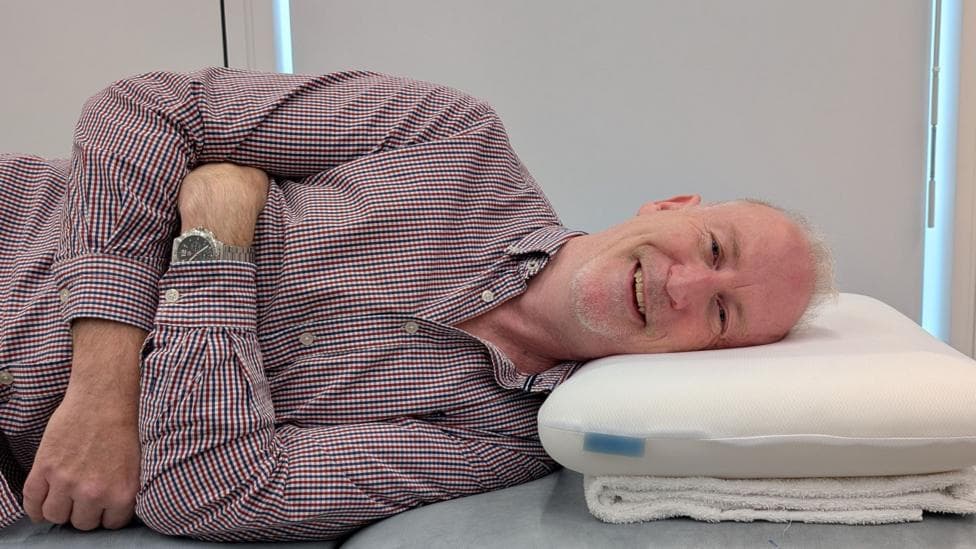
Dr Chris McCarthy, an associate professor at the Manchester School of Physiotherapy, travels with his own pillow and has developed a systematic approach to selecting the ideal one for any sleeper. His method separates marketing claims from evidence-based guidance on what actually matters when choosing a pillow.
McCarthy appeared on a national broadcaster's Sliced Bread programme on 6 August 2026 to discuss how personalised pillow selection can improve sleep quality. The episode, titled "What makes the perfect pillow?", explored the science behind choosing the right support for different sleeping positions and body types.
The physiotherapist emphasises that there is no universal pillow design that works for everyone. Instead, the ideal pillow depends on three interconnected factors: your sleeping position, your body measurements, and your mattress firmness. Understanding these elements allows people to move beyond brand marketing and make informed choices based on their individual needs.
Which sleeping position do you favour?
Your primary sleeping position is the foundation for pillow selection. McCarthy identifies three main categories of sleepers: side, back, and front.
Front sleeping is the position McCarthy most strongly discourages. When you sleep on your front, your neck remains turned to one side for extended periods, placing prolonged stress on the muscles and ligaments in that region. "Inevitably a muscle or ligament gets stretched and a bit irritated," McCarthy explains. "If there's one thing there's a really good consensus on in the physiotherapy world about treating spinal pain, it's don't sleep on your front."
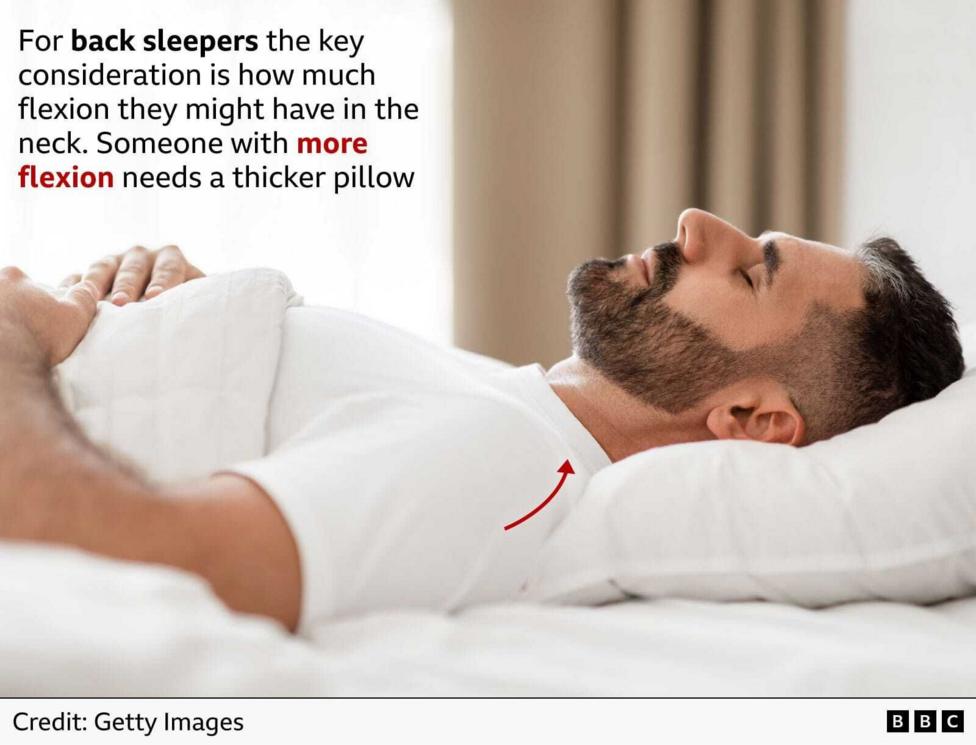
Back sleepers should pay attention to the natural curve at the top of their spine, a feature that becomes more pronounced in many people as they age. According to UCLA Ergonomics research, the depth of this neck curve is a key measurement when selecting pillow thickness. "If you have a bigger bend it means you need a slightly thicker pillow than someone who's got a very flat back," McCarthy notes. The goal is to maintain neutral neck alignment, keeping your cervical spine in a straight line with the rest of your body.
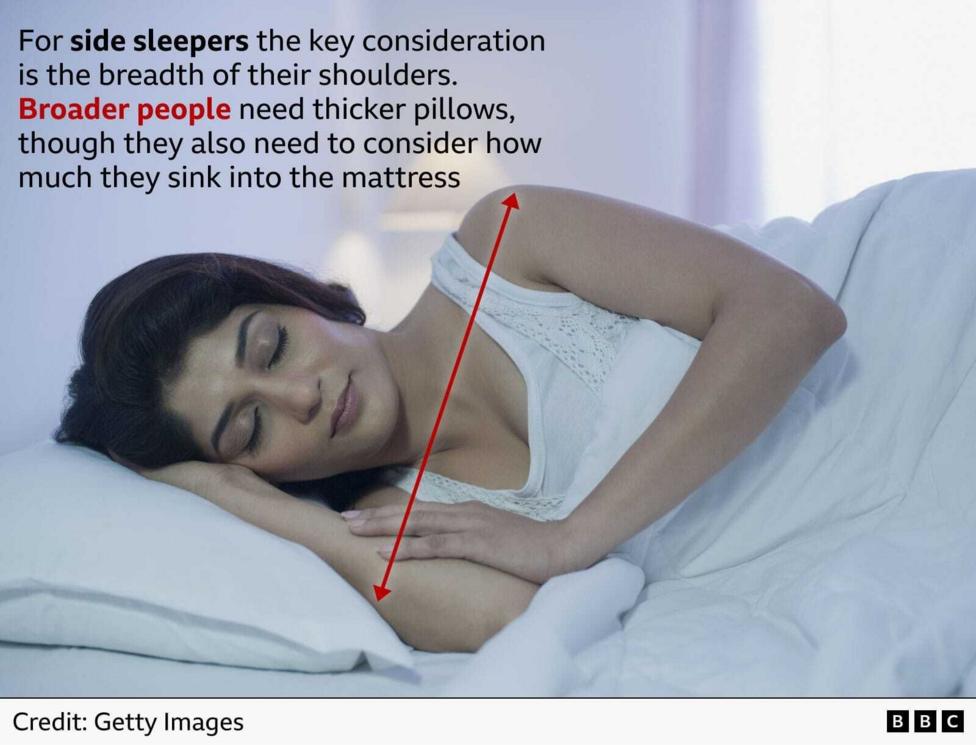
Side sleepers face a different calculation. The critical measurement is your shoulder width. In general, broader shoulders require a thicker pillow to bridge the gap between your head and the mattress surface. However, this calculation is not straightforward, because mattress softness plays an equally important role.
How does your mattress affect pillow choice?
The firmness of your mattress fundamentally changes the pillow height you need. McCarthy explains that how much your body sinks into the mattress "makes a huge difference in the subsequent height you then need from the pillow".
A side sleeper with broad shoulders on a very firm mattress will need a thick pillow because the shoulder does not compress into the bed surface. The same person on a softer mattress, however, needs a thinner pillow because the shoulder sinks deeper into the mattress, reducing the gap between head and mattress. According to Sleep Foundation guidance, softer mattresses allow the body to sink more and may work better with a lower pillow height.

Back sleepers experience this effect less dramatically because they do not sink into the mattress as much as side sleepers do, making mattress firmness a secondary consideration for them.
If your current pillow feels too flat, McCarthy offers a practical solution: place a folded towel underneath it and adjust the number of folds to change the height. This allows you to experiment and measure the ideal thickness before purchasing a new pillow. According to coverage of the programme, many people find they need support equivalent to somewhere between one and two standard pillows, making the towel adjustment method particularly useful for fine-tuning.
Does pillow shape matter?
Specialist pillows marketed as contoured, ergonomic, or orthopaedic often command premium prices, but the evidence supporting their superiority is limited. McCarthy notes that "there is a little bit of fairly scrappy evidence to suggest that having a little bit of a higher front of the pillow, which goes into the neck area, does help" side sleepers.
To test whether a higher front benefits your sleep, McCarthy suggests using his towel trick by rolling a towel and placing it under the front section of your pillow. If you find this improves your comfort, you can then seek a pillow with that contoured feature.
For side sleepers, the most important factor is selecting a position that keeps your back straight and your spine aligned. For back sleepers, some manufacturers advertise pillows with a dip in the middle and raised sides. While these pillows can position the head effectively, McCarthy notes that some of his patients find them "a bit claustrophobic". Additionally, people with large and heavy heads require thicker and firmer pillows to provide adequate support regardless of shape.
What filling material works best?
The material inside your pillow affects both comfort and durability. Feather and down fillings have a significant advantage in warm conditions because they wick heat away from your head, keeping you cooler during the night. However, they have a notable drawback: they can shift and change shape during sleep, particularly if you move around frequently. "What starts off as a nice, flat, supported surface becomes a wedge and so your neck is then kinked up," McCarthy explains, describing how feather pillows can bunch toward the headboard.
Hollow fibre and microfibre fillings hold their shape much better throughout the night, though they generally do not wick away heat as effectively as natural materials. Some synthetic pillows are engineered with a firmer material in the lower half, which helps the pillow retain its shape and support as you sleep.
McCarthy himself uses a foam pillow with tubular ventilation spaces, which he purchased five years ago for approximately £50. As a side sleeper, he adjusts its height using a folded towel placed underneath, demonstrating that even experts personalise their setup.
Making your final choice
McCarthy emphasises that pillow selection is highly individual. "There just isn't a one-off design that is perfect for everybody or every position," he says. "You really have to personalise it." He encourages people to take advantage of trial periods offered by some manufacturers, allowing you to test a pillow in your own bed before committing to the purchase.
The Sliced Bread episode, part of a long-running series that investigates consumer product claims and separates evidence from marketing fiction, remains available on a national broadcaster's audio platform. The discussion with McCarthy provides a framework for cutting through pillow marketing and making choices based on your specific sleeping position, body measurements, and mattress characteristics rather than brand promises or price.