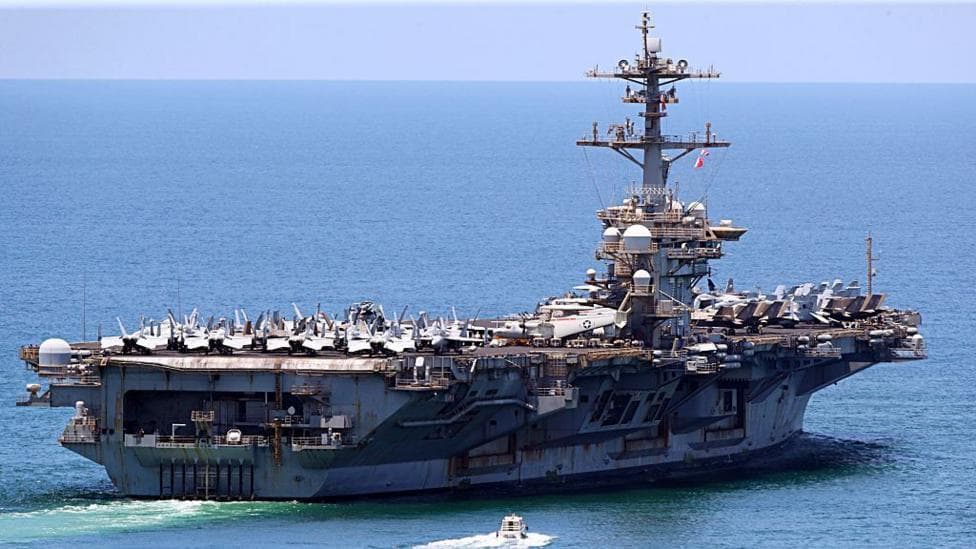
Acting Navy Secretary Hung Cao disclosed in a letter to Senator Kirsten Gillibrand of New York on Tuesday that eight crew members assigned to the USS Abraham Lincoln carrier strike group attempted suicide during their extended deployment. According to reporting from a major news outlet, Cao confirmed that no service members died by suicide, though the disclosure underscores mounting concerns about mental health conditions aboard the vessel.
The letter responded to questions from the New York Democrat regarding the welfare of sailors following alarm raised by family members about deteriorating psychological conditions and difficult living circumstances. The carrier, which departed in November 2025, is now returning to the United States after an extended operational period.
What triggered the disclosure?
Relatives of sailors had expressed serious concerns about mental health deterioration and harsh conditions aboard the vessel. According to a defense official speaking to a national news organization, two of the eight suicide attempts occurred during active combat operations with Iran, adding another dimension to the crisis.
Who were the sailors involved?
Cao's letter specified that the eight individuals came from diverse units within the strike group structure. The group included sailors from the Lincoln crew itself, personnel from the carrier air wing, strike group and destroyer squadron staff, crew from escorting destroyers, and members of all embarked aviation squadrons. According to military personnel reporting, two sailors had attempted to jump overboard from the USS Abraham Lincoln during the deployment, highlighting the severity of psychological distress.

What support was available onboard?
Cao stated in his letter that five chaplains and multiple mental health professionals were stationed aboard to address the spiritual and emotional requirements of the crew. Despite these resources, the Navy had previously denied that a mental health crisis existed on the Lincoln, which carried approximately 5,000 crew members.
What operational challenges did the ship face?
While the Navy acknowledged certain supply difficulties on the carrier, it rejected characterizations of a broader mental health emergency. The service confirmed temporary localized plumbing failures and malfunctions affecting the reverse osmosis desalination units responsible for producing fresh water. Regarding food provisions, the Navy acknowledged that main entree options at meals were temporarily reduced from two choices to one for a limited period.
The deployment extended far beyond typical operational schedules. According to military reporting, the ship went more than 260 days without a scheduled port call as of 21 September 2026. The vessel's deployment had entered its tenth month by that date after departing from Guam following a brief respite.
How did the deployment unfold?
The USS Abraham Lincoln departed in November 2025 and docked near Pattaya, Thailand, on 2 September 2026 after roughly nine months at sea. During that Thailand port call, the Navy reported that some mental health cases were treated without loss of life. The carrier subsequently departed Thailand and continued operations in the region.
In August 2026, the USS George Washington, another aircraft carrier, was assigned to replace the USS Abraham Lincoln following the completion of its extended nine-month deployment cycle.
Key Facts
- Eight suicide attempts occurred across the USS Abraham Lincoln strike group during deployment, with no fatalities reported by Acting Navy Secretary Hung Cao
- Two of the eight attempts took place during active combat operations with Iran, according to defense officials
- The ship completed more than 260 days without a scheduled port call, contributing to strain on crew mental health and operational readiness
- Five chaplains and multiple mental health professionals were available aboard, though concerns persist about adequacy of mental health resources during extended deployments
- The Navy acknowledged temporary supply challenges including localized plumbing failures and reduced meal options, while denying a broader crisis existed