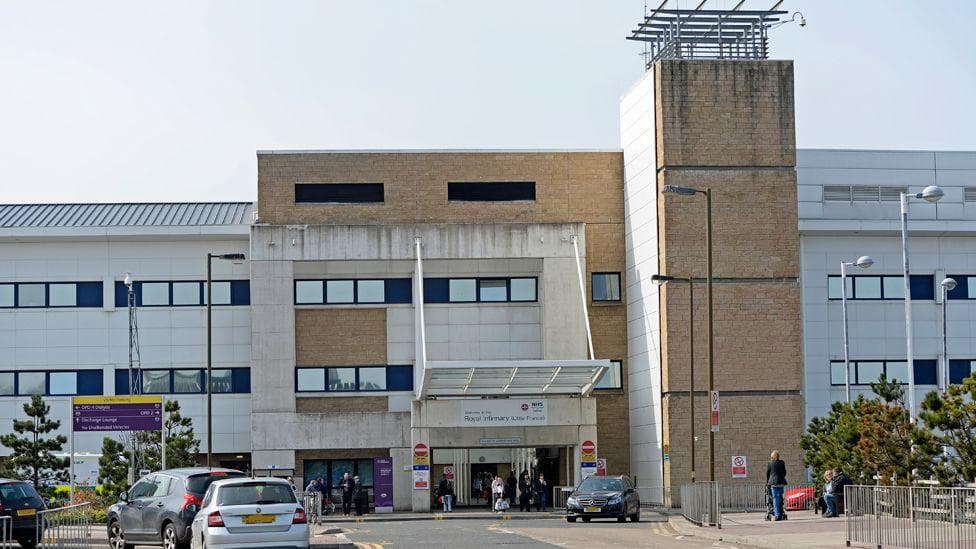
The Royal Infirmary of Edinburgh has maintained free parking for visitors and staff since 2020, but the arrangement has required substantial public funding to compensate the private operator for foregone revenue. New figures reveal the financial scale of this policy.
More than £10m has been paid to Consort Healthcare, the private firm operating the Royal Infirmary of Edinburgh (RIE), to sustain free parking at the facility. By the time the operator's contract concludes next year, the total compensation will exceed £12m.
Parking charges were eliminated at most Scottish hospitals in 2008 under a policy introduced by the first SNP Scottish government, which scrapped fees for staff, patients and visitors at 14 facilities. However, three hospitals remained subject to charges because they operated under Private Finance Initiative (PFI) contracts. In 2021, the Scottish Government announced buyout deals worth £35m to end parking charges at Ninewells Hospital in Dundee and Glasgow Royal Infirmary. Ministers committed at that time to keeping the RIE car park free while negotiations for a permanent arrangement proceeded.
According to a Scottish Government freedom of information review, the parking suspension at the RIE began on 30 March 2020, with the PFI company agreeing not to charge in exchange for compensation funded by the Scottish Government. NHS Lothian's current travel information confirms that parking charges remain suspended at the hospital as of mid-2026.
How much has the free parking policy cost?
Freedom of information figures released by NHS Lothian show that maintaining free parking, including operational costs, amounts to £400,000 per quarter. This expenditure has totalled £10.4m since the policy began, with a further £2m scheduled to be paid before the PFI contract with Consort ends. The compensation arrangement reflects the revenue the private operator would have collected had standard charges remained in place.
The RIE was constructed in 2002 using the PFI model, under which Consort Healthcare received approximately £1bn to build and maintain the hospital over 25 years before transferring it to NHS ownership. This financing structure created the contractual obligation to compensate the operator for lost parking income.
Why did negotiations become complicated?
In 2021, then health secretary Humza Yousaf stated that discussions about a permanent car park deal were progressing favourably and that free parking would continue while final terms were negotiated. However, these talks became entangled in a broader dispute over maintenance standards at the facility. The disagreement delayed resolution of the parking question and extended the period during which compensation payments were required.

The maintenance dispute has proven significant. In recent months, reporting revealed that tens of millions of pounds of public money will be needed to restore the RIE to acceptable condition when it transfers to public ownership, as large sections of the building require substantial renovation work.
How has the policy affected hospital operations?
The elimination of parking charges has proven popular among staff and visitors, but it has generated unexpected consequences. Demand for parking spaces increased substantially following the policy change, prompting the introduction of a controversial staff parking permit system to manage capacity. NHS Lothian's medical education transport guidance indicates that staff parking remains tightly controlled, with permit-based access at designated times and designated access for staff during nights and weekends.
The controlled access arrangement reflects the reality that free parking does not mean unrestricted parking. The hospital continues to manage the car park as a finite resource, balancing the policy objective of eliminating charges with the practical need to allocate spaces fairly among users.
What do unions and NHS officials say?
A spokesperson for NHS trade union Unison criticised the financial arrangement, stating:
Staff, patients and visitors should not have to pay for parking at hospital, and taxpayers shouldn't be paying millions to subsidise an outdated PFI contract. With the contract now approaching its end, the focus must be on bringing the service back into public hands, where it belongs, and ending reliance on costly PFI contracts.
NHS Lothian confirmed that parking costs, which encompass staffing and operational expenses, have been met by the Scottish Government and will cease when the PFI deal concludes next year. The health board has not yet announced arrangements for parking management after the contract ends or whether charges will be reintroduced.
What happens when the contract ends?
The PFI agreement between NHS Lothian and Consort Healthcare is scheduled to terminate next year, at which point the hospital will transfer to full public ownership. The conclusion of this contract will eliminate the obligation to compensate the private operator for free parking. However, NHS Lothian's maternity information continues to describe parking as currently free at the Royal Infirmary of Edinburgh, and no public announcement has specified whether charges will be reintroduced, maintained free of charge, or managed under a new arrangement following the handover.
The broader context of the RIE's transition to public ownership remains complex. The hospital will require substantial investment to address maintenance deficiencies identified during the PFI period, and decisions about parking policy will form part of the wider financial planning for the facility's future operation under NHS management.
Key Facts
- Consort Healthcare will have received more than £12m in compensation by the time its PFI contract ends next year, with payments of £400,000 per quarter to maintain free parking
- Parking charges were eliminated at most Scottish hospitals in 2008, but three PFI-contracted facilities retained charges until buyout deals were negotiated
- The free parking policy, which began on 30 March 2020, has required the introduction of a staff permit system to manage increased demand for limited spaces
- The RIE will transfer to full public ownership when the PFI contract concludes, ending the compensation obligation but leaving the future parking policy undetermined