The death toll from an ongoing Ebola outbreak in the Democratic Republic of Congo has surpassed 5,000, according to government health data, marking the deadliest epidemic in the country's history. More than 10,300 confirmed cases have been recorded across eight of the nation's 26 provinces since the outbreak began in May. According to BBC News, the current case fatality rate stands at 48.6%, with the outbreak spreading faster than previous epidemics in the region.
The Bundibugyo species of Ebola virus is responsible for the current outbreak, a strain for which no approved vaccine or treatment existed until recently. However, clinical trials of candidate vaccines have now begun, offering hope for containing the disease. According to NPR, the first dose in the TUMAINI Ebola vaccine trial was administered in the DRC, with the trial evaluating vaccines specifically designed against the Bundibugyo strain.
This represents the 17th outbreak in DR Congo's recorded history and the second largest globally. The country's previous deadliest outbreak occurred between 2018 and 2020, resulting in 2,299 deaths. The deadliest Ebola epidemic on record took place in West Africa between 2014 and 2016, killing more than 11,325 people across multiple countries including Italy, the United Kingdom, and the United States. The UN has warned that the current outbreak is advancing at a significantly faster pace than historical precedents.
Why is containment proving difficult?
The epicentre of the epidemic remains in Ituri province in the north-east, a region experiencing active conflict that severely hampers disease control efforts. The unstable security situation restricts access for health workers and complicates contact tracing and isolation procedures. Adding to these challenges, healthcare workers and public officials responding to the outbreak have faced violent attacks from community members.
Earlier in the week, a nurse was killed and another health worker seriously injured during an attack while responding to an Ebola alert. Local residents had accused them of contaminating water sources and deliberately spreading the virus, according to reports from UN-backed Radio Okapi. In August, the Red Cross documented 11 violent incidents during the outbreak's first 100 days, resulting in injuries to volunteers and the destruction of an ambulance. Last month, a politician was beaten to death after advocating for measures to prevent disease transmission.
The World Health Organization has called for a
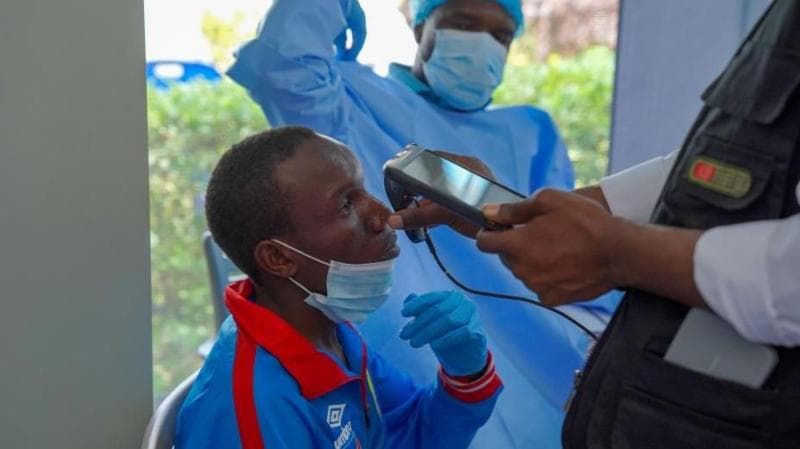
continued scale-up of key control measures, greater access to affected areas, and community outreachto bring the outbreak under control. As of 28 October, 85.4% of identified case contacts were under follow-up, and 936 patients were hospitalized in isolation, according to the European Centre for Disease Prevention and Control.
How does Ebola spread and what are its symptoms?
Ebola is a rare but severe disease caused by infection with the Ebola virus. Symptoms emerge suddenly and include fever, weakness, and muscle pain. As the infection progresses, patients develop vomiting and diarrhoea, which can lead to organ failure and shock. Some, though not all, infected individuals develop both internal and external bleeding.
The virus spreads from person to person through direct contact with blood or other bodily fluids of an infected individual, including vomit, faeces, and sweat. Healthcare workers and family members caring for patients face heightened risk of infection without proper protective equipment. The high case fatality rate of 48.6% in the current outbreak underscores the severity of this particular strain.
What treatment and vaccine options are available?
Until recently, no approved treatments or vaccines existed for the Bundibugyo strain. Testing and treatment protocols are now underway, along with multiple vaccine trials. The TUMAINI trial is initially testing whether the Evebro vaccine, used against the Zaire strain, can protect against the current outbreak through a strategy that vaccinates close contacts of confirmed cases.
A separate treatment trial called PARTNERS is assessing the antivirals MBP134 and remdesivir, both individually and in combination, for Bundibugyo virus disease. These parallel efforts represent the first systematic attempts to develop medical countermeasures specifically for this viral strain.
How has the outbreak spread beyond DR Congo?
Cases have been confirmed in three neighbouring countries. Uganda recorded two deaths and 20 cases shortly after the outbreak began, but no new cases have been reported since August, though travel restrictions remain in place for those crossing from DR Congo. Kenya has confirmed nine cases and two deaths, all linked to its initial case identified in early October.
Nigeria identified two suspected cases on Saturday, with the individuals isolated and undergoing testing. Earlier in October, one woman was confirmed to have the disease in Nigeria and was medically evacuated to Switzerland for treatment. Nigeria reported an imported case on 20 October; the patient was medically evacuated to Switzerland, and 62 contacts were under follow-up as of 29 October.
The European Centre for Disease Prevention and Control has assessed the likelihood of infection for people in Europe as very low, given the limited travel patterns and existing border health measures.
What happens next?
Interim results from the TUMAINI vaccine trial are anticipated in early 2027. If those results prove promising, vaccine rollout could potentially begin within approximately six months. The WHO has indicated that findings from its expert review of two additional vaccines designed specifically against Bundibugyo were expected to be published during the week of 28 October, which could accelerate the availability of protective measures.
As of 31 October, the DRC reported 5,026 deaths among 10,351 infected people, with 2,788 individuals having recovered. The outbreak has expanded into Wapinda Health Zone in Nord-Ubangi province, marking a newly affected area. Continued investment in healthcare infrastructure, security improvements in conflict zones, and community engagement remain essential to controlling transmission and preventing further spread across the region.
Key Facts
- More than 5,000 deaths and 10,300 confirmed cases have been recorded in the DR Congo outbreak, the deadliest in the country's history
- The Bundibugyo strain of Ebola virus is responsible, with a case fatality rate of 48.6%
- Clinical vaccine trials, including the TUMAINI trial, have begun and interim results are expected in early 2027
- The outbreak has spread to Kenya, Uganda, and Nigeria, with cases also detected in Europe
- Conflict in affected regions and violent attacks on health workers have significantly complicated containment efforts