Western Reef Heron Sighted in North Wales for First Time
A western reef heron, a tropical bird species typically found between West Africa and India, was observed in North Wales last week, marking what is believed to be the first ever sighting of this species in the United Kingdom.
The heron was initially spotted over the weekend before it moved to Caernarfon harbour, where it was seen feeding among the boats.
While this sighting has generated excitement among birdwatchers across the country, experts note that it also reflects the impact of changing climate conditions on bird distribution.
Climate Change Influences Bird Range Expansion
“The fact that they are getting here in the first place, and then surviving, is likely to be because of increasingly mild winters,” said Nick Moran, training manager at the British Trust for Ornithology (BTO).
“It’s much easier to survive in the winter now than it was 50 years ago because we don’t see shallow water bodies freezing over with any regularity. These herons and egrets typically feed in relatively shallow water.”
Other Tropical Bird Sightings in the UK
In addition to the western reef heron, a squacco heron, another rare tropical bird usually found in southern Europe and North Africa, was also recorded this week. According to the BTO, the squacco heron is only seen in the UK a few times annually.
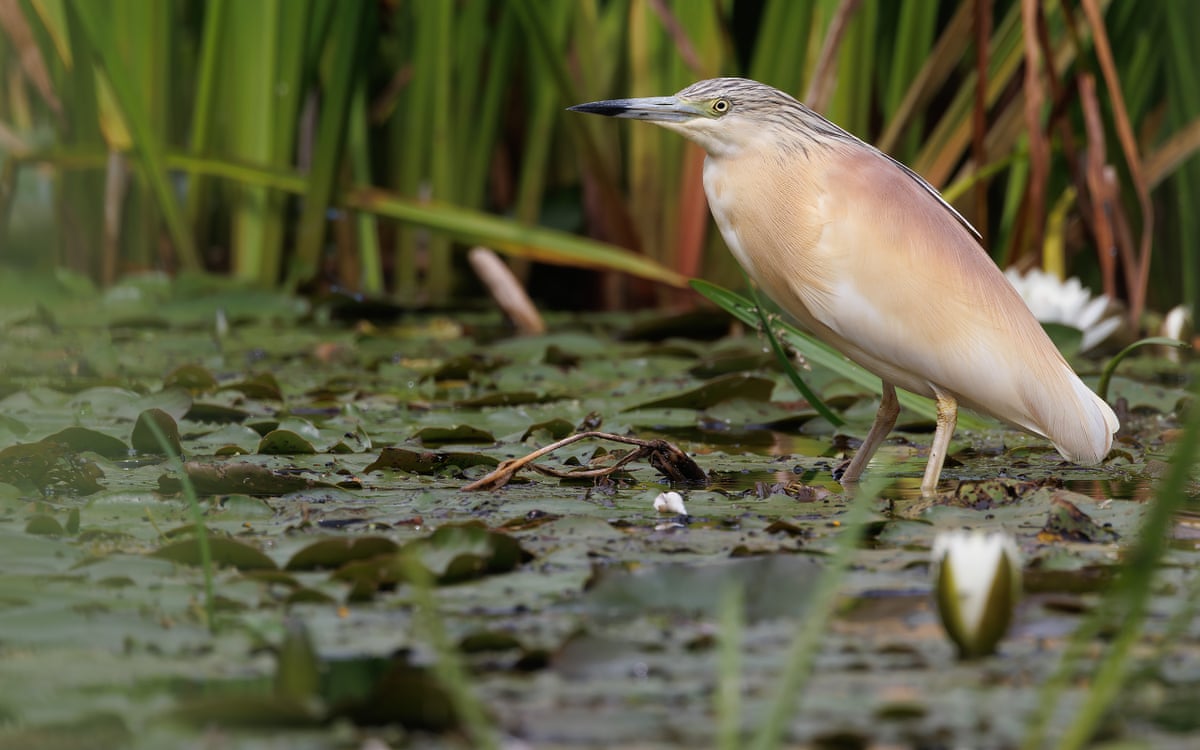
Alexander Lees, reader in biodiversity at Manchester Metropolitan University and chair of the British Ornithologists’ Union records committee, explained that these herons represent “what were formerly largely tropical species whose distributions are shifting north with climate change.”
“We are seeing a shift and a readjustment for biodiversity,” he said. “For instance, last year we had the . It’s a Mediterranean small warbler, and that bird has moved north with climate change. The reason that species didn’t historically breed here is because it’s very sensitive to harsh winters. It couldn’t survive because if we had a prolonged cold spell, they all die. But we no longer get those prolonged cold spells.”
Other notable tropical sightings in the UK over recent years include the , which has been delighting birdwatchers , in 2019, and the , which first colonised Spain from North Africa in the 1960s and was spotted in Britain for the first time in 2018.
In 2022, the Royal Society for the Protection of Birds (RSPB) reported that sightings of European bee-eaters, commonly seen in Africa and southern Europe, were an had reached Britain.

Western Reef Herons Expected to Appear in the UK
Western reef herons have been increasingly recorded in southern Europe, including Spain and France, leading experts like Lees to anticipate their arrival in the UK.

Simon Hugheston-Roberts, who first observed the bird in Wales, recounted that he was on a walk when he “was lucky to see a small dark heron flying over me on the shore.”
“I’ve spent time birdwatching in Africa and the Middle East, so I’m familiar with a variety of different types of herons, as well as this species.
“So, I applied my knowledge and years of experience of observing birds to inform a process of identification.”
Ian Lycett, who traveled to North Wales to see the heron, said:
“That I would be watching a stunning new species for Britain, with the imposing Caernarfon Castle as a backdrop, was not what I initially expected to be doing at the weekend.
“It was a long drive up from London on Sunday morning, but well worth the effort, as the heron offered fantastic views as it fed in the harbour at close range.”
Distinctive Features and Origin of the Heron
The western reef heron is similar in size and structure to the common little egret but is distinguished by its blue-grey plumage.
“They’re very striking,” said Moran. “Unlike anything else we have here in the UK.”
The bird observed in Wales is an adult and is likely to have arrived from Europe rather than directly from Africa, although its exact route cannot be confirmed without tracking.
“It could even be a bird that hatched in Europe,” Moran said.
Future Sightings and Biodiversity Implications
While Moran cautioned against expecting a sudden influx of western reef herons, he anticipates more sightings in the future.
“I don’t expect we’ll have dozens of records by this time next year, but I strongly suspect we’ll get more.”
For additional information, readers can find more coverage and follow biodiversity reporters in app for further nature updates.