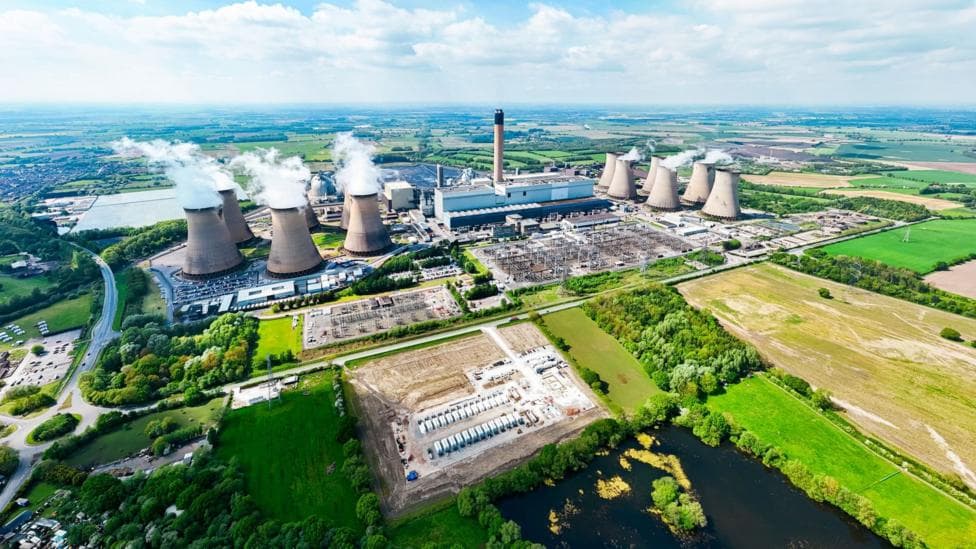
North Yorkshire Council's strategic planning committee has approved a scheme to extract up to 23.5 million tonnes of ash from a disposal site adjacent to Drax Power Station near Selby. The decision, made on 8 September 2026, permits recovery of legacy deposits accumulated since the 1970s, with the material destined for use in construction products including concrete.
The 161-hectare mound, situated immediately north-west of the power station, rises to 39 metres and represents decades of ash accumulation from the facility's operations. According to the council's planning report, the scheme involves two-phase recovery of pulverised fuel ash and furnace bottom ash, with a maximum extraction rate of approximately 1.175 million tonnes annually. The project is intended to recover material already deposited at the mound rather than establish a new disposal facility.
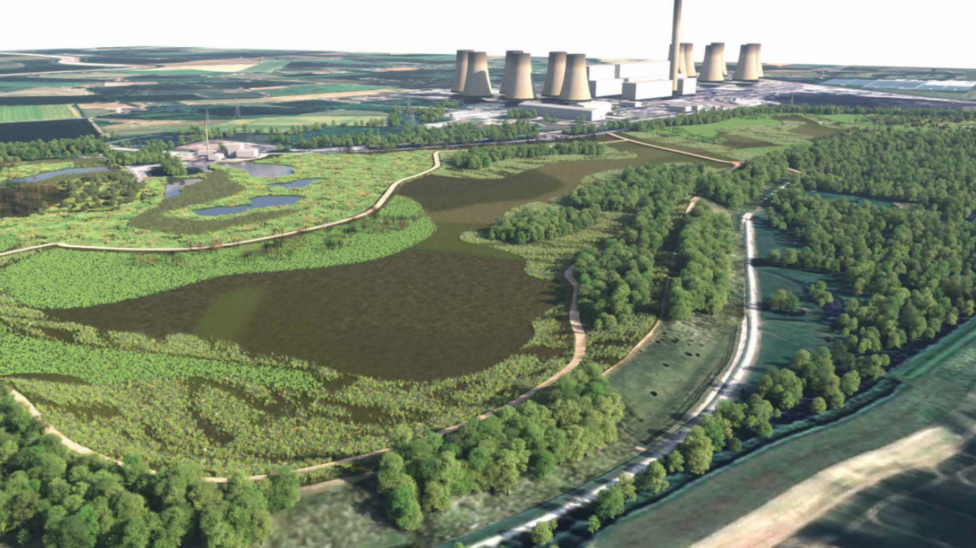
Extraction is scheduled to continue until 2045, with site restoration required no later than 2055. The development will include a weighbridge, wheel-wash facilities, screening and processing plant, lighting columns, landscaping and restoration works. Permission covers a 20-year period from commencement of enabling works, under planning reference NY/2024/0159/ENV.
What concerns did residents raise?
Local objections focused on multiple environmental and quality-of-life impacts. Three residents submitted formal concerns citing dust, noise, lighting, air pollution and landscape effects. Additional worries included habitat loss, the scale and duration of operations, and removal of screening that currently shields the power station from nearby communities.
Councillor Tim Thrall from Barlow Parish Council acknowledged the principle of ash removal but expressed reservations about mitigation adequacy.
However, we do have a number of concerns about whether mitigation measures are enough to impact the quality of life of the residents of the village.
Councillor Mark Crane, whose ward includes Barlow, objected strongly to the proposed operating schedule.
To expect them to accept that they can work from six in the morning till midnight every single day of the year is, I'm sorry, completely unreasonable.The original proposal suggested 18-hour daily operations from 06:00 until midnight, seven days weekly excluding bank holidays.

What conditions did the council impose?
The planning committee significantly restricted working hours in response to resident concerns. The approved scheme permits site operations only between 08:00 and 20:00, with Sundays and bank holidays excluded entirely. This represents a substantial reduction from the applicant's original request.
The committee also mandated that 65 per cent of extracted ash be transported by rail, with the remainder removed by road. This condition aims to minimise traffic impacts on local highways. Council officers concluded that, subject to these conditions, the development would not result in unacceptable impacts on residents, highways, ecology, air quality or the water environment.
What financial commitments were made?
Approval was conditional on a legal agreement including a £200,000 fund designated to mitigate landscape impacts on surrounding areas. The planning permission cannot proceed until the Section 106 legal agreement terms are completed, meaning formal implementation remains subject to finalisation of these arrangements.
What is the background to this project?
The Barlow Ash Mound has operated as a designated ash-disposal site for Drax Power Station since the 1970s. According to EP Power Minerals, the company announced in March 2025 that it had begun a major investment project to harvest and process millions of tonnes of legacy coal ash at Barlow Mound. The recovery scheme reflects broader efforts to repurpose industrial waste streams and reduce demand for virgin aggregates in construction.
York's minerals planning documents identify Barlow as one of the safeguarded ash-disposal sites for Drax power station ash, establishing its long-term role in the facility's waste management strategy.
What happens next?
The planning approval is subject to completion of the Section 106 legal agreement, meaning the scheme cannot commence extraction activities until these terms are finalised. Once the legal framework is in place, the operator may begin enabling works, with the 20-year permission period commencing from that point.
Key facts
- The mound covers 161 hectares and reaches 39 metres in height, containing deposits accumulated since the 1970s
- Maximum extraction rate is approximately 1.175 million tonnes annually, with operations permitted 08:00–20:00 Monday to Saturday only
- Sixty-five per cent of ash must be transported by rail to minimise road traffic; a £200,000 mitigation fund was agreed
- Extraction continues until 2045 with restoration required by 2055; the 20-year permission runs from commencement of enabling works
- The scheme requires completion of a Section 106 legal agreement before any extraction can begin