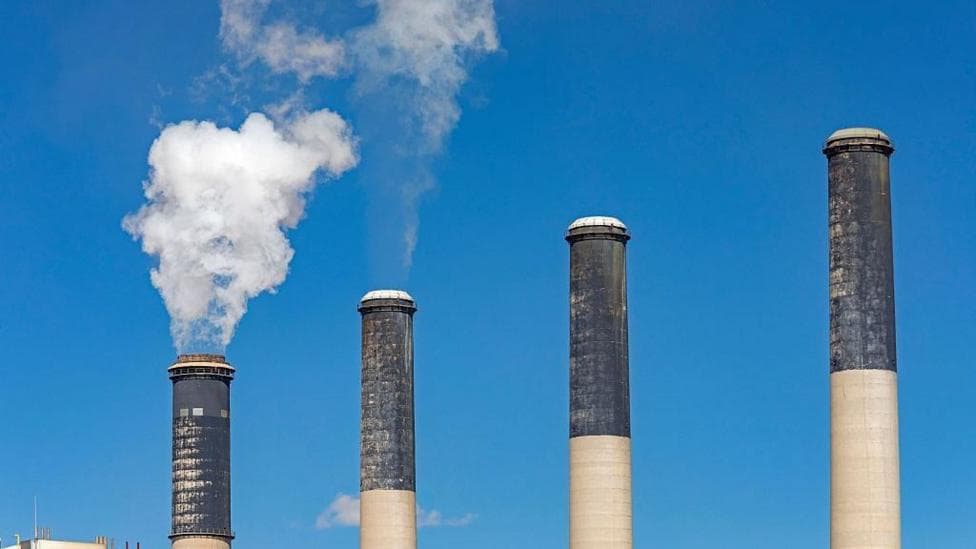
The United States Environmental Protection Agency has formally eliminated rules designed to restrict greenhouse gas emissions from coal and gas-fired power plants, marking a significant reversal of Obama and Biden-era climate policy. EPA Administrator Lee Zeldin announced the decision on 14 September 2026, coinciding with the G20 energy ministers' meeting in Houston. The agency projects the elimination will reduce compliance costs by $310 billion (£230 billion) and lower energy prices across the nation.
Zeldin defended the action in a statement, asserting that
America produces energy better and cleaner than anywhere else in the world, and our power plants should not be unfairly targeted. The EPA characterized the Biden-era regulations as having
exceeded the agency's authority by requiring control technologies that are not adequately demonstrated, effectively forcing plants to retire rather than setting standards they could actually meet.
The White House and EPA are framing the move as part of a broader effort to unwind U.S. climate policy and unleash American energy. According to reporting on the final rule, the Biden-era limits would have required carbon capture or equivalent controls on existing coal plants and new gas plants by 2032. The repeal is expected to remove more than $300 billion in compliance costs for industry.
What the repealed rules would have required
The eliminated regulations called for substantial reductions in carbon emissions from power plants, vehicles, and industrial facilities. Modelling had predicted these measures would prevent approximately 4,500 premature deaths annually. The EPA's 2025 proposal to scrap the rules also targeted updates to the Mercury and Air Toxics Standards for coal plants, indicating the rollback is part of a wider deregulation campaign affecting multiple environmental protections.
How does this affect public health?
Environmental advocates and public health experts have raised serious concerns about the health implications of eliminating these protections. Zeldin countered these worries by stating that
any potential public health harms are too uncertain, conjectural, remote, and convoluted to tie specifically to the US power sector. However, Nathaniel Keohane, president of the Center for Climate and Energy Solutions, characterized the decision as
a giant step backward, arguing that
in repealing carbon pollution standards for power plants, EPA has ignored sound science and economics and abdicated its responsibility to protect public health and welfare.
The February 2026 reversal of the Obama-era scientific ruling that classified greenhouse gases as a threat to public health has already paved the way for this broader rollback. That earlier action was challenged by several states and local governments concerned about its implications for environmental regulation.

What is the scale of US power sector emissions?
The United States ranks as the world's second-largest emitter of planet-warming greenhouse gases such as carbon dioxide, trailing only China. The power sector accounts for roughly one quarter of total US emissions, generating approximately 1.5 billion tonnes of carbon dioxide-equivalent annually according to the latest available estimates. This means American power sector emissions alone exceed the total emissions of all but a handful of countries globally.
Over the past two decades, US power sector emissions have generally declined as coal consumption has fallen, though a slight uptick occurred last year. Fossil fuels—including coal and natural gas—remain by far the largest driver of global climate change, according to the United Nations.
Will coal make a comeback?
President Trump has long advocated for a resurgence in coal power and has regularly criticised renewable energy sources such as wind and solar. However, some researchers question whether coal will experience the revival that Trump envisions. They point to dramatic cost reductions in clean technologies, particularly solar power, over the past decade as a barrier to coal's return. Independent modelling by the Rhodium Group suggested that rolling back US climate regulations would slow—but not reverse—emissions cuts in the country.
The Trump administration has already taken steps to discourage renewable energy development. In August 2026, the administration struck a $1.2 billion deal with German energy firm RWE to halt offshore wind projects, with the company redirecting investment toward gas and liquefied natural gas ventures instead.
What is the legal context?
The EPA's authority to regulate power plant emissions has been contested in court. In 2022, the Supreme Court ruled in favour of 19 states and several major coal companies, which argued that the agency lacked the authority to limit emissions across entire states. That decision significantly constrained the EPA's regulatory power over greenhouse gases.
The current repeal follows an EPA proposal issued on 11 June 2025 to eliminate all greenhouse gas emissions standards for fossil fuel power plants under Section 111 of the Clean Air Act. The broader Trump administration effort to unwind climate rules extends beyond the power sector, as evidenced by the removal of over 1,600 Department of Energy webpages on utility bill savings during a US heatwave in July 2026.
What happens next?
The EPA has formally published the final repeal rule on 14 September 2026 alongside the Houston G20 meeting. A separate proposal to repeal the finding that power plant greenhouse gases specifically threaten public health is expected to follow. The precise consequences of this announcement for US emissions and global climate change remain uncertain, though the elimination of these standards removes a major regulatory mechanism for reducing power sector carbon output.
Key Facts
- The EPA eliminated rules restricting greenhouse gas emissions from coal and gas power plants on 14 September 2026, projecting $310 billion in reduced compliance costs
- The Biden-era regulations would have required carbon capture or equivalent controls on existing coal plants and new gas plants by 2032
- US power sector emissions account for approximately 1.5 billion tonnes of carbon dioxide-equivalent annually, roughly one quarter of total US emissions
- The rollback is part of a broader Trump administration effort to unwind climate policy across multiple sectors and agencies
- Environmental groups and public health advocates have criticised the decision as ignoring science and abdicating responsibility to protect public welfare