

Gerry Grehan, head of The Peace People, wept with joy while watching tens of thousands of revellers at Belfast's All Ireland Fleadh, reflecting on how far the city's streets have come since the organisation was founded 50 years ago this week. The group emerged in the summer of 1976 after three young children were killed during Northern Ireland's Troubles, and Grehan, who is 77, is an uncle of those children.
Standing on the same streets where violence once claimed lives, Grehan described the shift he witnessed as almost impossible to reconcile with his own memories.
"These were the streets where people used to die and now all of a sudden they were dancing," he reflected.
"I waited until I came back to my car… I cried tears of joy."
The Belfast Fleadh, the largest festival of Irish traditional music and dance, has itself become a major story this summer. It was brought to the city through the efforts of the McClean family, who worked to secure Fleadh Cheoil na hÉireann for Belfast and hoped to perform themselves. During the event, a 22-nationality initiative called Tunes Translated brought together migrants and long-time residents, and organisers reported that attendance and economic impact exceeded expectations. In the aftermath, city officials have begun discussing lessons for the future, with a council review sought before next year's festival to address pedestrianisation, use of derelict buildings and transport strain.
Who killed the three children?
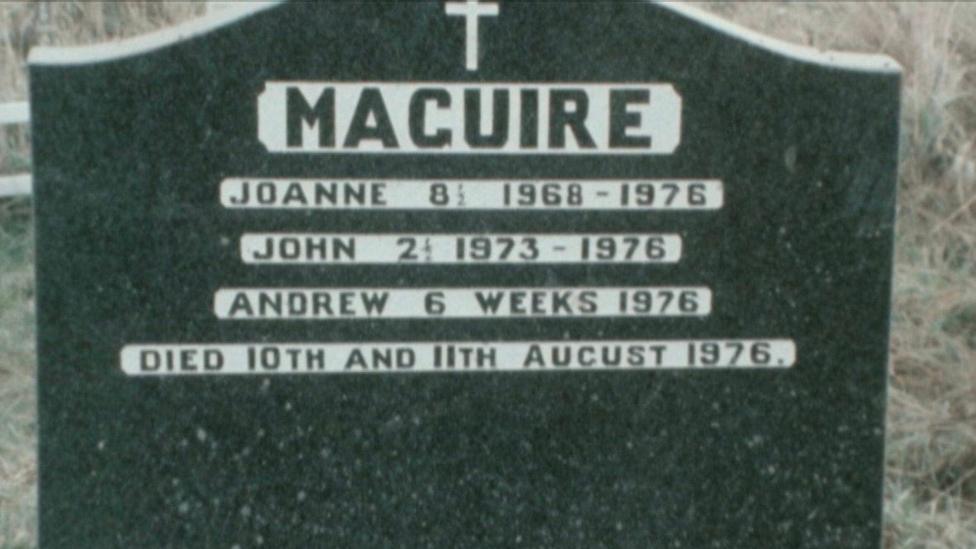
Joanne, aged 8, John, aged 2, and two-month-old Andrew died in west Belfast after being hit by a car whose driver, a member of the IRA, had been shot by a British Army soldier. According to the Irish News, the crash took place on 10 August 1976, with the vehicle driven by IRA volunteer Danny Lennon, who had been fatally wounded after a British Army patrol pursued and shot him. The same report states the car struck railings outside St John the Baptist School, killing six-week-old Andrew Maguire and eight-year-old Joanne Maguire instantly.
In the aftermath, one of the children's aunts, Mairead Corrigan, launched a campaign aimed at halting the violence engulfing Northern Ireland. She was joined by Betty Williams and journalist Ciaran McKeown, and together the three founded The Peace People. Corrigan and Williams later received the Nobel Peace Prize, and according to the Irish News, they were joint recipients of the award in 1977.
What did The Peace People achieve?
While the campaign did not halt the violence outright, Grehan argues it substantially reduced its scale.
"The Peace People reduced the violence at the time by 70%. Now that's undeniable and that's massive."
"If I could take the phrase from the (Covid) pandemic, the peace people flattened the curve."
"At that point we were heading towards an all out civil war on this island, I have no doubt about that."
Anne Maguire, mother of the three children, survived the crash on Finaghy Road North in west Belfast, as did her seven-year-old son Mark. Grehan and his late wife Mary, one of six Corrigan sisters, had previously babysat the children. Four years after the crash, Anne Maguire took her own life.
Catholics and Protestants marched together
Following the children's deaths, The Peace People established an office and organised marches that drew thousands onto the streets in protest against the violence.
Although Corrigan and Williams had been raised as Catholics, their campaign gained backing across the religious divide. Images of Protestants from the Shankill Road walking alongside Catholics from the Falls Road captured international attention, and further marches followed in Ballymena, Londonderry, Enniskillen, Newry and London.

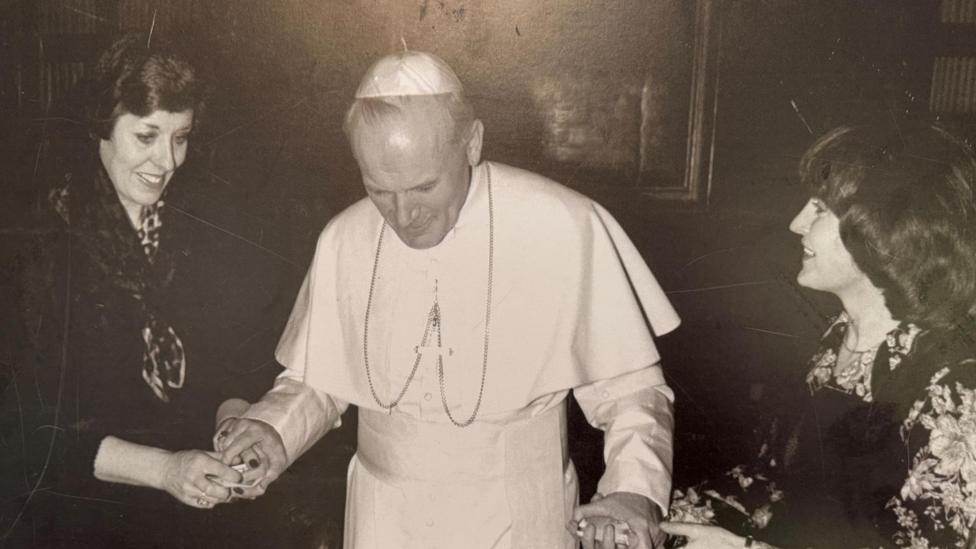
Corrigan and Williams received recognition from world leaders, including meetings with Pope John Paul II and Queen Elizabeth II. Yet the killings did not stop. According to a later recollection by Mairead Corrigan Maguire reported by WFMT's Studs Terkel programme archive, the children's deaths and the surrounding violence prompted "many thousands of people" to take to the streets demanding an end to the bloodshed.
Grehan recalled the perception problems the movement faced in its early years.
"It was seen to be anti-IRA because they were involved in what happened at the outset, but The Peace People were against all forms of violence and it probably took a long time for that to register with some people."
How did the wider conflict eventually end?
It took nearly two decades for the ceasefires that Grehan's organisation had campaigned for to materialise. The IRA and loyalist paramilitary groups did not agree to a ceasefire until 1994, and a further four years passed before the Good Friday Agreement of 1998 cemented the peace process politically.
Historical roots of the movement
The Peace People's origins trace back to a period of escalating violence that had intensified since 1969, according to research published by Swarthmore College's academic archive. The movement built its approach around non-violent tactics and grew into an internationally recognised organisation focused on peace and human rights, according to Britannica. The same source notes that the group initially formed under the name Women for Peace before adopting the broader Peace People identity, with Mairead Maguire, Betty Williams and Ciaran McKeown recognised as its founders.
Despite the scale of its early rallies, which reportedly drew tens of thousands of participants and generated significant international press coverage, the Irish News reports that the movement later lost momentum and "petered out amidst public and internal acrimony."
The Peace People today
The organisation remains active, operating from premises on the Lisburn Road in south Belfast, and its founding message has changed little since 1976: "The only time ever available for making peace is now. And now is the time for all of us to play our part."
Mairead Corrigan continues to be involved with the group. Betty Williams departed in 1980 and moved to the United States before returning to Ireland in 2004; she died in 2020 at the age of 76. Ciaran McKeown died the year before, also aged 76.
What does the future hold for Northern Ireland's peace process?
Grehan believes sustained effort is still required to mend social divisions that persist despite the end of large-scale violence.
"We've taken the guns, to a large extent, out of the equation, but we must now demilitarise ourselves. We must give something more to the kids."
He also called on politicians to safeguard the power-sharing arrangement at Stormont, warning of the risks should it collapse.
"The only way of preserving the peace is preserving our political process. So anything that endangers that could encourage those people on the periphery of this who still hold arms."
"I implore them stay in Stormont and see this through."
This week, Grehan visited the grave of his sister-in-law Anne Maguire and her three children, where the inscription reads: "They died that others may live in peace."
Key Facts
- The Peace People was founded in 1976 after Joanne (8), John (2) and Andrew Maguire (2 months) were killed in west Belfast on 10 August 1976.
- Founders Mairead Corrigan and Betty Williams were joint recipients of the 1977 Nobel Peace Prize.
- Gerry Grehan says the movement reduced violence at the time by 70%.
- The IRA and loyalist paramilitaries agreed a ceasefire in 1994; the Good Friday Agreement followed in 1998.
- The organisation still operates today from the Lisburn Road in south Belfast, with Mairead Corrigan still involved.


