

A cross-cultural music project called Tunes Translated brought together migrants, refugees, asylum seekers and Belfast locals for a concert on Saturday 8 August 2026, as part of Fleadh Cheoil na hÉireann, the world's largest Irish traditional music festival. Organiser Catherine Crean said the ensemble featured performers representing 22 different nationalities, using a blend of local and international tunes to foster integration through shared musical performance.
The project's approach centres on cultural exchange rather than one-way instruction. Crean explained that participants swap musical traditions directly with one another as a way of building connection.
"This is the first Fleadh we have performed in and it's been crazy, we have had an event every single day. I just think it's been amazing."
"Music is such a powerful tool for integration as it's a universal language. We specifically take tunes from the participants home countries. We play their tunes, and they play our tunes."
How diverse is this year's festival programme?
Beyond the Tunes Translated concert, this year's Fleadh has been marked by an unusually strong emphasis on cultural diversity. According to a report by Herald Scotland, the 2026 edition is being described as one of the most culturally diverse in the festival's history, with cross-community participation featuring prominently throughout the opening days. The official opening ceremony, titled Sharing Traditions, was designed to fuse Irish traditional music with performances from Dhol drummers, Indian dancers, flute and pipe bands, and Highland dancers, according to a report by Breaking News.
The festival, which runs from 2 to 9 August 2026, is being staged in Belfast for the first time and marks only the second time the event has taken place in Northern Ireland, following Derry's hosting of it in 2013, according to the same report. Belfast's official event guide describes the Fleadh as the world's largest celebration of traditional Irish music, dance and culture, encompassing elite All-Ireland competitions, pub sessions, street performances and concerts, according to Discover Northern Ireland. The festival is organised by Comhaltas Ceoltóirí Éireann, the body responsible for running the annual competition and arts event, according to a report by OAIM.
Belfast had earlier prepared extensively for hosting the festival for the first time, with family events and road closures planned in advance of the opening, and the festival subsequently launched in the city with more than 200 events scheduled across the eight-day run.
What has attendance looked like so far?
Visitor numbers have already surpassed initial projections. Organisers, including Belfast City Council, Comhaltas Ceoltóirí Éireann and Ards CCÉ, had originally forecast roughly 800,000 visitors across the eight days of the festival.

However, the Belfast One Business Improvement District recorded a city centre footfall total of 900,020 between Sunday 2 August and Thursday 6 August, already exceeding the original estimate before the festival's final days. The Department for the Economy had initially projected a £53m economic boost from the event, but stated on Friday that this figure now looks likely to be surpassed.
How are individual participants experiencing the project?
For performers, the initiative has offered more than musical collaboration. Shayan Kargaran, originally from Iran, plays piano and guitar within the group and has introduced a number of Iranian tunes to its repertoire.
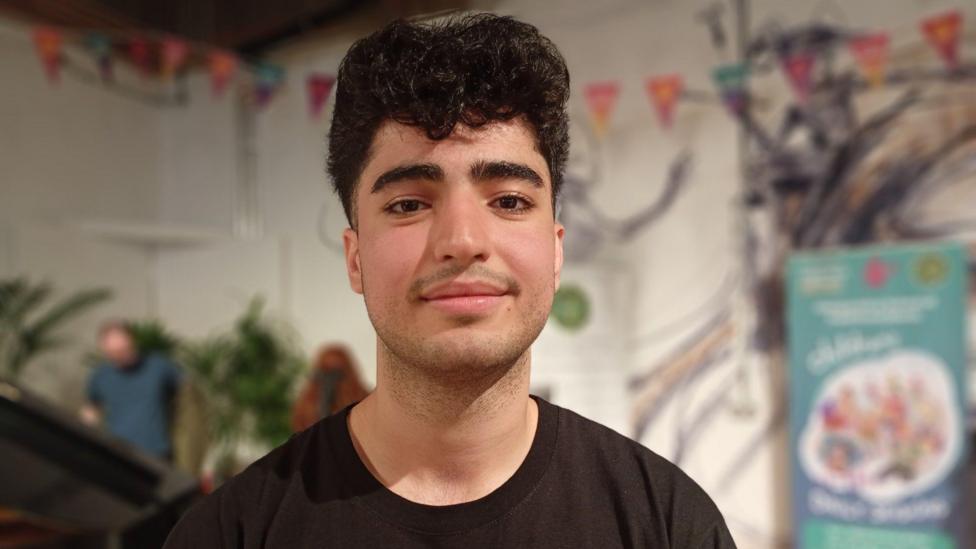
"It's been brilliant learning Irish music, very beautiful – I love the music. Since the day I listened to it I've loved it."
"Music has helped me interact more here – I've almost found my family – it's more than a group for us."
"This is my first Fleadh – I've loved it."
Why does the group describe music as a universal language?
Members from Northern Ireland involved in the project say the exchange has broadened their own musical understanding as much as it has welcomed newcomers. Susan Curran, a fiddle player from Northern Ireland who has performed with Tunes Translated for more than three years, described the group as welcoming from the outset.
"It has given me such an appreciation for the beautiful music that is coming from Iran, Sudan, Somalia and Palestine."
"Music is such a universal thing – there are challenges in learning the different beats and lilts. It's an eye opener and your ear almost has to do a little different bit of a job."
What else is happening at the Fleadh, and what comes next?
Alongside community projects like Tunes Translated, the festival's national broadcaster TG4 has been airing live coverage of competitions throughout the week. On Saturday 8 August, TG4's Fleadh26 schedule included Banjo competitions at 1.30pm, Duets at 2.30pm and Harp at 5pm, according to the official Fleadh Cheoil website.
The festival is scheduled to conclude on Sunday 9 August 2026. TG4's broadcast schedule for the closing day includes Under-12 Céilí Bands competitions at 10am, followed by Senior Céilí Bands running from 5.30pm to 9.30pm, according to the same source. The city's role in hosting the festival was set in motion well before this year's event, with Belfast confirmed as host for both the 2025 and 2027 editions as part of a wider plan to boost the city's cultural and economic profile through repeat hosting of the festival.
Key Facts
- Tunes Translated featured performers from 22 different nationalities at its Fleadh concert on Saturday 8 August 2026.
- Organisers originally predicted around 800,000 visitors, but footfall already reached 900,020 between 2 and 6 August.
- The Department for the Economy's original £53m economic boost forecast now looks set to be exceeded.
- Belfast is hosting the Fleadh for the first time, and it is only the second time the festival has been held in Northern Ireland, after Derry in 2013.
- The festival concludes on Sunday 9 August 2026, with Senior Céilí Bands competitions broadcast live in the evening.


