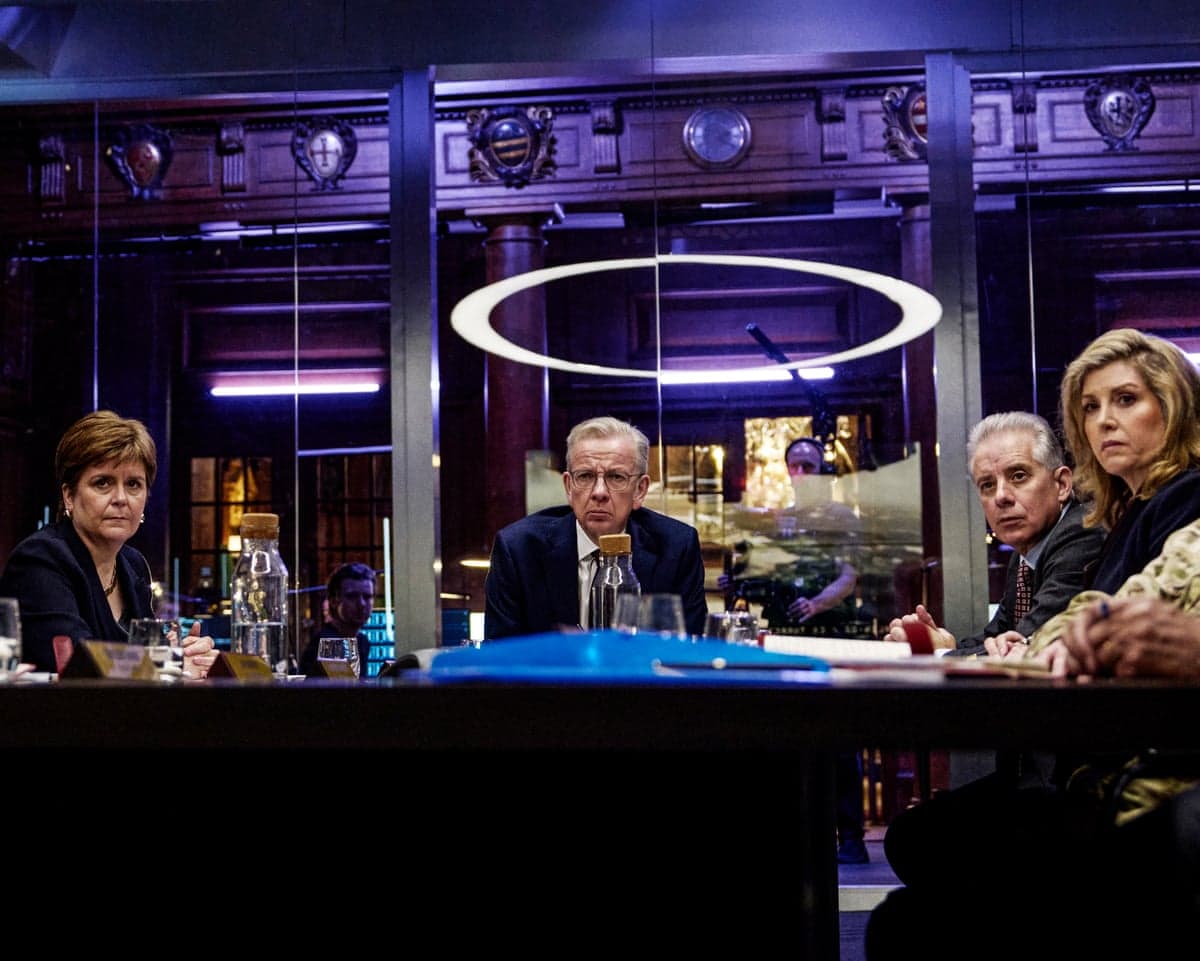
A four-part constructed documentary series that imagines an imminent Russian nuclear strike on Britain takes on an additional layer of dark comedy through its casting choices. The premise positions Michael Gove as prime minister, Nicola Sturgeon as his deputy, Harriet Harman as home secretary, Sayeeda Warsi as attorney general and Penny Mordaunt as defence secretary—a fictional government whose members' on-camera performances become as much the subject of scrutiny as the simulated crisis itself.
The series launched on Sky and NOW on 21 September 2026, with episodes airing nightly through 24 September 2026. The show functions as both a high-stakes political simulation and a revealing character study, forcing viewers to confront uncomfortable questions about who they would trust in genuine crisis while simultaneously questioning how these prominent figures agreed to participate in such a venture.
The central mystery surrounding the production is how its creators secured the participation of these senior politicians. Did producers engage in a lengthy courtship process, presenting carefully weighted arguments about the professional risks and rewards of stepping into the entertainment sphere? Or did modern politicians—driven by ego and the allure of media exposure rather than the public service ethos of previous generations—eagerly pursue the opportunity? The answer remains opaque, though informed speculation suggests the latter scenario may hold some truth.
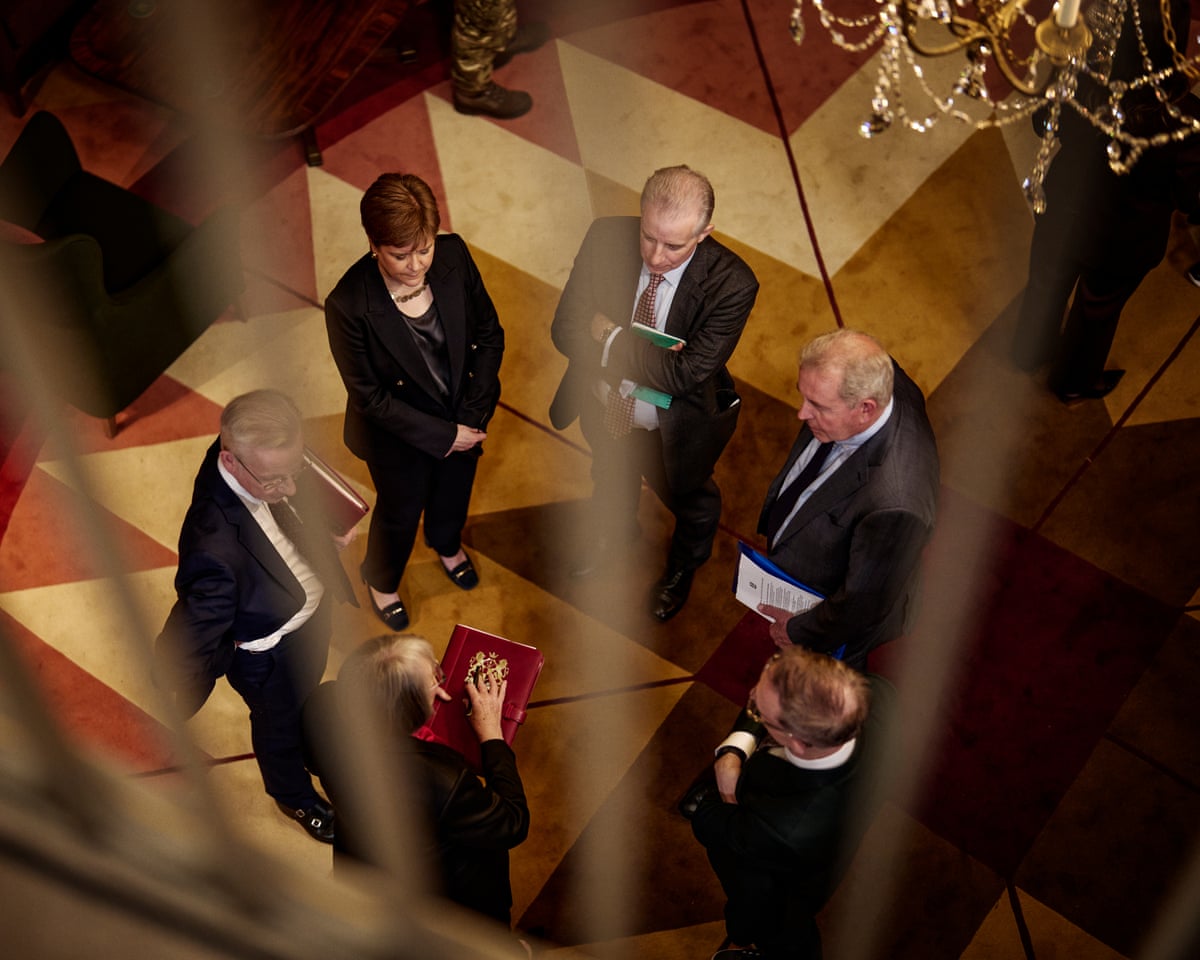
The narrative begins nine months in the future with a Cobra meeting convened following the assassination of two RAF pilots and a malware attack on regional ambulance services. The assembled politicians and military officials must determine which hostile force bears responsibility and whether these incidents are connected. While the politicians advocate for patience and further intelligence gathering, the military and intelligence services move swiftly to investigate. Intelligence soon emerges that a Russian spy ship has been detected in British waters, positioned directly above the undersea cables upon which 93 percent of national infrastructure depends—a revelation that transforms speculation into apparent confirmation of Russian involvement.
The opening episode unfolds at a measured pace, with characters repeatedly invoking the phrase "This is straight out of the Russian playbook!" Gove visibly strains to project statesmanlike authority despite the absence of immediate crisis, a tension that oscillates between endearing and ridiculous. However, the narrative momentum accelerates sharply as the first episode concludes, building toward increasingly consequential developments and mounting tension through the third instalment.

What makes the performances so revealing?
The true entertainment value emerges not from the geopolitical scenario itself but from observing which participants command the screen and which falter under scrutiny. This distinction becomes the lens through which viewers assess who they would genuinely trust during an actual emergency. Gove, Harman and Sturgeon deliver performances characterised by stiffness and self-consciousness. Sturgeon oscillates between whining and fury, Harman embodies disappointed authority, and Gove maintains his characteristic condescending tone regardless of whether he addresses cabinet colleagues, military advisers or the nation at large.
By contrast, Mordaunt, Jim Murphy (who served as Foreign Office minister in 2007-08 and portrays the foreign secretary here) and General Richard Barrons (who commanded joint forces from 2013-16 and plays chief of defence staff in the series) project an entirely different presence. These three demonstrate decisiveness, clarity of speech and—in a notably sparse field—genuine charisma. Murphy earns particular credit for his strategic deployment of profanity, timing it with precision for maximum impact. Their performances suggest individuals capable of functioning effectively under pressure, individuals whose judgment one might reasonably trust when circumstances demand swift, clear decision-making.
What larger questions does the series explore?
The programme gestures toward several substantive political and ethical dilemmas. At what threshold does a hostile act constitute an indisputable act of war? How can leaders prepare for worst-case scenarios while avoiding signals that might provoke enemies or alarm their own populations? Can contemporary electorates absorb complex information in an age of social media, or has the public become fundamentally dysregulated? Can established alliances be relied upon, particularly when led by unpredictable figures? Is there ever a moment when leaders must abandon concern for public perception and simply act according to their judgment? Do any contemporary politicians possess the capacity to do so?
The series addresses these questions with genuine intellectual engagement, though the answers remain deliberately ambiguous. Yet the programme's most compelling function transcends these abstract considerations. The Wargame rapidly becomes almost excessively entertaining for a narrative premised on the threatened annihilation of millions, transforming into something closer to an audition than a warning. For Mordaunt, Murphy and Barrons in particular, their performances may well serve as a form of political or professional advancement, demonstrating capabilities that extend far beyond their current roles.
When does the series conclude?
The four-part series concludes on Thursday 24 September 2026. The final episode was unavailable for review at the time of writing, leaving the ultimate resolution of the simulated crisis and the final assessments of the participants' crisis management capabilities unknown. The series is based on an award-winning podcast and functions as an immersive documentary, blending constructed scenarios with genuine political figures navigating realistic crisis protocols.
The Wargame ultimately functions on multiple levels simultaneously. As a geopolitical thriller, it poses legitimate questions about national security and crisis management. As a character study, it reveals which public figures possess the temperament and capability to function effectively under extreme pressure. And as entertainment, it offers the peculiar pleasure of watching senior politicians struggle with the demands of performance while simultaneously confronting scenarios that, however fictional, reflect genuine vulnerabilities in contemporary British governance and infrastructure.