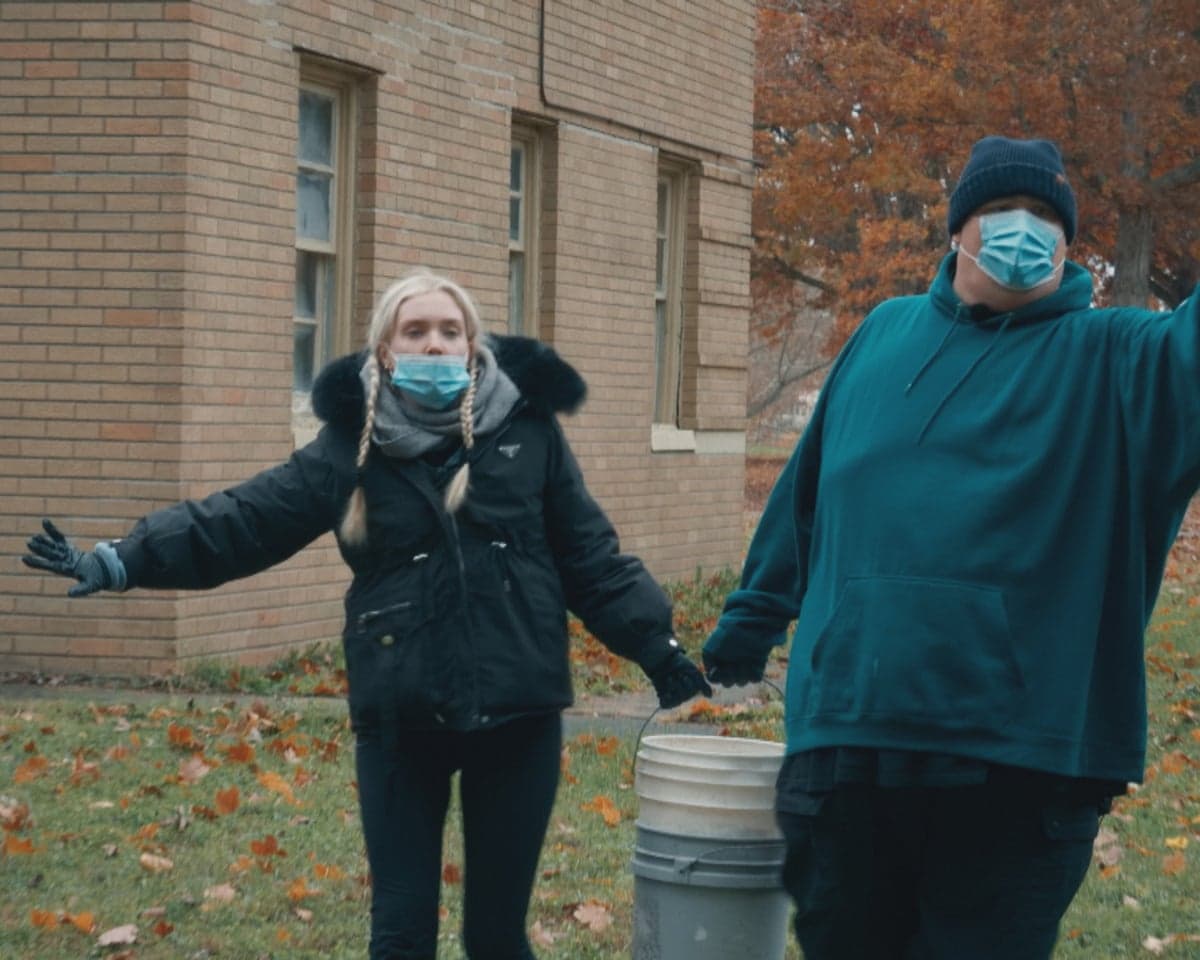
A new reality competition asks whether ordinary people can rebuild society from scratch after civilisation collapses. The answer, based on the opening episodes, is an emphatic no.
The premise of Apocalypse, which premiered on on 13 September 2026, divides 14 strangers into two rival camps—East and West—each unaware the other exists. Placed in a 1,000-acre abandoned town in rural Indiana used by the US military for urban warfare training, the participants must survive for 28 days using only materials they can scavenge or create. According to 's press materials, the contestants received three days of survival training before being released into the town, though this detail never appears in the broadcast itself—probably because viewers would find it implausible.
The opening hour offers little action. Both teams spend most of their time standing, sitting or lying around, with their primary achievement being the selection of two large, draughty buildings as base camps. The voiceover asks whether these people can rebuild society from scratch. The available evidence suggests they cannot.
Why does the West team fail to find supplies?
The Western camp quickly descends into interpersonal conflict. Two women argue constantly about boundaries and respect rather than attending to survival priorities like gathering firewood or locating food. When a pair of team members discover the town's massive supermarket, they find it boarded up and simply return to base without attempting to break in. Ioan Humphreys, a Welsh sheep farmer who emerges as the team's leader, then suggests tidying the camp instead of returning to the supermarket to force entry and secure supplies. The famished team inexplicably agrees to this plan.
How does the East team's approach differ?
The Eastern camp operates under a different dysfunction. Steven McKell, a content creator, insists that no decision be made without collective agreement—a principle so rigid that psychologist Kiera Madison defers to him even for basic toilet use, a choice she herself acknowledges is absurd.
"We're fucked on quite a few fronts,"observes Bertie, a theatre director who cries frequently throughout the episodes, a response that is emotionally understandable but practically useless.

The only genuinely competent participant is Scott McMinn, an Australian cattle farmer. When Steven proposes foraging in the forest as the team's first priority, Scott dismisses the idea and instead raids nearby buildings, taking the dry-eyed Bertie with him. They locate the supermarket, break in successfully and return with food while the foragers remain in the woods examining berries. Scott immediately institutes rationing, but the team subsequently consumes most of the supplies, leaving only enough for the Western team to steal when the two guards fail to prevent the theft.

Does the show improve beyond the opening episodes?
The first two episodes are dominated by stupidity so profound that sustained outrage becomes exhausting, particularly since viewers know the participants face no genuine risk of starvation. By the third episode, the programme becomes more engaging. An engineer begins constructing useful devices from the junkyard, someone locates a hunting rifle, and Celia Hibbert, a Nigerian-born politician, emerges as a compelling presence.
"Men think with their dicks. Women think with their brains. So do not ever think men are making the best decisions."Her directness and clarity provide a sharp contrast to the surrounding chaos.
What is the underlying problem with both teams?
Beneath the surface comedy lies a more troubling pattern. The participants' refusal to defer to expertise, their inability to prioritise sensibly, and their unwillingness to follow orders sabotage every endeavour. This venality and impenetrable individualism—the insistence that personal preference trumps collective survival—creates a depressing portrait of modern society. The show suggests that our current values and social structures are fundamentally incompatible with the cooperation that genuine crisis would demand.
What happens next?
The series continues with weekly episodes following the 13 September launch. The eight-episode first season will air on and remains available to stream on demand. Early critical response has been mixed, with a 60% Tomatometer rating from five reviews on Rotten Tomatoes, suggesting the programme's appeal may depend heavily on whether viewers find the participants' failures entertaining or simply depressing.
Apocalypse ultimately functions as an unintentional critique of contemporary culture. It raises genuine questions about whether societies built on individualism and the rejection of authority can survive genuine hardship. The answer the programme provides—through the chaos of its opening episodes—is bleak. Whether that bleakness is intentional or merely the accidental byproduct of casting decisions remains unclear. What is certain is that the show will make you fear for the future, though whether that fear concerns television programming or human civilisation itself depends on your perspective.