Dame Esther Rantzen's philanthropic legacy encompasses far more than her founding of Childline, the helpline serving children in crisis, and The Silver Line, which addresses loneliness among older adults. Her broadcasting career, particularly her stewardship of That's Life! from 1973 to 1994, fundamentally reshaped British television by evolving the show from a consumer rights programme into an issues-driven series that captivated millions of viewers.
Among the defining moments of her career was an episode broadcast in February 1988 that would eventually become one of the most celebrated sequences in British television history. The episode centred on Nicholas Winton, a humanitarian who had orchestrated the rescue of 669 children from Czechoslovakia during the Nazi occupation that began in 1939.
Winton's extraordinary work had remained largely obscure for nearly five decades. The story emerged only after his wife discovered a scrapbook in their loft containing the names of children he had saved. Holocaust researchers subsequently used this documentation to trace and reconnect with some of those he had helped.
How did Winton manage such a massive rescue operation?
Born to German-Jewish parents, Winton travelled to Prague and compiled a list of children requiring sponsorship, then identified British families willing to host them. Working alongside local activists and humanitarians in Czechoslovakia, he navigated formidable political barriers, including the challenge of transporting children through the Netherlands after it had sealed its borders to Jewish refugees. The Kindertransport scheme allowed unaccompanied Jewish children under 17 to enter Britain with foster families, provided a £50 guarantee was secured for their return ticket.
A House of Commons ruling passed shortly before his mission began proved crucial, permitting young refugees to enter the country. With his mother's assistance, Winton placed photographs of the children in British publications including Picture Post to locate suitable homes, arranged for hostels to accommodate additional refugees, and raised funds to cover travel expenses and provide necessities upon arrival in Britain. Winton's scrapbook recorded 664 children; later research identified five more who had entered Britain on Kindertransport he organised.
In 2003, Winton was knighted for his humanitarian contributions. He lived to the age of 106, passing away in 2015.
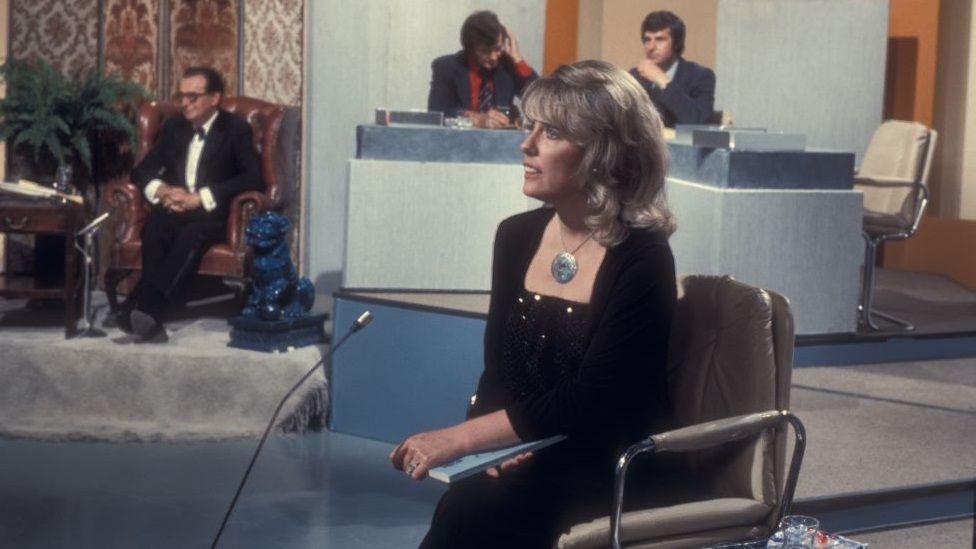
What prompted Rantzen to invite Winton onto That's Life!?
When Dame Esther first contacted Winton, she recalled congratulating him on his remarkable accomplishments. However, she discovered that he harboured regret about his efforts. Speaking to The Radio Times in February 2024, she explained that Winton had expressed disappointment, remarking that insufficient numbers had been rescued.
"I was devastated that he felt he had failed. I wanted to prove to this extraordinary man that every life he had saved was precious,"Dame Esther said.
She extended an invitation for him to appear on That's Life!, and during his first appearance, his scrapbook was presented to the studio audience. Two women he had rescued as children—Vera Gissing and Lady Milena Grenfell-Baines—were positioned on either side of him and revealed their identities on television, a moment Winton had not anticipated. Winton believed he was joining the programme as an audience member who might help Kindertransport children trace their families.
Lady Milena, now recognised as one of Britain's most prominent Holocaust survivors, departed Prague with her younger sister Eva at age nine aboard a train Winton had arranged. The siblings were cared for by a Tameside family until their mother arrived the following year after escaping via Norway. Gissing, who left Prague in 1939 at age eleven, lost the majority of her family during the Holocaust and subsequently settled in the United Kingdom after the war concluded.
Dame Esther recalled the emotional intensity of that moment:
"That was the only time in my career when I had to stop recording to wipe away my tears."
How did the story develop after that first appearance?
Following the broadcast, the production team received contact from numerous viewers who recognised their connection to Winton. This response inspired the team to organise a subsequent episode that would become one of British television's most iconic moments.
"In our next episode, I asked all those who owed their lives to him to stand, and Nicky, whom we had seated on the front row, turned to see the whole ground floor of the Television Theatre on their feet,"Dame Esther recounted.
The episode has been rediscovered repeatedly by successive generations through social media sharing. Dame Esther stated that she has watched the sequence
"many times"and finds herself
"deeply moved"each time she views it.
Dame Esther maintained contact with Winton, meeting him regularly until his death. Beyond their television connection, hearing the accounts of the children he had rescued left her feeling
"immensely lucky"to have been born a Jew in England during the 1940s.
What is Winton's broader legacy?
Winton's story has inspired numerous films and documentaries. Most recently, the biographical film One Life, featuring Sir Anthony Hopkins in the lead role, premiered at the Toronto Film Festival and reached UK cinemas in January 2024.
Dame Esther emphasised the scale of Winton's impact, noting that it had been estimated that
"6,000 people owe their very existence to Nicholas Winton."She added:
"The Jewish children Nicky rescued were almost the only ones in Czechoslovakia to survive the Holocaust."
Through Dame Esther's decision to share Winton's story on That's Life!, millions of viewers became aware of his extraordinary humanitarian achievement. What began as a consumer affairs programme evolved into a platform for revealing one of the Holocaust era's most remarkable rescue missions, transforming both Winton's legacy and the television landscape itself.