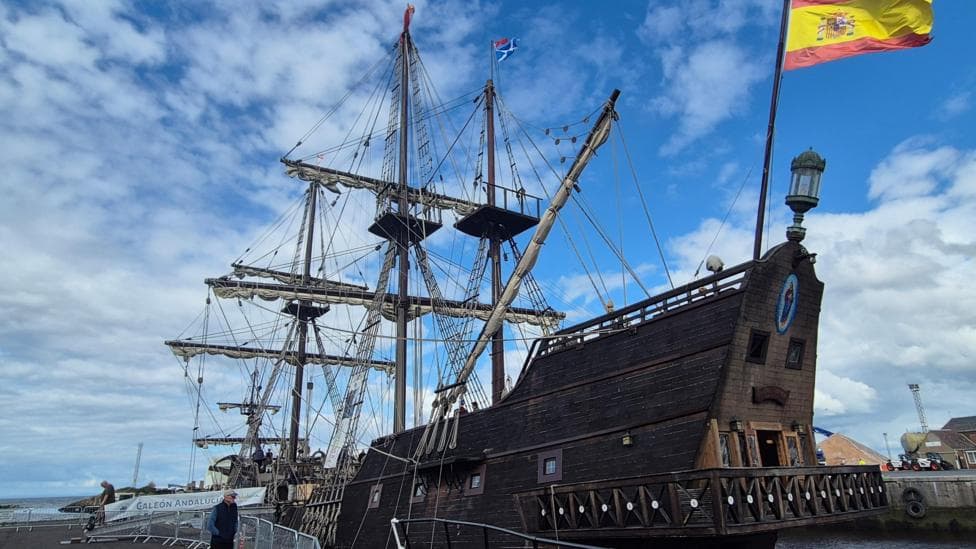
A full-scale replica of a 17th-century Spanish galleon has been moored at Ayr harbour for the past two weeks, offering visitors an unusual glimpse into maritime history. The Galeón Andalucía, a 51-metre vessel constructed as a floating museum, is operated by the Nao Victoria Foundation, a Spanish not-for-profit organisation staffed by cadets from the Spanish navy. The ship will depart Ayrshire on 24 August, with its next destination being Tobermory on the Isle of Mull on 26 August as part of a broader European tour.
The waters of Ayr harbour typically accommodate commercial cargo vessels and occasional visits from heritage paddle steamers. The arrival of this tall ship, complete with billowing national flag and period-accurate rigging, represents a striking departure from the usual maritime traffic. According to local tourism information, the vessel officially opened to public visitors on 16 August following a press ceremony and invitation-only preview.
What was the purpose of ships like the Galeón Andalucía?
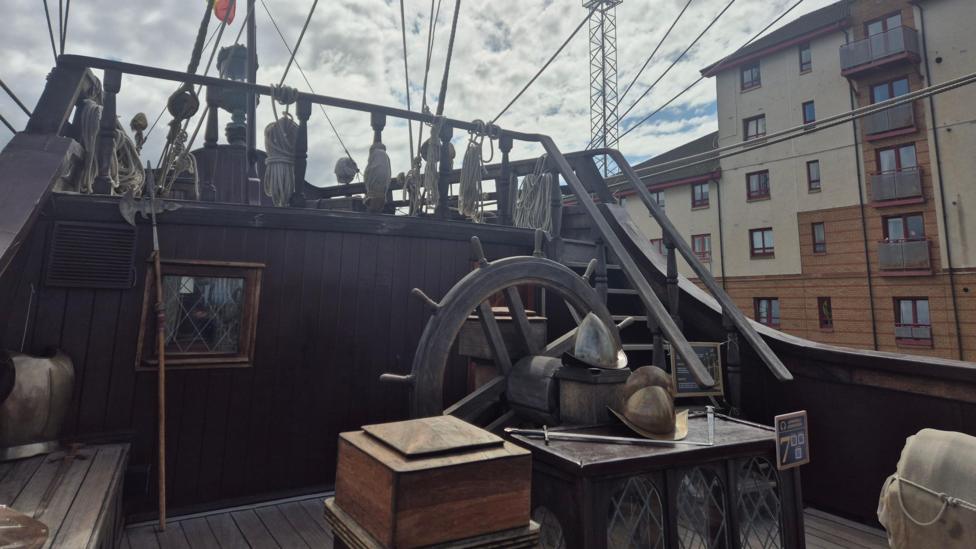
Galleons of this design were employed to establish and maintain trade routes connecting Spain, the Philippines and America, functioning primarily as merchant vessels rather than warships. The cannons mounted on the replica serve as historical reminders that these ships possessed defensive capabilities, though on the modern vessel they now attract visitors seeking photographs. The holds of such vessels were cavernous, designed to accommodate valuable cargo including spices, gold and silver across long ocean voyages. Because merchant galleons prioritised cargo capacity over combat capability, their cannons were reserved for self-defence rather than offensive operations, and their smaller, more manoeuvrable design contrasted with dedicated warships of the era.
How does the replica balance historical accuracy with modern comfort?
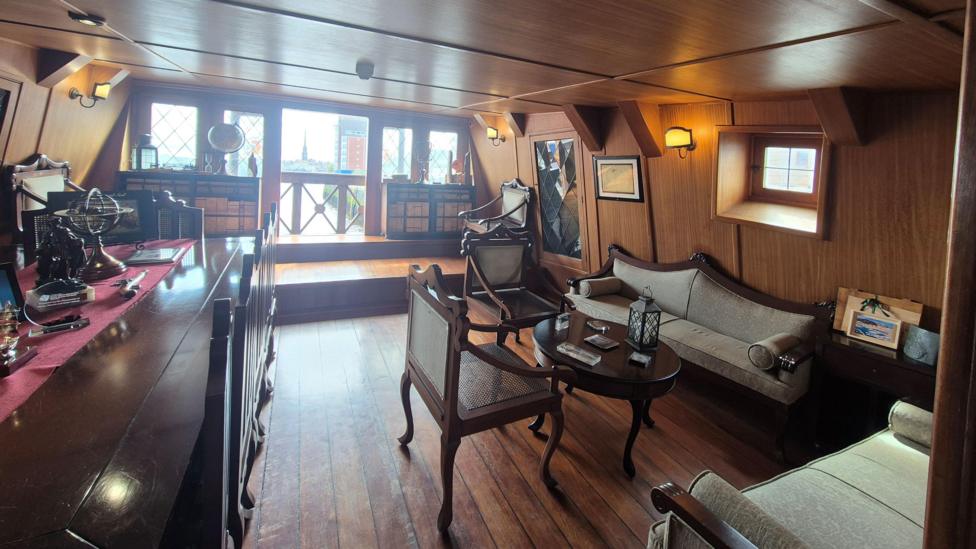
The Galeón Andalucía was constructed over a period of four years and ten months, including a 16-month building phase, to replicate the specifications and appearance of vessels from centuries past. However, the ship does not fully recreate the harsh conditions sailors endured. The sleeping quarters have been modernised to eliminate the need for hammocks, and the galley features contemporary kitchen equipment. Much of the vessel's structure, layout and fittings were nonetheless built to historical specifications, allowing visitors to understand how 17th-century sailors lived and worked.
The ship includes detailed recreations of the admiral's quarters, period-appropriate nautical instruments such as the log used to measure vessel speed, and informational plaques documenting historical context. These features combine to create an educational experience that brings maritime heritage to life.
What do crew members say about the ship's educational mission?
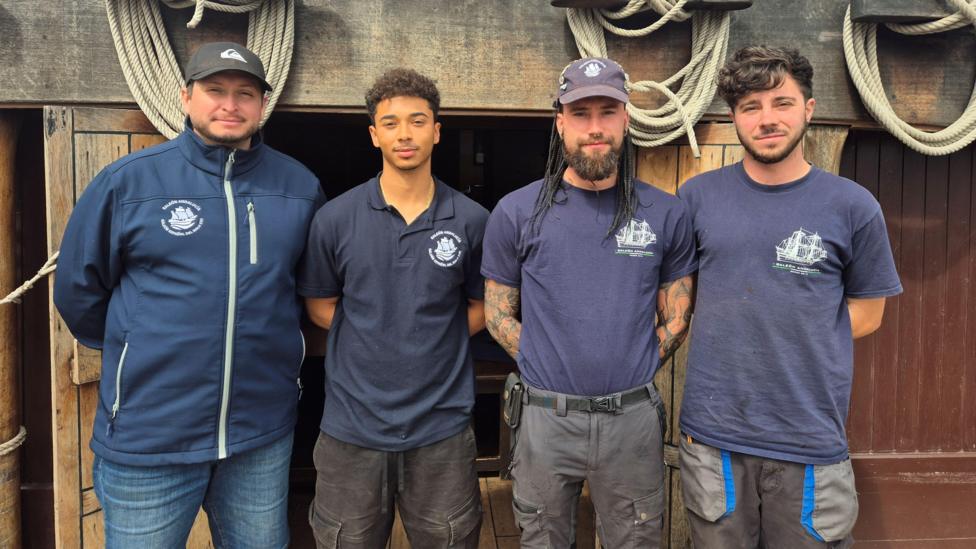
For the young sailors aboard, the vessel serves dual purposes: preserving and presenting history while providing essential maritime training. Eze Thomas, a 21-year-old marine engineer who has spent five months with the crew, explained the significance of the experience.
Not many people have been on a ship, especially one like this. Children love it, they're always keen to see the artillery deck. It's really important, especially in Spain - it's real history and real culture, and on here you can actually see how they lived.

For cadets training in maritime professions, the voyage fulfils practical requirements.
You can see exactly how an old merchant ship used to be, but for us it's also experience. I'm a marine engineer and it works well for us to get days at sea. In Spain it's required to get at least nine months out at sea when a cadet.Thomas added that the role combines labour with cultural exchange:
It's hard work, but you meet wonderful people and I love it - I get to chat with people from different places and different cultures when showing the museum off too. It's both our life and our job.
How can visitors experience the ship?
According to tourism information for South Ayrshire, the Galeón Andalucía is berthed at South Harbour Street, Ayr KA7 1JU, and remains open to the public until 23 August with daily tours running from 10am to 8pm. Admission is priced at £12 online for adults and £6 for children aged 5 to 10, with family tickets available at £30; tickets purchased directly on the vessel cost £15, £7 and £37 respectively. Group guided tours are scheduled for 13, 14, 18, 19, 20 and 21 August for those wishing to explore the ship with specialist commentary.
Steady crowds have already visited the vessel during its Ayrshire stay. The ship previously called at Oban earlier in 2026 as part of its wider itinerary.
What is the broader context of this visit?
The Galeón Andalucía is part of a 2026 European promotional tour sponsored by the Andalusian government and co-financed with European funds. According to the Fundación Nao Victoria, the vessel is scheduled to visit multiple ports across the continent, including Plymouth, Amsterdam, Delfzijl, Bremerhaven and Cherbourg. The ship was built by the Fundación Nao Victoria as a floating museum dedicated to preserving and presenting Spanish maritime heritage.
The visit also highlights Scotland's continued role as a destination for heritage maritime experiences. The Ayr harbour itself is home to regular visits from the Waverley, the world's last sea-going paddle steamer. During the Galeón Andalucía's stay, the vessel was required to vacate its berth temporarily to allow the Waverley access to the South Harbour, demonstrating how heritage attractions must coordinate within the working port environment.
What happens next?
The Galeón Andalucía departs Ayr on 24 August and is scheduled to arrive in Tobermory on the Isle of Mull on 26 August. Following its Scottish visit, the ship will continue its 2026 European tour, calling at ports in the Netherlands, Germany and France as part of the broader promotional voyage.
Key Facts
- The Galeón Andalucía is a 51-metre replica of a 16th- and 17th-century Spanish galleon, built over four years and ten months by the Fundación Nao Victoria
- The vessel is staffed by cadets from the Spanish navy and operates as a floating museum, combining historical education with maritime training
- Public visits in Ayr run until 23 August from 10am to 8pm, with admission from £6 to £12 online depending on age
- The ship is part of a 2026 European tour visiting ports in Spain, the United Kingdom, the Netherlands, Germany and France
- The vessel was temporarily displaced from its berth to allow the Waverley paddle steamer access to Ayr harbour