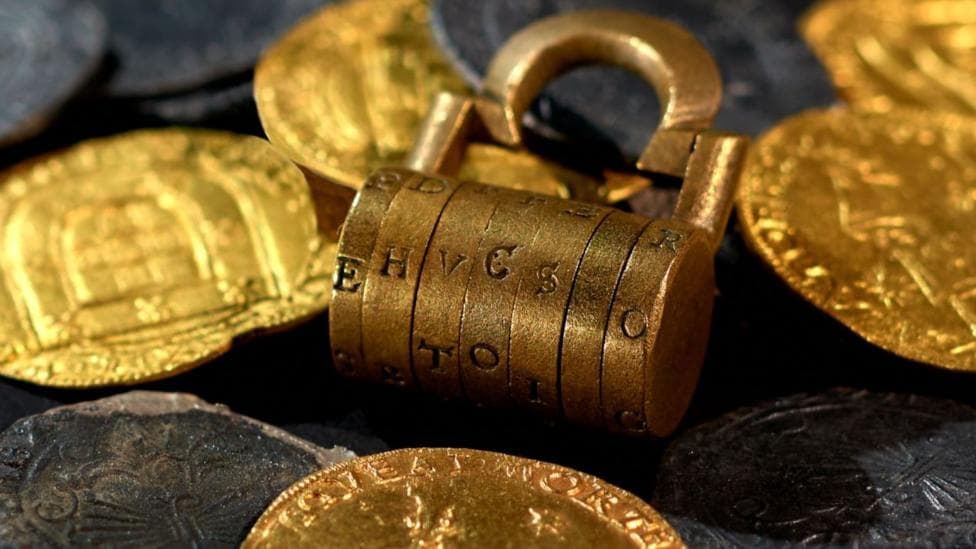
Researchers have successfully decoded a four-letter combination on an ancient brass padlock recovered from a 16th-century shipwreck off the Welsh coast, solving a mystery that stumped a metal detectorist for two decades. According to BBC News, the lock was discovered in sand near Margam in Port Talbot and dates to 1583, when the merchant vessel Ann Francis sank during a storm while returning from Spain.
Metal detectorist Peter Hughes, from Maesteg, found the brass lock in 1999 while searching Morfa beach with his detector, along with Spanish silver coins and other artefacts. The discovery marked the beginning of a 21-year effort to understand the lock's mechanism and unlock its secrets.
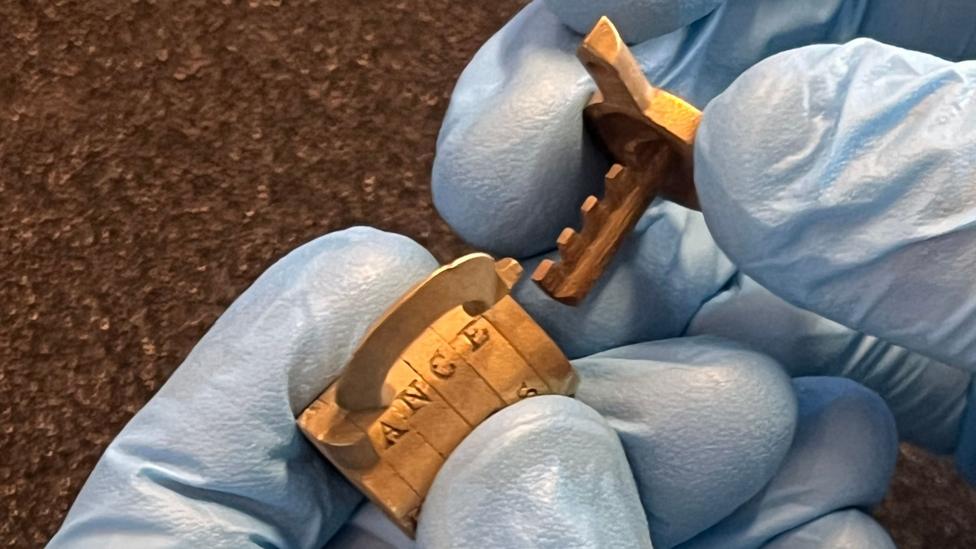
Museum experts at Amgueddfa Cymru and Cardiff University employed CT scanning technology—the same medical imaging devices used in hospitals—to examine the lock's internal workings and determine the correct letter sequence. The code spells out ANCE, and the lock remains in working condition after four centuries beneath the sand.
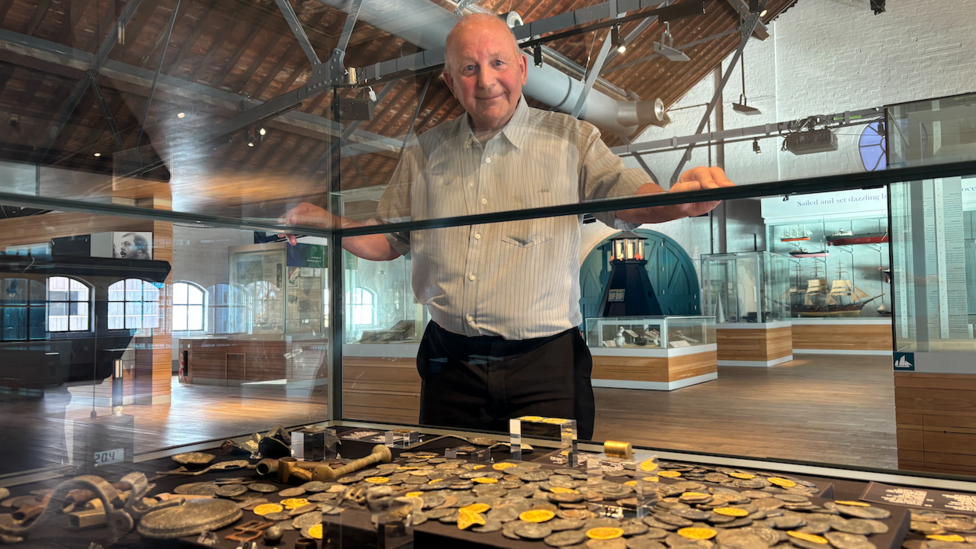
The padlock was found in close proximity to Spanish silver coins and two coin weights, suggesting it may have protected valuable items or secured a chest containing precious documents or textiles that did not survive the centuries of submersion. The broader collection recovered by Hughes includes approximately 870 gold and silver coins and other objects, including examples from the reign of Ferdinand and Isabella of Spain, according to the museum's records.
Hughes described his initial discovery as serendipitous.
It was by chance - a day off. I was walking along the beach with my metal detector on a day off, and I came across a coin. That was the start of a journey that lasted 21 years.The 69-year-old spent approximately two decades attempting to solve the lock's combination by manually manipulating the dials, without success.
When museum experts finally cracked the code using advanced technology, Hughes expressed profound relief and satisfaction.
I tried to unlock it for about 20 years, I tried moving the dials, finding the right combinations, and I failed. But with the aid of modern technology we've been able to crack what's like the Da Vinci code, really. For me, it's like opening the Ark of the Covenant, and I'm delighted, truly thrilled.
How did researchers solve the puzzle?
Dr David Williams, a research associate at Cardiff University's School of Engineering, initially expressed scepticism about whether micro CT scanning—a medical imaging technique adapted for smaller objects—could reveal the lock's internal secrets. The challenge lay in the device's original design purpose, which differed significantly from archaeological analysis.
Williams and his team conducted multiple scans, with the first attempt yielding surprising results.
We did a first scan to see if we could see anything and we were quite surprised that we could see letters. The second scan went terribly, but with the third scan, we tried a different approach, and figured out the code. I was blown away that we actually cracked it.The persistence and willingness to adjust methodology proved essential to the breakthrough.
What makes this lock historically significant?
Senior curator Alastair Willis explained the technical complexity of the lock's design.
It's really complex because there are so many combinations. There are four different rings, and because there are six different letters on each of the rings, there are 1,296 different combinations, and you have to make sure they're aligned with the loop at the top.This mathematical reality underscores why manual attempts to crack the code would have been extraordinarily time-consuming.

Senior curator Siân Iles noted that the lock's exceptional preservation distinguishes it from other historical examples.
This is a wonderful example of one that still functions as it would have done hundreds of years ago. Because it was found so close to the wreck of the Ann Francis and with all the material that's part of that collection, it provides a really good context, it allows us to really tightly date it. I've seen others, and they're usually corroded and in different parts, but it was in wonderful condition.
The lock's small size suggests it secured a chest or box, though the original contents remain unknown.
It's a small object so it probably would have been a lock for a chest or a small box, we don't know the content, and that's part of the story, there are some things we'll never know, but it's something that would have meant something to the person who knew that code.

What is the broader context of this shipwreck?
The Ann Francis sank on 28 December 1583 while returning from Spain, caught in a storm that claimed the vessel and scattered its cargo across the seabed. The ship's owner, Francis Shaxton of King's Lynn, had sent grain to Spain, and after the wreck, local people plundered the ship while Shaxton pursued the return of goods through legal disputes.
Hughes donated his entire collection of artefacts to Amgueddfa Cymru in 2017, and the assemblage is now displayed at the Swansea Waterfront Museum. The National Waterfront Museum's "Tides of Treasure" display opened to the public on 26 June 2026, with the lock positioned as a centrepiece of the exhibition.
When will the exhibition remain on view?
The treasure collection, including the newly decoded padlock, will remain on display at the National Waterfront Museum until June 2027, allowing visitors to examine one of Wales's most significant maritime archaeological discoveries and witness the remarkable preservation of objects from the 16th-century wreck.
What should you do if you discover treasure?
Treasure has a variety of legal definitions under the Treasure Act of 1996. In Wales, any discovered treasure must be reported to a Finds Liaison Officer within 14 days of first finding it or within 14 days of realising an item might be treasure, regardless of how long you have possessed it. Failure to report treasure carries penalties of a fine or up to three months in prison.
After a find is reported, a Finds Liaison Officer or museum curator will contact you to discuss the circumstances of discovery. These officials will prepare a report, and a coroner will hold an inquest to determine whether the item meets the legal definition of treasure. If a museum wishes to acquire the find, the Treasure Valuation Committee will commission an expert assessment to determine its monetary value and recommend how any reward should be distributed to eligible parties.
Different regulations apply in Scotland and Northern Ireland, so detectorists in those regions should consult their local authorities for specific guidance on reporting requirements and procedures.