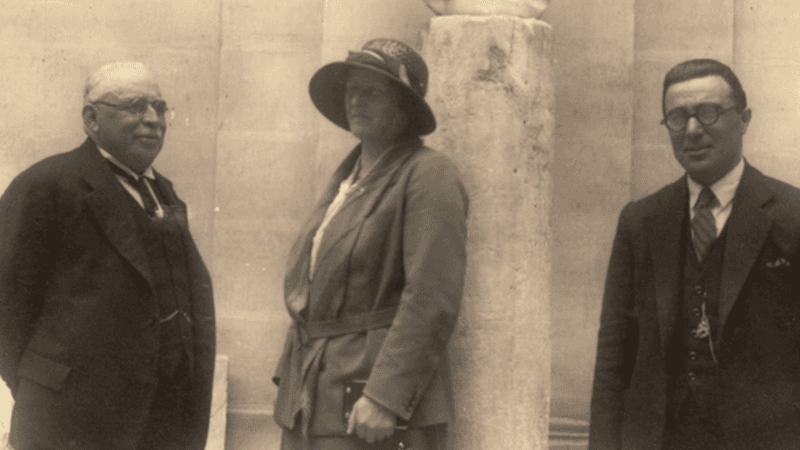
A trailblazing fossil hunter who became one of the first women employed by the Natural History Museum has been recognised with a national blue plaque. Dorothea Bate, who died in 1951 aged 72, fundamentally reshaped understanding of prehistoric creatures and ancient ecosystems through decades of fieldwork and research. The plaque, unveiled at the Natural History Museum in Tring, Hertfordshire, commemorates her role as Officer-in-Charge of the institution from 1948 and her extraordinary contributions to palaeontology.
Born in Carmarthen, Wales, in 1878, Bate showed an early passion for the natural world despite receiving minimal formal schooling. She educated herself largely through independent study and hands-on exploration. As a young woman, she relocated to rural Gloucestershire with her family and spent considerable time investigating local caves and countryside, amassing a collection of fossils that would fuel her scientific ambitions.
In 1898, at just 19 years old, Bate began working behind the scenes at the Natural History Museum in London, initially without a formal appointment. Her dedication and expertise impressed museum leadership, securing her a position as an assistant and establishing a professional relationship spanning more than five decades. She published her inaugural scientific paper, titled A Short Account Of A Bone Cave In The Carboniferous Limestone Of The Wye Valley, in 1901, launching a prolific publishing career.
Throughout her life, Bate undertook ambitious expeditions across the Mediterranean region, frequently travelling alone to isolated caves in pursuit of ancient remains. Her discoveries proved groundbreaking: in Cyprus, she identified a previously unknown species of dwarf elephant, and in 1909, while working in the Balearic Islands, she unearthed the myotragus, an extinct goat-like antelope. Over her career, she authored more than 80 scientific papers—a remarkable achievement given that she spent most of her working life without a permanent salaried position, a reflection of the barriers women faced in science during that era.
Where is the plaque located?
The plaque is affixed to the wall of the original cottage on Akeman Street, facing Park Street, at the museum's Tring location. Dacorum Borough Council granted listed building consent for the plaque on 13 August 2026, enabling its permanent installation. The placement at this historic site underscores Tring's significance as a centre for natural history research and Bate's enduring legacy within the institution.

What recognition has Bate received?
This Tring plaque represents the second blue plaque honouring Bate's life and work. In 2017, a plaque was dedicated at Napier House in Carmarthen, marking her birthplace. The National Blue Plaque Scheme, administered by Historic England, celebrates individuals who made significant contributions to human welfare or happiness. Bate's selection reflects her transformative impact on palaeontology and her role in advancing opportunities for women in science.
In a joint statement, co-CEOs of Historic England Claudia Kenyatta and Emma Squire emphasised Bate's legacy:
She used this drive to make sense of ancient life through fragments of bone, bringing it to life once again. Her research transformed our understanding of prehistoric animals and ancient environments. Not only does her work continue to be invaluable in the field that she helped to establish, but as one of the first women to be employed by the Natural History Museum she was instrumental in paving the way for future women in science. This plaque ensures that her pioneering contributions to science receives the wider recognition it deserves.
Heritage minister Baroness Twycross characterised Bate's achievements as instrumental in breaking barriers:
helped break through the glass ceiling and paved the way for women in palaeontology.
Dr Sandra Knapp, director of research at the Natural History Museum, highlighted the broader significance of the recognition:
The role of women scientists in natural history is often hidden - but Dorothea Bate's work with fossil mammals was both innovative and set a path for others, despite obstacles. The installation of this plaque not only honours her but also serves as a reminder that women have been, and continue to be, key contributors to our understanding of the natural world.
Why does Bate's story matter today?
Bate's career demonstrates the obstacles women faced in early twentieth-century science, yet also their determination to contribute meaningfully to knowledge. She operated in an era when women were systematically excluded from formal positions, yet she persisted in conducting fieldwork, publishing research, and eventually achieving leadership within a major institution. Her trajectory—from self-taught fossil collector to museum director—challenges narratives that position women's scientific contributions as recent phenomena. The plaque serves as a tangible reminder that women have long been central to advancing understanding of the natural world, even when institutional recognition was delayed.
What happens next?
A Dorothea Bate family day is scheduled at the Natural History Museum at Tring on 12 September 2026, offering an opportunity for the public to engage with her life and work. The event will allow visitors to explore the museum's collections and learn more about Bate's discoveries and influence on the institution.
Key Facts
- Dorothea Bate was born in Carmarthen, Wales, in 1878 and died in 1951 aged 72
- She discovered a previously unknown dwarf elephant species in Cyprus and the myotragus, an extinct goat-like antelope, in the Balearic Islands in 1909
- She published more than 80 scientific papers despite spending most of her career without a permanent paid position
- She served as Officer-in-Charge of the Natural History Museum at Tring from 1948 until her death
- The blue plaque at Tring is the second honouring her legacy, following a 2017 plaque at her birthplace in Carmarthen