Astronomy enthusiasts across the UK have the opportunity to observe a striking diagonal arrangement of four planets throughout November in the pre-dawn sky. Mercury, Venus, Mars and Jupiter will all be visible without optical aid, stretching across the south-eastern to eastern horizon. According to BBC News, the most dramatic moment arrives on 16 November when Mars and Jupiter will draw exceptionally close together. Starting from 24 November, a full Moon—the first in a sequence of four supermoons—will join this celestial display in the morning sky.
This planetary alignment builds on autumn's lengthening nights offering prime opportunities for stargazing, which have already featured the Pleiades star cluster and earlier meteor showers. The November parade represents one of the season's most accessible naked-eye spectacles for observers willing to rise before sunrise.
Which planets will be visible and how to find them?
Mercury presents the greatest challenge among the four planets in this parade. As the closest world to the Sun and the smallest in our solar system, it remains perpetually trapped in solar glare and only becomes visible during twilight hours, never in a fully dark sky. Its position will always be dim and hugging the horizon. To locate it, seek out a wide open area with an unobstructed, flat horizon and direct your gaze toward the south-east.
Venus occupies a position above and to the right of Mercury and shines as the brightest celestial object in our night sky after the Moon itself. This brilliance stems from its exceptionally high albedo—the proportion of sunlight it reflects back into space—which exceeds that of any other major planet. Venus also happens to be the closest planet to Earth at certain points in its orbit, sometimes drawing within 24 million miles of our world, and possesses a similar overall size. It will appear higher in the sky than Mercury and become visible earlier in the pre-dawn hours before sunrise.
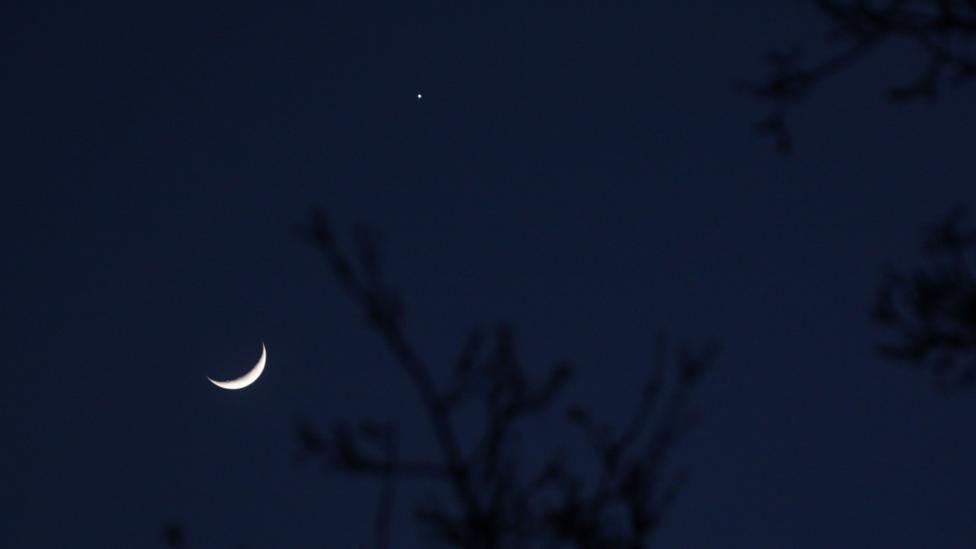
Observers should take care not to confuse Venus with the bright star Spica, which will occupy nearby space in the sky. A reliable distinction exists: stars twinkle noticeably while planets emit a steady glow. According to timeanddate.com, Venus reaches its 2026 brightness peak on 27 November, making late November an especially favourable window for viewing this world.
When will Mars and Jupiter appear closest together?
The most visually striking moment of November's planetary parade occurs on 15 and 16 November, when Mars and Jupiter will seem to nearly touch in the sky. Mars currently hangs high in the eastern sky with Jupiter positioned below it but shining more brightly.
They will be separated by just 1.2 degrees, or roughly the width of a finger held at arm's length, according to Gideon Bendavid-Walker, astronomer at the Royal Observatory Greenwich. The two planets will appear close to the luminous star Regulus and may even resemble a triple star system to the naked eye. This configuration will repeat on 30 November, when the Moon, Mars and Jupiter will gather near Regulus once more.
What about the supermoon and other celestial objects?
From 24 November onward, a full Moon will join the planetary lineup in the pre-dawn sky. This marks the first of four consecutive supermoons—full Moons occurring near lunar perigee, the Moon's closest approach to Earth. The November full Moon, traditionally called the Beaver Moon, reaches peak illumination at 14:53 UTC on 24 November, when it will sit 360,766 kilometres (224,170 miles) from Earth, according to timeanddate.com.
Those equipped with binoculars or a telescope will discover additional planets worth pursuing. Uranus will be setting in the west at a similar pre-dawn time, while Saturn and Neptune will become visible during evening hours rather than in the morning sky. Notably, Uranus reaches opposition on 25 November, making it brighter and more accessible to optical observation than usual.
What are the optimal viewing conditions and times?
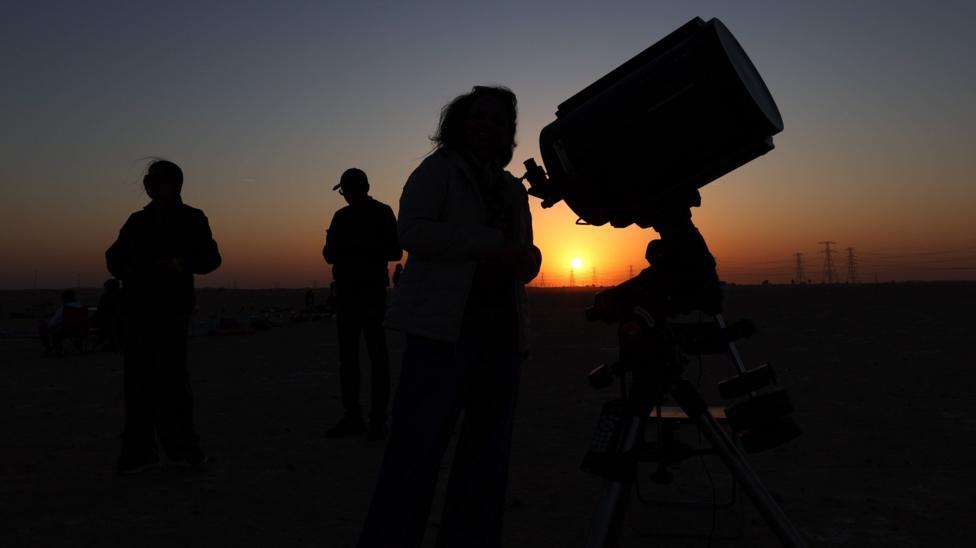
To observe the planetary parade effectively, locate a position away from light pollution that offers a clear view of the eastern horizon. Allow your eyes approximately twenty minutes to adjust to darkness. The ideal viewing window falls roughly 45 to 60 minutes before sunrise, when the planets reach their highest positions above the horizon.
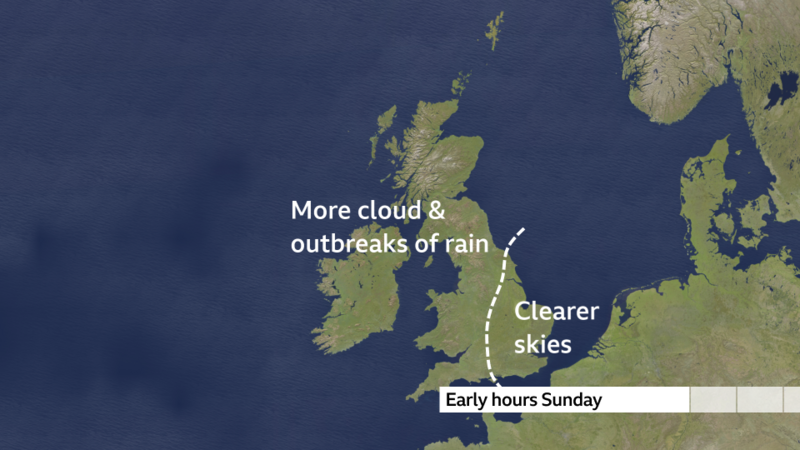
Weather conditions will play a crucial role in viewing success across the UK. Saturday night into Sunday morning will see progressively increasing cloud cover and wind, with rain spreading eastward. An early frost may still develop under clearer skies in the south and east, though breezes and cloud will tend to increase even in these regions. Despite these challenges, early Sunday morning still offers the best opportunity for viewing through the weekend.
Sunday night presents a drier forecast as the day's rain and hill snow clear away. However, wintry showers will persist in northern Scotland alongside substantial cloud cover, and occasional showers may develop around north-west facing coasts. Otherwise, the night should remain mostly clear and dry, aside from the possibility of isolated mist or fog patches.
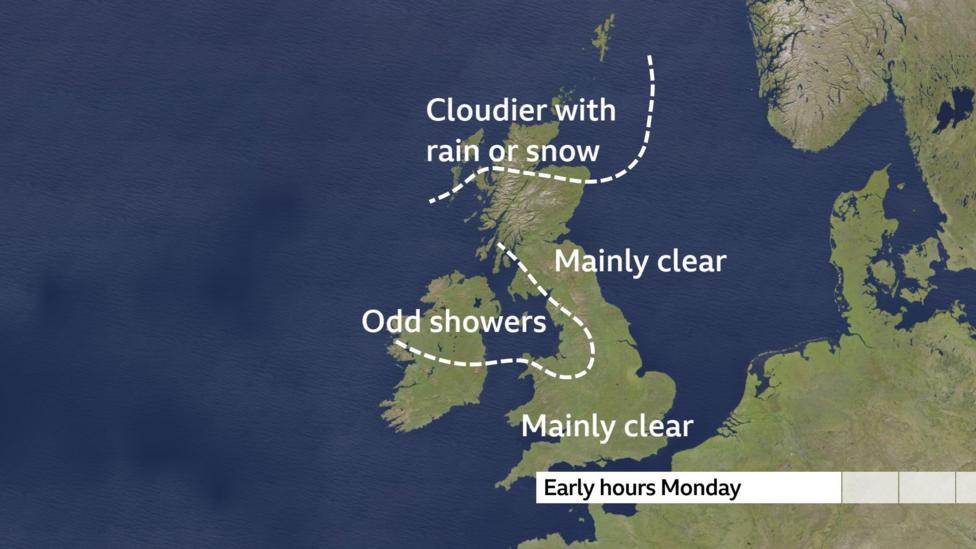
Pre-dawn conditions on Monday 16 November—the date of the Mars-Jupiter conjunction—could deliver improved viewing prospects for much of the UK, making this an especially favourable morning for observing the closest approach of these two planets.
What other astronomical events occur in November?
The Leonid meteor shower will peak on the night of 17 to 18 November, delivering 10 to 15 meteors per hour during optimal viewing conditions. Best visibility occurs in the early mornings of 17 and 18 November when the Moon sets, allowing darker skies for meteor observation. Additionally, NASA's November skywatching guide highlights a Voyager "Light-Day" activation scheduled for 17 November, commemorating the historic space missions.
Mercury will reach its greatest western elongation on 20 November, marking the point in its orbit when it achieves maximum separation from the Sun as seen from Earth, potentially improving visibility slightly for observers seeking this elusive world.