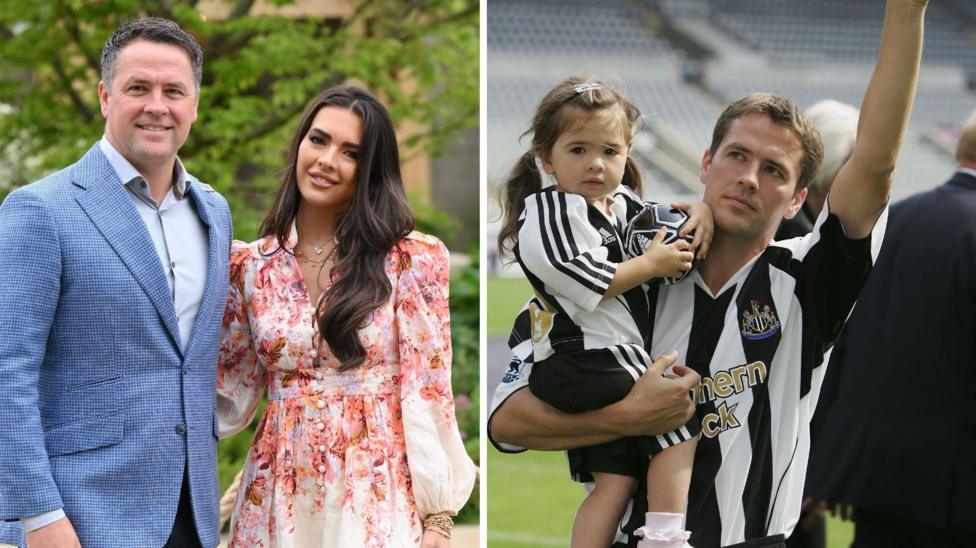
Former England striker Michael Owen ignited a conversation about parenting approaches this week after revealing in a podcast interview that he "never ever" tells his children he loves them, despite describing them as "the most dearest things in the world" to him.
"I don't say anything like that,"Owen told Jamie Laing during the podcast discussion.
"I just assume my actions would show them that I love them. I think most of us are like that."According to reports of the interview, Owen framed his approach as "tough love," noting that he is "definitely getting softer" but still not willing to express affection verbally. He explained that he prefers to send his children to school with tough love rather than constant praise, and argued that repeating the phrase too often can diminish its meaning.
The comments have divided opinion among parents and experts. While some expressed surprise and disagreement, others said they share Owen's perspective that actions speak louder than words. The exchange has highlighted broader questions about parenting styles, gender roles, cultural differences, and generational attitudes toward emotional expression.
Owen's remarks come as his family prepares for increased public scrutiny. According to the official details of the new series, the family's Prime Video docuseries Meet the Owens began streaming on 28 August 2026, following a year in the lives of Michael, his wife Louise, and their children Gemma, James, Emily and Jessica.
Do children need to hear the words, or do actions suffice?
Experts suggest that making a child feel loved involves far more than a single phrase. Educational psychologist Dr Patricia Britto explains that while words can be important, the fundamental requirement is that a child experiences being "safe, valued and emotionally secure."
"We shouldn't conclude that children have been psychologically damaged and harmed simply because they don't hear those words,"Dr Britto says.
"They may experience love very clearly through actions."However, she emphasises that the critical factor is whether affection is "consistently communicated" through both words and actions, or ideally a combination of the two.
"If you said to a child 'I love you, I love you' but you never turn up to any of their football games or shows, they might not actually feel loved. They might just feel they are empty words."
Aaron Dale, host of the Raisingboys2men podcast and author of a parenting book, agrees that the two approaches should complement rather than compete.
"It's not words or actions - they shouldn't compete against each other, they should complement each other. Words are to speak the message and actions are the evidence."Dale points to his own experience, noting that his father would often say "I love you" after letting him down, which diminished the meaning of those words.

Yet many parents believe verbal affirmation is non-negotiable. One father of a seven-year-old daughter described Owen's stance as "awful," saying
"You should always tell your children you love them no matter what, when they're bad, when they're good."On social media, another parent wrote: "Parents and potential parents do not listen to this man. Tell your kids you love them everyday, even when it annoys them."
How do culture, gender and generation shape parenting styles?
Owen's reluctance to express affection verbally reflects attitudes that many fathers hold toward parenting, according to both Dale and Dr Britto. They attribute this partly to long-standing beliefs about masculinity and what men "should" do as parents.
"I think that's the dangerous part there,"Dale says,
"the belief of what men should and what men shouldn't do."He argues that many fathers see their role as purely to "provide," but that men have far greater capacity to offer.
"Men are much more than just providers... what about our emotional capacity and willingness to have conversations and be there as fathers? And maybe we can't provide, but you know what? Our presence is at full capacity."Dale also suggests that parenting styles often stem from how individuals were raised themselves, including whether they received verbal affirmations of love as children.
Gender and masculinity are not the only factors at play. Dr Britto points out that cultural differences significantly shape how families express love.
"In some cultures they don't even use those words [I love you] at all,"she explains.
"They may ask things like 'Have you eaten?' as a sign of love rather than actually saying 'I love you'."Drawing on her own background, she adds:
"As an African myself, in Nigerian culture parents don't always say 'I love you'... but I still felt loved."
Generational differences also play a role. Several parents responding on social media suggested that older generations of fathers simply did not express emotions verbally, yet their children never doubted their love. One wrote: "My dad never said the words, but it was also never in doubt." Another commented: "What's the big deal? My dad - and I'm sure most dads of our generation - didn't. He did something far, far better than emotional words he 'showed us' by his actions."
What matters most to children?
Despite the range of perspectives Owen's comments have sparked, it is evident that parents communicate love through countless different methods. Dr Britto emphasises that the ultimate goal is ensuring children feel a genuine sense of belonging.
"Do they feel loved?"she asks.
"Do they feel wanted? Do they feel that they matter, rather than simply hearing the words?"
To the outside observer, Owen's affection for his children is not in question. The trailer for his new show demonstrates what appears to be a warm home life with his wife and children. In 2024, the former England striker spoke movingly about his son James's sight loss, saying:
"If I could give him my eyes... I would."When pressed by Laing to explain his reluctance to express love verbally, Owen acknowledged the tension in his approach, saying
"I would love to be a little bit soft"while maintaining his current stance.
What happens next
All six episodes of Meet the Owens are available to stream exclusively on Prime Video from 28 August 2026. The docuseries is expected to provide further insight into the family's dynamics and may prompt additional discussion about Owen's parenting philosophy as viewers see the family's interactions firsthand.