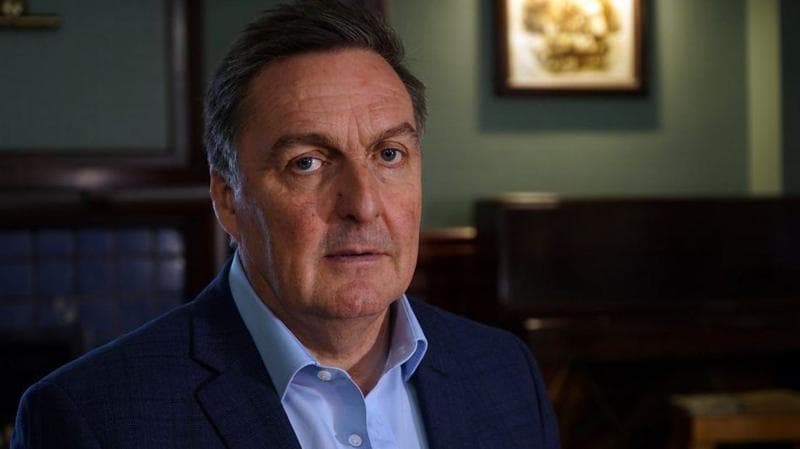
The chairman of MG Alba has told MPs that Gaelic media services have missed out on substantial public funding compared to language broadcasters in neighbouring Celtic nations. John Morrison raised the concern during the Scottish Affairs Committee's inquiry into the future of Gaelic broadcasting, highlighting that Welsh and Irish services receive significantly more investment to support their digital expansion and content development.
MG Alba operates the LearnGaelic website and partners with the BBC to deliver BBC Alba, which broadcasts news, current affairs, sport, drama and children's programming. The Scottish government allocated £15m to MG Alba for 2026-27, while the BBC committed £10m for content. However, Morrison argued this falls short of what comparable services receive elsewhere.
"The most important thing for us is not MG Alba, it's not BBC Alba, it's about the whole language and the importance of the language to the increasing number of young people who are embracing it," Morrison said.
Morrison, a former correspondent, stressed that MG Alba has had to adapt to operating across multiple digital platforms rather than as a traditional linear television channel. He pointed out that counterparts in other Celtic nations received substantial support for this transition.
"Our colleagues in the Celtic countries got serious millions of pounds of support to help them diversify, or the 'dash to digital' as we call it. We got no money to support us with that."
How does MG Alba's funding compare to other language broadcasters?
The funding disparity is significant. S4C in Wales receives £22m in BBC content funding plus £95m in direct licence fee funding, while MG Alba receives no direct licence fee allocation. Irish language public service broadcaster TG4 is also substantially better funded and benefits from tax-based incentives that MG Alba does not access.
In a written submission to the inquiry, MG Alba detailed its financial position: £15m from the Scottish government and £10m in BBC content allocation. By contrast, the Welsh broadcaster's total support substantially exceeds this figure. The Scottish government has acknowledged that MG Alba does not benefit from "fair funding" direct from the TV licence fee, unlike S4C.
What is driving the funding debate?
The UK government is currently reviewing the BBC Charter ahead of its expiration on 31 December 2027, with a new charter set to take effect on 1 January 2028. This renewal process has prompted calls for reform of how Gaelic broadcasting is funded. Gaelic Secretary Màiri McAllan said the BBC has a responsibility to Scottish licence payers to commission, invest in and broadcast programming reflecting Scottish life, including Gaelic language and culture.

"Unlike S4C in Wales, MG ALBA does not receive direct funding from the licence fee. We continue to call on the UK government to ensure fair funding from the licence fee as part of the BBC Charter renewal process."
A Scottish Parliament committee paper has argued that Gaelic television should receive statutory or charter protection similar to S4C, with funding arrangements clarified in statute or in a public document accompanying the BBC Charter.
What is MG Alba's current output and budget allocation?
MG Alba's 2026-27 annual plan sets total budget spend at £10.2 million, slightly down from £10.285 million in 2025-26. The organisation is increasing drama, entertainment and learning short-form output while seeking at least £200,000 of co-investment into skills and talent initiatives. According to the annual plan, drama receives £1.841 million, factual programming £2.702 million, sport £2.397 million, music and events £1.299 million, entertainment £600,000, digital-first and short-form content £547,000, and children's output £156,000.
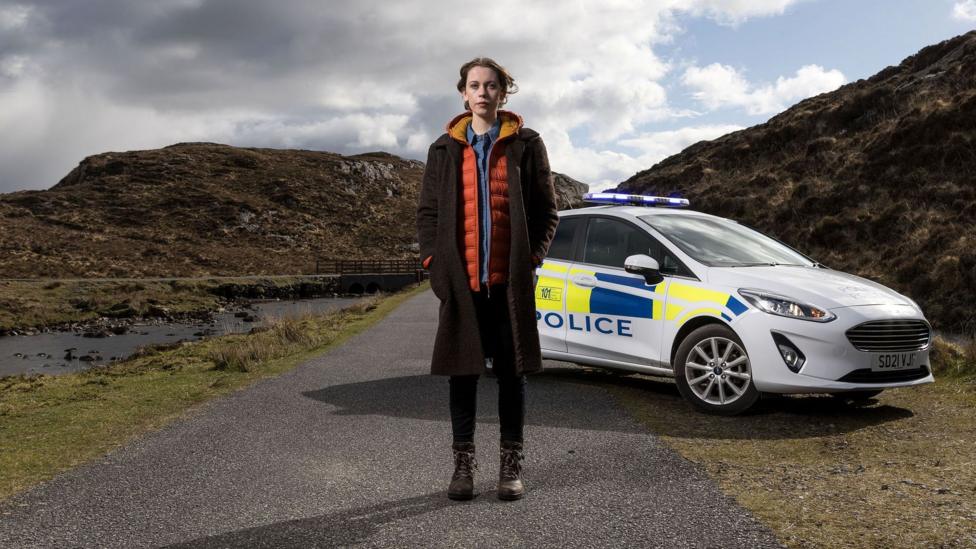
BBC Alba's most high-profile drama production, An t-Eilean (The Island), exemplifies the collaborative funding model now essential to Gaelic content creation. The second series is being funded by MG Alba, the BBC, Screen Scotland, Black Camel Pictures, Highlands and Islands Enterprise, and Comhairle nan Eilean Siar.
What new opportunities are available for Gaelic producers?
Despite funding constraints, new commissioning opportunities have emerged. MG Alba and BBC Alba have opened a Gaelic-language feature film development opportunity with BBC Film and Screen Scotland, with submissions due by 19 October 2026. Additionally, a digital commissioning round launched for summer 2026 explicitly directs producers toward additional funding sources such as Creative Scotland's Broadcast Content Fund and BFI tax reliefs.
BBC Alba was established in 2008 and has grown to become a significant platform for Gaelic language content. The channel provided nightly live coverage and highlights throughout the Glasgow 2026 Commonwealth Games, demonstrating its role in major sporting events and its reach to audiences across Scotland.
What happens next?
The feature film development opportunity has a submission deadline of 19 October 2026. BBC Alba's winter 2026 commissioning round closes at 5pm on 19 October 2026. The BBC Charter renewal process will continue through 2027, with the new charter taking effect on 1 January 2028—a critical juncture for determining whether Gaelic broadcasting receives the statutory protections and funding parity that campaigners argue it deserves.
Key Facts
- MG Alba receives £15m from the Scottish government and £10m in BBC content funding, but no direct licence fee allocation unlike S4C in Wales
- S4C receives £22m in BBC content funding plus £95m in direct licence fee support; TG4 in Ireland is also significantly better funded with additional tax-based incentives
- MG Alba's 2026-27 budget is £10.2 million, with drama (£1.841m) and sport (£2.397m) receiving the largest allocations
- New commissioning opportunities include a Gaelic feature film development scheme and digital commissioning round with access to additional funding sources
- BBC Charter renewal concludes in 2027, with a new charter taking effect on 1 January 2028