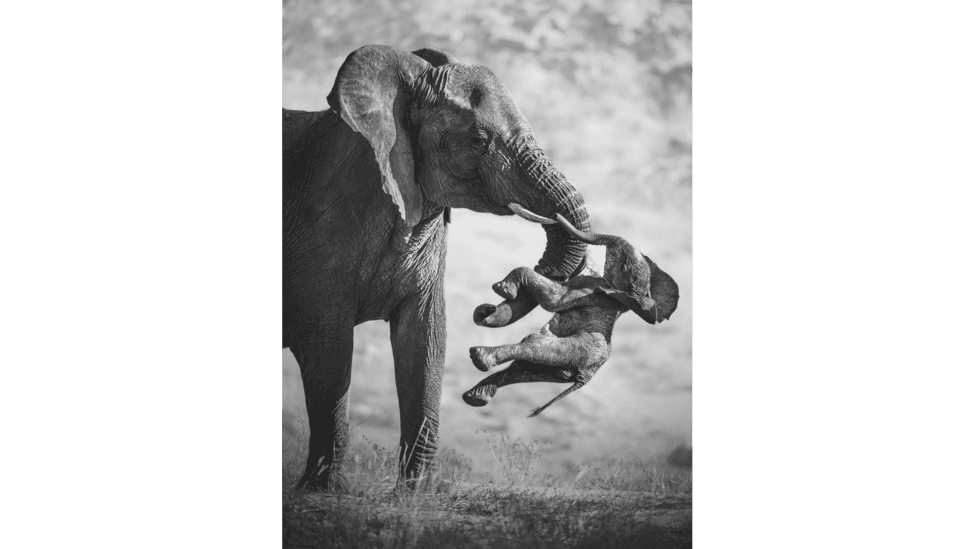
Federico Veronesi, an Italian photographer, has been awarded the title of Wildlife Photographer of the Year 2026 for a profoundly moving image of an elephant carrying a deceased calf. The photograph, titled "The Aftermath," also secured the Behaviour: Mammals category award. The winners were announced on 13 October at a ceremony held at the Natural History Museum, hosted by Chris Packham and Megan McCubbin.
While tracking elephants in Namibia's Huab River Valley, Veronesi observed an unusual trail of drag marks across the sand of a dry riverbed. Following these tracks, he discovered a female elephant transporting a dead calf, with its leg wedged between her tusk and trunk. The encounter proved to be a turning point in his career as a wildlife photographer.
After sharing his photographs with an elephant research project operating in the region, Veronesi learned that the identity of the calf's relationship to the adult elephant remained uncertain. Researchers identified the elephant as a female who had experienced the loss of a calf several years prior and had previously collected dead calves belonging to other females in the herd.
For Veronesi, this moment held profound significance.
Of all the 20 years I've done photographing animals, this is the most heart-wrecking and fascinating and dramatic,he reflected, describing the encounter as
revealing of the depth and complexity of the emotions, the feelings of the animals.He envisions the image as a catalyst for changing human perception of wildlife.
It's a small window that opens just a crack into the complexity of their world,he said, hoping viewers will recognise animals as individuals possessing their own relationships, memories and emotional lives.
Record-Breaking Competition
The 2026 edition marks the 62nd year of this prestigious competition. According to National Geographic, the competition received a record 65,403 entries from 121 countries and territories, demonstrating the global reach and appeal of wildlife photography as a medium for conservation and storytelling.
Young Photographers Making Their Mark
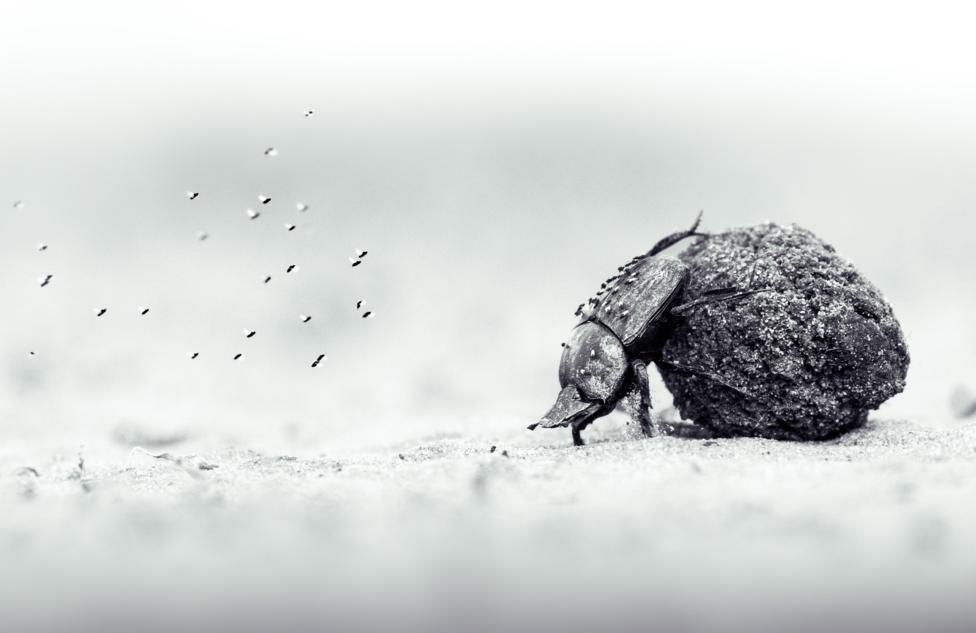
The competition continues to nurture emerging talent. Oscar Whitfield, a young photographer from Zimbabwe and the UK, won the Young Grand Title and 11 to 14 Years category for his striking image titled "Labour of Love." While on a family game drive near his home in Victoria Falls in Zambezi National Park, Whitfield spotted a dung beetle struggling to push a ball of dung uphill through the sand, pursued by a trail of flies. To capture the true scale of the beetle's effort, Whitfield positioned himself at ground level, lying in the dust to achieve eye-level perspective with his subject.
I hope that when people look at the photograph, they can see too, and maybe appreciate how much can be happening in a small moment in the natural world,Whitfield explained.
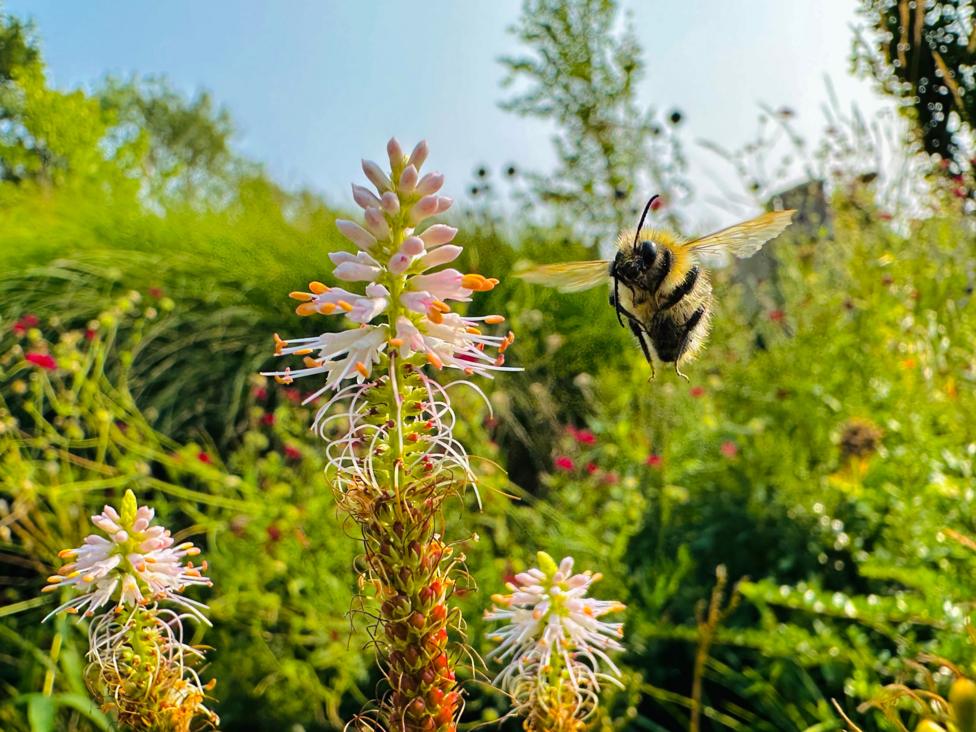
Another young photographer demonstrated that professional-quality wildlife imagery requires neither expensive equipment nor distant travel. A photographer captured an award-winning image of a common carder bumblebee using only a smartphone belonging to her father, freezing a single wingbeat as the insect prepared to land on a flower in a garden setting.
Capturing Behaviour and Habitat
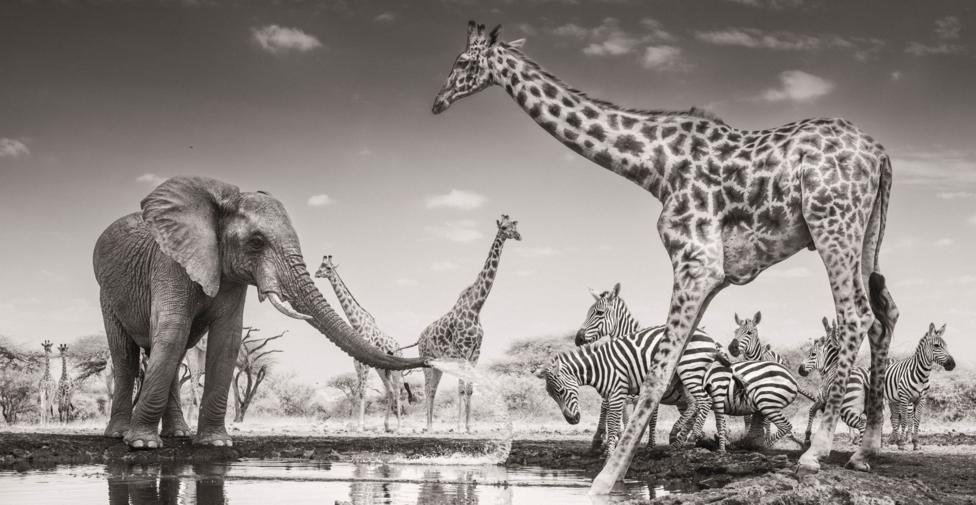
The Animals in their Environment category showcased a dreamy, black-and-white photograph by a photographer named Lewin, taken in Chyulu Hills National Park, Kenya. The image depicts a young bull elephant spraying water at zebras gathered at a waterhole. Lewin employed a camera converted to infrared technology to soften the typically harsh natural light, creating an ethereal quality that elevates the composition beyond a straightforward wildlife record.
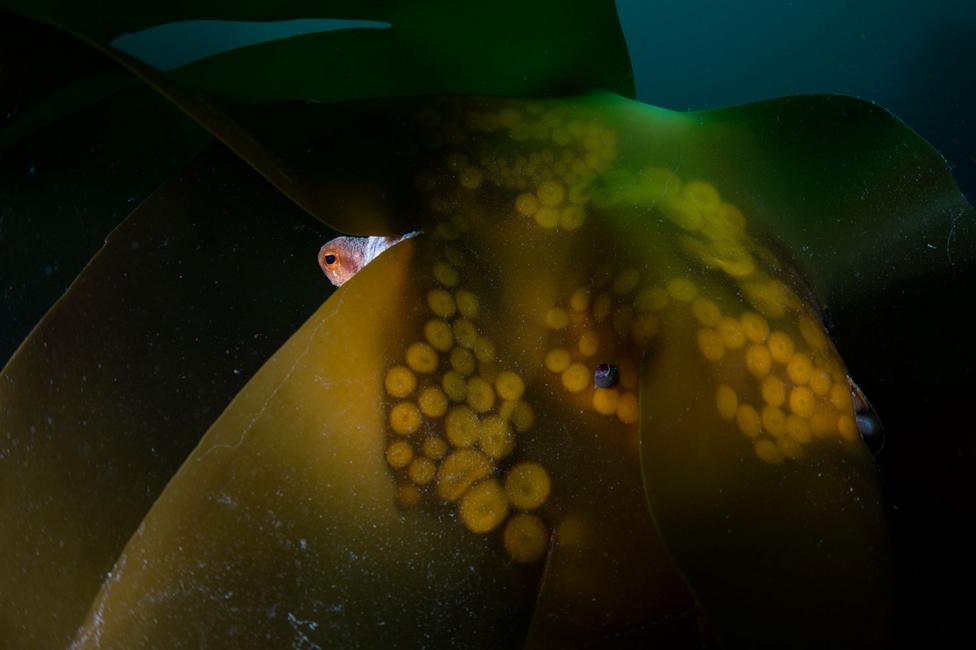
Global warming is reshaping wildlife distribution patterns, a reality captured in an image by Aaron Sanders from Porthkerris Beach in Cornwall. Common octopuses, typically found in the warmer Mediterranean Sea, have begun appearing with increasing frequency across south-west England as springtime sea temperatures rise. Sanders documented the moment he spotted a single eye peering from behind kelp, describing the encounter:
We remained perfectly still, watching one another with a seemingly shared curiosity.
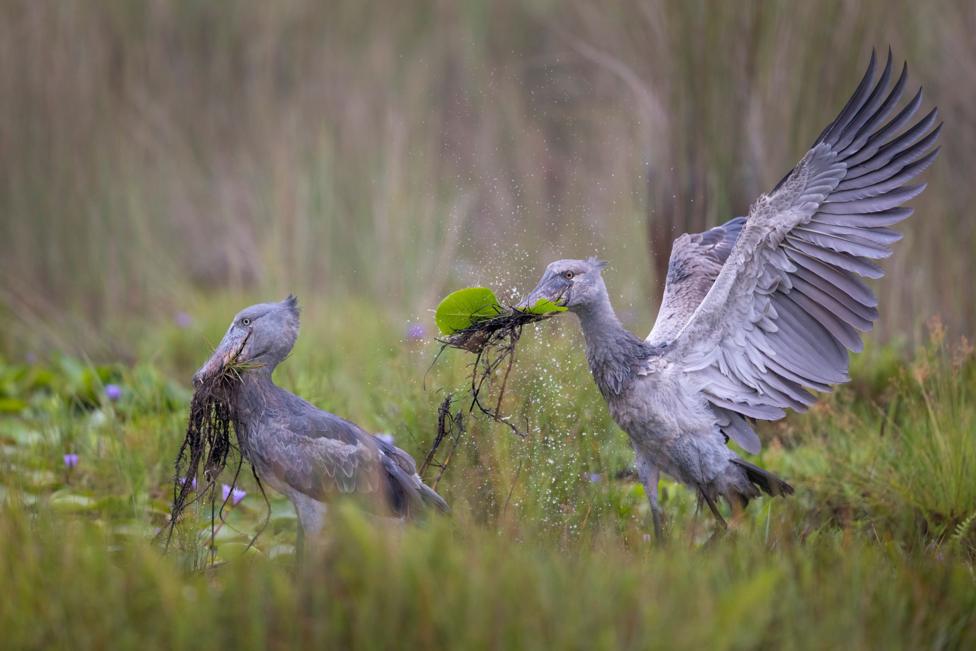
In Mabamba Swamp, Uganda, photographer Isak Pretorius captured two shoebill storks—likely a breeding pair—collecting nesting material while canoeing with a guide. Fewer than 5,300 mature shoebill storks are estimated to remain in the wild, making such sightings exceptionally rare. Despite their name, shoebill storks are actually more closely related to pelicans, herons and ibises than to true storks.
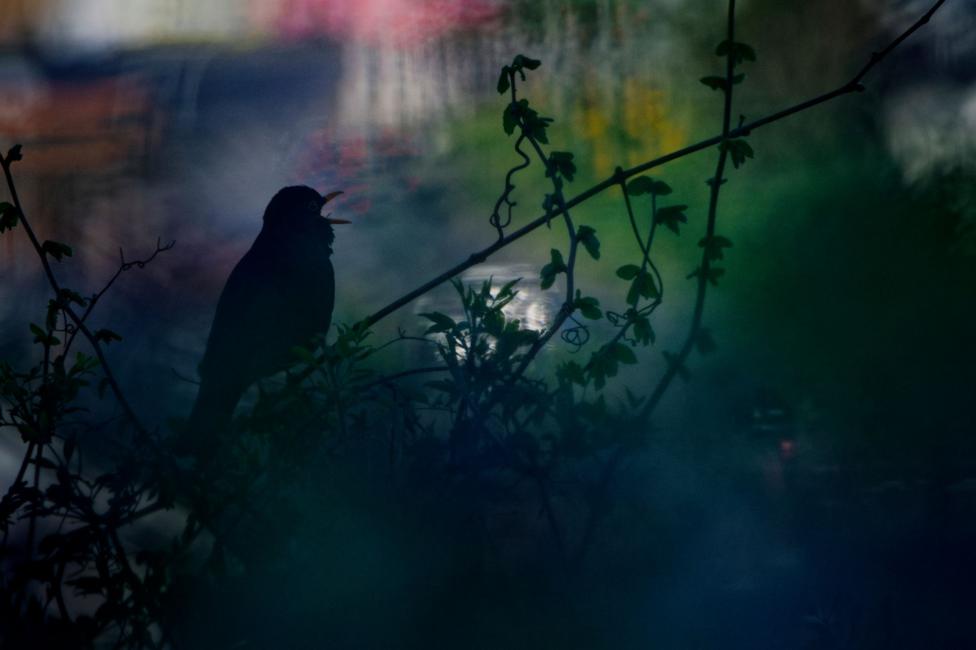
Konrad Gräeter's photograph of a male blackbird singing at dawn in a Baden-Württemberg vineyard in Germany captures the bird at a moment of peak vocal complexity. Spring drives male blackbirds to seek high vantage points where they perform their most intricate songs in attempts to attract mates, and Gräeter timed his shot to coincide with the birds' most elaborate compositions.
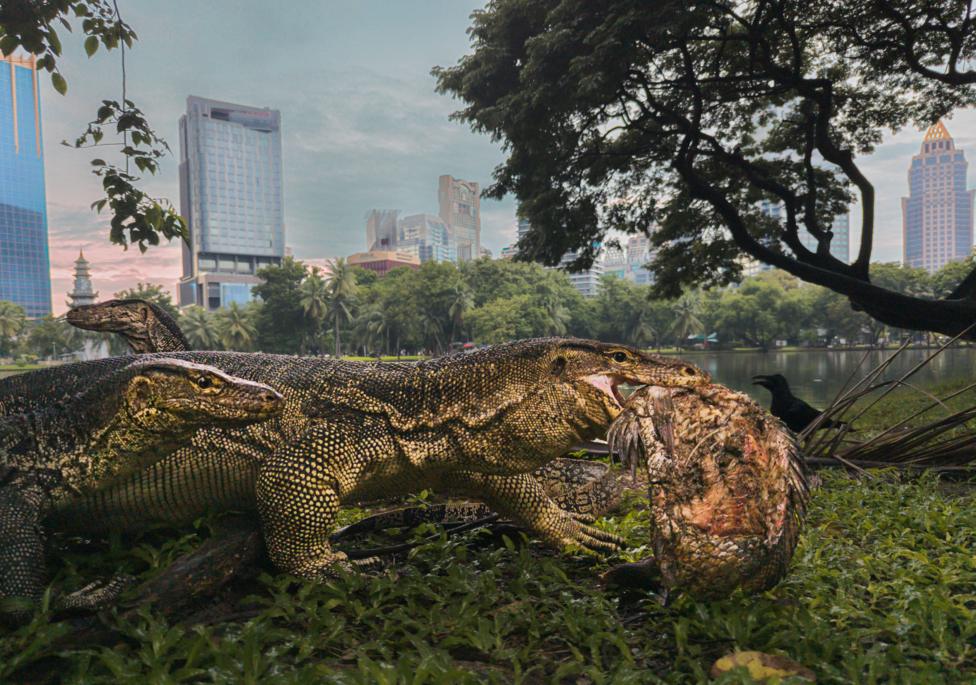
Seth Forestson documented urban wildlife adaptation in Lumphini Park, Bangkok, Thailand, lowering himself onto mud to photograph a common water lizard against the city skyline. These remarkably adaptable reptiles inhabit cities across South and South East Asia, consuming whatever food sources are available, including catfish and koi from urban waterways.
Scientific Discovery Through Photography
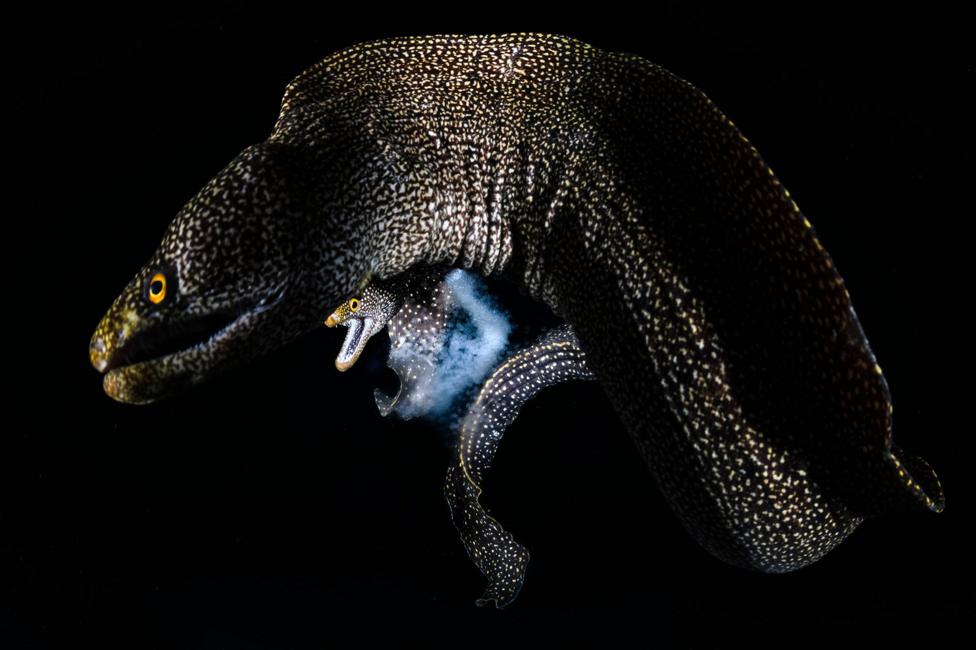
Tony Wu's photograph of Abbott's moray eels represents a significant scientific achievement. The image documents what is probably the first photographic record of the courtship ritual of this species, captured in Kagoshima Prefecture on Kyūshū, Japan. Wu collaborated with biologists and employed dim red light alongside a customised fisheye lens to minimise disturbance to the animals during their intimate behaviour.
Urban Wildlife and Conservation Challenges
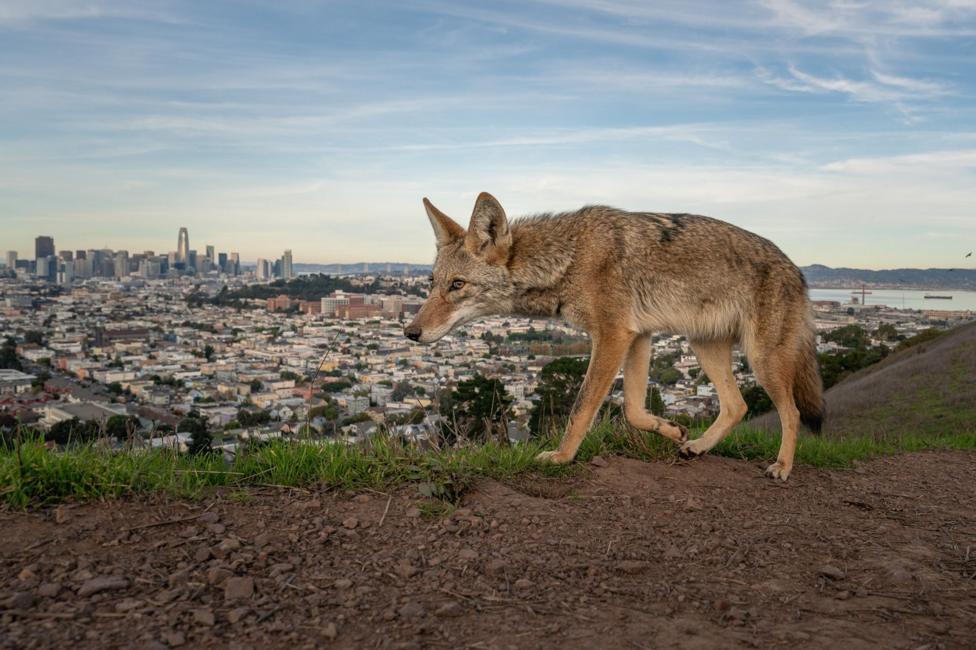
According to National Geographic, American photographer Loren Elliott won the Photojournalist Story Award for documenting coyotes in San Francisco. The city is estimated to be home to approximately 100 coyotes living alongside a large human population. While these animals can prey on domestic pets, they also provide ecological benefits by controlling disease-carrying rodents. Public attitudes towards coyotes remain mixed, reflecting the complex relationship between urban expansion and wildlife conservation.
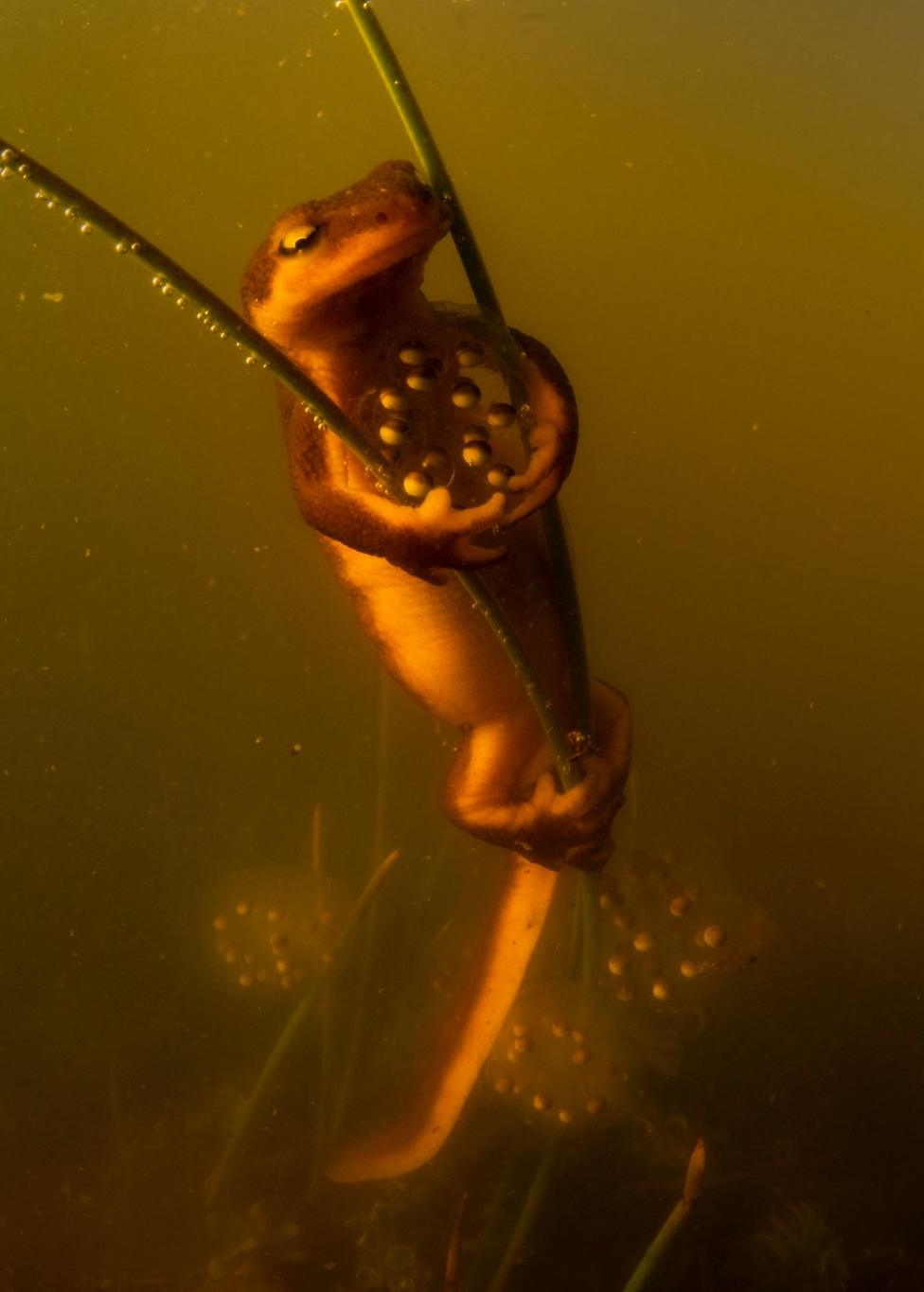
Anton Sorokin captured a California newt laying eggs in Contra Costa County, California, by submerging his camera and lights in a murky pond to document this vulnerable moment in the amphibian's reproductive cycle.
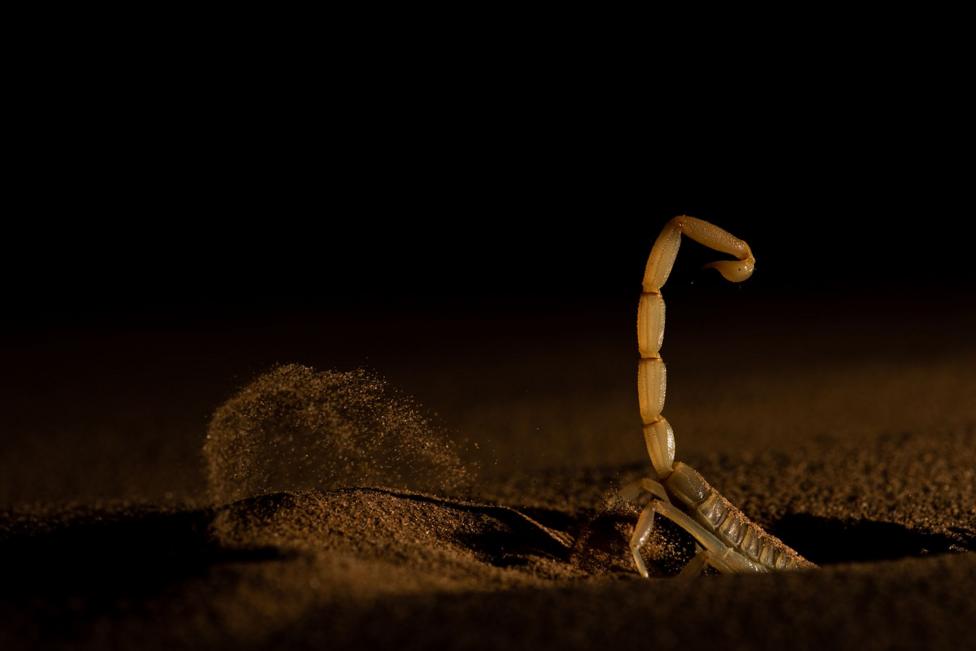
In India's Thar Desert, photographer Sitaram Raul documented a scorpion burrowing into shifting dunes. While exploring the dunes at night, Raul observed numerous scorpions hunting for prey, but as temperatures rose after sunrise, the scorpion dug into the sand to escape the intense heat—a behavioural adaptation captured in the Behaviour: Invertebrates category.
Marine and Aquatic Ecosystems
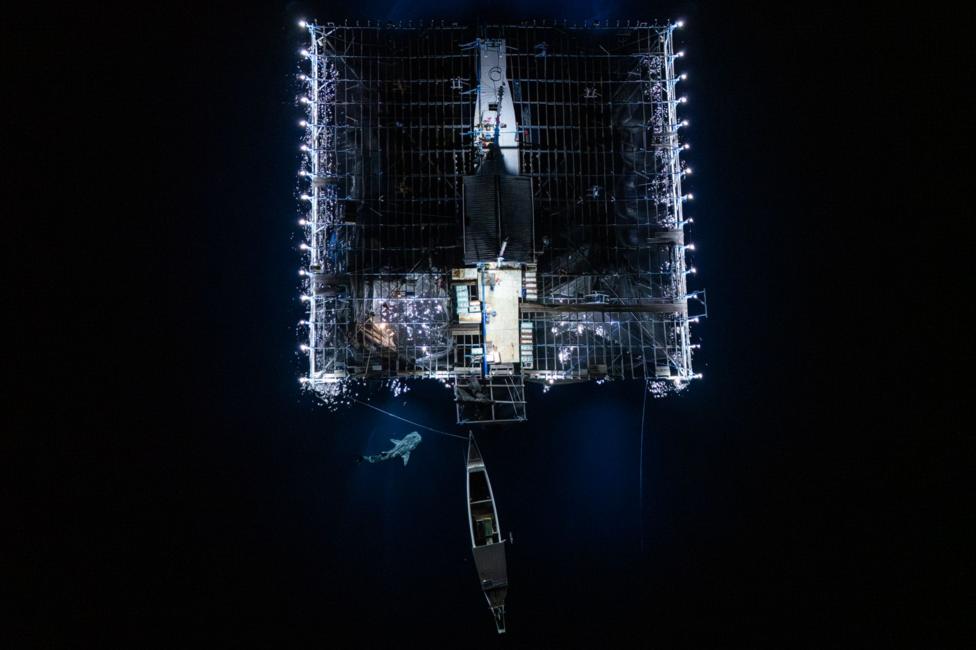
Alex Lindbloom's photograph in the Oceans: The Bigger Picture category shows a whale shark investigating the catch of a mobile net-fishing platform known as a bagan, located off Cenderawasih Bay in Papua, Indonesia. Lindbloom searched for sharks around dawn, using the bagan's bright lights to illuminate subjects when natural light proved insufficient for his drone photography.
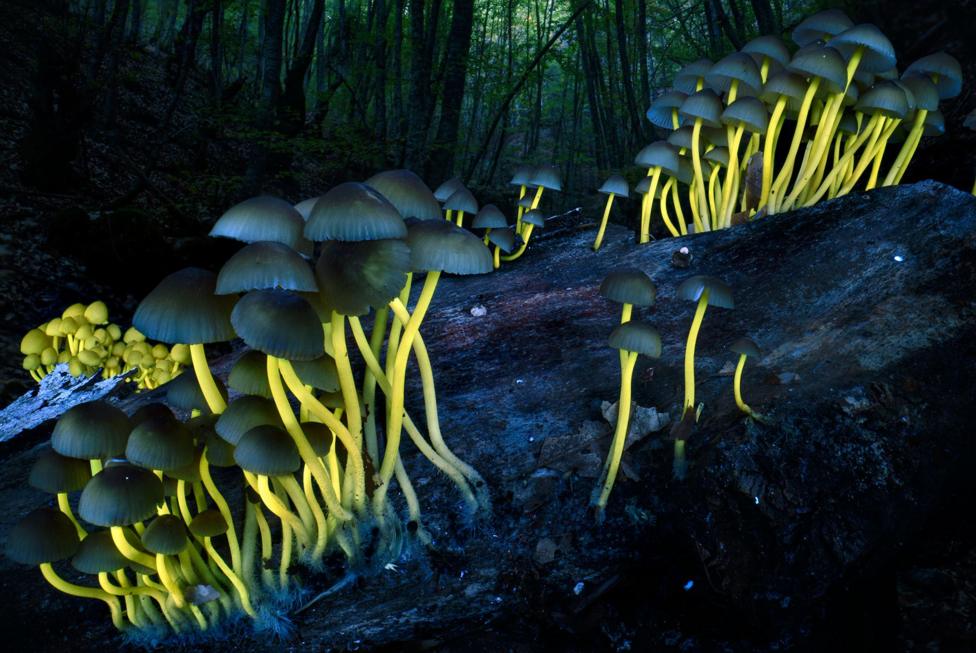
Agorastos Papatsanis employed ultraviolet light to reveal the intricate beauty of mushrooms known as "beautiful bonnets" growing from a decaying log on the lower slopes of Mount Olympus in Litochoro, Pieria, Greece. The technique transforms the fungi into luminous subjects that would otherwise remain invisible to the human eye.
Macro Photography and Hidden Worlds
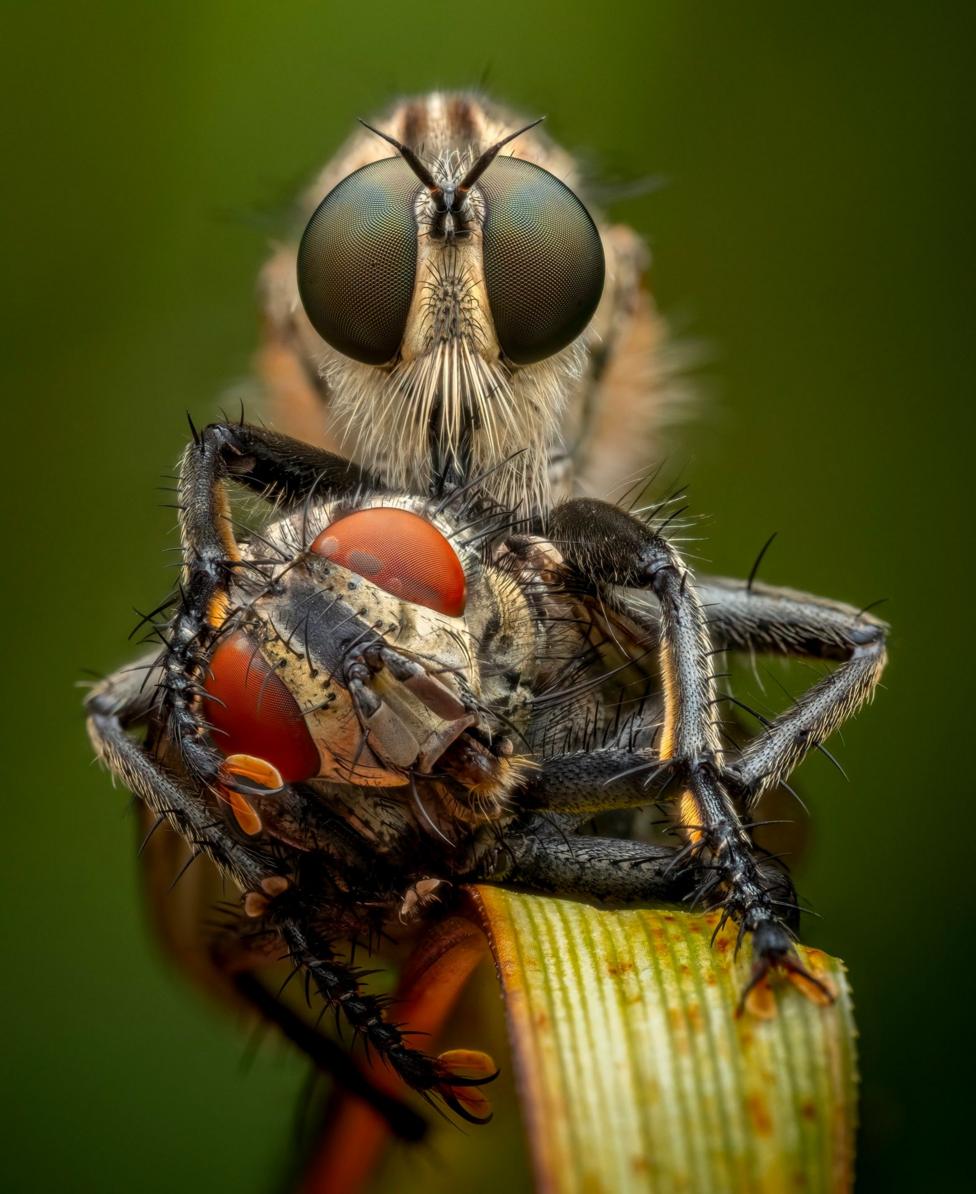
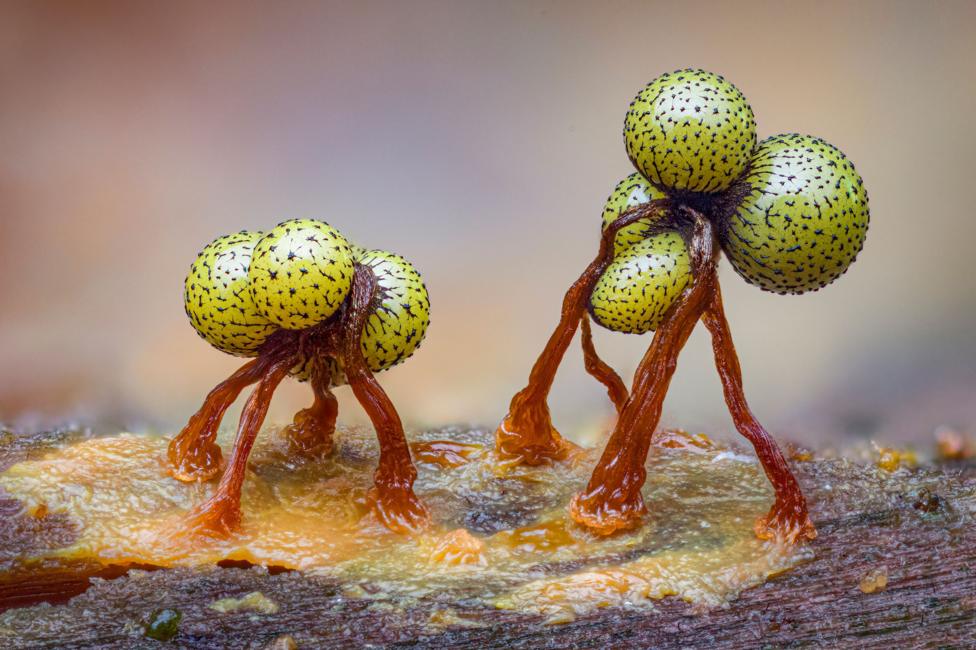
Alexis Tinker-Tsavalas uses macro photography to reveal the intricate details of tiny animals that are easily overlooked, particularly in urban habitats. His passion for macro photography developed during the Covid-19 lockdowns, when restrictions confined him to habitats near his home in Berlin. According to the Independent, Kutub Uddin was recognised for a portfolio depicting slime moulds in woodlands in West Sussex, organisms that can be barely visible to the naked eye with fruiting structures measuring just one to two millimetres in height.
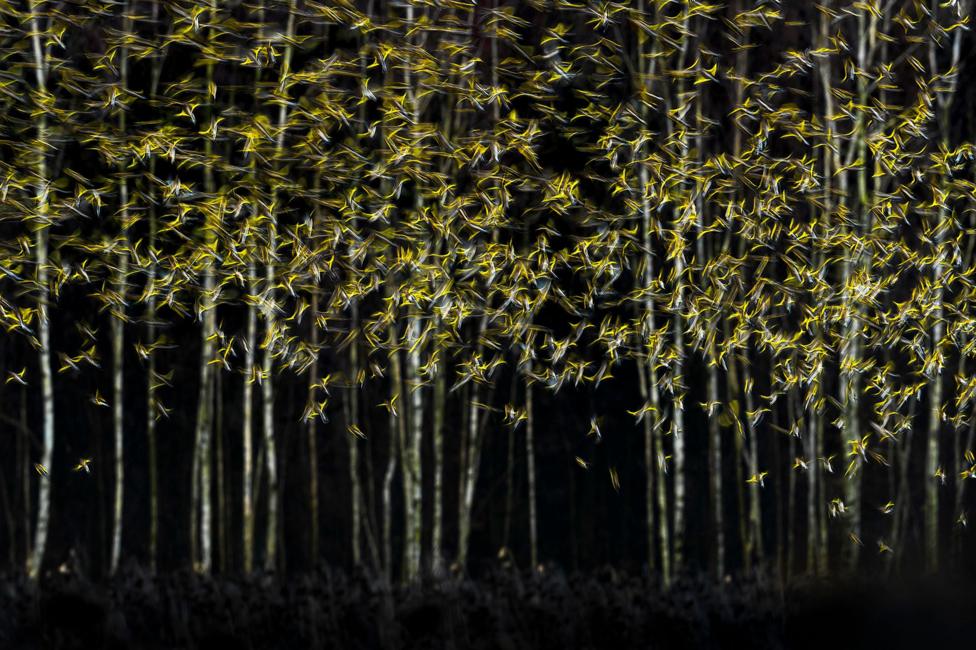
Michał Michalski employed a slow shutter speed to photograph birds flying across a background of leafless birch trees. A field of unharvested sunflowers had attracted mixed flocks of birds, particularly goldfinches and bramblings, before a sparrowhawk startled them into the air, creating golden streaks of motion across the frame.
Environmental Impact and Conservation
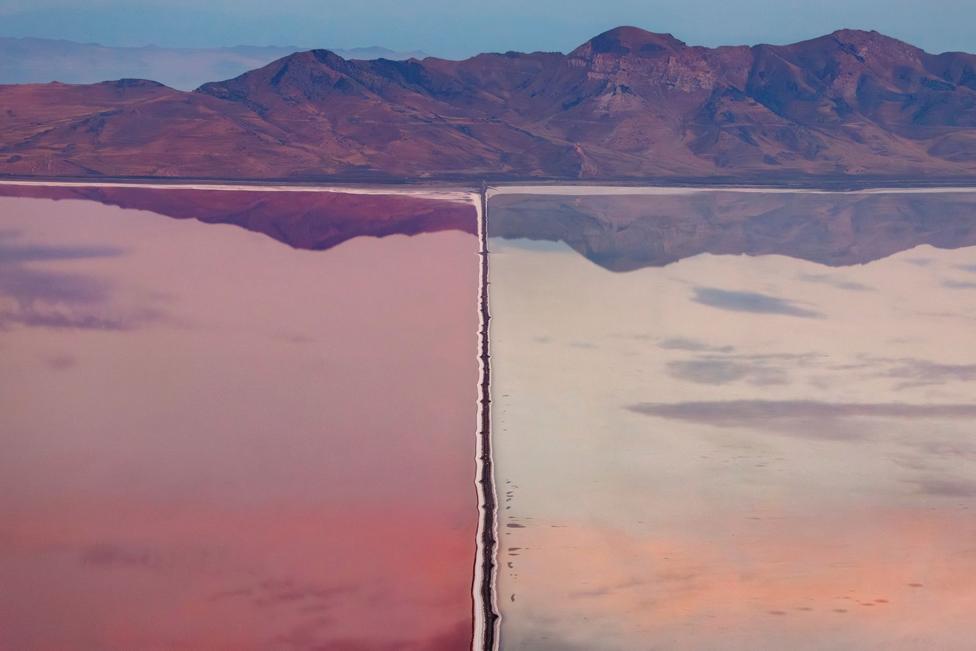
Alex Visbal's photograph in the Wetlands: The Bigger Picture category documents how a single engineered line can fundamentally reshape an entire wetland ecosystem. Taken at Stansbury Bay on the Great Salt Lake in Utah, the image is part of a long-term project examining industrial impact on waterways. The striking pink coloration visible in the photograph results from microbes thriving in extremely salty water after the area was cut off from fresh water sources.
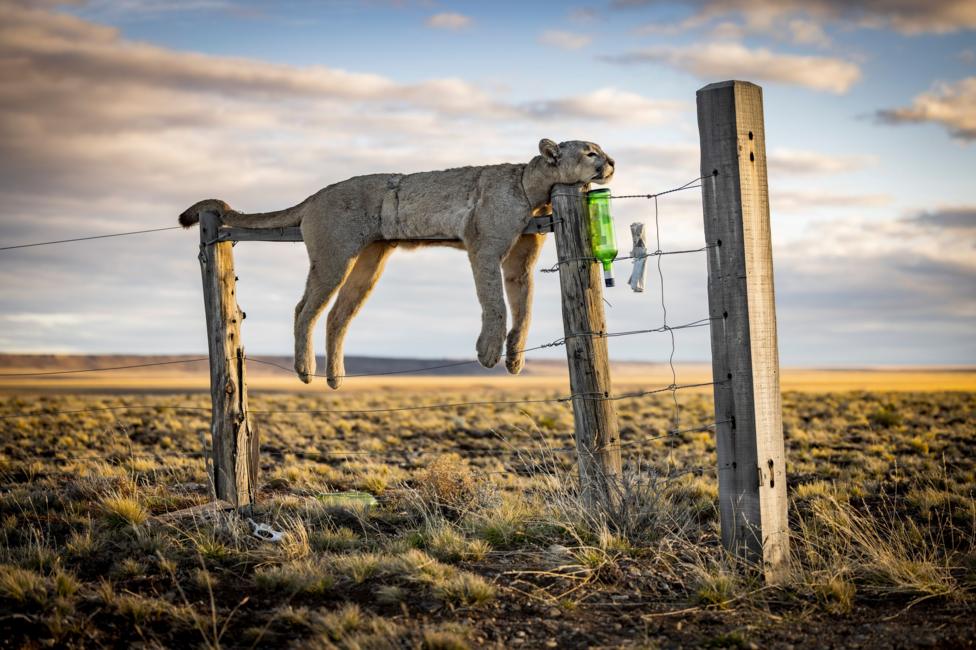
Francisco Negroni's image from Route 40 in Santa Cruz Province, Argentine Patagonia, records a dead puma displayed as a hunting trophy. Although Santa Cruz banned puma hunting in 2025, illegal persecution of the species continues, highlighting the ongoing tension between conservation efforts and traditional practices in the region.
Kutub Uddin's portfolio explores the miniature world of slime moulds, revealing delicate fruiting structures that rise from dark surfaces on slender stalks, with fine thread-like extensions creating intricate forms barely visible to the unaided eye.
Exhibition and Future Access
The annual exhibition of award-winning photographs opens at the Natural History Museum on 16 October 2026 and runs until 11 July 2027, allowing the public extended opportunity to view these remarkable images. The exhibition will feature 100 awarded photographs selected from the record-breaking entry pool, offering visitors an immersive experience of global wildlife photography at its finest.
Key Facts
- The 2026 competition received 65,403 entries from 121 countries and territories, a record for the event
- The competition is in its 62nd year, demonstrating nearly six decades of commitment to wildlife photography and conservation
- The exhibition runs for nine months, from 16 October 2026 to 11 July 2027 at the Natural History Museum
- Young photographers continue to achieve recognition, with Oscar Whitfield winning the 11 to 14 Years category at an age when professional equipment and travel opportunities are often limited
- The competition showcases both artistic achievement and scientific discovery, including the first documented photograph of Abbott's moray eel courtship behaviour