Online mult changed the trajectory of games, but the cost of keeping servers running means every virtual world is doomed to die – sooner or later. That reality came into focus for players of Halo 3 on the night of 13 January 2022, when they gathered online to mourn the game and, if possible, delay its shutdown for a little longer.
Nevan Hagarty had an idea. If he and other players stayed online through the night, they could delay the impending server shutdown. Players knew this was coming: it had happened to Halo 2 when its Xbox Live servers were turned off in 2010, and a group managed to stay logged into the mult servers.
So players gathered online before the shutdown to pay homage and mourn the game they loved so dearly. And, maybe, to keep it online for a little longer. “I must have played ’til about 4am the night of the shutdown, trading stories with so many players about their love of the game and their experiences over the last 15 years,” says Hagarty, 22. “It was a really wholesome experience I won’t forget.”
There was a sense of mourning both spoken and unspoken. Thirty-year-old fan Jimi hadn’t played Halo 3 in a while but logged on to the game on shutdown day to experience the original servers once more, later posting a video on.
“My team was losing really bad,” he says, “I saw a few of the other team’s people standing in the middle, and our guy standing in the middle, and everybody’s just looking at each other. I shot up once in the air, and then everybody just starts going crazy.”
“I shot up once in the air, and then everybody just starts going crazy.”
Someone threw a shield down, others threw grenades in the air and launched rockets. It looked almost like fireworks. “There were no people on the voice chat. There wasn’t any mutual agreement on this. Everybody just felt it and knew.”
Online mult changed video games in the late 90s by allowing players from across the globe to interact with people they’d never otherwise meet. That shift changed the trajectory of games, bringing people together in ways games had not before – to play, and to mourn, when their virtual worlds are doomed to die.
Why do players grieve server shutdowns?
Games go offline all the time, and people have got used to saying goodbye to their favourites. The increasing popularity of online-only live service games means more reliance on servers to host these experiences, and those servers cost money to run and maintain. In the case of recent flop, developer Wildlight Entertainment couldn’t afford to keep the game online for more than a few months. have shut off their servers already in 2026.
“People really hold on to the idea of place,” says UX and games researcher Evan Conaway, who holds a PhD in anthropology. “That we create community online at all is really remarkable. When you find it and you have it and it’s real, you have an emotional connection to it. Wanting to hold on to it is only human.”
Conaway says this happens a lot in the real world, when the corner bar shutters or a local skatepark is torn down. His research delved into the ways people commemorate online spaces, with a focus on the massively mult online role-playing game World of Warcraft (WoW). People play together on separate servers – or instances – which all run contained copies of WoW, and each server has its own culture created by the community. When the game changes, the culture can change, too. WoW has persisted for decades, and the game is no longer the same as it was when it was released – it’s hardly the same game it was just a few years ago.

Though people still have access to WoW, they are often “gradually mourning”, says Conaway. They know that this version of the game is ephemeral. It won’t stay the same – it can’t, by design. In exchange for new content, players must accept that the spaces they inhabit online will find new forms.
“The quests are different, the way things are worded is different,” he says. “The way I felt while playing it, and wandering around by myself or exploring the world, all of that is part of this meaning-making for people – just the raw experience of it.”
Part of Conaway’s research centred on a group of people who wanted to literally hold on to those memories and meanings. When Blizzard Entertainment was changing its servers in 2011, it auctioned off the old server blades with displaying which server they held. It was important for some players, he says, to have a physical representation of that moment in time. He points to one server in particular, Proudmoore, which was an unofficial queer server: “For a gay person or queer person who was playing World of Warcraft at that time on that server, it does feel a little bit like a skatepark brick, like they can take home a piece of a thing.”
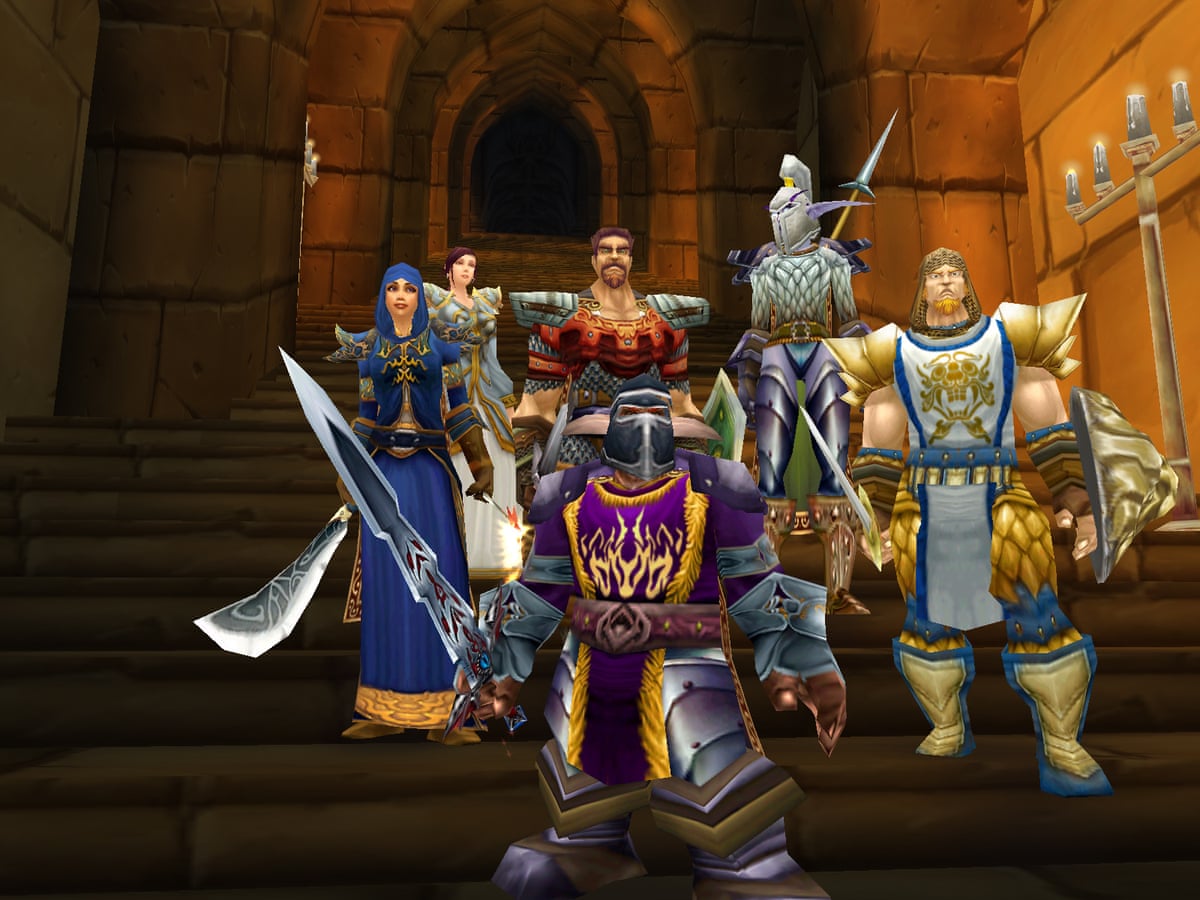
When World of Warcraft players in China were faced with server shutdowns in, they were at the mercy of both Blizzard Entertainment and its Chinese partner NetEase. must be published with a local company, so when Blizzard Entertainment and NetEase had a dispute, it hit the players. Millions lost not just the server but the whole game, and there was no date set for its return. It could have been months, years. Maybe never.
Naturally, players wanted to gather in their servers on the day of the shutdown, 24 January 2023, to pay their respects. To do so, people started preparing – and logging in – days in advance, according to City University of Hong Kong PhD student and games researcher HongLan Xu, who joined them to document the last days.
“I encountered hundreds of players, but there are millions,” says Xu. “Everybody thought it could be at least several years. They don’t know when the server will be back. It’s profound. It’s real. The shutdown is very real for them, so they gathered in the game to say farewell to their avatars, like it’s the last time.”
Chinese players’ grief was mixed with anger, too, says Xu. Many in the Chinese market felt disrespected, as if Blizzard Entertainment didn’t care about them.
“From a Chinese player’s perspective, the main takeaway is sometimes the capitalism of the western gaming companies [leads to] distrust.”
WoW opened back up to Chinese players in August 2024. Returning players were glad to have it back, of course, but there was an unease underneath that excitement. This could happen again; they knew what it felt like to lose it all.
“Virtual life attachment and this sense of loss is deep, profound,” says Xu. “It can be completely vulnerable and very uncertain.”
Losing your forever-game is a uniquely sad experience. Players make a very real investment into these spaces – time, money, friendships, stories, characters, creativity. As one player said:
“What gets me is that people poured themselves into these games. Not just cash, but actual time, actual friendships built inside them, characters they spent months on. And then one day a studio decides the numbers don’t work any more and everything just disappears.”
Key Facts
- Halo 3 players gathered online on the night of 13 January 2022 as servers faced shutdown.
- Neven Hagarty, 22, stayed online until about 4am trading stories with other players.
- World of Warcraft players in China faced shutdowns in 2023 after a dispute between Blizzard Entertainment and NetEase.
- WoW reopened to Chinese players in August 2024.
- UX and games researcher Evan Conaway and PhD student HongLan Xu described the emotional impact of losing online game spaces.