Josh Baker, the journalist behind the acclaimed podcast series I'm Not a Monster, has returned with his most ambitious investigation yet—an examination of Austin Tice, a former US marine and freelance foreign correspondent who vanished in Syria in 2012. Should Tice still be alive, he would rank as the world's second-longest detained journalist. According to reporting from a major public broadcaster, the investigation spans reporting across the United States, Europe and the Middle East, with a nine-part audio series launching in September 2026.
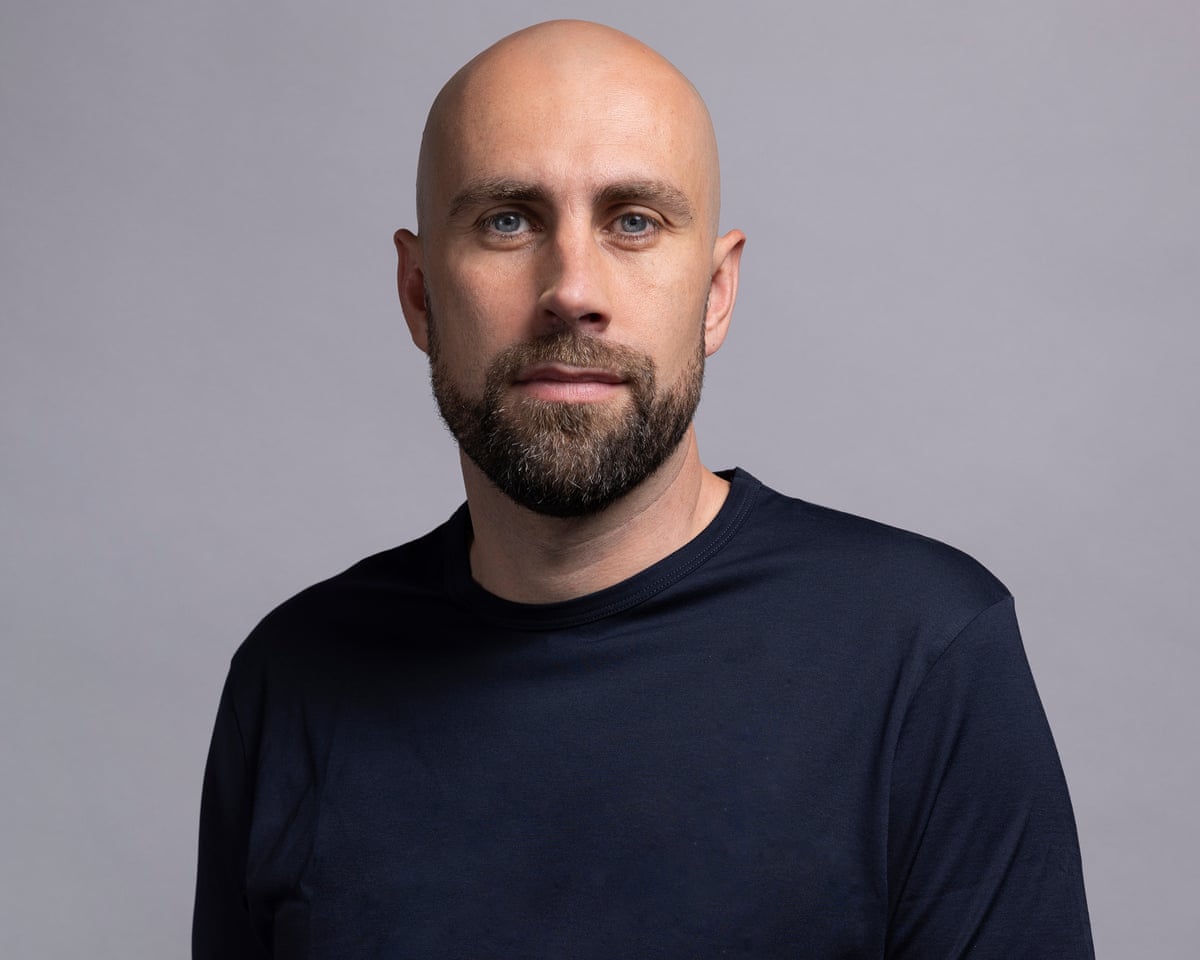
Speaking from Wales, Baker describes the investigation as far more complex than a straightforward missing-person case.
We thought we were looking for a missing person, and what we fell into was almost like a Bourne novel, utterly extraordinary. A world of espionage, spies, dictatorship.The story encompasses American exceptionalism and offers insight into Syria's civil war over the past 14 years.
I don't mean this in a crass way, but through Austin's story, we also learn a lot about the last 14 years of the civil war in Syria. We really go inside the regime's industrial complex of disappearance and torture. As episode two begins, Assad is gone, and we enter into these facilities.
The hunt for those responsible for Tice's disappearance and the search for perpetrators of Syrian atrocities have become inseparable. Baker notes that his decade-long work with intelligence agencies has yielded unprecedented cooperation on this case.
A lot of my work for the last decade has involved intelligence and espionage and dealing with intelligence agencies, and I have never received so many leaks from so many different places as I have with Austin Tice – from every direction imaginable. It is absolutely extraordinary.
How did Baker become a war correspondent?
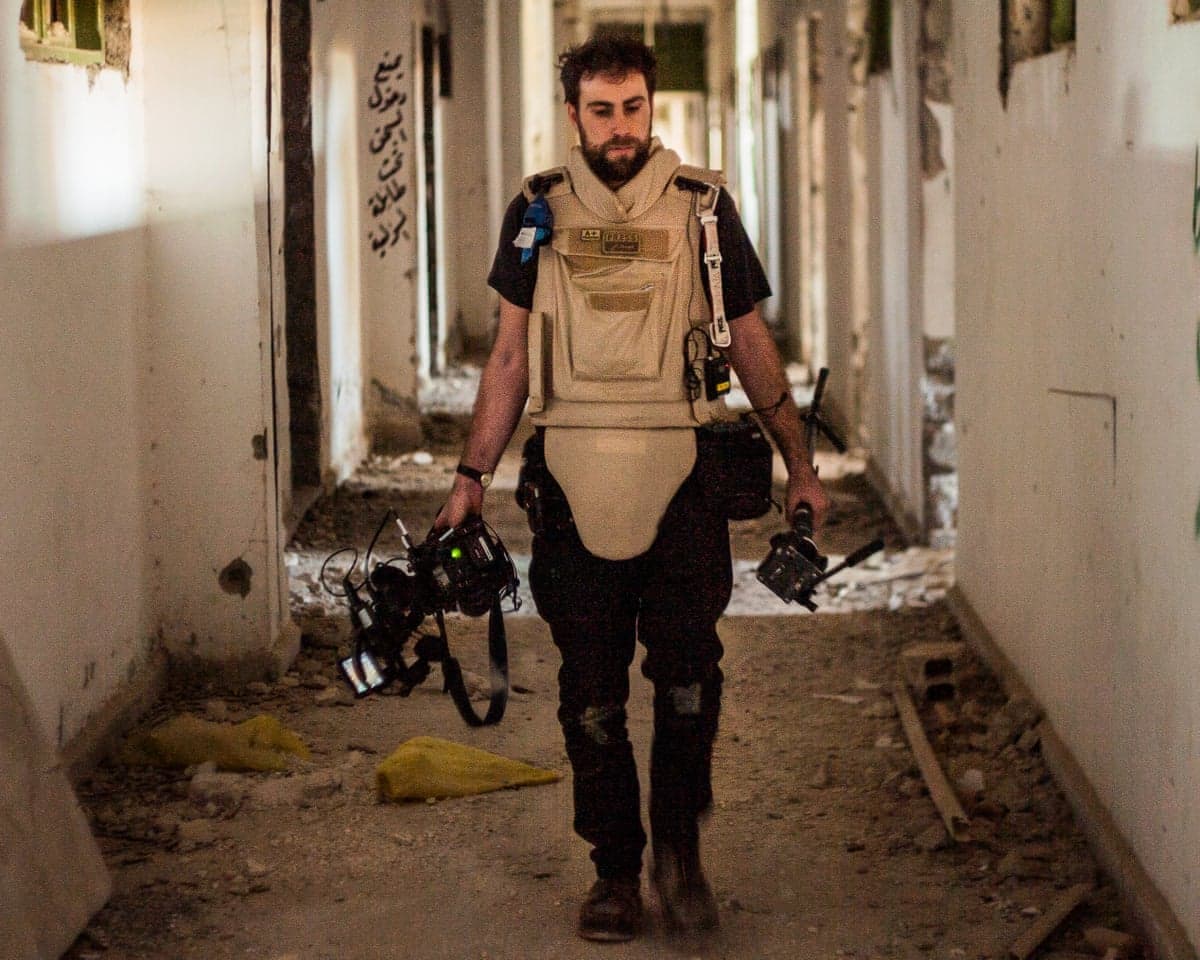
Now 37, Baker began his career as a night editor on the foreign desk of the Times, covering the Serbian refugee crisis and Middle Eastern conflicts. By the mid-2010s, he was directing a documentary about the battle for Iraq, embedded with Iraqi special forces.
The story of the day was that the coalition forces were defeating Isis, were kicking their ass basically. And the reality was quite different.While reporting from central Mosul, Baker found himself surrounded by explosions and gunfire. He recalls the distinct acoustic signature of different weapons:
without wanting to sound like a war bro, it was all going one way and it was all American weaponry. The sound is different when it's Isis.
What he failed to hear until catastrophe struck was a massive articulated lorry manoeuvring down the street with a car bomb.
I know this bit because Isis, the bastards, were filming from a drone. It detonated right outside our house and I was buried in the collapsing building, and broke my back.This near-fatal experience became the catalyst for his most significant investigations.
What led to the investigation of Sam's story?
While recovering in England following his evacuation, a source contacted Baker with extraordinary material.
He's now almost like a friend, but a source like that always has an agenda.The source provided a home video from inside Raqqa, then the Islamic State capital, showing a young American boy named Matthew being forced to assemble a suicide bomb.
This wasn't a propaganda video, it was a home video.
Matthew was the eldest son of Sam, an American woman who had disappeared into the caliphate with her young children when her husband became a sniper. Baker, still in a fragile mental state, became determined to locate the boy.
I was obviously in a mental state, having just walked out of something by the skin of my teeth. But I thought: 'I'm gonna find this kid,' which sounds incredibly idealistic, but seven months later, I did.This pursuit became the subject of the first season of I'm Not a Monster, which Baker describes as an extraordinary piece of journalism.
How did the Shamima Begum investigation develop?
The second season of I'm Not a Monster emerged from the same suicide bombing incident. A Dutch woman who had been in Mosul at the time later privately messaged Baker on Twitter, revealing she was in the same refugee camp as Shamima Begum and her children—all three of whom have since died. Baker was already familiar with Begum's case, having worked as an assistant producer on a previous project and been inside her east London mosque on the day she and her school friends disappeared in 2015.


Baker's new source provided rich detail about conditions in Syria for these girls and young women: the deprivation, violence, forced marriage, and constant danger. After extensive research in Turkey, Baker uncovered Canadian intelligence's role in facilitating Begum's border crossing—a revelation he views as evidence supporting her status as a victim rather than a terrorist.
Had it been an action of British intelligence, he says, he'd never have been able to prove it, because of the tradecraft. Whereas if you look at some of the American or Canadian, or even some European agencies, the tradecraft doesn't seem to be there in the same way.
The Dutch woman was eventually repatriated to the Netherlands, where her prison sentence was overturned on grounds of grooming and abuse by her husband. Baker emphasises the broader context:
Tens of thousands of people from potentially as many as 100 nations were convinced to go to Isis. They had a highly effective campaign. Which isn't to say that someone who's been with Isis isn't a threat, but you will struggle to find a security expert who'll say that our current strategy is making us safer.The documentary generated substantial death threats, touching on terrorism, foreign policy, British identity, and government transparency.
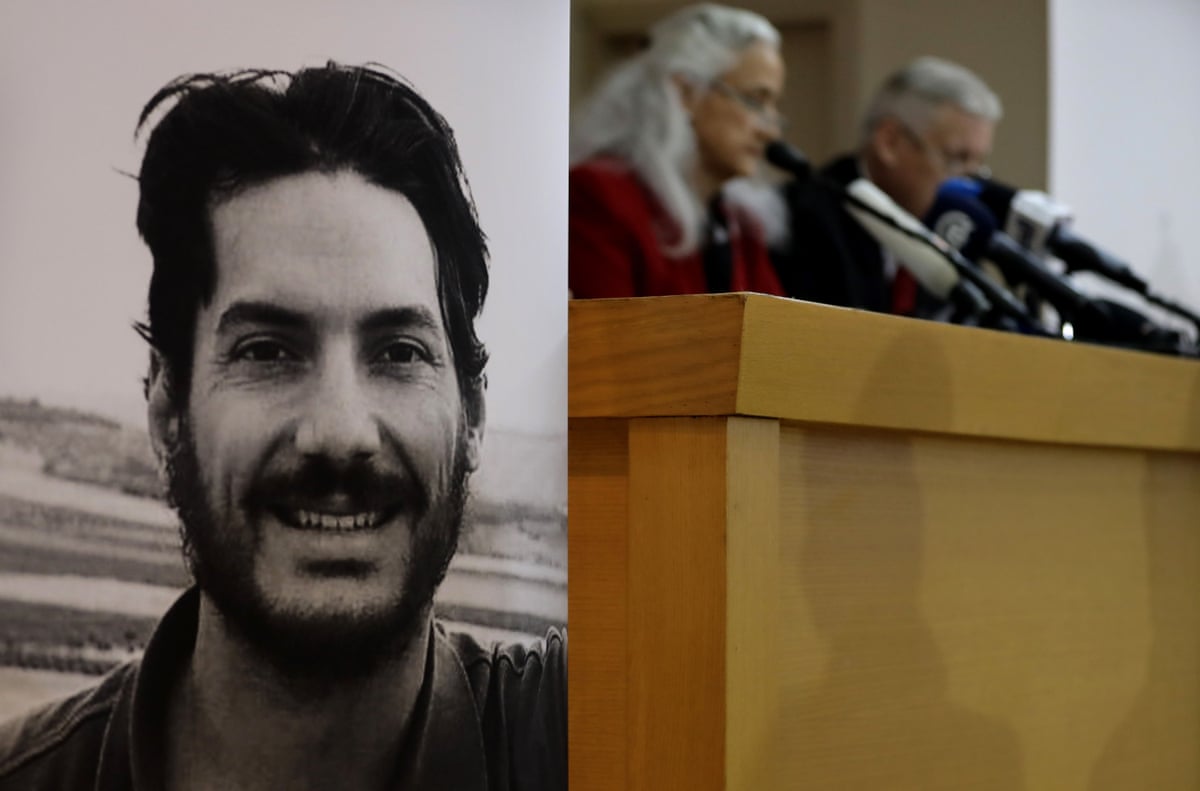
What makes the Austin Tice investigation different?
Baker's access to intelligence sources differs markedly between nations.
In Britain, when people say they have an intelligence source, they often mean they've spoken to a press officer. In America, and particularly in Washington, that world is much more accessible. You can meet intelligence officers or senior law enforcement at dinner parties or even in bars. And still, a great deal of what I'm told I either can't stand up or I'm told I can't use. I will say, though, that under the Trump administration, people have become much less inclined to speak.This access is evident in the Austin Tice podcast, which feels remarkably close to sources and maintains urgency despite the case being 14 years old.
Baker's motivation extends beyond solving Tice's disappearance.
Genuinely, our first mission was to try to get answers to Austin's mum. But also, I really want people to care about what happened in Syria, because it's obscene. Conservatively, 100,000 people have been disappeared. One of the reasons I left news is I got very tired of having to explain complex things in a matter-of-fact way. The privilege of doing this kind of narrative investigative journalism is that I can slow down and make you care about the people.
What personal connection does Baker feel to Tice's case?
When asked whether he identified with Tice as a young journalist in a war zone facing uncertain dangers, Baker redirects the question.
No, what I identified with was his mother. I remember seeing her do a press conference, nine or 10 years into his disappearance, and thinking about my own mum. I'm from a single-parent household – we're very close. I just thought, 'Jesus Christ, what an awful existence to have.'This empathy drives his determination to pursue answers.
Baker believes he has developed substantial insights into what may have happened to Tice, though definitive conclusions remain elusive.
He thinks he has emerged from this investigation with a pretty decent idea about what may have happened to Austin. Whether or not we could ever be definitive about it is a different thing.
What happens next?
The investigation represents Baker's third series for I'm Not a Monster. According to official announcements, the nine-part audio series is produced for , Radio 4 and World Service in collaboration with NPR's Embedded programme. Episode one became available on 8 September 2026, with weekly broadcasts commencing on 9 September 2026. The series includes episodes such as "A Black Box," in which Baker and colleague Obeidat report from Damascus following the regime's collapse, examining a list of possible detention sites.
The case itself remains unresolved. According to reporting from 2026, Tice's family believes he may be alive and may have been transferred from Syria to Iran, though that remains unverified. The US government previously stated it was certain Tice had been held by the Syrian government, making this investigation potentially crucial to understanding his fate and the broader story of disappearances in Syria.
Key Facts
- Austin Tice, a former US marine and freelance correspondent, disappeared in Syria in 2012 and would be the world's second-longest detained journalist if alive
- Baker's investigation spans reporting across the United States, Europe and the Middle East, with a nine-part audio series launching in September 2026
- Baker's previous investigations for I'm Not a Monster examined an American woman named Sam who disappeared into the Islamic State caliphate and the case of Shamima Begum
- A car bomb explosion in Mosul in 2015 left Baker with a broken back but also connected him to sources who provided crucial material for his investigations
- Baker emphasises that approximately 100,000 people have been disappeared in Syria, making the investigation part of a much larger story of atrocities