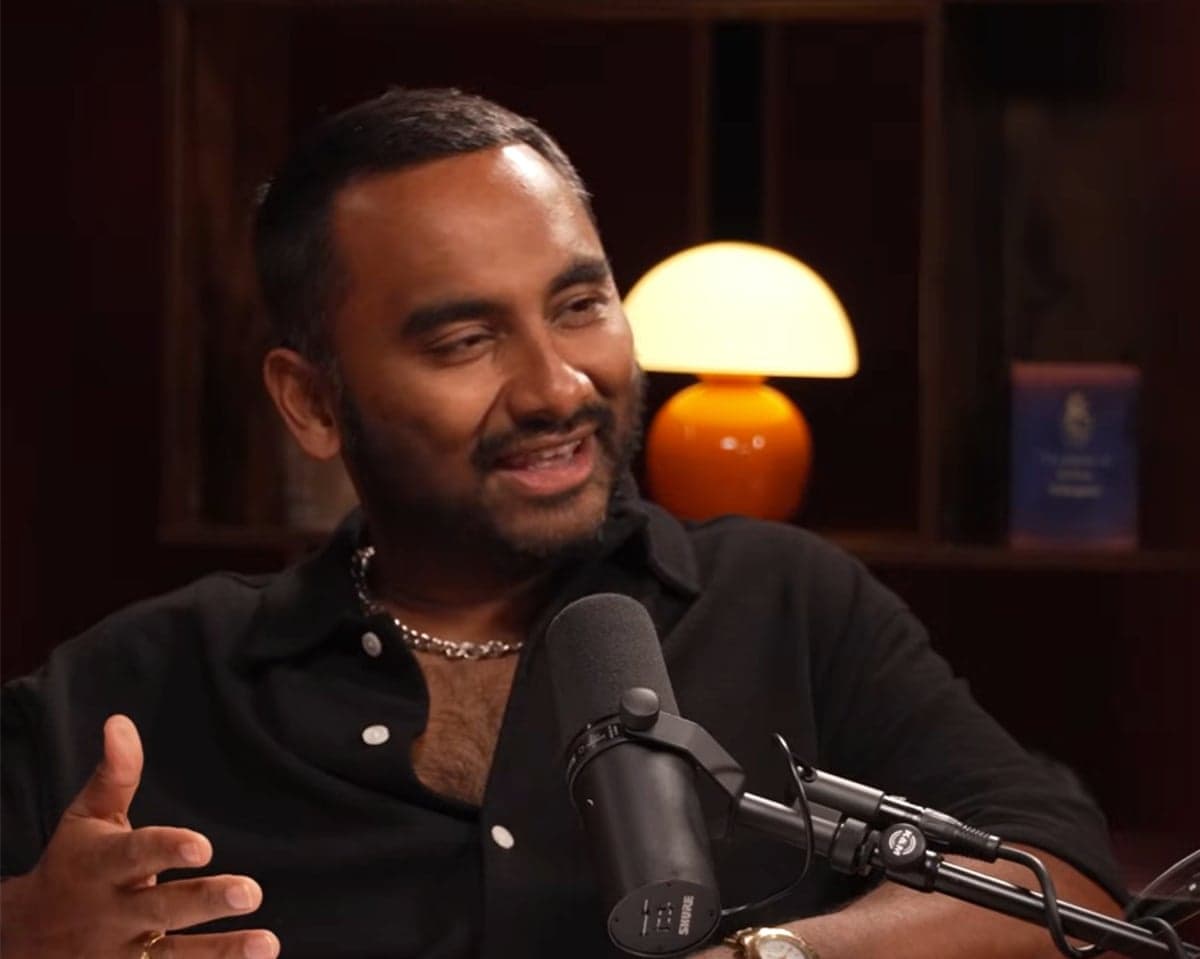
The broadcaster departs the BBC with unshakeable self-assurance, yet his inaugural YouTube venture with former England manager Gareth Southgate falls short of the radical reinvention his departure might have suggested. Instead, the show demonstrates a more cautious approach, with Rajan adopting a tone reminiscent of the tech entrepreneur archetype he has previously critiqued.
In promotional material for The Amol Rajan Connection, Rajan articulates an ambitious vision of contemporary upheaval. "We are about to get 100 years of change in a single decade," he declares. "And that's scary. But maybe I can help." Such grandiose framing sits uneasily with his track record: he was notably outlasted by Richard E Grant during his brief appearance on The Celebrity Traitors, a reality television competition that lasted merely one evening. Yet Rajan's confidence appears undiminished by this setback, remaining characteristically unwavering.
The show's visual identity draws from The Harder They Come, a Jamaican film depicting a rebellious protagonist whose defiance of institutional authority ends in violent death. The iconography suggests Rajan positions himself as an outsider challenging established power. This framing, however, sits uncomfortably with his actual trajectory. His progression from national newspaper editor through University Challenge and the Today programme demonstrates a consistent pattern of rapid ascension within Britain's most prestigious institutions. The project is being recorded at studios at Koko in Camden through a production and distribution partnership with Sister Group, which provides audience-data and community-building support. His corporate backing—two multinational technology firms, a major British bank, and an upmarket supermarket retailer—further undermines any claim to institutional outsider status. He previewed the venture through an appearance on former Conservative chancellor George Osborne's podcast, demonstrating that his networks remain firmly embedded within establishment circles.
Rajan's stated rationale for departing the BBC was revealing. In conversation with Osborne, he explained: "The BBC, and , is going to get smaller at an accelerating rate. And I want to go to where the action is." The question of what constitutes meaningful action in contemporary media remains unresolved. Long-form video podcasts featuring extended one-on-one conversations have become an increasingly saturated format. By contrast, his former role co-presenting Today on Radio 4 arguably represented a more influential platform for media commentary and cultural influence.
Since departing the broadcaster, Rajan has articulated certain grievances regarding BBC constraints, particularly around editorial freedom and the ability to express personal viewpoints. These criticisms initially surfaced in an article published in the Spectator, which notably included expressions of sympathy toward ideas advanced by Dominic Cummings. While Rajan undeniably possesses considerable communicative fluency, his rhetorical facility occasionally veers toward something less appealing. A certain tech-entrepreneur sensibility characterises his public persona—his conviction sometimes approaches the quasi-religious. Questions linger about whether he genuinely engages with expert perspectives or whether his interviewing style, honed through years in current affairs broadcasting, defaults to interruption and assertion.
Rajan's first guest offers a striking counterpoint to his own temperament. Southgate presents as deliberately understated, measured, and occasionally somewhat deliberate in his speech patterns. Rajan demonstrates clear awareness of the room's dynamics: like most observers, he radiates admiration and warmth toward the former England manager, allowing himself to be drawn into Southgate's unhurried, occasionally somnolent conversational rhythm. The resulting broadcast represents thoroughly conventional television.
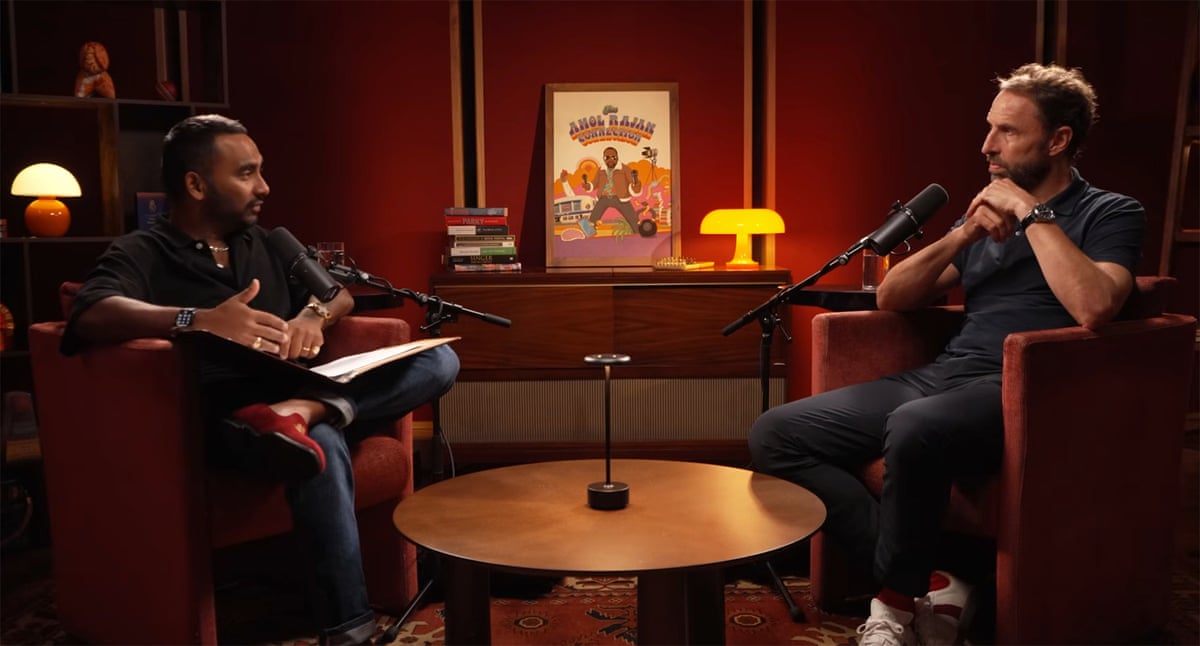
The first hour traverses familiar biographical territory at considerable length. Southgate's rejection by Southampton, his subsequent opportunity at Crystal Palace, his England captaincy, the infamous penalty miss, his managerial tenure at Middlesbrough—which ended in 2009—and his eventual return to the national team as manager all receive extended treatment. The narrative arc concludes with his recent England management period, during which he navigated both footballing objectives and unexpected cultural leadership responsibilities. The overall effect resembles a gently engaging, comforting narrative.
During the interview, Southgate expressed doubt about returning to Premier League management, suggesting his focus has shifted beyond club football. The conversation's second hour ventures into more contested terrain, examining FIFA governance structures, international football administration, and Southgate's recurring preoccupation: the psychological and social challenges confronting young men in contemporary Britain.
None of this material proves tedious in any straightforward sense. Much of the discussion engages substantively with meaningful subjects. Yet the overall impression lacks dynamism or genuine innovation. If this represents "where the action is," the episode provides limited evidence that the venture will deliver on its revolutionary promise.
Tone and thematic emphasis will inevitably shift according to subsequent guests—the version of Rajan presented here demonstrates considerably more reflectiveness than his public persona typically suggests, which constitutes a welcome development. At this initial stage, however, The Amol Rajan Connection opts for caution rather than experimentation. Perhaps future episodes will embody a more authentic response to contemporary volatility. For the present, this inaugural offering does not.
What happens next
The platform's stated plan includes daily explainers and twice-weekly interviews, with NatWest's partnership scheduled to run across multiple platforms over 12 months. The first episode, featuring Gareth Southgate, was released on 15 October 2026 across YouTube and major podcast platforms. The partnership will encompass podcast integrations and appearances across social channels and live events throughout the coming year.
Background: Rajan's departure from the BBC
Rajan's exit from the broadcaster followed his delivery of the Alternative MacTaggart Lecture at the Edinburgh Television Festival, during which he warned that the BBC faced financial "doom" without urgent reform of its funding model. His departure marks a significant shift in British broadcasting, as one of the corporation's most prominent editorial voices moves toward independent digital platforms.