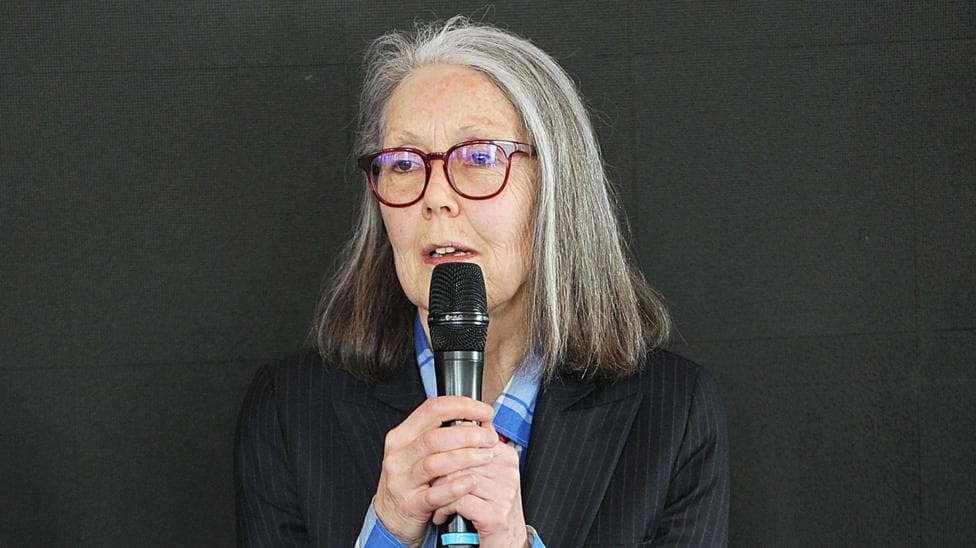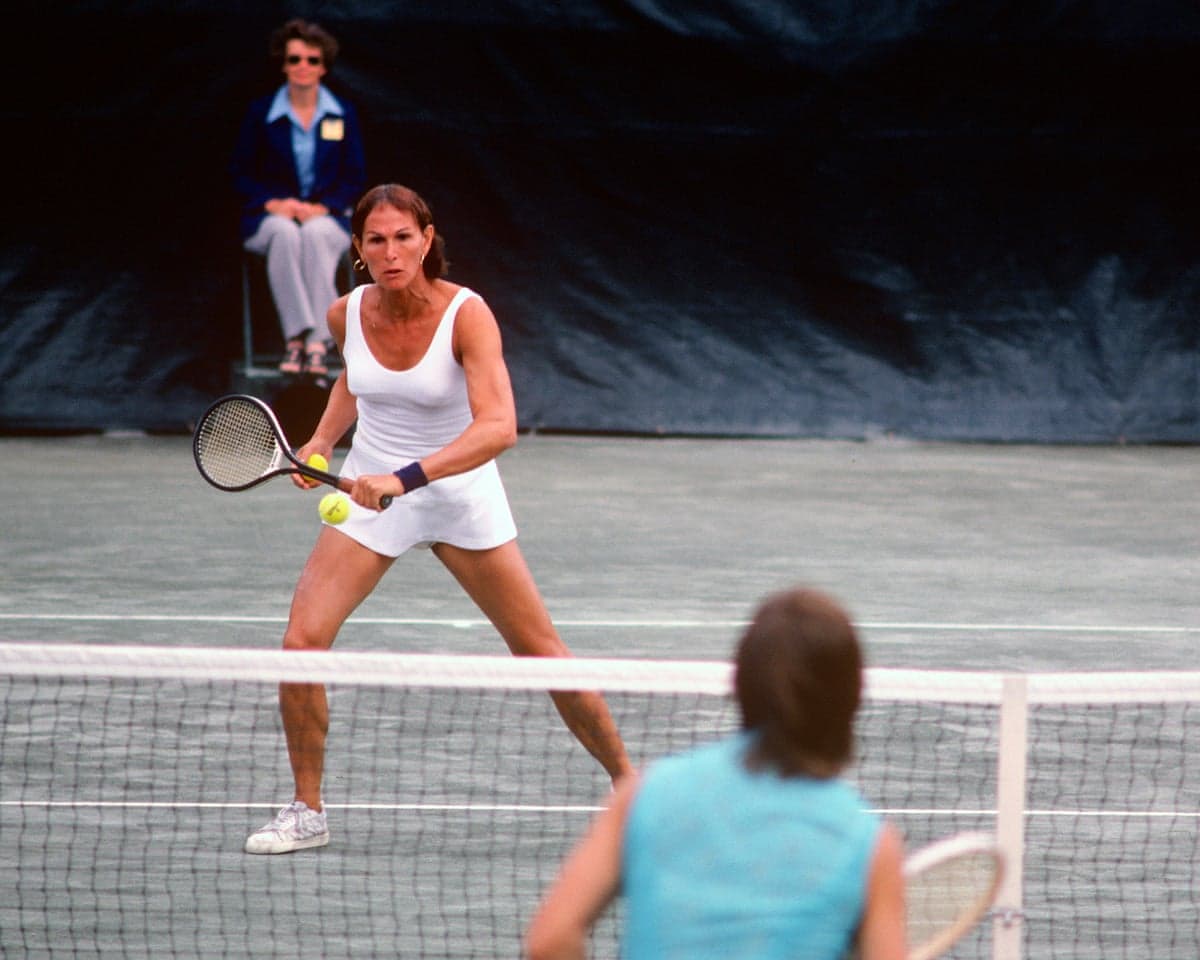
In 1977, Dr Renée Richards, an ophthalmologist who had transitioned and undergone sex reassignment surgery, sued for the right to compete in the women's draw of the US Open. The case became a watershed moment in sports history, yet decades later Richards would adopt a starkly different position on transgender athletes' participation in women's sports. A new biography by journalist Julie Kliegman examines this paradox and the pioneering but complicated legacy of a woman who fought for her own inclusion while now opposing it for others.
Richards turned to an unlikely ally for her legal battle: Roy Cohn, the infamous attorney known for prosecuting suspected communists during the McCarthy era and later representing Donald Trump. Cohn's firm successfully argued Richards's case in court, a victory that would become central to the narrative of Finding Renée Richards: The Groundbreaking Story of Tennis's Trans Pioneer, published by HarperOne on August 18, 2026.
For Kliegman, a sports journalist who identifies as trans and non-binary, researching Richards's story offered an opportunity to reexamine a half-century-old legal victory and what it meant—and did not mean—for transgender people seeking inclusion in sports and society. The author accessed Richards's multiple autobiographies, unpublished memoir transcripts, and conducted extensive interviews with Richards, now 92 years old, meeting her at various locations including the golf club where Richards regularly participates in ladies' day.
How did Richards's legal victory shape trans rights in sports?
The 1977 lawsuit was groundbreaking for Richards personally, but its legal impact proved limited.
The lawsuit was really significant. Obviously, clearly, it was very significant for Renée. But the decision was limited to her, as opposed to setting a precedent for trans people going forward.Kliegman explains. The ruling applied specifically to Richards rather than establishing broader protections for transgender athletes, a distinction that would have lasting consequences for how trans inclusion in sports evolved.
The path to that courtroom victory was fraught with hostility. When Richards entered a tournament in 1977, 25 of 32 players withdrew, while the WTA and USTA withdrew their support. Yet one figure proved instrumental in shifting the landscape: Billie Jean King. Though initially uncertain about the issue, King ultimately became Richards's most powerful advocate.
She took a little while to make up her mind. She was quiet on the issue for so many years, but I understand why … She ended up calling doctors, asking them questions. She was not super familiar with the concept of trans people at the time.Kliegman recounts. King met with Richards, consulted medical experts, and eventually submitted an affidavit backing Richards in her court case. She further demonstrated her support by playing doubles alongside Richards, a gesture that helped persuade much of the women's tennis establishment to accept her participation.
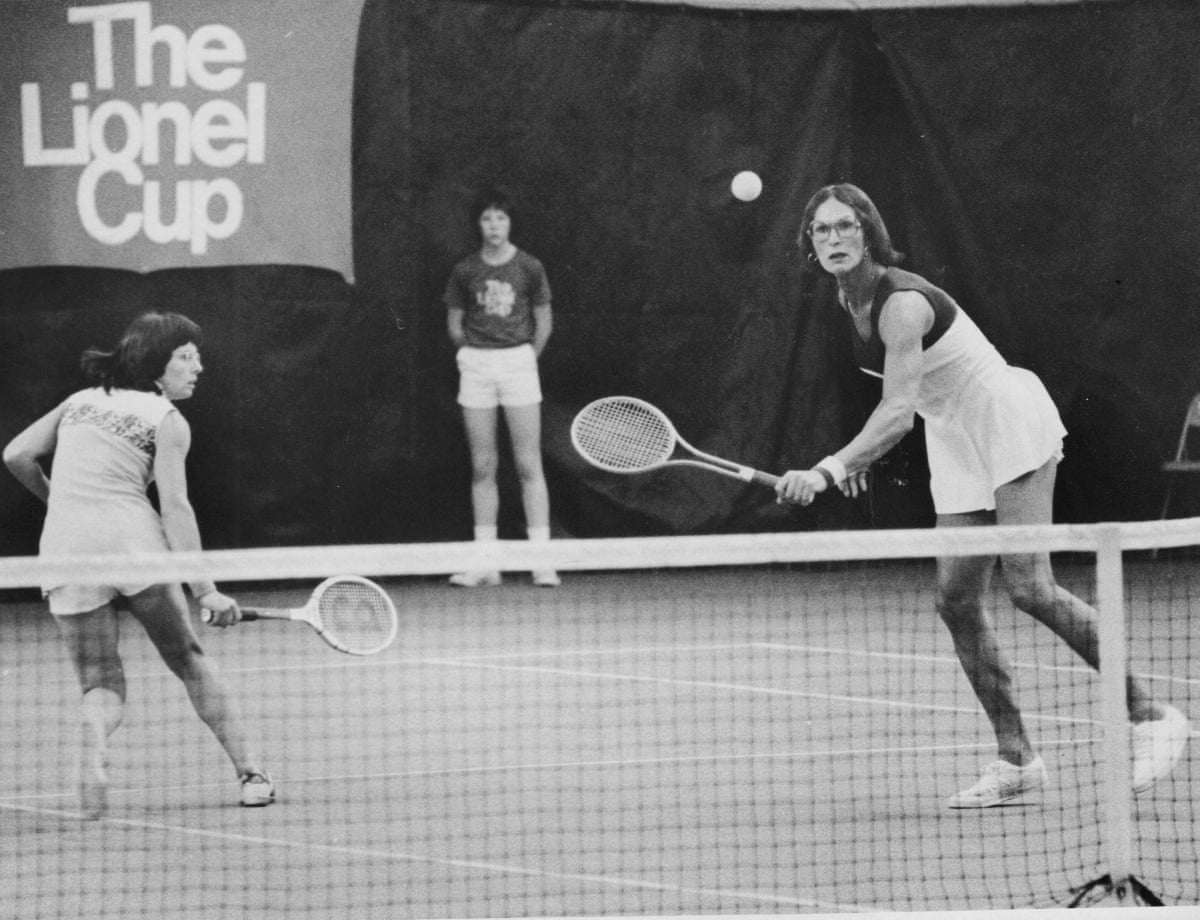
At the 1977 US Open, Richards competed in both singles and doubles. In singles, she lost in the first round to defending Wimbledon champion Virginia Wade. In doubles, she and partner Betty Ann Stuart advanced further, reaching the women's doubles final, where they lost to Martina Navratilova and Betty Stöve. Despite the mixed results, Richards's presence on the professional tour marked a historic moment.
What was Richards's early life and path to transition?
According to Kliegman's biography, Richard Raskind grew up in a Jewish-American family in New York City, the son of an orthopedic surgeon and a psychiatrist. He excelled as a tennis player from a young age, eventually ranking as high as the top 10 in the eastern region of 35-and-over players, known for a powerful left-handed serve. Yet throughout his youth and into adulthood, Raskind grappled with his gender identity. He attended Yale University and later the University of Rochester School of Medicine, becoming an ophthalmologist in New York. He also served in the Navy, competing in service tennis tournaments and working aboard submarines. All the while, he dated women and married Barbara Mole, with whom he had a son, Nicholas.
Privately, Raskind began wearing women's clothing and presenting as female during visits to Greenwich Village, while maintaining his public identity as a man. He consulted with psychoanalysts about his gender identity conflict, though obtaining appropriate care proved difficult.
At the time, it was really, really difficult to get the care you needed as a trans person. Also, on top of this, Renée was uncertain she was a woman. Certainly, she was a trans woman. Certainly, she was Renée. But there were also these other pressures encouraging her in the direction to present as Richard Raskind, whether it be for his career, for his love life, different forces.Kliegman explains.
In the late 1960s, Raskind traveled to Morocco to explore sex reassignment surgery but ultimately decided against it at that time. After his marriage ended, he made the decision to undergo the procedure in New York in 1975, choosing the name Renée—French for "reborn"—as his new identity. The transition marked a fresh beginning: a new gender, a new name, and a relocation to California. Yet tennis remained central to Richards's life. She began competing as a woman and quickly achieved success on the court.

How was Richards outed and what followed?
Richards's private transition became public when broadcaster Richard Carlson, father of political commentator Tucker Carlson, revealed her background. The biography opens with Richards's 1976 outing by Carlson, which triggered what reviewers describe as a worldwide media circus. With her history now exposed, the United States Tennis Association challenged her right to compete in women's professional tennis, questioning whether she was "genetically female" and demanding chromosomal testing to verify whether she possessed "the conventional XX sex chromosomes."
Richards responded by filing a lawsuit.
Tennis is sort of the through line, one of the through lines of her life. At any age, she could contribute to it … It sustained her through difficult times in her life. I think it's what prompted the lawsuit – 'Why I can't I have this, this lifeline for me, a constant throughout my life, I should be able to play tennis, do the thing I love.'Kliegman reflects on Richards's motivation. A judge ruled in her favor, allowing her to compete in the US Open and, by extension, on the women's professional tennis tour.
What was Richards's professional tennis career and later coaching work?
Richards achieved considerable success as a professional player. She reached No. 19 in the women's world rankings in 1979, establishing herself as a legitimate competitor despite the ongoing controversy surrounding her participation. After retiring from professional play, she transitioned into coaching, most notably working with Martina Navratilova. Richards later coached Navratilova to three Grand Slam singles titles, demonstrating her expertise and value to the sport even as her own playing career concluded.
Beyond tennis, Richards maintained a successful career in ophthalmology, with a client list that included sports and politics journalist Keith Olbermann. Yet her later years were marked by personal tragedy: her son Nicholas died by suicide at age 47 in 2019.
It's still raw for her. I don't think the tragedy of losing a child is something most people ever get over.Kliegman says of Richards's grief.
How has Richards's position on trans athletes changed?
Perhaps the most striking aspect of Kliegman's biography is the stark reversal in Richards's views on transgender participation in sports.
Renée today believes that trans women and girls should not be allowed to play girls and women's sports unless they have not undergone so-called male puberty. She does not, overall, believe most trans athletes should be allowed to play girls and women's sports. It was an interesting point of tension between me and Renée.Kliegman explains, describing this as a 180-degree shift from the woman who sued for her own right to compete.
Richards bases her current position on research suggesting that transgender women and girls may retain athletic advantages over cisgender peers.
She cites research that shows trans girls and women may have an advantage over cisgender peers. My impression is that the research isn't conclusive enough.Kliegman counters, noting disagreement with Richards's interpretation of the scientific evidence.
However, Kliegman has observed a subtle evolution in Richards's thinking regarding the broader context of trans rights.
If I did not see her views on trans athletes themselves evolve, what I did see was that she now understands restrictions on trans athletes … are connected to this broader project the right wing has to try to eliminate trans people from public life. It's not a distinction she was making, and was comfortable with, before Trump was reelected.The author notes that Richards has come to recognize how policies targeting trans athletes fit within a larger political agenda, a connection she had not previously acknowledged.
How did Kliegman approach writing about Richards's life and identity?
In crafting the biography, Kliegman made a deliberate choice that departed from contemporary journalistic conventions. Modern practice typically avoids using a person's former name or pronouns when discussing their past, even when describing events from before their transition. Yet Richards felt strongly that accurately depicting her life required using different pronouns for different periods: he/him when referring to Richard Raskind and she/her for Renée Richards.
In recent years, you usually don't refer to someone by their former name, former pronouns, when they change it, even when referring to past points of their life. I came to understand [using their birth name when talking about their early life] was really important for [Richards] to fully depict the back and forth, the push and pull, Dick [Richards was formerly called Richard Raskind] and Renée.Kliegman explains. The decision proved difficult for the author, who acknowledged it conflicted with journalistic norms.
It was a tough one for me. It goes against the journalistic norms I understand. Yet, [Richards] felt I could not describe it accurately without 'he' and 'her' pronouns … So much in the book, Renée did not have any say over. It's a journalistic project, not an authorized biography. Just about the only thing I think she needed a say over was [to] describe her respectfully.
The 272-page hardcover biography is priced at $28.99 and represents Kliegman's effort to present a nuanced portrait of a woman whose life has embodied both groundbreaking achievement and profound contradiction. For Kliegman, the project illuminated uncomfortable parallels between Richards's era and today.
There are a lot of parallels. What struck me the most is that if anything, the conversation and dynamics between athletes are amplified today by the hostility [that is] more powerful than anything Renée would have faced.The author reflects on how contemporary debates over trans inclusion in sports have intensified, even as the legal and social landscape has shifted in ways both progressive and restrictive.