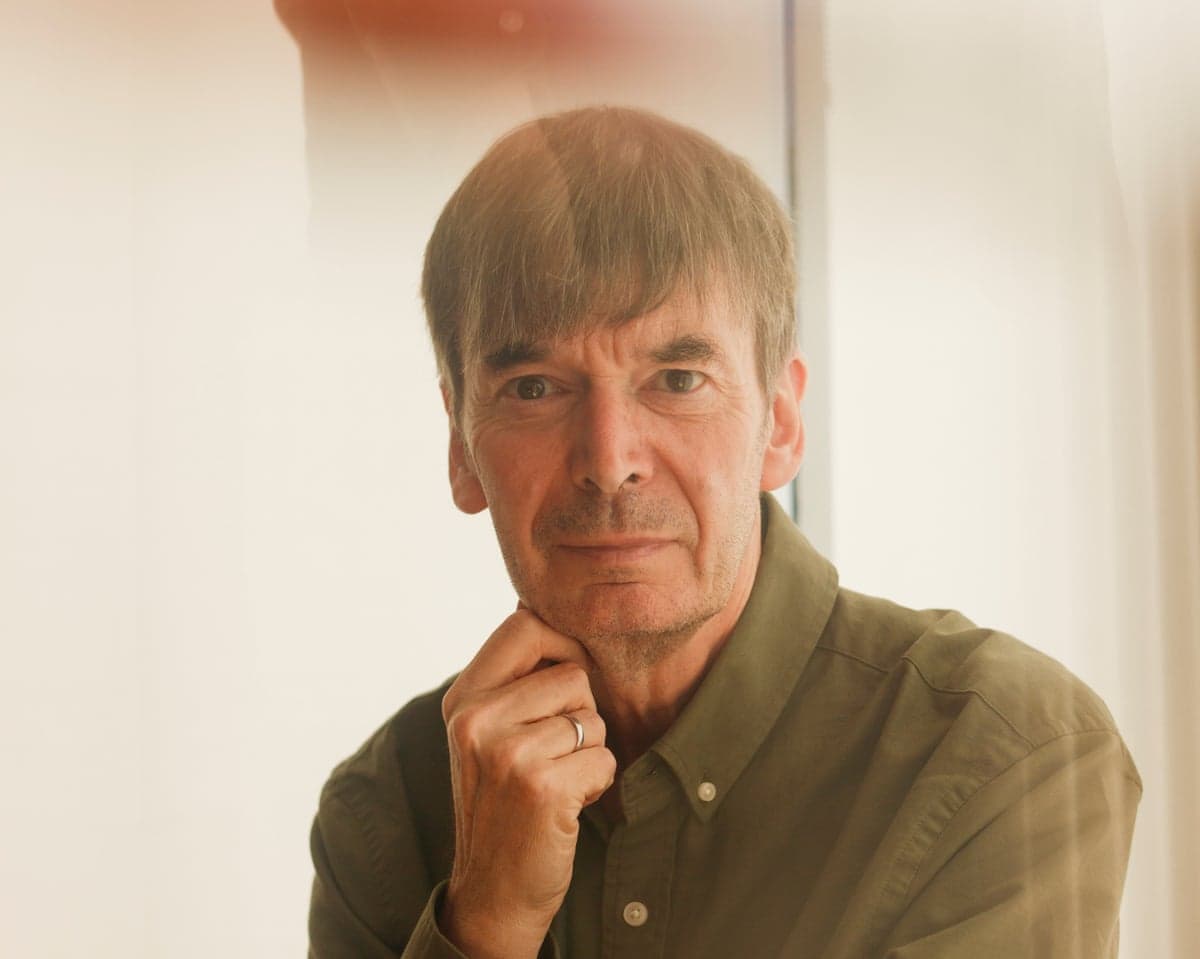
Sir Ian Rankin rarely watches television. Certainly, there's no gleaming flatscreen in the corner of the apartment in Edinburgh where he writes, listens to music and constructs elaborate Lego models—all four Beatles, their Yellow Submarine and, once, a 6ft version of the Eiffel Tower. When asked whether he saw the most recent adaptation of his most famous creation, Detective Inspector John Rebus, this time portrayed by Richard Rankin (no relation), following earlier performances by Ken Stott and John Hannah, he offers a measured response.
"I did," he concedes. "They gave me them on DVD, so I could play them on my computer."
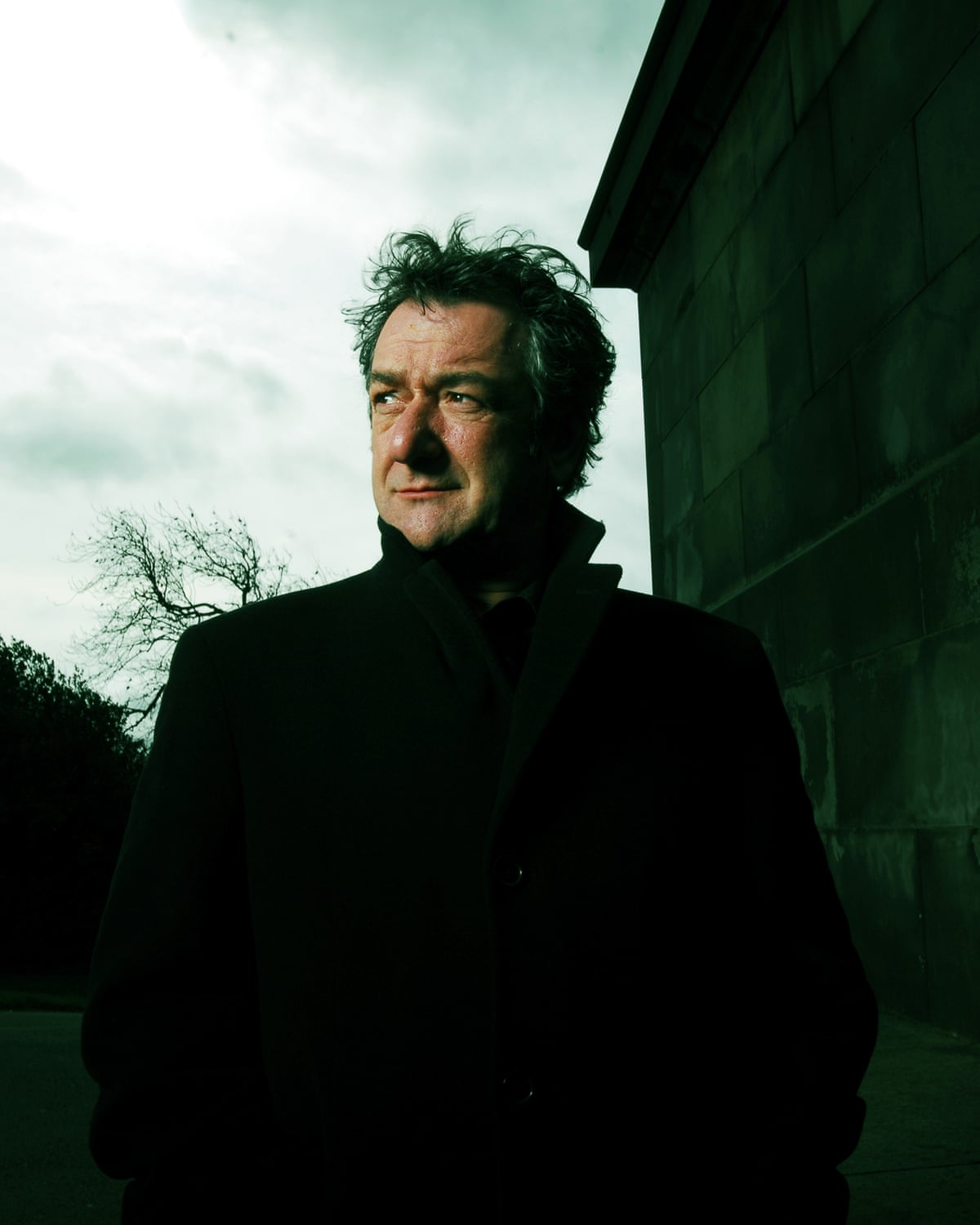
That computer has undergone multiple repairs—its screen and hard drive have been replaced, and grooves mark its well-used keys. It occupies a plain, compact trestle-table desk purchased on London's Charing Cross Road in 1987 and transported by tube to his Tottenham flat; both desk and machine have made the journey from London to rural Dordogne in southwest France, where he and his wife Miranda spent several years during the 1990s, and subsequently back to Edinburgh, where the couple and their two sons have remained.
Yet this apparent attachment to the familiar masks a writer intensely engaged with contemporary society. Across 26 Rebus novels, a smaller series featuring detective Malcolm Fox, and numerous standalone works and theatrical pieces, Rankin has demonstrated a keen awareness of pressing modern issues.
"The crime fiction I'm interested in," he explains, "is the crime fiction that's looking at society and the mess we're in and how we got there, and it's predominantly political."
What is The Heights about?
His latest work, The Heights, which became available on 8 October 2026, tackles this ambition with considerable flair. The title designates a Knightsbridge apartment complex targeting the apex of the property market, its residents wealthy and celebrated individuals who expect their homes to feature private cinemas and luxury spas, with Chapman brothers artworks adorning the marble entrance hall. What they do not anticipate is the discovery of their concierge with a fatal head wound, prompting DS Gillian Gish to arrive and interrogate them about their movements.
The novel represents Rankin's first standalone thriller in two decades, and it emerged from his previously published short story The Rise, which he has now substantially expanded. The hardcover edition, published by Hachette, carries a price of £25.
Who is Gillian Gish?
Gish, a brand-new protagonist, draws inspiration from 1970s American television detective Columbo, whom Rankin—during his earlier television-watching years—found mesmerising.
"I didn't realise it when I was watching as a teenager, but he's a socialist figure," Rankin observes. "He comes into these very rich people's lives and tears them apart, and they don't know he's doing it until he's already done it. I just thought that was extraordinary. It's to do with class: he's the underclass, they're the overclass, and he's going to bring them down."He notes that Rebus has performed this function in several earlier novels, and that Gish similarly derives satisfaction from unsettling the wealthy.
"Gish, I think, secretly really enjoys the idea that she's going to upset them by asking the wrong questions and by interfering in their very comfortable, cosseted world."
Unlike Rebus, Gish possesses a fuller personal life; she is rooted in her own neighbourhood in Tottenham, Rankin's former London base, and her evenings involve caring for her mother. This domestic dimension enriches the novel's portrait of London as a fragmented metropolis of disparate social worlds.
Why did Rankin move the story from Edinburgh to London?
When asked whether relocating from the Edinburgh setting he has inhabited for decades felt daunting, Rankin dismisses the concern.
"I didn't feel any trepidation," he replies. "In some ways it can be a wee bit stifling. You get an idea for a story, you say, 'Well, could that be contained in Edinburgh? And if it can't be contained in Edinburgh, can I write it?'"
He is convinced that his narrative of ostentatious wealth coupled with the paradoxical obsession with privacy among the ultra-rich could not have functioned in Edinburgh. Though prosperous, the city lacks the visible symbols of extreme affluence.
"You're not going to see a Rolls-Royce or a Bugatti Veyron. The wealth here is discreet."
How has Rankin's own wealth shaped his life and work?
Rankin's literary success has rendered him a wealthy man, though he did not achieve financial security until his 60s—he is now 66. Throughout his career, he worked in spare rooms, attics and even beside a juddering washing machine, with a clothes airer suspended overhead. He expresses gratitude that early success eluded him.
"I was stupid. I'm sure I would have bought a Lamborghini and a pinball machine for every room in the house."
Today, he and Miranda live a short walk from his writing flat and undertake frequent international journeys.
"Miranda decided a few years ago that, now the kids have left and we've got money in the bank: before we get too old and we lose the use of our limbs and our brains, we should travel. I am holiday agnostic. She's the one who tells me, right, you're going here and you're going there. So we do a lot of travelling, just in the last three or four years maybe. She's booking through to 2028 at the moment."
When travelling, Rankin researches but cannot write productively. During a recent South American cruise, he had not brought his laptop and was writing by hand when a fellow passenger offered him a computer—an act of kindness he acknowledges in The Heights's closing pages. Upon returning home, he writes with speed and determination, though he resists characterisation as exceptionally prolific.
"If the weather's nice, I get no writing done. If the weather's bad, I get a lot of writing done because there's nothing else to do. I'm the laziest, hard-working author I know."
How does Rankin use his earnings?
Beyond vinyl records, occasional seated live performances, Lego construction and holidays, Rankin directs a substantial portion of his income to charitable purposes. Between 30 and 40% of his annual net earnings flow into a charitable trust established by him and Miranda, where their older son Jack also works.
"I've got more money than I can spend. Once you've bought a nice hi-fi system and you've got a nice car, what are you going to do?"
The trust prioritises smaller charities, particularly those serving young people and adults with special needs. This focus reflects the family's personal circumstances: their younger son Kit has Angelman syndrome, a genetic condition causing severe learning difficulties alongside epilepsy and vision problems. Now in his early 30s, Kit resides in a nearby care facility, and all four family members gather each Sunday.
"Any money that we leave behind when we shuffle off this mortal coil will get channelled to him to make sure that he's always looked after. And our older son will be part of that process of looking after him financially."
What is the future for Rebus?
Regarding his most celebrated creation, whom readers last encountered imprisoned following the death of his longtime adversary gangster "Big Ger" Cafferty, Rankin remains guarded about his next project—whether a return to Rebus or another Gillian Gish adventure. However, he offers reassurance about Rebus's prospects.
"Everybody says that, but it's not true," he protests when reminded of Rebus's dire circumstances. "At the end of the book, his lawyer says, 'You've got some very good news.' So he's obviously getting out. You know the appeal is going to be heard and he's going to get out. I have no doubt in my mind that's the happy ending."
What's next for Rankin?
Rankin is scheduled to appear at Edinburgh's Assembly Rooms on 14 October 2026 to discuss The Heights, with an audience question-and-answer session and book signing to follow. After the interview, he departs to write before an evening engagement, possibly stopping by the Oxford Bar, where locals' sole acknowledgment of his renown is to inquire, "Where's your horse?"—a distinction he clearly treasures.