

Chinese robotics firm Unitree Robotics made its stock market debut on the Shanghai Star Market on 19 August 2026, with shares surging by more than 600% on the opening trade. The stock opened at 1,100 yuan (£120.60; $163.12) against an offer price of 150.8 yuan, according to . The listing on China's technology-focused exchange, often described as the country's answer to Nasdaq, is regarded as a milestone for Beijing's push to build a world-leading robotics industry.
The debut lands as the United States and China compete for dominance in robotics and the artificial intelligence systems that power them. Robots such as automated warehouse equipment and household vacuum cleaners are already commonplace, but humanoid machines are now drawing heavy investment from companies including Tesla, BYD and Amazon, all of which are developing two-legged robots designed to carry out tasks traditionally done by people.
What is Unitree and why does it matter?
Founded in 2016 and based in Hangzhou, in eastern China, Unitree has grown into one of the industry's leading manufacturers, producing everything from sensors and robotic arms to four-legged and human-shaped machines. It has spent several years competing directly with US developers by offering comparable features at lower prices.
The company sits within Hangzhou's so-called golden cluster of robotics firms, an area that has benefited from substantial state investment. That backing helped the number of Chinese robotics companies more than triple between 2020 and 2024, according to the state-run China Daily. Fei Qin, an associate professor at the University of Bath, said robots are also viewed as a possible answer to the labour shortages that China's ageing population could create in its manufacturing-heavy economy. She described robotics as a strategic priority for Beijing in its pursuit of leadership in advanced technology.
Robots are where AI leaves the screen and enters the economy.
That shift is playing out in factories, hospitals and potentially homes, Qin added. Chinese start-ups have also been working to close a key technical gap by developing more dexterous robotic hands, an effort detailed in earlier reporting on China's progress in robotic hand design, which is seen as essential to turning humanoid robots into genuinely useful tools rather than novelty demonstrations.
Harold Soh, a researcher at the National University of Singapore, said American robots generally offer more polished software, but their price tags are hard to justify against Chinese alternatives. Unitree's robot dogs start at $2,700, compared with roughly $70,000 for Boston Dynamics' four-legged Spot device.
They're not exactly comparable because some of Unitree's dogs are much smaller. But the price is a big difference.
Unitree began selling humanoid robots in 2023 and introduced its $13,500 child-sized G1 model the following year, well ahead of major US competitors such as Tesla, which has yet to begin delivering its own humanoid units to customers.
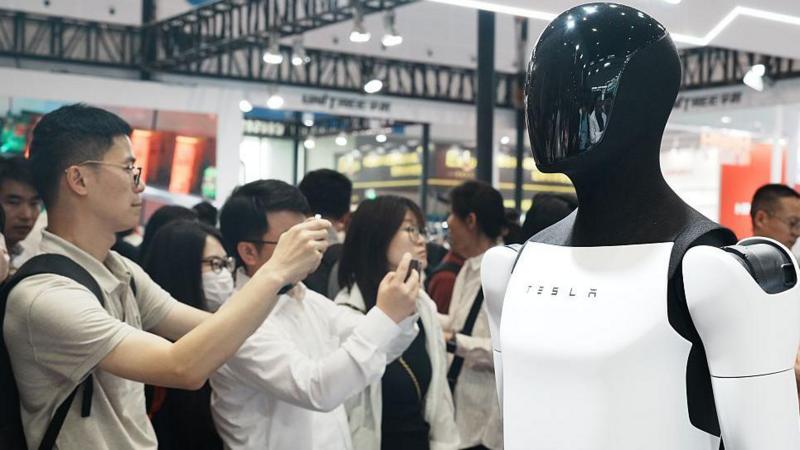
The G1 and other Unitree machines featured heavily in a marketing campaign that preceded the IPO. This week, the company's robots are taking part in the 2026 World Humanoid Robot Games in Beijing, where hundreds of teams are competing in events ranging from running and football to tasks such as opening boxes and sorting library books. Earlier in the year, Unitree's G1 robots drew widespread attention after performing martial arts routines during China's Spring Festival Gala, a broadcast robotics researcher David Hsu said displayed a full range of motions, live on stage, in a way not previously seen.
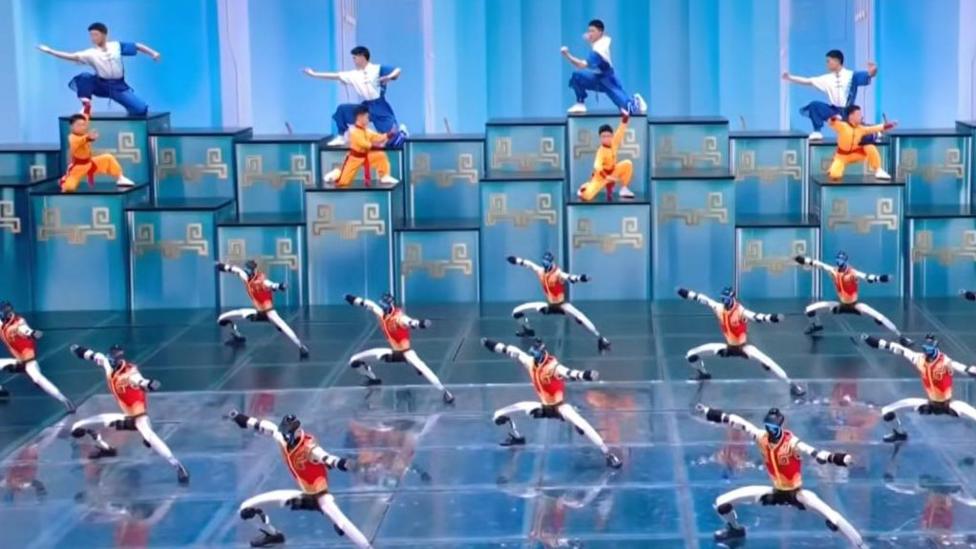
It was an indication of a rise of an industry.
Is this a bellwether for the robotics industry?
Some analysts see Unitree's listing as a test of how much investor appetite exists for the fast-growing humanoid robotics sector. Jack Pearson of investment firm RoboStrategy said the offering gives the public a rare opportunity to invest directly in a humanoid robotics business and could set a reference point for future listings. He also described the successful debut as a turning point for China's robotics industry, coming even as Washington moves to restrict imports of foreign-made robots.

According to , the offering was more than 8,000 times overd by retail investors, leaving a lot-winning rate of roughly 0.018% after share clawbacks. Unitree had priced the deal to raise about $900 million, and Citic Securities, the IPO's sponsor, estimated the company could be valued between 50.6 billion and 55.9 billion yuan within six to 12 months of listing. The company first filed for the Shanghai offering in March 2026, seeking to raise 4.2 billion yuan in a move it framed at the time as a test of investor interest in humanoid robots. Its prospectus said proceeds would fund software and hardware development, new products and the construction of a manufacturing base.
Unitree's listing follows Chinese rival UBTech Robotics, which floated on the Hong Kong exchange nearly three years earlier. In July 2026, UBTech attracted global attention by unveiling what Chinese state media described as a life-sized, hyper-realistic humanoid robot designed as a companion that offers users emotional support and everyday interaction.

Other manufacturers, including Leju Robotics and AgiBot, are expected to pursue their own stock market listings in the coming months, following the path set by UBTech and Unitree. Chinese robotics firms have also been expanding abroad: Geek+, for instance, has deployed around 2,000 warehouse robots across 10 sites in the UK as British retailers adopt Chinese automation technology, according to earlier coverage of Chinese robots reshaping UK retail warehouses.
Even so, some experts remain cautious about demand for robots beyond industrial and commercial use. Soh said robots are still years away from working reliably inside people's homes, citing unresolved issues around battery life, privacy safeguards and dependability. In the near term, he said, the market is likely to remain concentrated in settings such as factories and hospitals.
How does this fit into the US-China tech rivalry?
Robotics and artificial intelligence have become a fresh point of tension between Washington and Beijing, with both governments treating the sectors as strategically vital. In July 2026, the Trump administration announced it would block imports of new Chinese-made humanoid and quadruped robots, citing national security concerns and the protection of domestic manufacturing, a move detailed in earlier reporting on the administration's ban on new Chinese humanoid robot imports. Beijing rejected the justification, accusing Washington of politicising trade policy. Washington has separately imposed tight restrictions on other Chinese technologies, including AI systems, electric vehicles, semiconductors and drones.
Christine Wan of the Peterson Institute for International Economics said China's grip on robotics manufacturing reflects a wider problem for US policymakers, as Chinese suppliers become increasingly embedded in global supply chains.
Other countries may be reluctant to sharply reduce their reliance on Chinese suppliers if doing so would significantly disrupt domestic manufacturing.
Western manufacturers have yet to match that scale on factory floors or in consumer markets. Boston Dynamics, majority-owned by South Korea's Hyundai since 2021, has said it plans to deploy humanoid robots in Hyundai factories within two years. Amazon and Tesla have both outlined plans to bring humanoid robots into their own operations; Musk's company said earlier this year it would use its California plant, formerly dedicated to Model S and X production, to build its Optimus humanoid line. Amazon told reporters it completed a pilot of humanoid robots in its warehouses after testing the technology in 2023 and continues researching next-generation systems. Tesla and Boston Dynamics have both been approached for comment on their humanoid robot plans.
David Hsu said the shift in momentum is unmistakable, noting that American robotics firms have largely fallen out of the headlines while Chinese companies now dominate coverage of the sector.
We no longer hear about American robotics companies in the news. It's the Chinese robot companies that are making news today.
They have replaced America as the cool kids on the block.
What happens next?
Unitree's Shanghai trading debut on 19 August 2026 followed a subscription period that opened on 10 August and pricing that was finalised on 6 August, according to . With the listing complete, attention now turns to whether other Chinese robotics firms, including Leju Robotics and AgiBot, will follow with their own market debuts in the coming months, and whether Citic Securities' valuation estimate of 50.6 billion to 55.9 billion yuan holds up as Unitree's shares continue trading.
Key Facts
- Unitree's shares opened more than 600% above their 150.8 yuan offer price on the Shanghai Star Market on 19 August 2026.
- The IPO was more than 8,000 times overd by retail investors, leaving a lot-winning rate of about 0.018%.
- Unitree aimed to raise roughly $900 million, with Citic Securities estimating a post-listing valuation of 50.6-55.9 billion yuan.
- The US banned imports of new Chinese-made humanoid and quadruped robots in July 2026 over national security concerns.
- Rivals including Leju Robotics and AgiBot are expected to pursue their own stock listings in coming months.


