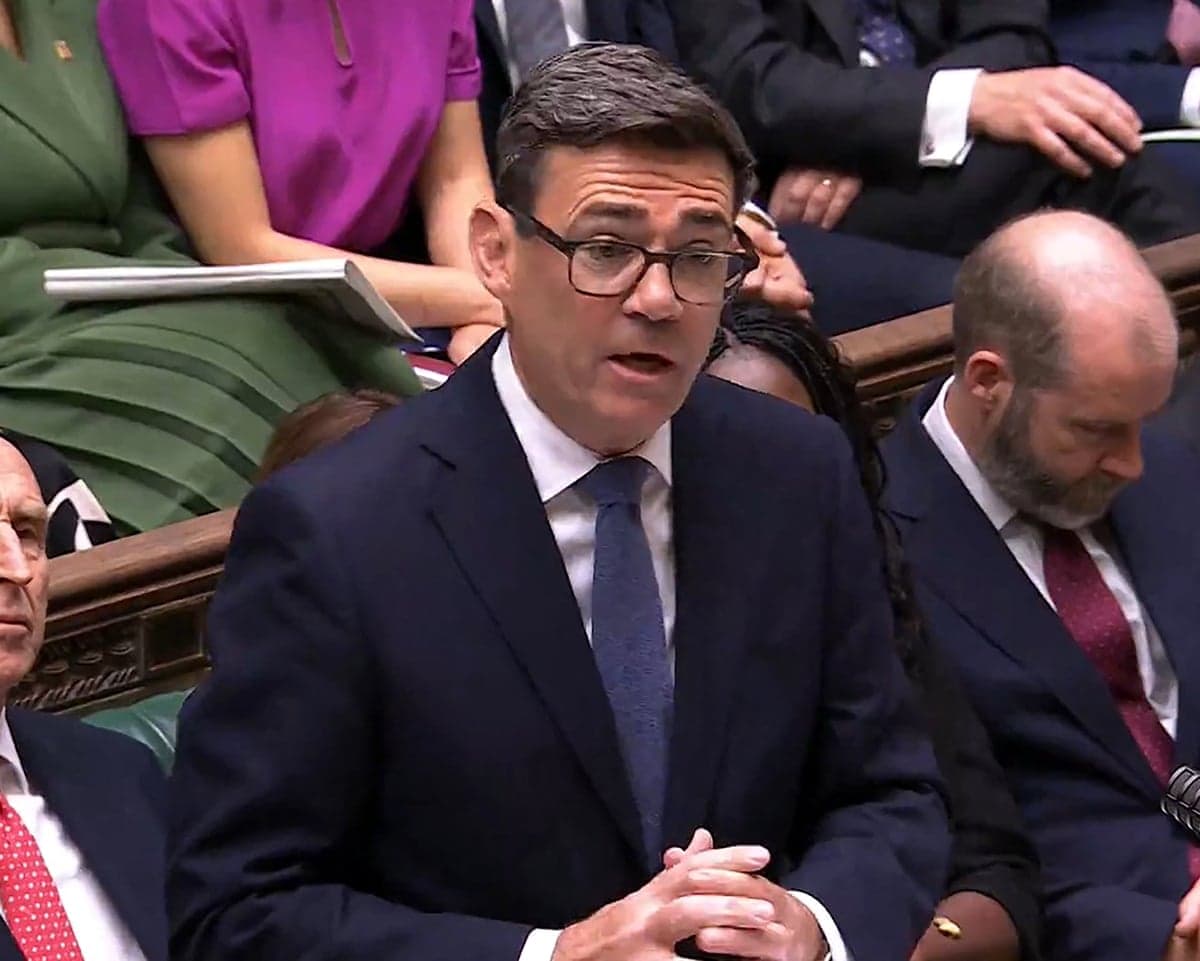
Government borrowing costs in Britain have climbed to their highest level in nearly three decades, intensifying fiscal pressures on Prime Minister Andy Burnham as he prepares to present his inaugural Budget on 28 October. The yield on a 30-year gilt—a long-term loan instrument issued by the British government—reached 5.89%, marking the highest point since 1998, while the 10-year gilt yield climbed to 5.234%, its highest since 2008. According to market data, on 1 September 69 of 70 conventional gilts rose in yield, indicating the sell-off was broad-based across the gilt market.
A gilt is essentially an IOU issued by the government to borrow money. Governments typically spend more than they raise in tax and fill the gap by selling bonds to investors, primarily financial institutions such as pension funds. In return for lending money, investors receive regular interest payments—known as the yield—and the repayment of the bond's value at maturity. When yields rise, bond prices fall, and governments must pay higher interest rates on their existing debt.
The surge reflects a confluence of global market forces. On 1 September, renewed Middle East fighting lifted oil above $90, intensifying inflation concerns that have rippled through bond markets worldwide. The 10-year gilt yield rose to 5.23% on 1 September, the highest since June 2008. Across major economies, borrowing costs have reached similar multi-decade highs, with global government debt yields rising to 3.72%, the highest since mid-2008. Germany's 10-year government bond yield hit its highest level since April 2011, underscoring the global nature of the sell-off.
The yield movements reflect investor concerns extending beyond energy markets. Inflation pressures stemming from the ongoing Iran conflict, competition from major technology firms for long-term capital, and apprehension about state borrowing levels have all contributed to the sell-off in government bonds. According to market reports, the 30-year gilt yield briefly touched around 5.9% during trading on 2 September before closing at 5.85%.
This development follows earlier warnings about rising borrowing costs. Bond yields across major economies hit multi-decade highs on 18 August 2026 as the US-Iran ceasefire lapsed and oil prices topped $90 a barrel, signalling the beginning of the current market turbulence.
How does this affect the government's spending plans?
The government's ability to spend on public services and support for households is limited by the so-called fiscal rules it has set for itself. If the government needs more money to pay back higher borrowing costs, it has less to spend on other things under its self-imposed rules. This creates the possibility of less support for households struggling with the cost of living, or of tax rises to pay for any support. These are choices—not certainties—so the Chancellor might free up some money by spending less elsewhere.
Burnham and Chancellor John Healey face a narrowing window for fiscal manoeuvre. Higher borrowing costs reduce the headroom available under the government's fiscal rules, constraining the amount Healey can allocate toward consumer-focused spending measures designed to address cost-of-living pressures. The Chancellor is currently in the United States attending a meeting of global finance ministers and central bankers, where he highlighted that the UK achieved the fastest growth rate among G7 nations in 2026 so far, with improving productivity and borrowing declining at the fastest pace among major economies.
The timing compounds existing challenges for the new administration. In May, UK borrowing reached £23.3bn, exceeding forecasts by £5.6bn amid rising government spending and inflation-driven debt costs, with the national debt climbing to 95.1% of GDP. Interest payable on government debt hit a record £11.7bn in May, underscoring the fiscal sensitivity of higher borrowing costs. This backdrop underscores the fiscal constraints Burnham will confront when he addresses Parliament.
Daniel Mahoney, senior UK economist at Handelsbanken, warned that the current environment is likely to force difficult choices:
The 10-year gilt yield has hit levels last seen during the Global Financial Crisis. Recent drivers of increasing gilt yields have been broadly international – including geopolitical risk and competition for investor capital in the context of the AI boom – but it continues to be a major concern that UK government borrowing costs remain notably higher than G7 counterparts. Current moves in financial markets are clearly set to further erode the Government's fiscal headroom at the upcoming Budget, adding to the likelihood that fresh tax increases will be announced on 28th October.
The government's fiscal rules, which Healey has committed to maintaining, create a binding constraint on discretionary spending. With borrowing costs rising and debt levels elevated, the Chancellor faces difficult trade-offs between maintaining credibility with financial markets and delivering on campaign commitments. Economist Lord Jim O'Neill suggested that the bond markets would "respond favourably" to a Government that takes "credible action to deal with the excesses of the triple lock or the excesses of welfare spending."
Matthew Amis, investment director for rates management at Aberdeen Investments, emphasised the limited room for manoeuvre:
Gilts played catch-up with European peers after Monday's bank holiday. The summer holidays are over and yet the Iranian conflict is still no closer to a resolution. Tensions in the Middle East increased again, as such both oil and natural gas moved higher. With gilt yields at these levels, the fiscal room for manoeuvre going into October's budget is incredibly limited.
What is driving the global bond sell-off?
Multiple factors have converged to push borrowing costs higher across developed economies. The primary trigger has been renewed geopolitical tension in the Middle East, which sent Brent crude trading above $91 a barrel, reviving inflation expectations that had begun to stabilise. If inflation is high, then the purchasing power of fixed payments investors receive from bonds is diluted. Consequently, investors demand a higher yield as compensation, and sell off their bonds. Central banks globally have signalled a readiness to tighten monetary policy in response to persistent price pressures, with markets now pricing in expectations of rate increases from the US Federal Reserve and other major institutions.
Joel Kruger, market strategist at an investment firm, identified the dominant theme: the renewed escalation between the US and Iran, with attacks on Iranian military and tanker targets raising concerns over further disruption in the Strait of Hormuz. Oil has extended to a six-week high, amplifying inflation concerns and driving another sharp rise in global bond yields.

Investors are also increasingly concerned about high levels of government borrowing, while there has been greater demand for loans from big technology companies hoping to fund investment in artificial intelligence—driving up competition and increasing the interest rate lenders demand.
Kathleen Brooks, research director at investment company XTB, characterised the situation as alarming.
Of course, this is red lights flashing.She acknowledged that while financial markets have experienced volatility in recent months, the combination of record government debt levels and record tax revenues creates an uncomfortable environment for the new government and its chancellor.
Every time bond yields rise, the UK has to pay more on the debt interest.
Mike Goosay, chief investment officer and global head of fixed income at Principal Asset Management, summarised the underlying drivers:
The sharp rise in global bond yields reflects investors reassessing inflation risks, policy expectations, and the growing supply of government debt across major markets. While markets are increasingly pricing the possibility of additional policy tightening, we believe higher long-term yields also reflect structural factors such as elevated issuance, ongoing fiscal financing needs, and a rise in term premium.
What role will the Bank of England play?
The bond market sell-off could prompt the Bank of England to reconsider whether to continue with its own sale of UK government debt. The BoE is due to decide later in September whether to maintain its quantitative tightening programme, or slow it down. Quantitative tightening involves the sale of UK gilts which the BoE bought to stimulate the economy after the 2008 financial crisis and the Covid-19 pandemic. It is controversial as the Bank is making a loss by selling bonds for less than the value it paid for them under quantitative easing.
Professor Costas Milas of the University of Liverpool's management school explained the dilemma:
The ongoing global shock is indeed a challenge for Burnham as it puts firmly the focus on his fiscal intentions and whether next month's Budget will raise taxes without doing much (or anything) about lowering government expenditure. But let us not forget that the BoE's policymakers will also decide in mid-September on UK interest rates and Quantitative Tightening (QT; or sales of government bonds) for the next 12 months. With UK (and global) yields on the rise and Scott Bessent authorizing a buyback of U.S. debt to suppress, as much as he can, US yields, it will look very odd if the BoE's policymakers decided to continue aggressively with QT action.
At the front end of the UK yield curve, markets are now pricing in three interest rate hikes from the Bank of England over the next year, reflecting expectations of further monetary tightening if inflation pressures persist.
What are the broader economic implications?
The bond market turmoil is creating headaches beyond government finances. European gas prices have hit their highest level since January 2023, with the benchmark Dutch gas contract touching a 43-month high of €75.325 per megawatt-hour on 2 September. The month-ahead UK gas price also hit its highest level since January 2023, at 184 pence per therm. This will make it increasingly expensive for European countries to stock up on gas ahead of the winter, at a time when EU gas stores are at their lowest level in 13 years.
Stock markets have dipped in response to the turmoil. The FTSE 100 index of blue-chip equities fell by 39 points, or 0.36%, in early trading, with technology and services provider Computacenter down 3.5% and sports and leisure-wear retailer JD Sports down 2%. Investment bank Jefferies has cut its appetite for risk due to the jump in bond yields and the ongoing US-Iran war, warning that rates are reaching a level where a further selloff would be increasingly negative for both equities and credit.
The US dollar has climbed to its highest level against a basket of other currencies in over two weeks, with traders betting that the US Federal Reserve is more likely to raise interest rates at its next meeting in September following Fed chair Kevin Warsh's warning that there would be "work to do" unless inflation eases. This has pushed the pound down below $1.35 for the first time since 14 August.
What about mortgage rates and annuities?
Some observers have raised concerns about the impact of higher gilt yields on the mortgage market, particularly after the rapid rate movements that followed Liz Truss's mini-Budget in September 2022. Analysts believe that mortgage rates could go up on new fixed deals, as funding costs for lenders rise. However, this current situation is very different to 2022, when rates shot up over a couple of days. That speedy rise led to lenders quickly pulling deals while they tried to work out what interest rate to charge. The current market movements, while significant, are expected to be more gradual.
The market could be more favourable to anyone currently buying an annuity—a product from an insurance company that gives a retirement income for the rest of their life, bought only once. Higher yields on government bonds typically translate to higher annuity rates, benefiting retirees purchasing these products.
What happens next?
Market observers are watching for signals from the US Federal Reserve as the next major catalyst for bond movements. If inflation pressures persist, expectations of US rate increases could further pressure gilt yields, as international investors reassess the relative attractiveness of UK government debt. The Bank of England's own policy stance will also influence market sentiment, particularly as inflation data continues to arrive in the coming weeks.
The next Bank of England gilt-sale auction in the existing Q3 calendar is scheduled for Monday 14 September 2026. The BoE's decision on whether to maintain or slow its quantitative tightening programme will be made later in September, with significant implications for the gilt market.
Burnham's Budget presentation on 28 October will be scrutinised for any measures designed to address fiscal sustainability while managing political expectations. The government's ability to balance these competing demands will likely determine whether borrowing costs stabilise or continue their upward trajectory. Roger Lee, head of equity strategy at Cavendish, noted that the current level of bond yields is likely to erode most of the previous headroom, leaving the new Prime Minister with "even more complicated budget choices in October."
Key Facts
- The 30-year gilt yield reached 5.89% on 1 September, the highest since 1998, while the 10-year yield climbed to 5.234%, its highest since 2008, with 69 of 70 conventional gilts rising in yield on the day
- Global government debt yields have risen to 3.72%, the highest level since mid-2008, with Germany's 10-year yield hitting its highest since April 2011, driven by renewed Middle East tensions and rising oil prices above $90 per barrel
- UK national debt stands at 95.1% of GDP following May borrowing of £23.3bn, which exceeded forecasts by £5.6bn, while interest payable on government debt hit a record £11.7bn in May
- Higher borrowing costs reduce fiscal headroom under the government's self-imposed rules, limiting spending flexibility ahead of the 28 October Budget and increasing the likelihood of tax increases
- Markets are pricing in expectations of three interest rate hikes from the Bank of England over the next year and multiple rate increases from the US Federal Reserve, if inflation pressures continue
- European gas prices hit their highest level since January 2023, with the Dutch benchmark at €75.325/MWh, raising winter supply concerns as EU gas stores sit at their lowest level in 13 years