

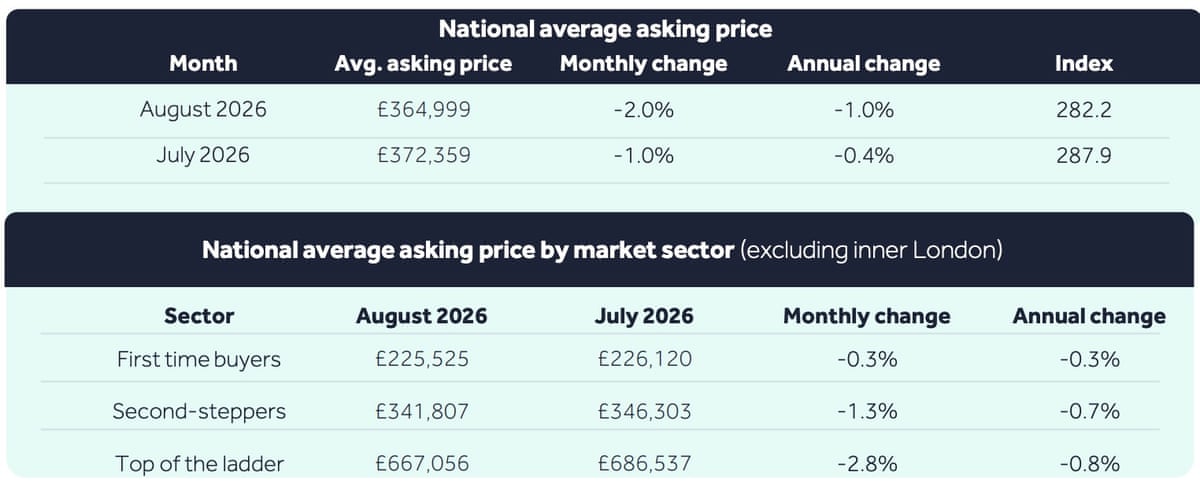
Average asking prices for newly listed homes in Britain fell by 2% in August 2026, marking the sharpest August decline since 2018, according to new data from Rightmove. The average price of a home coming to market dropped by £7,360 to £364,999, leaving asking prices 1.0% lower than a year earlier as higher mortgage rates continue to weigh on buyer appetite.
Rightmove has responded by cutting its forecast for house price growth across 2026, now expecting prices to finish the year anywhere between flat and a 2% fall, down from an earlier prediction of 2% growth. The property portal pointed to a combination of factors clouding the outlook, including geopolitical uncertainty and shifting mortgage conditions.
“The uncertain geopolitical picture, changing mortgage rate landscape, and new Chancellor’s first Budget in October making it difficult to predict the rest of the year,” Rightmove warned.
How does this compare with recent months?
The August drop looks even sharper when set against the summer’s figures. Rightmove’s own published data shows July 2026 asking prices stood at £372,359, according to Rightmove’s house price tracker, meaning the fall to £364,999 in August represents a steep month-on-month slide even before accounting for the usual seasonal dip. A separate report earlier in the summer had described the market as broadly stagnant, with buyers already being squeezed by higher mortgage rates and affordability pressures, according to a national newspaper’s report from earlier in the summer.
Is the fall the same everywhere in Britain?
No — the figures reveal a widening gap between the north and south of England. Prices in the north are up 1.5% compared with a year ago, while prices in the south have fallen 1.8% over the same period. London has recorded the steepest annual decline of any region, down 3.1%, with the capital’s wealthiest postcodes hit hardest. Asking prices in the Royal Borough of Kensington and Chelsea have fallen to £1,552,970, down from £1,648,148 a month earlier — a drop of just over £95,000.
Why are sellers cutting prices so sharply?
Rightmove says sellers are increasingly recognising that competitive pricing is essential to secure a sale in a crowded market. Colleen Babcock, property expert at Rightmove, explained the shift in seller behaviour.
“This month’s larger-than-usual August price drop is a sign that many sellers are recognising the reality of the market and pricing much more competitively from day one. Buyers have the widest choice of homes for sale at this time of year in more than a decade, so standing out on price for the right reasons is hugely important. While no seller likes to come to market lower than they might have hoped, Rightmove analysis shows that those who price realistically are statistically proven to be giving themselves the strongest chance of finding a buyer and successfully completing a move. One tactic some sellers are using when considering lower offers on their home, is to also make a lower offer themselves on their onwards purchase, to see if they can make up the difference.”
Are investors using the slowdown to their advantage?
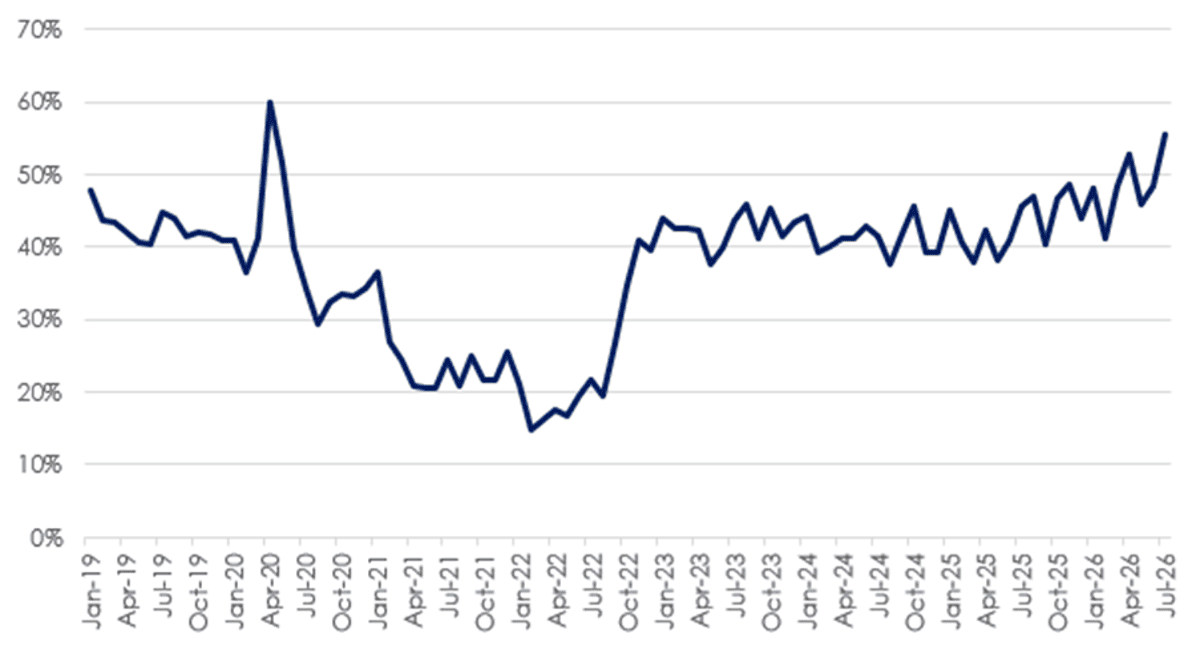
Separate figures from Hamptons suggest landlords and cash buyers are driving harder bargains as the market cools. The agency found that 56% of offers from investors in July were at least 10% below the original asking price, rising to 63% among landlords paying in cash.

David Fell, lead analyst at Hamptons, said seasoned investors tend to move quickly when conditions soften.
“When the market slows, seasoned investors rarely stand on the sidelines for long. With homes taking longer to sell and chains proving fragile, landlords are using their liquidity and chain-free status to maximise their leverage when it comes to agreeing a price. In a market where certainty has become more valuable, these benefits tend to be worth more than in hotter markets where sellers often have multiple options on the table.”
What is Jamie Dimon warning the government about?
Away from housing, JP Morgan chief executive Jamie Dimon has repeated his warning to the UK chancellor against raising taxes on banks. Dimon told chancellor John Healey in a call on Thursday that a tougher tax regime risked pushing financial jobs overseas, drawing on his own observations of hiring trends in New York.
The Wall Street executive told Healey in a call on Thursday that higher taxes often drive jobs elsewhere, citing a material decline in finance roles in New York that he attributed in part to the city’s tax burden, according to people briefed on the conversation.
It is the latest in a series of interventions by Dimon on UK tax policy, coming as pressure grows for higher levies on banks after HSBC, NatWest, Barclays and Lloyds together reported profits of £29.2bn in the first six months of the year.
Has the change of prime minister affected buyer demand?
Rightmove says there has been a modest improvement in buyer activity since Andy Burnham became prime minister on 20 July 2026. Demand is up 5% since the change in Downing Street, with the portal linking part of the uplift to Burnham ruling out property tax changes in the October Budget.
“The new Prime Minister has brought a general boost to optimism and has ruled out property tax changes in October’s Budget, meaning buyers have fewer reasons to wait around and see what happens.”
Even so, the broader picture points to a market still under strain. According to a wire-service report, the record August price fall came despite this modest pickup in activity following Burnham’s appointment, suggesting underlying weakness in the market has not been fully offset by the political shift, according to a market news report.
What happens next?
Attention will now turn to whether the rest of 2026 confirms Rightmove’s downgraded outlook of flat prices or a 2% annual decline, a revision reported by a national news outlet. Much will depend on how mortgage rates move over the coming months and on the new chancellor’s first Budget in October, which markets and homeowners alike will watch closely for any changes to property taxation.
Key Facts
- Average asking prices fell 2% in August 2026, the steepest August drop since 2018, to £364,999.
- Rightmove cut its 2026 forecast to between 0% and -2% growth, down from a previous 2% forecast.
- London asking prices fell 3.1% annually, with Kensington and Chelsea down over £95,000 in a month.
- 56% of investor offers in July were at least 10% below asking price, rising to 63% for cash-paying landlords.
- Buyer demand rose 5% following Andy Burnham’s appointment as prime minister on 20 July 2026.


