
Year 10 pupils at Sandbach High School and Sixth Form College in Cheshire are learning practical employability skills through mock job interviews, handshake practice and eye contact training. According to BBC News, these lessons form part of a dedicated careers programme designed to equip young people with the confidence and techniques needed to enter the workforce successfully.
The initiative comes as the UK faces a significant youth employment challenge. Nearly one million young people aged 16 to 24 are not in education, employment or training—a figure Prime Minister Andy Burnham has described as both a "moral failure" and an "economic catastrophe". This week, a major independent review led by former Labour health secretary Alan Milburn is expected to outline government recommendations for addressing youth unemployment and ensuring school leavers are "work-ready".
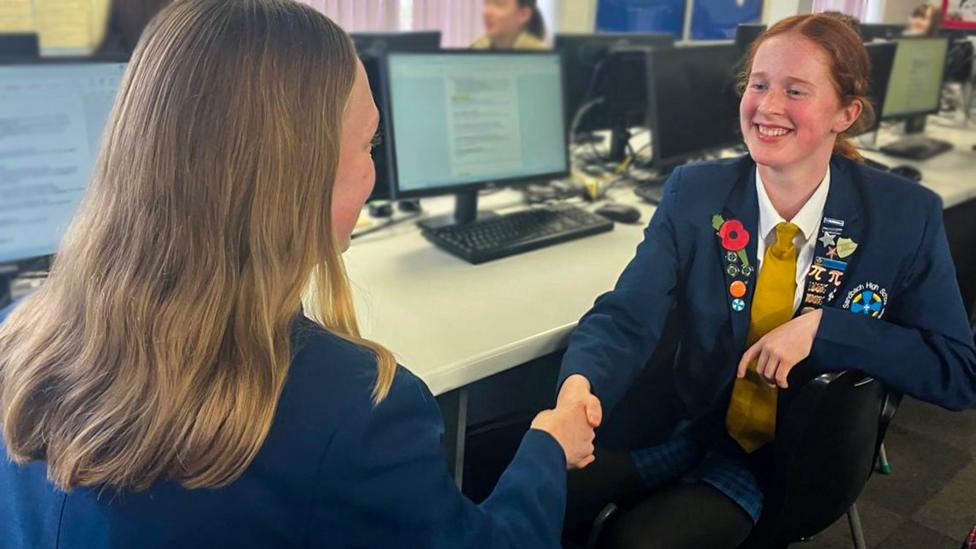
What skills are pupils practising in these lessons?
During the mock interviews, 14- and 15-year-olds rehearse responses to typical workplace questions such as "When was the last time you worked in a team?" and "Tell me about a time you made a mistake at work". Beyond interview technique, the curriculum covers CV writing and workplace rights—topics that will be explored in forthcoming lessons delivered fortnightly alongside regular classes.
Ati, a Year 10 student, has found the experience valuable.
How to speak to people. How to present myself to different people,she explains.
Like the fact you have to walk into a room and introduce yourself. I didn't think you really had to do that, but I think that's a good new skill that I've learned.
Fourteen-year-old Myla believes starting interview practice in Year 10 is well-timed.
In two years we'll probably start looking at part-time jobs. It definitely helps with nerves and that kind of stuff if you've done it before and tried it before.
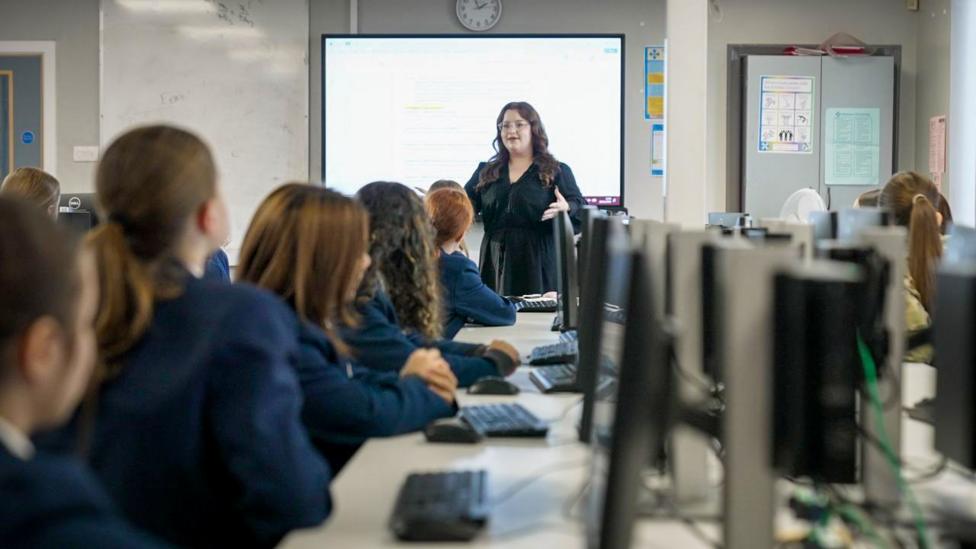
How is Sandbach High School embedding careers education across the school?
Careers teacher Paisley Charlton emphasises that the goal is to build student confidence for real-world employment. The school has made careers education a priority from the moment pupils arrive, with a "speed-networking" event in Year 7 where students have one-to-one conversations with local employers. Nine "employability principles"—including resilience and problem-solving—are displayed on posters throughout the school and reinforced in every lesson.
Head teacher Ellen Walton stresses the school's commitment to preventing youth unemployment among its leavers.
We want to ensure they are confident within themselves to attend things like job interviews, to look for work experience and be able to talk about themselves in a positive way.Since overhauling its careers education two years ago, the school has achieved a notable outcome: none of its students has become Neet upon leaving at 18.
We make sure careers isn't just something that happens at the end of school, or at transition points,Walton adds.
It's a big world out there and we see it as a moral duty to make sure that we give them everything that they need to make the choices that are right for them. We work really hard to make sure they're all in education, employment or training when they leave us.
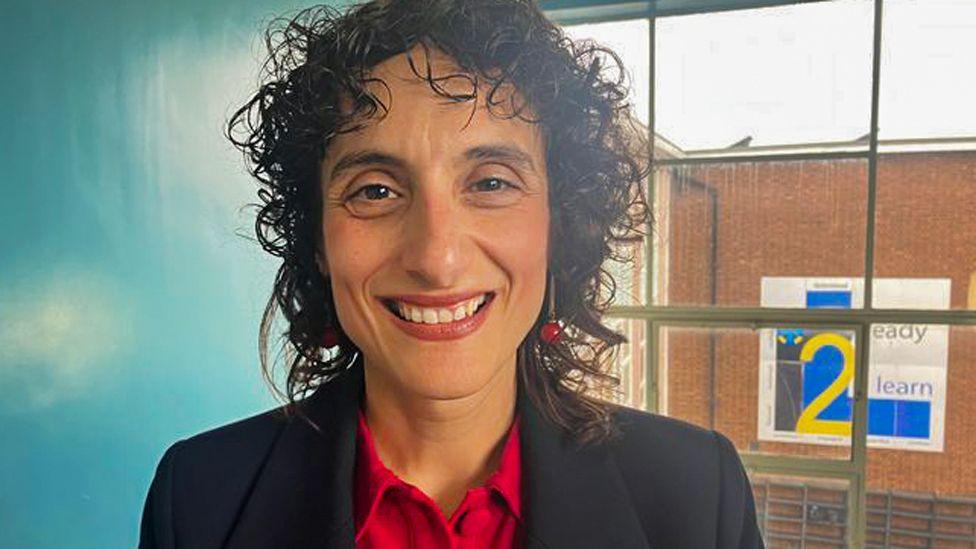
What role are external organisations playing in youth employment preparation?
Beyond individual schools, charities and external organisations are stepping in to bridge the gap between education and employment. Youth Careers Collective, which works with dozens of schools in London, brings employers into schools and arranges workplace networking opportunities for disadvantaged pupils.
Chief executive Matt Lent explains the organisation's approach.
We act as a bridge between schools and businessesby creating these connections. However, he cautions that employability skills alone cannot solve the Neets crisis.
Yes, we need to prepare young people for employment, but employers also need to take responsibility for creating accessible opportunities,he says. Lent remains
hopefulthat the Milburn review will address systemic barriers beyond school-level intervention.
What frameworks guide careers education in schools?
Schools and colleges across England are legally required to provide a careers programme, including expanded work experience opportunities, and to follow the updated Gatsby Benchmarks—guidance developed by the Gatsby Foundation to structure careers education effectively.
Beth Jones, who developed the benchmarks, notes a clear correlation between implementation and outcomes.
Careers guidance cannot solve every barrier young people face, but it is an important part of helping them navigate their futures successfully.Research shows that schools achieving more of the Gatsby Benchmarks are significantly less likely to have students leave as Neet.
What broader factors contribute to youth unemployment?
While careers education and vocational options are important, they represent only part of the solution to the Neet crisis. In his interim report earlier this year, Milburn highlighted a sobering reality: the education system can predict from age four which children are most likely to struggle. A child entering school without basic "school-ready" skills—such as potty training—at ages four or five is nearly three times as likely to be Neet by ages 16 or 17.
Pupils with special educational needs, those from lower-income backgrounds, and young people experiencing mental health difficulties face elevated risks of becoming Neet. The Institute for Fiscal Studies has warned that a "one-size-fits-all approach" to the crisis is "unlikely to work, given the very different circumstances of young people who are Neet". The institute identifies a critical question for government:
how much they are willing to invest in the short run in the hope of a pay-off in future years.
According to earlier reporting, Milburn has called for employers to introduce careers learning in primary schools from age four and make work experience mandatory for 14- to 16-year-olds as part of a comprehensive strategy to address the 981,000 young people who remain unemployed or inactive.

How are individual pupils responding to employability training?
Fifteen-year-old Riley, who aspires to work in acting or with animals, believes the skills she has acquired will serve her well when pursuing her first job interview.
You're able to learn a lot about yourself and how you can improve,she reflects.
It's quite nice because it prepares me for the future.
The government has already announced plans to allow students in England to choose new vocational GCSEs from age 14, building on existing school-level efforts to improve work-readiness. Technical subjects will be offered from age 14, with courses linked to local jobs and industries as part of the broader strategy to tackle youth unemployment.
What happens next?
The Milburn review, expected to be published this week, will set out formal government recommendations for tackling youth unemployment. Schools are anticipated to face increased expectations to ensure pupils are work-ready upon leaving, while the government will need to decide how much investment to commit to addressing the deep-rooted factors that contribute to youth unemployment across different demographic groups.