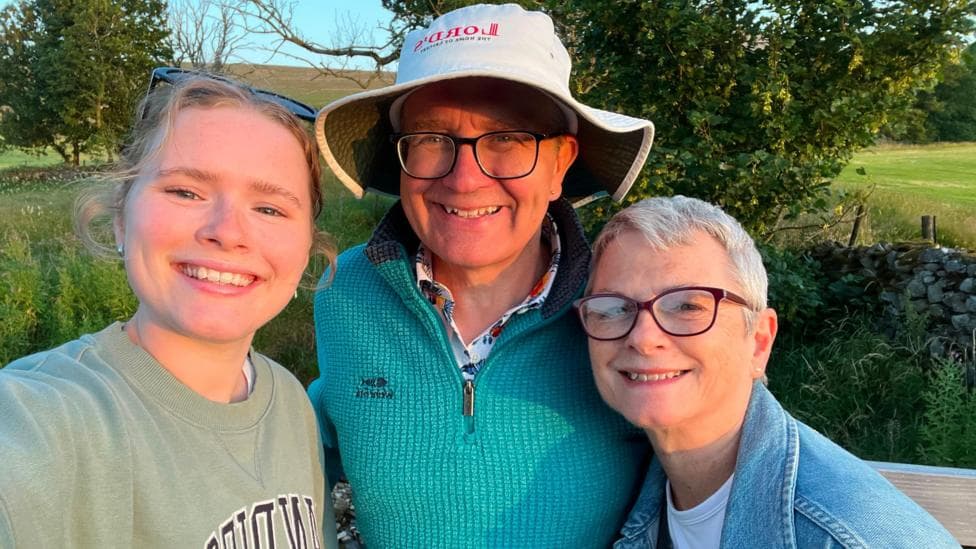
Sarah and Geoff Moorhouse have secured their daughter Poppy's enthusiastic blessing to spend their retirement savings on experiences rather than accumulate assets to pass down. The couple, who live in the Yorkshire Dales, travel four or five times annually to destinations including Scotland, the Lake District, Norfolk and Cambridgeshire, prioritising what Sarah describes as living life "to the max" while they are able to enjoy it.
This approach reflects a broader shift in retirement spending habits. A growing number of UK retirees are adopting what financial professionals call "skiing"—an acronym for spending the kids' inheritance—challenging the traditional assumption that wealth will transfer to the next generation. According to a March report by pension provider Standard Life, one in seven UK parents of children of all ages (15%) now plan to prioritise enjoying their money in retirement over leaving an inheritance. Across the Atlantic, the picture has shifted markedly: the proportion of Americans expecting to receive an inheritance from their parents dropped to 20% in 2025, down from 25% in 2024, according to research by financial services firm Northwestern Mutual.
Sarah, 64, a retired school administrator, explains her philosophy with candour.
I'm of an age where I'm going to friends' and acquaintances' funerals, and I think you just need to live life and enjoy it while you can, because it's a very precious commodity.She and Geoff recently sold their vintage Sunbeam Alpine sports car specifically to purchase a more modern Mazda MX-5 convertible, demonstrating their commitment to enjoying their resources during their active years.
Why are retirees changing their approach?
The shift towards spending rather than saving for inheritance stems from fundamental changes in how pensions operate. Mike Ambery, retirement and savings director at Standard Life, identifies the decline of final-salary pensions as a key driver. These schemes historically provided guaranteed monthly payments lasting throughout retirement, making it psychologically easier to set aside funds for heirs. Today, most UK workers accumulate defined contribution pension pots, which can be depleted and create uncertainty about whether retirement income will last as long as needed.
Beyond structural pension changes, many retirees simply wish to enjoy themselves after decades of work.
It's just having a little bit of indulgence to enjoy life. Let's face it, working life can be very hard for some people.Ambery notes that this desire for personal enjoyment represents a legitimate shift in priorities.
However, the financial landscape is becoming more complex. From April 2027, leftover private pensions will be counted in inheritance tax calculations, whereas most unused private pensions can currently be passed on tax-free, prompting many people to reconsider their retirement strategy. This change may accelerate the skiing trend as retirees recognise that unused pension funds will face tax treatment previously unavailable.
What do adult children think about this?
Poppy Moorhouse, one of Sarah and Geoff's two adult daughters, firmly rejects any expectation of inheriting parental wealth.
To me that's wild. It never even crossed my mind that I'll get money when my mum and dad die. I'd so much rather them do what they want to do.Her perspective reflects a generational shift in attitudes towards inheritance, particularly among younger adults who increasingly doubt the viability of traditional wealth transfer.
Financial advisers emphasise the importance of clear communication between generations. Matthew Loveless, a vice president at Northwestern Mutual based in Ohio, stresses that retirees must be explicit with their adult children about inheritance plans.
Some of whom might be expecting an inheritance that they intend to rely on.This transparency prevents misunderstandings and allows younger adults to plan their own financial futures accordingly.

How much are retirees actually spending on family support?
While some retirees embrace skiing, others maintain significant financial commitments to their families. According to Quilter's 2026 Retirement Lifestyle Report, retirees spend an average £2,272 a year on gifts to relatives and £2,250 on education costs for children and grandchildren. Family support now accounts for 17% of annual retiree spending, surpassing expenditure on groceries. This suggests that while some pensioners prioritise personal experiences, many continue to direct substantial resources towards supporting younger family members.
Additionally, Standard Life reports that three in five parents of over-18s prioritise supporting children financially during retirement, with one in seven saying this commitment will delay their own retirement. This indicates that the skiing phenomenon, while growing, coexists with continued family financial obligations among many retirees.
Who are the people choosing to spend their inheritance?
Karen Green, 60, exemplifies the explicit approach some retirees take. Originally from Berkshire, she has lived in Provence in the south of France for the past 11 years and spends more than £10,000 annually on holidays.
I have been quite explicit to say there is unlikely to be a legacy because I'm anticipating spending it all.
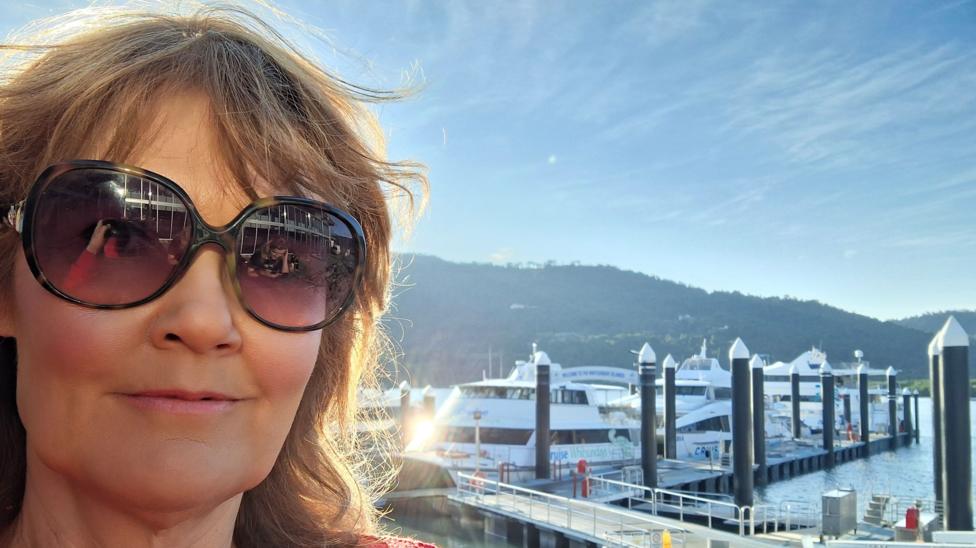
Karen describes herself as semi-retired, supplementing her private pension through business consultancy work—the profession she previously pursued full-time. Her monthly income matches what she earned during full-time employment, with 40% of her funds derived from renting out a property. She plans extensive travel, including a yoga retreat and tours through Vietnam and Laos. Despite her spending on experiences, Karen insists she is not
crazy with moneyand actively seeks value.
I like to get a deal.
Like Sarah Moorhouse, Karen will not receive her UK state pension until age 67, when she becomes eligible for the standard £12,547.60 annually (for those reaching state pension age after April 2016). This amount is scheduled to increase in the coming year. In the United States, retirees receive Social Security retirement benefits, with the maximum annual amount from the full retirement age of 67 standing at $49,824 (£36,993), though individuals can opt for reduced payments from age 62.
What is the broader financial context?
Not all retirees enjoy the financial security to embrace skiing. In the UK, 16% of pensioners live in poverty according to the Joseph Rowntree Foundation charity, while the US figure stands at 15.4%. Simultaneously, UK pensioners have experienced disposable income growth—excluding housing costs—that exceeds that of non-pensioners over the past three decades, according to the Institute for Fiscal Studies think tank.
Pension coverage remains uneven. Official figures show that 69% of UK retirees hold a private pension in addition to their state provision, compared to 56% of US pensioners. This disparity influences retirement spending capacity and inheritance potential across both nations.
Sarah Moorhouse articulates the philosophy underpinning the skiing movement with characteristic directness.
I've worked hard all my life and I think I deserve to have a bit of free time and to be able to do nice things.For her and a growing cohort of retirees, the opportunity to travel, pursue hobbies and enjoy experiences during active retirement years outweighs the traditional obligation to accumulate wealth for the next generation.