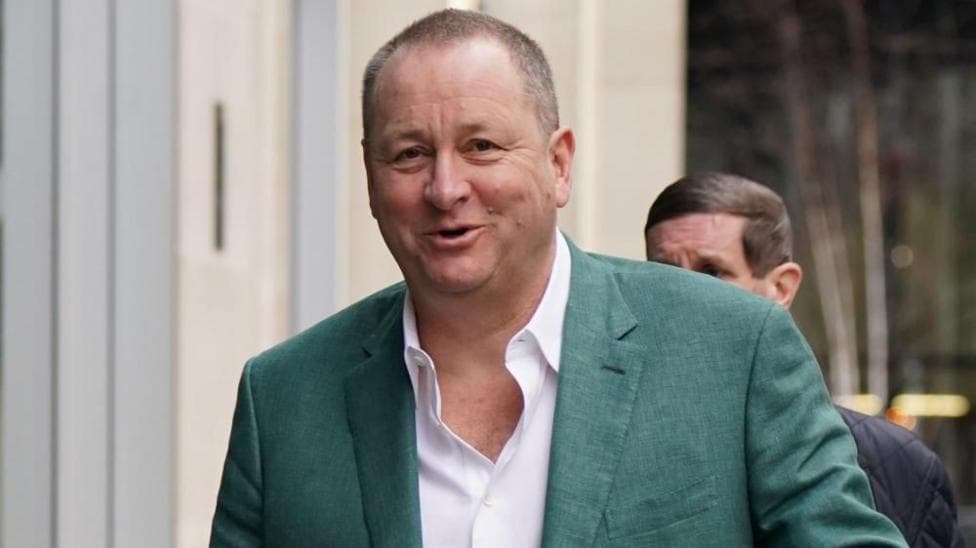
Billionaire retail entrepreneur Mike Ashley has launched a scathing critique of Prime Minister Andy Burnham's approach to revitalising Britain's high streets, dismissing his cost of living and retail policies as superficial responses to deeper structural problems facing the business sector.
In a letter to Burnham, Ashley accused the prime minister of pursuing "populist reactions" and "jumping on 'everyday fixes' or bandwagons" rather than addressing the fundamental challenges confronting retailers. He singled out business rates policy and rising employment costs as the genuine drivers of commercial distress, describing Burnham's proposals as inadequate and misguided.
Ashley's intervention, reported on 27 August, represents a significant public challenge from one of Britain's most prominent business figures to the government's retail strategy. The Frasers Group founder has long positioned himself as a voice for high street businesses, repeatedly calling for comprehensive tax reform to level the playing field between traditional retailers and online competitors.
A Downing Street spokesperson responded by reaffirming the government's commitment to economic renewal, stating that Burnham would "build a new economy that backs British business, delivers growth in every postcode and ensures the essentials in life - like energy, water and housing - are affordable again." The government highlighted its VAT cuts on household electricity bills and business rates reductions for certain firms as initial steps, describing these measures as "just the start" of a broader programme.
What are Burnham's high street proposals?
Burnham has outlined a multi-faceted plan to address the decline of town centres and shopping districts. Earlier this month, he announced measures to help local councils block new vaping and betting shops, aiming to restrict the proliferation of these outlets on struggling high streets. The government has also brought forward rules to end subscription traps and ban retailers from using misleading recommended retail prices—a practice that artificially inflates the appearance of discounts.
According to coverage of the government's planning powers, tighter rules on vape shops, betting shops and adult gaming centres will require planning permission, with these requirements expected to start next year. The government has also committed to providing business rates relief worth approximately £100 million to support venues on the high street.
A cornerstone of Burnham's strategy is a 20% business rates cut for pubs, social clubs and live music venues, scheduled to take effect from April 2027. According to analysis of the government's tax announcements, this relief is expected to benefit approximately 32,000 venues in England, with a typical pub's bill cut by around £1,100 in 2027/28. A review has also been launched into how business rates are calculated, reflecting long-standing calls from high street firms for fundamental reform of the tax system.
Why does Ashley object to the warehouse rates proposal?
Ashley's most pointed criticism targets Burnham's previous suggestion that higher business rates on large warehouses operated by online retailers could fund the cuts for pubs and clubs. The entrepreneur dismissed this approach as fundamentally flawed, describing it as "simply delusional."
"If your answer is to tax larger retailers even more, through hiking business rates on retailer owned or third-party warehouses whilst reducing rates for pubs and clubs, then that is simply delusional,"
Ashley wrote in his letter. Before becoming prime minister, Burnham had suggested that warehouse levies targeting online firms such as Amazon, combined with taxes on owners of empty high street properties, could offset the cost of supporting pubs, clubs and music venues. Ashley's objection reflects his long-standing position that the solution lies not in redistributing the tax burden between different types of business, but in fundamentally overhauling the rates system itself to create genuine parity between high street and online commerce.

What does Ashley say about the underlying problems?
In his letter, Ashley contended that the real obstacles facing retailers have little to do with the specific policies Burnham has announced. Instead, he identified two primary culprits: the business rates system and the escalating cost of employment.
"It is the disastrous business rates position (which I have raised many times over the years) and the dramatically increasing cost of employing people that are really causing business to struggle,"
Ashley stated. He called on Burnham to use the upcoming Budget to lower costs for employers and fundamentally reshape the government's approach to business rates. Burnham has signalled that he intends to go "further" on business rates for high street businesses at the autumn budget, extending relief beyond the initial support for pubs, clubs and venues.
Ashley also referenced comments by Kemi Badenoch, the Conservative peer and former Marks & Spencer chief executive, who had dismissed the government's announcements as "hot air." By aligning himself with this criticism, Ashley sought to position his objections within a broader business consensus that the proposals fall short of what is needed.
What is Ashley's track record on employment and business practices?
Ashley's intervention carries weight given his transformation of Sports Direct from a single store in Maidenhead in 1982 into a sprawling retail empire encompassing dozens of brands and employing 30,000 people. However, his business career has been marked by persistent controversy. In 2016, Ashley admitted to MPs that workers at his Derbyshire warehouse had been paid below the minimum wage and that a policy of fining staff for lateness was unacceptable. These admissions followed years of criticism from investors, media outlets and labour advocates regarding working conditions and employment practices at his operations.
Despite these controversies, Ashley remains a significant figure in British retail. His company, Frasers Group, which he still owns but now runs through his son-in-law Michael Murray, acquired luxury department store Harvey Nichols this month and pledged a "significant restructuring" of the business. In his letter to Burnham, Ashley also pressed the prime minister on how the government intends to support Harvey Nichols, which has faced financial difficulties in recent years.
What are Ashley's other criticisms of the government's approach?
Beyond his objections to the rates and employment cost issues, Ashley challenged Burnham's plan to crack down on misleading recommended retail prices. Rather than targeting this practice, Ashley argued that the real problem lies in "price fixing in sporting goods and other markets," citing the rising cost of official football merchandise as an example. This criticism suggests Ashley views the government's focus on consumer protection measures as a distraction from what he sees as more fundamental market distortions.
Ashley warned that without major reforms to the business rates system, the high street will be "further devastated." He also expressed scepticism about Burnham's suggestion that further business rates changes will be considered at the coming Budget, describing such measures as "too little, too late" given the scale of the challenge facing retailers.
"You have the chance to make a difference or get it horribly wrong,"
Ashley concluded in his letter, framing the Budget as a critical moment for the government's retail strategy.
What happens next?
Burnham is expected to provide more detailed announcements on business rates support for high street businesses when the government presents its Budget on 28 October 2026. The 20% rates cut for pubs, social clubs and live music venues is scheduled to take effect from April 2027. The government has also committed to consulting on misleading pricing practices this autumn, with new consumer protections due by January 2027.
Ashley's public letter signals that the retail sector remains divided on whether the government's approach will prove sufficient to reverse the long-term decline of Britain's high streets, with influential business figures continuing to press for more fundamental structural reforms to the tax and employment landscape.