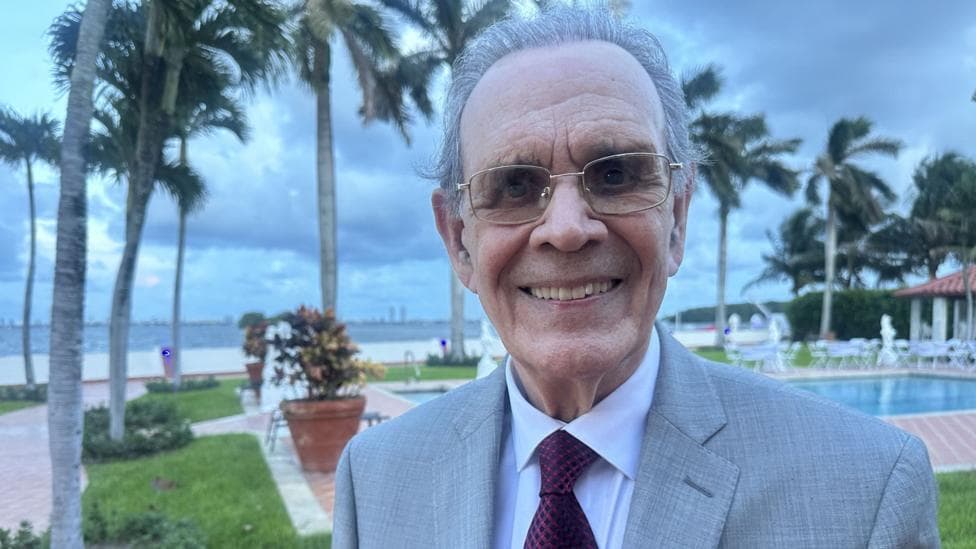
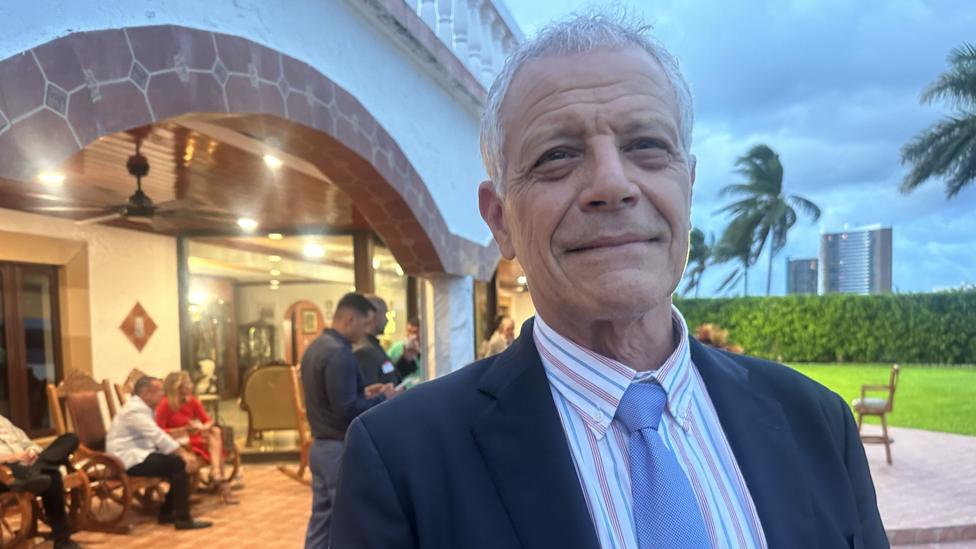
At a gathering in an upscale Miami home overlooking Biscayne Bay, some of Florida's most prominent Cuban-American families assembled to discuss their vision for Cuba's political and economic future. The fourth meeting of the Cuban-American National Chamber of Commerce (CANCC) brought together members of Miami's established wealth—families bearing names like Bacardi and Babun—to refine plans for what they describe as "the day after" the current regime falls.
CANCC president Juan Omar Sixto, a real estate developer in his early 80s who fled Cuba as a teenager, framed the gathering's purpose directly:
"The intention of this evening is to gather under one roof the most prominent Cuban-American entrepreneurs in Miami-Dade County, and the objective is to be in Cuba once the regime falls."His guests expressed conviction that such a transition was imminent.
This influential diaspora community has opposed the Communist government since Fidel Castro seized power in 1959, expropriating their lands and nationalising their family enterprises. Over decades, they have leveraged their political and economic influence in Florida to shape Washington's approach to their homeland. According to the Miami Herald, Sixto indicated that if the chamber reaches its goal of 100 wealthy Cuban-American families, their combined net worth would total approximately $200 billion.
What planning has the chamber undertaken?
The CANCC has developed detailed proposals for Cuba's reconstruction, including creation of a Havana stock and commodities exchange and an investment summit designed to attract banks, corporations and investment funds. The organisation has established committees addressing energy infrastructure, food security and other sectors deemed critical for post-transition development. Sixto's own father lost five properties and a farm in Pinar del Rio province during the revolution, a loss that shapes his commitment to securing restitution or compensation for nationalised assets.
Nicolás Gutiérrez, president of the National Association of Sugar Mill Owners of Cuba, an exile organisation championing title claims, outlined potential uses for recovered land:
"Most of our sugar mills have been dismantled, but we will recover those lands and put them into production. I'm not promising it will be in sugar. It might be in ethanol, co-generation, solar panels or water purification cells. Who knows? There are a lot of different options. We need to get them producing, we need to have a real wage paid to Cuban workers and create a multiplier economic effect across the island."
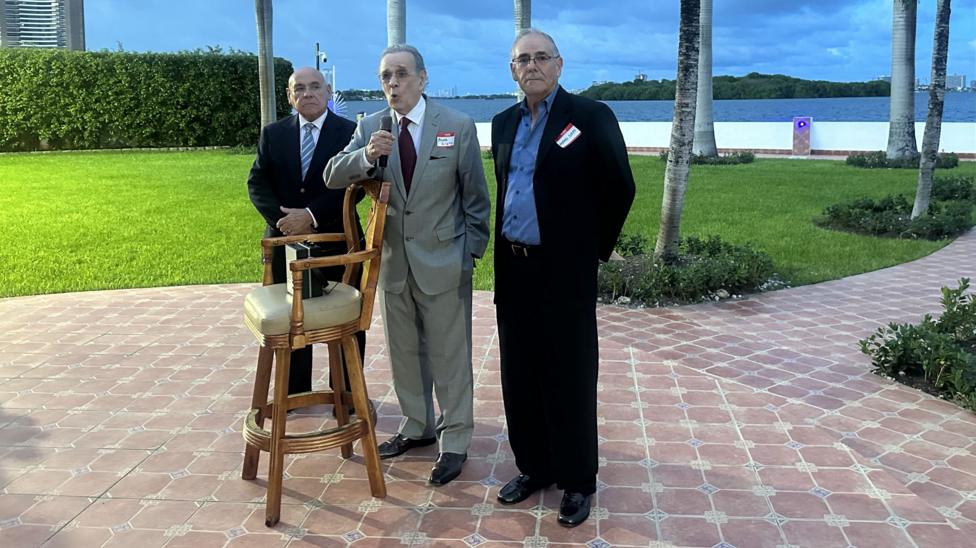
Sixto expressed readiness to mobilise resources immediately upon regime change, stating:
"Together with deliveries of humanitarian aid and medical supplies, we'd go and do business in Cuba right away."He cited connections to high-profile figures including people close to Secretary of State Marco Rubio, suggesting the Trump administration's "maximum pressure" campaign on Cuba creates unprecedented opportunity for such planning.
How has Cuba responded to these plans?
The Cuban government has not publicly commented on the CANCC itself, though such groups traditionally provoke indignation among revolutionary leadership, who insist they will not be displaced by Miami-based critics. In March 2026, Cuba's foreign-trade minister Óscar Pérez-Oliva Fraga stated that the country was open to investment from Cubans living abroad, including Cuban Americans; however, CANCC founders rejected the offer, citing a lack of legal guarantees.
In response to Washington's "maximum pressure" campaign, Cuba's leadership recently announced 176 economic liberalisation measures. President Miguel Díaz-Canel characterised them as intended
"to advance the defence of socialism, to support and widen social justice."To critics, however, the measures appear to constitute full-blown capitalism—lifting caps on private-sector workers, permitting direct hiring and firing of Cuban employees, and allowing ownership of multiple enterprises simultaneously, including by Cuban Americans. CANCC attendees dismissed these reforms as cosmetic, offering no meaningful investor protections. Sixto stated they would
"not put a foot into Cuba"while the current regime remained in place.
What do analysts say about the timing of these plans?
Some scholars question whether such planning meetings are premature. Mike Bustamante, associate professor of history at the University of Miami, argues that expectations for imminent change have diminished.
"Right now, the very high expectations created by the US administration that some kind of 'day after' was coming soon, or that Cuba would 'be next' have been kicked down the road."With November mid-term elections approaching and the Trump administration occupied with international crises, Bustamante contends there is limited appetite for further foreign military ventures.
He characterised current policy as incremental:
"It's really tough to think that they will escalate further than what they're doing which is this drip-drip-drip of sanctions."Although the island's oil supply has been effectively shut off since January, creating severe hardship for ordinary Cubans, Bustamante notes these measures have not yet
"created the ingredients for a political inflection point"in Cuba. According to Politico, on October 1 the Treasury Department announced tightened Cuba sanctions, and President Trump called for "fundamental change" on the island in a speech to the United Nations General Assembly the previous month.
What are the practical challenges to reconstruction?
Cuban-American agricultural expert Hugo Orizondo acknowledged the difficulty of assessing conditions on the island.
"Right now, Cuba is like a black hole, we don't know what is happening over there. But we do know the potential [for investment]."He recognised Cubans' sensitivity about foreign investors acquiring rights to arable land, yet argued that external capital and expertise are essential.
"When investors come, they bring money and technology into the land."
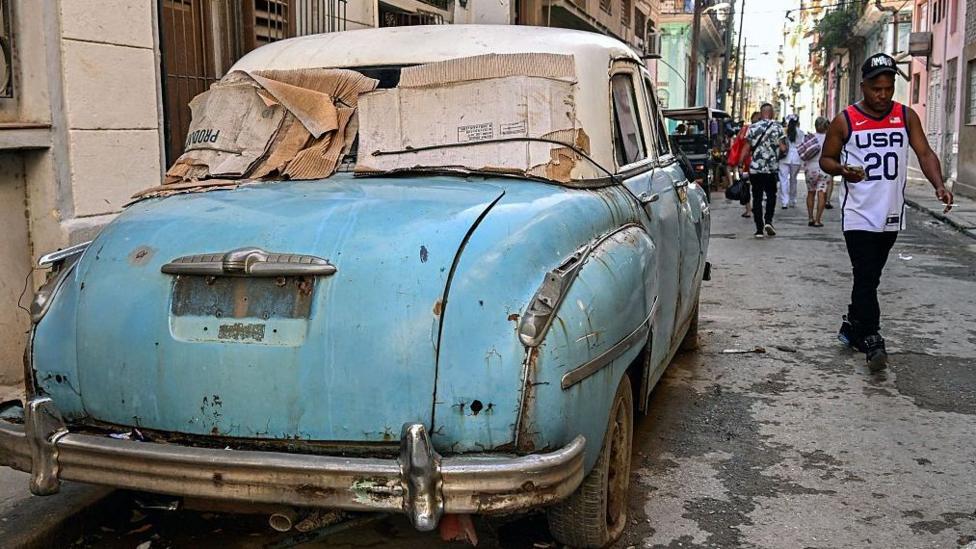
The scale of Cuba's infrastructure deficit is substantial. Repairing the island's failing electrical grid alone is estimated to cost between $8 billion and $10 billion. Before any sector—from agriculture to tourism—can be revitalised by diaspora wealth and political connections, Cubans face acute shortages in food, water, fuel and medicines. Within hours of the CANCC gathering, Cuba experienced its sixth nationwide blackout of the year, underscoring the disconnect between Miami's ambitious reconstruction plans and the immediate crises confronting the island.
What historical context shapes these claims?
The Cuban government portrays historic title claims as expressions of bitterness by a corrupt landed gentry who accumulated fortunes through the labour of indentured workers and enslaved people—systems that persisted in Cuba until the late 19th century. The government argues that exiles cannot accept that Castro implemented land reforms transferring fields to workers and the state. Cuba's last stock exchange ceased operating in 1959, according to reports on the chamber's proposed Havana exchange, making the CANCC's plan to establish a new exchange a significant departure from post-revolutionary practice.
What are the chamber's next steps?
The chamber's website previously listed an invitation-only gathering scheduled for September 16, 2026, though that date has passed as of early October with no subsequent event date publicly announced. The organisation continues to develop detailed proposals for Cuba's economic transformation, contingent on political change that remains uncertain in timing and form.
For most ordinary Cubans, the elaborate plans being drafted in Miami's affluent neighbourhoods remain distant from their immediate reality. While the diaspora anticipates fundamental transformation, the island's population continues to navigate daily shortages and infrastructure failures, hoping for incremental improvements rather than the wholesale reconstruction their exiled compatriots envision.