The International Monetary Fund has assessed the economic prospects of nations worldwide, and its findings on the United Kingdom reveal a mixed picture of near-term resilience tempered by emerging headwinds. The IMF's twice-yearly forecasts carry significant weight in global economic analysis, as the organisation works to maintain stability across international markets. However, like all projections, these assessments can prove inaccurate and should not be viewed as definitive.
Three key insights emerge from the IMF's latest evaluation of the British economy.
How is the UK weathering global energy shocks?
The global economy has experienced substantial turbulence from the US-Israel conflict with Iran. Disruption to energy transportation and production across the Middle East has driven oil prices upward and intensified inflationary pressures worldwide. Central banks, including the Bank of England, are anticipated to raise interest rates in coming months to counter accelerating price growth.
Despite these headwinds, the IMF reported that the global economy is performing considerably better than anticipated, bolstered significantly by a surge in investment into artificial intelligence. This positive momentum extends to the UK. The fund upgraded its forecast for British economic expansion to 1.3% in 2026, an increase from the 1% projection made in July, though it expects a deceleration to 1.2% in 2027. According to , the IMF warned that higher energy prices and long-term interest rates are expected to weigh on UK growth in 2027, even after its upgrade to the 2026 forecast. Economic expansion allows companies to invest capital and expand their workforce while consumers gain purchasing power; conversely, contraction produces the opposite effect.
Where does the UK stand among major economies on fiscal discipline?
Growing concern surrounds the borrowing levels accumulated by governments globally, yet the IMF identified the UK as performing better than all other major developed economies on this measure. The fund noted that the UK "basically stands out, along with India" in addressing this challenge, and by 2031 it is projected to maintain the lowest annual borrowing among G7 members—a group comprising Canada, France, Germany, Italy, Japan and the United States.
Sir Howard Davies, former deputy governor of the Bank of England, attributed this relative success to the UK government's majority status and demonstrated commitment to tackling the deficit through either tax increases, public service reductions, or a combination of both. He contrasted this with the United States, which has articulated little about deficit reduction, and France and Germany, which lack majority governments.
"So, we [the UK] are not great students, but we look somewhat better than some of the others we are sharing the class with,"Davies observed.
The IMF's growth projections position the UK to achieve the second-fastest expanding economy in the G7 this year alongside Germany. Davies cautioned against overinterpreting this achievement.
"We're still growing slowly. It's almost like saying we're winning a slow bicycle race here because other people are going backwards a bit more rapidly than we are."
According to , the UK ran a budget deficit of 4.4% of GDP last year and aims to balance day-to-day spending with tax revenue by 2029/30. IMF chief economist Silvana Tenreyro said the UK should
"stay the course"on deficit reduction, according to the same source.
What economic challenges lie ahead?
Although the IMF elevated its 2026 growth projection for the UK, it marginally reduced its forecast for the following year. While Britain has navigated the economic consequences of the Iran conflict more successfully than anticipated to date, the fund expects this advantage to erode in 2027 as elevated energy costs and higher interest rates constrain consumer spending and corporate investment appetite.
The IMF also cautioned that households will likely endure continued pressure from rising prices. The fund forecasts UK inflation will average 3.3% in 2026, and it has raised its estimate for 2027 to 2.8% from a previous projection of 2.4%. Tim Armitage, investment strategist at Quilter Cheviot, commented on the implications:
"There will be increasing inflationary pressure put on the UK and the Bank of England will have to consider further rate rises."Armitage added that at least one rate rise is anticipated this year, with additional increases expected to follow in 2027.
What happens next?
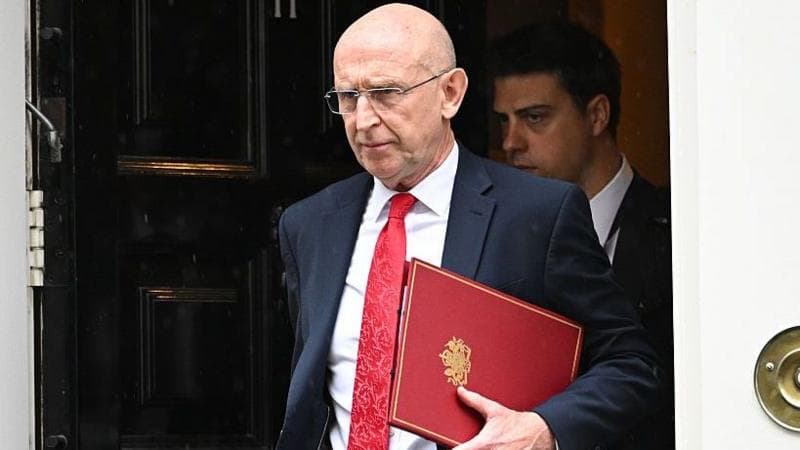
Finance minister John Healey is scheduled to update the government's budget plans on 28 October 2026, providing an opportunity to outline how fiscal consolidation efforts will proceed in light of the IMF's latest assessment and economic conditions.