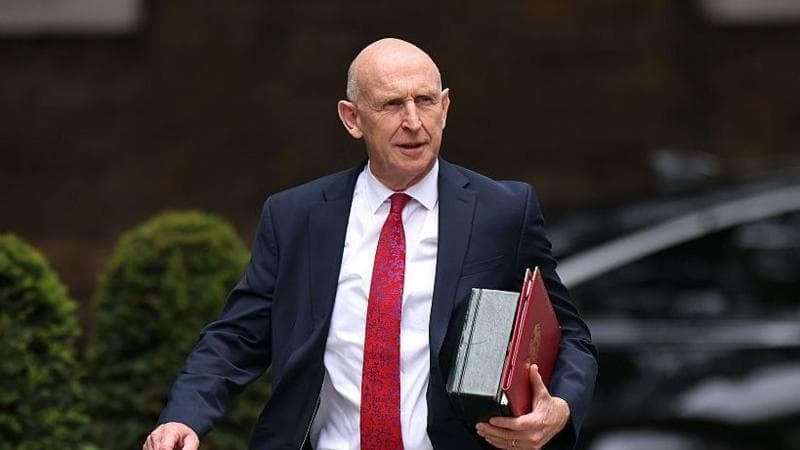
Chancellor John Healey will present a £150m investment programme targeting companies across northern England as part of a broader strategy to stimulate economic growth throughout the UK. The initiative forms part of his administration's push to leverage public capital in attracting private investment ahead of his first Budget on 28 October.
Healey's speech, scheduled for Monday, arrives during a period of economic headwinds. The government confronts mounting pressures including elevated borrowing costs for the state and concerns about inflationary consequences stemming from regional tensions involving Iran.
According to reporting on the Treasury's strategy, the government is preparing to assign the British Business Bank and the National Wealth Fund with expanded responsibilities for supporting investment and innovation across the country, including establishing new strategic partnerships with several mayoral authorities.
What does the £150m fund cover?
The allocation will be drawn from funds already committed to the British Business Bank and will target the "most innovative and fast-growing firms" in the region. Individual investments will range between £5m and £15m, with particular emphasis on university spin-outs and other ambitious enterprises seeking to establish operations in northern areas.
Healey intends to articulate how public investment can "unlock private investment, to support our innovation economy, and to create the new jobs their areas need". According to Treasury sources, a government official characterised the approach as "not sentimentality, it's supply side economics."
The National Wealth Fund has already established strategic partnerships with South Yorkshire, Liverpool City Region, the North East, and Cardiff Capital Region, providing local leaders with access to its investment expertise.
What is the government's wider growth strategy?
The chancellor is expected to emphasise that regional development represents a central pillar of the government's economic vision. In his remarks, Healey will likely reference statements made by Prime Minister Andy Burnham regarding the necessity for fundamental restructuring that places decision-making authority in appropriate locations.
Burnham has previously outlined plans for devolution and regional empowerment, framing these as essential to unlocking growth beyond London and the South East. The chancellor's speech will reinforce this message, asserting that "the next chapter of Britain's growth story will be written in more places."

This announcement builds on earlier government commitments to regional investment. In March 2026, the administration unveiled a broader northern technology package that included £150m from the British Business Bank directed toward high-potential companies in northern clusters, signalling continuity in the government's place-based investment approach.
How have critics responded?
Opposition parties have questioned whether the initiative will deliver meaningful economic benefits. The Conservative Party stated that the proposals would "do little to comfort hard-working families and businesses" facing economic uncertainty.
Shadow Chancellor Andrew Griffith argued that the plan would provide minimal relief to households and enterprises concerned about potential tax increases and elevated government borrowing rates, which he noted had reached near 28-year highs. Griffith also criticised the chancellor for apparently neglecting defence spending commitments, referencing Healey's previous resignation over defence budget disagreements and the government's stated goal of reaching 3% of GDP on defence expenditure.
Helen Miller, director of the Institute for Fiscal Studies, expressed scepticism about the feasibility of the ambition. She observed that while "economic growth in every postcode sounds great and is something we would all love," achieving this outcome "will actually be much harder to achieve in practice." Miller suggested it would be simpler to identify mechanisms for strengthening second and third-tier cities than to demonstrate how growth could be driven "in literally every postcode."
Liberal Democrat deputy leader Daisy Cooper dismissed the fund's scale, stating that "re-announcing £150m across the entire north of England will barely shift the dial on growth." Robert Jenrick, Reform UK's economic spokesman, was more forceful, characterising Healey as "an empty vessel with no idea about how to rescue our economy" in the aftermath of recent market volatility.
What is the political context?
The announcement occurs as Burnham faces scrutiny over rising UK borrowing costs. During his first Prime Minister's Questions on Wednesday, Conservative leader Kemi Badenoch pressed him on how the government would address mounting national debt, noting that the cost of borrowing for the UK had reached an 18-year high.
Burnham attributed the situation to the previous Conservative administration and pledged that his government would operate "grounded in fiscal responsibility." Economists have urged Healey to employ more flexible fiscal rules or adopt new borrowing models to fund investment while managing immediate spending pressures and a £5bn defence gap, suggesting tension between growth ambitions and fiscal constraints.
The timing of Healey's speech reflects the government's effort to establish a growth narrative before the October Budget, when more comprehensive fiscal decisions will be announced. The administration has previously committed to fiscal discipline and stability for businesses and families, positioning the growth fund as consistent with this framework rather than as a departure from it.
Key Facts
- The £150m fund will provide investments between £5m and £15m to innovative northern companies, with particular focus on university spin-outs
- The National Wealth Fund has established strategic partnerships with South Yorkshire, Liverpool City Region, the North East, and Cardiff Capital Region
- The chancellor's first Budget is scheduled for 28 October, with this announcement serving as an advance preview of growth-focused policies
- UK government borrowing costs have reached 18-year highs, creating fiscal pressure ahead of the Budget announcement
- The initiative builds on a March 2026 northern technology package that similarly allocated £150m from the British Business Bank to regional clusters