Introduction to a Decade-Long Reflection
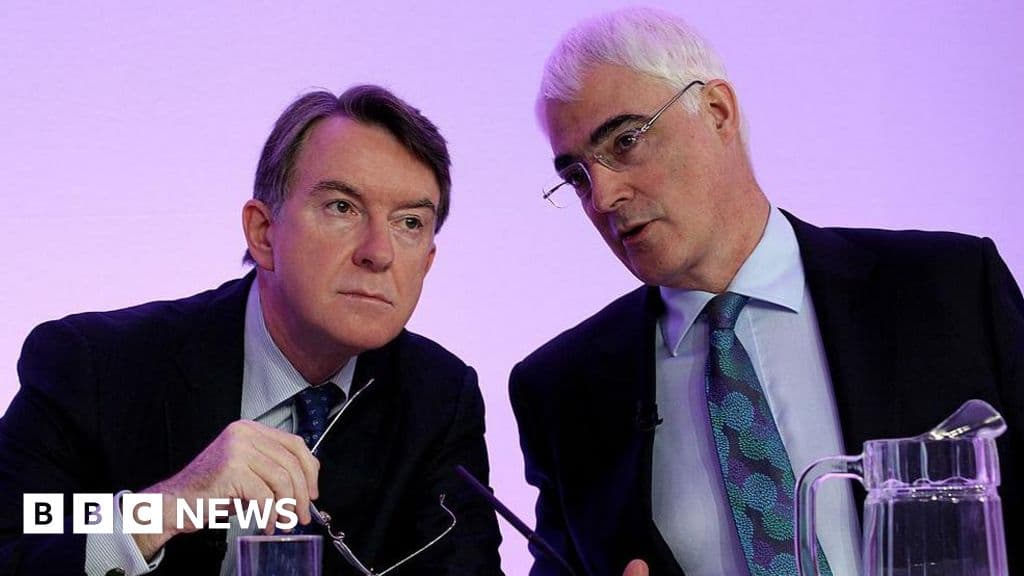
For over fifteen years, I have reflected on a private discussion with the late Alistair Darling, who served as Chancellor of the Exchequer under Prime Minister Gordon Brown, concerning the financial crisis.
The 2009 Telephone Conversation
Darling recounted a distressing and confrontational phone call he received from Jamie Dimon, the chief executive of the American banking giant JP Morgan, at the close of 2009. This call coincided with the UK government's announcement of a new tax on bankers' bonuses.
Some aspects of this exchange were public knowledge at the time, including Dimon's threat to cancel JP Morgan's plans for a substantial new headquarters in the UK.
New Revelations from Epstein Files
However, I was utterly astonished to discover that recently released Epstein files contain further details about the context and background of this call. These documents suggest an unexpected involvement of Peter Mandelson, Jeffrey Epstein, and the notion of "mild threats" related to the bonus tax.
Peter Mandelson, who was the business secretary at the time, apparently advised that Dimon should issue a mild threat to Darling regarding the tax.
Insights from Private Interviews in 2011
In 2011, during a series of private interviews conducted as part of the research for Darling's book Beyond the Brink, he provided additional information about the call.
Dimon had emphasized that JP Morgan was among the largest purchasers of UK government debt, implying that the bank could potentially cease lending to Britain if the tax proceeded.
Despite this pressure, Darling stood firm. He also recalled that numerous bankers contacted him, seemingly following a scripted complaint about the bonus tax, urging him to reverse the decision.
The frequency of these calls was such that Darling began anticipating their arguments before they spoke, having heard the same points repeatedly.
Details from Darling's Book
Much of this narrative, though not all, is documented in Darling's publication. He wrote:
"Mr Dimon was very, very angry.. he said that his bank bought a lot of UK debt and he wondered if that was now such a good idea. I pointed out that they bought our debt because it was a good business deal for them. He went on to say they were thinking of building a new office in London but they had to reconsider that now."
Although the office was eventually constructed, the bonus tax remained in place, and JP Morgan did not ultimately cease purchasing UK gilts. This episode serves as a vivid example of the balance of power between government and financial markets, illustrating the dynamics of the so-called "bond vigilantes."
Epstein and Mandelson's Involvement
The possibility that this episode was partially orchestrated through Jeffrey Epstein, with Peter Mandelson emailing advice while serving as Britain's business secretary on the financial crisis cabinet under Gordon Brown, is remarkable.
The policy in question imposed an additional 50% tax rate on bankers' bonuses exceeding £25,000.
Correspondence Between Mandelson and Epstein
The files reveal that in December 2009, prior to the call from Dimon, Mandelson wrote to Epstein stating: "Treasury digging in but I am on [the] case."
An email attributed to Epstein dated 15 December asked: "[A]ny real chance of making the tax only on the cash portion of the bankers bonus."
On 17 December, another email highlighted by tax expert and Labour Party member Dan Neidle showed Epstein inquiring whether Dimon should make one final call to Darling.
Mandelson reportedly replied that Dimon should "mildly threaten" Darling.
The call from Dimon to Darling, as previously described, took place a week later on 23 December 2009.
Mandelson's Response to the Allegations
Peter Mandelson told the BBC on Sunday that all UK and international banks were making similar arguments about the potential impact on UK financial services.
"My conversations in government at the time reflected the views of the sector as a whole not a single individual," he stated.
Mandelson has been contacted for further comment.