It is green, bulking with aggressive lines, and unmistakably intimidating. Ford's latest offering resembles a pick-up truck that has undergone a dramatic transformation. Drawing on its established Ranger platform, this muscular vehicle stationed at Ford's Dagenham facility in east London can transport a two-tonne load, tow up to four tonnes, and carries the aspirations of the 2,000 workers who continue to manufacture engines at the site.
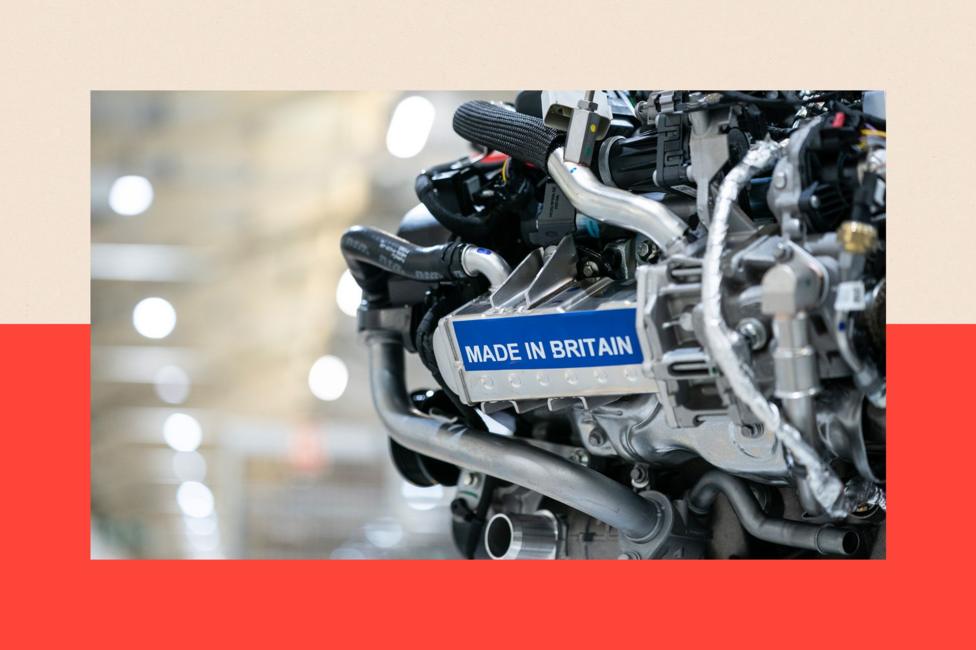
Within the factory walls, three-litre diesel engines destined to power this camouflaged prototype move along a production line that has contracted sharply. Annual output has fallen from 90,000 engines to approximately 45,000 over the past decade—a decline that reflects the broader turmoil engulfing Europe's automotive sector.
Ford is banking on a strategic reorientation toward military vehicles to address the void left by what the company's UK leadership describes as the most hostile commercial environment since the automobile's invention. Once a dominant force, the European car industry now finds itself diminished and is looking to Europe's expanding defence budgets as a potential lifeline to restore its industrial standing.
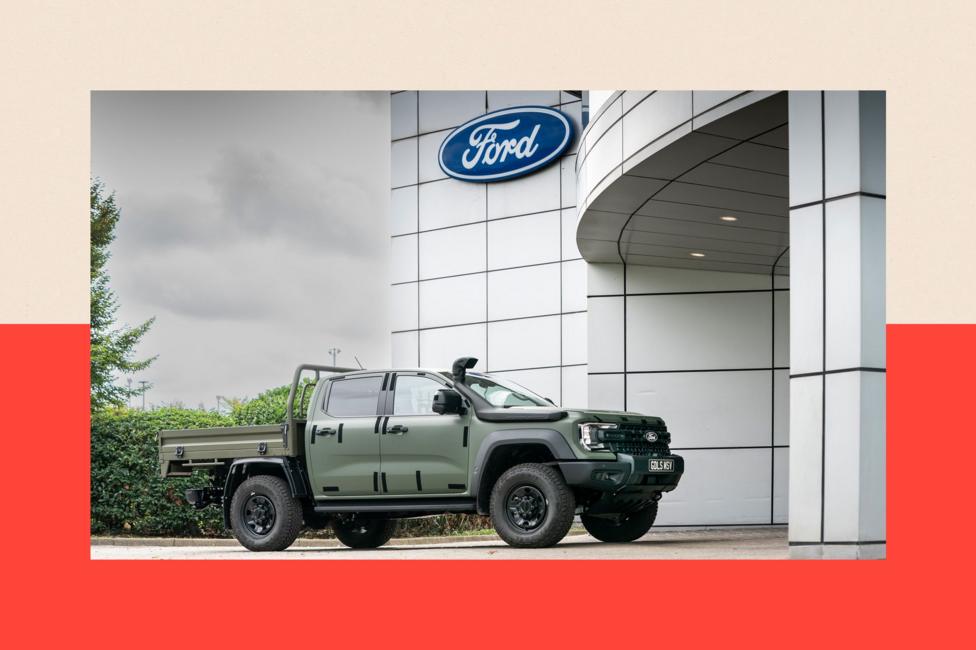
The company is participating in a joint venture with defence contractor General Dynamics and engineering firm Ricardo to bid for a Ministry of Defence contract to supply vehicles for the British Army's Light Mobility Vehicle (LMV) programme. According to defence procurement reporting, the initial phase covers approximately 3,000 vehicles, with options that could expand the total to more than 9,500 units and extend the arrangement through 2047.
Lisa Brankin, chair of Ford UK, frames the opportunity as a chance to demonstrate the company's capacity to respond swiftly to defence requirements:
As a manufacturer you look at every opportunity that comes at you and this is a great opportunity that we would love to take advantage of.Under Ford's proposal, engines will continue production at Dagenham while military conversion work is planned in South Wales.
This is not Ford's first venture into defence manufacturing. Before the Second World War, Ford's Dagenham facility was Europe's largest car plant. When conflict erupted, civilian vehicle assembly ceased entirely, and the factory converted to full military production. Between 1939 and 1945, the Dagenham plant manufactured 360,000 vehicles for the Allied forces. Separately, Ford workers in Manchester produced 34,000 Rolls-Royce-designed Merlin engines that powered Spitfire and Hurricane fighter aircraft.
Eight decades later, the UK and European car industries are hoping that defence procurement can arrest what one supplier characterised as a
terminal declinein the commercial sector. As Europe commits hundreds of billions to strengthen defence capabilities in response to Russian threats and reduced American security guarantees, car manufacturers facing commercial assault from Chinese competitors have taken notice.
Can rearmament reverse the industry's fortunes?
Ford is far from alone in recognising defence as a growth sector capable of absorbing excess manufacturing capacity across Europe. French manufacturer Renault has entered a strategic partnership with defence firm Thales to produce military drones, targeting output of up to 1,000 units monthly. The French military and its Directorate General for Armament aim to leverage Renault's mass-production expertise to circumvent slower traditional defence supply chains.
Volkswagen has agreed to divest an underutilised factory in Osnabruck, western Germany, which will become a military manufacturing facility through a joint venture with an Israeli-based defence investor. Jaguar Land Rover, manufacturer of the Land Rover, is also competing for the same British Army contract as Ford, with the Army scheduled to retire its existing Land Rover-based fleet by 2030. Jaguar Land Rover has established a dedicated defence division to pursue its global military ambitions.
Redirecting underutilised automotive manufacturing capacity toward defence makes logical sense, according to Mike Hawes of the Society for Motor Manufacturers and Traders trade association. The UK car industry and its suppliers depend heavily on a small number of major manufacturers: Nissan in Sunderland, Toyota in Derbyshire, BMW in Oxfordshire, and Jaguar Land Rover, the largest by output value, operating multiple sites across the Midlands and Merseyside.
Hawes emphasises that the supply chain faces considerable vulnerability.
UK automotive output has been in decline over the last eight or nine years. We're probably half of what we were 10 years ago. Now, that's obviously going to hit the supply chain because they're not making the same number of parts. So they've got capacity. They may be quite dependent on one particular manufacturer as well.Consequently, suppliers will welcome
the opportunity to broaden their customer base and potentially move into defence, he says.
Just two weeks prior to this article's publication, Jaguar Land Rover announced it was eliminating 4,000 positions from its 30,000-strong UK workforce to reduce costs and maintain competitiveness against international—particularly Chinese—rivals. Dave Roberts of Evtec, which supplies cooling system components to Jaguar Land Rover, expresses concern about the ramifications.
JLR is the critical mass in the UK automotive manufacturing space. It is the glue that holds the whole of the sector together. Because remember, when you're making volumes for JLR, they're significantly higher than any other car maker in the UK. If they suffer, the ripples run deeper through the supply chain.
Earlier in the week, major Jaguar Land Rover suppliers urged the government to facilitate automotive manufacturers' transition into aerospace and defence, cautioning that large-scale car production in the UK faces structural decline. In an open letter to the prime minister, chancellor, and West Midlands Mayor Richard Parker, industry leaders contended Britain's automotive supply chain was
not in declinebut
in the wrong market.
The letter bore signatures from executives representing organisations with more than 8,600 direct employees, alongside the Confederation of British Metalforming, which represents approximately 75,000 workers. Signatories characterised the redundancies as
the first visible crackin a UK automotive supply chain supporting roughly 183,000 manufacturing jobs.
Across Europe, the industry confronts what Sigrid de Vries, director general of the ACEA auto industry manufacturers' association, termed
a perfect storm. Car makers are investing billions to transition to electric vehicles while insisting that government sales mandates for EVs outpace actual consumer demand. Meanwhile, the electric vehicles consumers are purchasing increasingly originate from the sector's most formidable new threat: China.

How did Chinese manufacturers become such a threat?
During the early 2000s, Western firms perceived China as an opportunity frontier. The nation's expanding middle class possessed substantial purchasing power and demonstrated seemingly boundless appetite for automobiles, particularly high-margin premium models. The arrangement proved lucrative—the Chinese market once generated half of Volkswagen's profits.

That advantage proved temporary. China pursued development of a domestically-rooted car industry, channelling lavish state funding into establishing leadership in advanced sectors, including electric vehicles. Today, the Chinese market is saturated with competing brands, both foreign and domestic, characterised by intense price competition. Chinese manufacturers have redirected focus toward international markets, leveraging the shift to electric vehicles as a mechanism for capturing market share. Companies including BYD, Chery, and Geely are expanding aggressively into Europe.
For European manufacturers, the timing could scarcely be worse. The cessation of steady profits from China, combined with the emergence of Chinese competitors on their home continent, has coincided with substantial investments in electric vehicle production. However, EV sales have expanded more slowly than anticipated. Company executives acknowledge difficulty matching the low production costs and rapid development velocity of Chinese competitors.
The consequence is that European manufacturers are now implementing aggressive cost reductions while grappling with expensive factories capable of producing millions more vehicles than market demand permits. Volkswagen has already announced plans to eliminate 100,000 positions over coming years. Where plant closures in Germany were once considered unthinkable, the company has now shuttered one facility in Dresden and may close four additional sites. This includes a location in Zwickau, where Volkswagen invested over €1 billion (£857 million) converting production lines to manufacture electric vehicles—a conversion completed merely four years ago.
Industry assessments indicate that western European car plants possess approximately 2.5 million vehicles worth of annual excess capacity. It is unsurprising, therefore, that manufacturers are closely monitoring surging defence budgets throughout Europe.
De Vries observes that car makers possess capabilities well-suited to supporting European rearmament.
Many of the capabilities that defence needs are needed for and also delivered by the automotive sector. So automotive manufacturers and suppliers possess industrial assets, they possess manufacturing expertise, logistics capabilities, also advanced technologies. They have vast and also very integrated supply chains that may be relevant for Europe's broader defence preparedness objective.
However, the transition presents complications. Security protocols, political and economic rivalries within Europe, and the reality that unless actual warfare occurs, defence volumes cannot substitute for the mass consumer market all present obstacles.
These are two very different worlds, de Vries explains.
Governments want to invest in their defence capabilities and that is why it's now, more than ever, interesting for manufacturers and suppliers to see what's possible, but it will not be enough to address the underutilisation of manufacturing capacity we currently see.
Should European factories welcome Chinese production?
If defence spending cannot fill the substantial gaps in UK and European car manufacturing capacity, should the industry consider an alternative: permitting Chinese companies to operate within European production facilities?
To distribute the enormous fixed costs of maintaining idle assembly lines, legacy European and UK automakers are opening their doors to Chinese rivals. Stellantis—owner of Vauxhall, Fiat, Peugeot, and Citroen—has acquired a 20 percent stake in Chinese EV manufacturer Leapmotor, with production of the Chinese brand commencing in Poland two years ago. Leapmotor subsequently relocated production to Spain after Poland voted to impose substantial tariffs on Chinese electric vehicles while Spain abstained—illustrating how trade politics can become intricate.
Nissan and Chery International UK have signed a non-binding Memorandum of Understanding to examine contract manufacturing arrangements for Nissan to produce Chery vehicles at its Sunderland facility. Volkswagen CEO Oliver Blume stated in April 2026 that Volkswagen was evaluating sharing spare European factory capacity with Chinese joint-venture partners.
In principle, this arrangement could benefit both parties. European factories would gain additional production work while Chinese manufacturers could circumvent elevated tariffs when selling into the US and EU markets by manufacturing and exporting vehicles from those regions. However, producing vehicles in Europe does not automatically ensure preservation or expansion of European supply chains. Some facilities may perform only final assembly, with numerous components—particularly batteries—continuing to originate from China.
Why does car manufacturing matter beyond economics?
Car manufacturing remains regarded as fundamental to national sovereign industrial capability. Historically, the principle held that what benefited General Motors benefited America; the same logic applies to Volkswagen, Mercedes, and BMW for Germany, and Jaguar Land Rover for the United Kingdom. Car plants frequently serve as major regional employers and support local supply chains, meaning job losses can inflict severe local economic damage. Consequently, governments invest substantial effort in protecting and preserving automotive manufacturing.
Australia provides an instructive example. When its final domestically-manufactured car departed the production line in 2017, the nation lost not merely an industry but an engineering culture and critical technical expertise, according to Dave Roberts of Evtec.
Over the next decade... ripple effects crept into all manufacturing. So they lost infrastructure capability. They lost advanced manufacturing capability. They're vulnerable. They're not resilient in those sectors anymore.
Ford UK's Brankin acknowledges that 9,000 engines distributed across five to seven years represents a fraction of the 90,000 annually produced previously—but she maintains that every opportunity carries value.
It is a drop in the ocean but every single opportunity is worth having, isn't it?
A Ministry of Defence representative states the department wants UK industry to assume a
central rolein delivering thousands of modern light mobility vehicles. The spokesperson adds:
We are backing British businesses and supporting our defence industrial base with 85% of our defence spending currently staying in the UK, driving reindustrialisation and making defence an engine for growth.
What happens next in the LMV competition?
According to defence procurement sources, vehicle trials are scheduled between October 2026 and January 2027, with the award decision anticipated for 31 May 2027. Ford, General Dynamics Land Systems-UK, and Ricardo have publicly confirmed their LMV bid, with Ford providing the base platform and support. The competition is structured as a base-platform programme spanning nine vehicle variants, encompassing troop transport, utility, ambulance, and command-and-control configurations. Initial deliveries are expected from 2027 if the programme proceeds according to schedule.
It remains understandable why a declining European car industry seeks to participate in the defence sector's spending expansion. However, even if manufacturers succeed in securing contracts, it appears difficult to envision how they will ever reclaim the industrial dominance they once wielded. Defence procurement, while valuable, cannot replicate the scale of mass consumer automotive markets that historically sustained European manufacturing leadership. The industry faces a structural challenge that rearmament alone cannot resolve: the permanent shift of consumer demand toward Chinese electric vehicles and the loss of profitable markets that once underwritten European automotive prosperity.