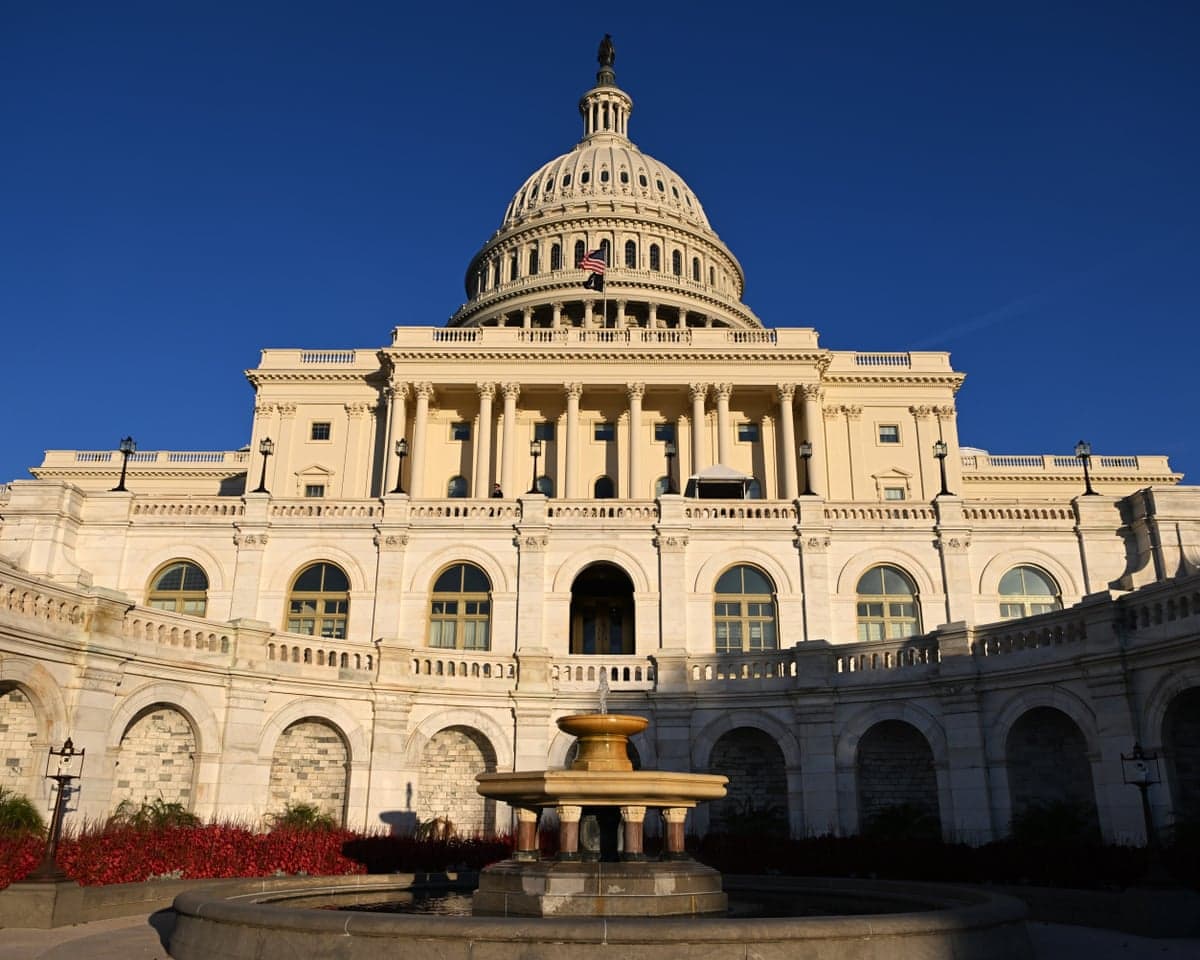
Financial markets have shifted sharply following the Democrats' decisive victory in the midterm elections, with the dollar hitting a one-month low while gold and US Treasury bonds rallied on expectations of tougher regulation of the artificial intelligence sector and reduced fiscal stimulus. According to The Guardian, the party has taken control of both the Senate and House of Representatives, scoring victories in Republican strongholds for the first time in generations as voters rejected the Trump agenda.
The dollar fell 0.6% against a basket of major currencies at one stage and is now down 0.35%, with its decline most pronounced against the Japanese yen and Swiss franc, both viewed as safe-haven assets. According to Yahoo Finance, the euro rose 0.5% to $1.1249 and the yen gained 0.7% to 157.63 per dollar, while the dollar index fell 0.3% to 101.4. Gold prices climbed 2.4%, supported by the weaker dollar, with spot gold reaching $4,022 an ounce.

How did European markets respond?
Stock markets across Europe rose this morning, with banks and clean energy stocks leading the gains. The FTSE 100 index in London advanced 24 points, or 0.2%, while the pan-European SToxx 600 index gained 0.6%. Germany's Dax climbed almost 0.6%, France's CAC rose 0.4%, and Italy's FTSE MiB index jumped almost 1.4%.
Bank stocks surged 2.8%, while clean energy stocks, which have endured the brunt of Trump administration policies, were among the top performers. Denmark's Vestas Wind Systems jumped about 5%, Ørsted surged 7.4%, and German wind turbine manufacturer Nordex leapt 6.5%. European defence stocks fell, while European technology stocks recovered to trade 0.5% higher.
Shares of major technology companies Amazon, Google owner Alphabet, Microsoft and Meta Platforms declined on the Tradegate platform in Europe. Elon Musk's Tesla and SpaceX both fell between 4.5% and 5%, as investors reassessed the implications of Democratic control for the AI sector.
Why are investors concerned about AI regulation?
Investors are now evaluating the prospect of stricter US regulation on the booming artificial intelligence sector, where concerns over mounting debt levels to finance infrastructure expansion have already triggered selloffs in recent months. Kathleen Brooks, research director at trading platform XTB, stated:
Overall, these results have had a mild impact on markets so far. Investors will move on from trading the uncertainty of the election results to trading the reality of what they mean for policy. This is bad news for Tesla and SpaceX on Wednesday, but the semiconductor names, the backbone of the AI trade, could brush off concerns about AI regulation and continue to move higher after Tuesday's stunning rally for the sector.
However, Aidan Yao, senior investment strategist for Asia at the Amundi Investment Institute, cautioned:
The significance of these midterm elections is more like a referendum on AI than a referendum on Trump. If the AI theme is subject to some restrictions, then the US economy, US inflation and US monetary policy all become very, very uncertain.
The chip exporter-heavy stock markets of Korea and Taiwan fell 3-4% overnight on news of the Democratic wave but have since recouped all those losses. Chris Turner, global head of markets at ING, noted that
Investors will be parsing what this all means. For example, Gina Hinojosa won the Texas governor's race on a ticket of wanting an immediate moratorium on data centre buildouts.
What does the Texas result mean for data centre expansion?
The Democratic victory in Texas presents significant challenges for data centre development, analysts warn. According to Chris Beauchamp, chief market analyst at IG in London:
Greg Abbott's loss of the Texas governorship means that the construction of more data centres is now open to question. We saw this overnight with weakness in the AI stocks like CoreWeave and Nebius, and while there has been some recovery the questions about how this plays out will continue to dog a sector already grappling with spending worries. Now legislation concerns are on the list too.
Tapas Strickland, chief market strategist at investing platform Moomoo ANZ in Sydney, explained the broader implications:
I think the fear is that the pace of the AI infrastructure rollout could slow, potentially quite markedly in Texas, as they start to digest exactly what mandate they might have in terms of AI. Going into this, we were talking about the importance of the Texas and Georgia governor races. Those two states effectively make up about a third of all AI datacentre spend and projects. If both of those go Democrat at the governor level [they did], the potential for it to slow is very much there, and that would obviously cascade through to the rest of the AI sector.
According to AP News, Democrats flipped House districts that had voted for Trump by as much as 18 percentage points in 2024, and won control of both chambers of Congress by flipping at least seven Senate seats, including Kansas, Iowa, Texas, Ohio, Maine, North Carolina and South Carolina.

How have US Treasury bonds reacted?
US government bonds have rallied sharply, pushing yields down, as investors welcomed the prospect that Democratic control of Congress could constrain Donald Trump's spending plans. The yield on the benchmark 10-year US Treasury bond fell 4.7 basis points to 4.918%, while the two-year bond yield dropped 3.7 basis points to 4.597%. Yields decline when bond prices rise.
Analysts attributed the rally to expectations that stricter regulation of the AI sector could lead to slower economic growth, thereby reducing the need for additional interest rate increases. Jim Reid, head of global macro at Deutsche Bank, explained:
There's been a rally for US Treasuries as well, given that divided government has generally made it harder for fiscal stimulus to be passed. So that's eased concerns on the fiscal trajectory a bit. Investors are also pricing in a more dovish path for the Federal Reserve too, with the amount of rate hikes priced by the June 2027 meeting down 3.3bps this morning to 55bps. So that's pushed the dollar index down.
Oliver Faizallah, head of fixed income research at US investment bank Raymond James, stated:
For bond investors, the significance of the midterms is ultimately about what they mean for US borrowing. The result makes further significant fiscal expansion harder to deliver through Congress, potentially easing some of the pressure around government borrowing and Treasury issuance. That could be supportive for US Treasuries, but it won't determine the direction of yields on its own. Growth, inflation and the Federal Reserve remain crucial. If the economy slows and inflation continues to ease, there is a stronger case for Treasury yields to move lower.
Prashant Newnaha, senior rates strategist at TD Securities in Singapore, added:
Bonds are coming out as the clear winner as markets put the AI trade on the chopping block and embrace the higher possibility that further tax cuts are put on ice and government spending slows.
What is the outlook for US stock futures?
US stock futures turned positive ahead of the Wall Street open, as investors continued to assess the implications of the Democratic victory. Dow Jones futures rose 0.4%, while S&P 500 and Nasdaq futures both edged about 0.15% higher. Earlier, Nasdaq futures had fallen 2.4% while S&P 500 futures dropped 1.4%, reflecting initial market anxiety about the election outcome.
Steven Chiavarone, chief investment officer for global equities at Federated Hermes, offered a longer-term perspective:
Prior to the US midterm elections, we felt that only two outcomes could meaningfully change monetary and fiscal policy: a GOP sweep creating wider voting margins or a Democratic blue wave large enough to produce filibuster- and veto-proof majorities. While the Democrats have retaken both chambers of Congress, it appears not to be enough to create the latter scenario. In the coming weeks, the stock market may experience volatility, but we think it should ultimately rise. Historically, the 12 months following midterm elections have been good for US equities. In fact, it has been 88 years since the S&P 500 last posted a negative return in that period, with an average of 14%. Why? One explanation is that the poor result of the president's party motivates it to champion economic policies that improve its chance of victory in the next presidential election. Another is that a divided government hinders the sort of drastic legislation that can unsettle investors, though this election outcome actually raises the odds of modestly stimulative policy passing. While the present uncertainty and changing of the guard might make investors anxious, no US midterm election has ended the world, and this one will not either. We are looking past the noise, focusing on the real opportunities due to strong economic growth, significant infrastructure buildout and what may be the earnings cycle of our lifetime.
What are the political implications?
The election result ushers in an era of divided government in Washington, following two years in which the Republican-controlled Congress rarely constrained Trump. Christopher Hodge, chief US economist at Natixis in New York, observed:
Economically, we still don't think the direct implications are huge. That doesn't mean that [last night] won't have big implications. For one thing, Trump doesn't like bad news and seeing as how he personally selected many of the struggling candidates, he might be looking to change the narrative sooner rather than later. A 'short and intense' campaign in Iran has been rumoured ... and that would certainly be a distraction. Presidents typically start making changes after midterms anyway and Trump could be looking for scapegoats. Secretary of Defense Pete Hegseth comes to mind as a possibility. Bessent is another one to watch...he may be looking for a graceful exit if he views the administration as a sinking ship.
Stephen Brown, chief North America economist at Capital Economics, noted:
The magnitude of the gains for the Democrats in the midterms does not change too much for the near-term policy outlook, given the party still lacks a filibuster-proof majority in the Senate and President Trump has veto power to block legislation. But the Democrats will now hold Senate seats in many typically red states for the next six years, which increases their chance of being able to enact more sweeping legislative changes if they win the next presidential election. That includes the potential for tax hikes on corporations and high-income individuals as well as regulation that could delay the AI rollout.
Deborah Cunningham, chief investment officer of global liquidity markets at Federated Hermes, explained:
Democrats pulled off a double victory in the US midterm elections that few saw coming at the onset of the year. The blue wave means the federal government is sure to be divided on most issues. That typically creates a blockade against new legislation — an environment which broad financial markets traditionally view favorably as variables decrease. But liquidity investors are different: they primarily look to the US Federal Reserve headquarters further down the National Mall from the Capitol for guidance – and its perspective is unlikely to have changed. The Fed might have wanted to hike rates in October due to stubbornly high inflation, but that policy-setting meeting may have been too close to the election. (Market sentiment has it that Fed officials traditionally have avoided rate moves in those periods to avoid seeming biased to a political party.) That stance, and officials penciling one more increase in 2026 in their September Summary of Economic Projections, could mean a quarter-point hike in December. That would raise the fed funds target range to 4.00-4.25%. That scenario would be music to the ears of cash investors, as the yields of most liquidity products have the potential to rise in concert with Fed hikes. And additional tightening in 2027 is likely. Why? Due to the lag between policy moves and their impact on the broad economy, inflation might not decline for several quarters. Also, the Fed tends to adjust policy in cycles rather than intermittently. But even if rates stay at present levels, industry liquidity offerings should, we believe, remain attractive.
Chris Beauchamp, chief market analyst at IG, observed:
Overnight markets had pointed towards steep losses for futures, but the picture is looking rosier as markets seem to look towards the future with relish. A divided US government has often been the best outcome for markets, and we are staring that squarely in the face today. Gold and silver are up, while volatility has reversed course too. All eyes are on the White House now, but Trump's apparent acceptance of the results at least suggests a nasty litigation battle (or worse) is off the cards.
Axel Rudolph, chief technical analyst at IG, added:
Midterms rattle Trump, send dollar lower and bullion higher: The heavy Republican defeat is a stark reminder that even a president who dominates the political conversation is not immune to voter discontent. The scale of the losses will inevitably raise questions about Trump's ability to push through his agenda over the next two years, and markets are already reacting. The dollar is under pressure as investors reassess the political outlook, while gold and silver are benefiting as safe haven plays. A divided government may ultimately prove manageable for markets, but the immediate message is clear: investors are becoming less comfortable with the political risks surrounding the White House.
What historic milestone was achieved?
In a historic development, Abdul El-Sayed was projected to win Michigan's Senate race, which would make him the first Muslim senator in US history, further underscoring the transformative nature of the election results.
What happens next?
The US nonfarm payrolls report is due on Friday, 6 November, with investors watching closely for clues about the Federal Reserve's policy path. The Federal Reserve is scheduled to publish minutes from its 27–28 October meeting on 18 November, which will provide further insight into the central bank's thinking ahead of potential December rate decisions.
In Asia, Japan's Nikkei lost 1.4% while Hong Kong's Hang Seng rose 1.3% and South Korea's Kospi gained 0.4%. Oil traded at $103.34 a barrel after falling about 1% the previous day.
Economic data releases scheduled for 4 November include the S&P Global Eurozone services and composite PMIs for October at 9am GMT, UK services and composite PMIs for October at 9.30am GMT, Eurozone inflation flash for October at 10am GMT, US ADP Employment change for October at 1.15pm GMT, US Trade for September at 1.30pm GMT, and US ISM Services for October at 3pm GMT.