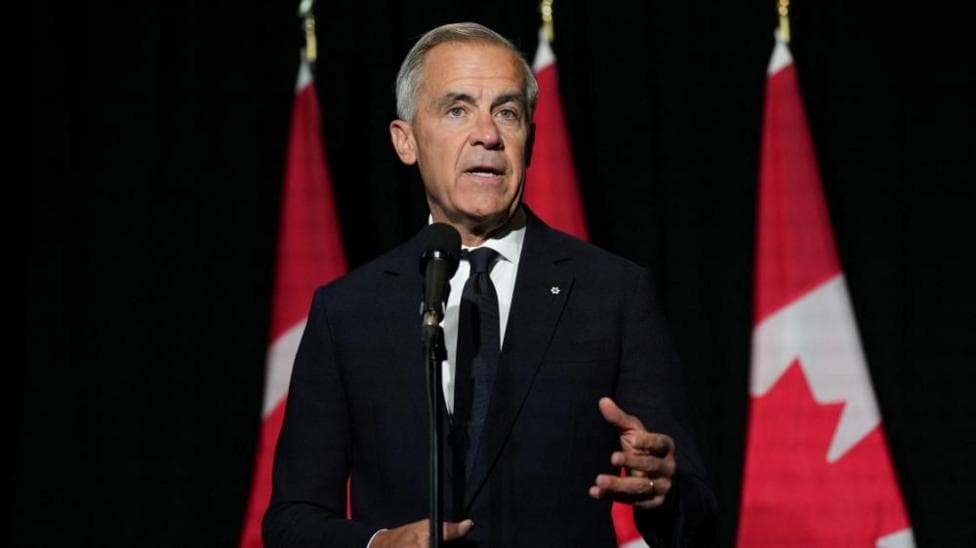
More than 18 months have passed since Canadian Prime Minister Mark Carney declared that his nation's relationship with the United States—forged over a century of close economic and military ties—had fundamentally changed. Collapsing trade negotiations, escalating tit-for-tat tariffs, and Donald Trump's rhetoric about annexing Canada have deepened the rift between the two North American neighbours.
Now, leveraging decades of personal connections built during his career in global finance, Carney is positioning himself as Canada's chief advocate to the world's largest asset managers and business leaders. He aims to convince them that investing in Canada represents a compelling opportunity as geopolitical instability reshapes international commerce.
Toronto will host the inaugural Canada Investment Summit on September 14–15, 2026, bringing together more than 100 global investors who collectively oversee nearly C$120 trillion in assets. The federal government has framed the event as central to attracting capital into what it calls nation-building projects across the country. On the eve of the summit, at a gala reception, Carney told assembled guests that investors
will come to 'peer into our shop window' because the world is looking at Canada differently.
The two-day gathering will take place at a luxury Toronto hotel and will draw representatives from major sovereign wealth funds—including those from the United Arab Emirates and Norway—alongside chief executives from leading financial institutions. Attendees will include BlackRock's Larry Fink and Blackstone president Jon Gray. Carney will deliver the opening remarks and a keynote address, while former Prime Minister Stephen Harper, who appointed Carney to lead Canada's central bank, will close the conference.
According to reporting on the summit agenda, the event will showcase more than 160 Canadian projects spanning energy, mining, defence manufacturing, and power generation. Over roughly 24 hours, Carney intends to pitch investors on Canada's energy and resource sectors, political stability, and opportunities in artificial intelligence, defence, transportation, and infrastructure. The summit is being co-hosted by the Canada Pension Plan Investment Board and the Public Sector Pension Investment Board, two of Canada's largest institutional investors.
Why is Canada pursuing this strategy?
The summit represents a deliberate pivot toward economic independence and resilience in response to the deteriorating trade relationship with the United States. Canada's retaliatory tariffs on approximately $20 billion of U.S. goods took effect on September 8, 2026, escalating the conflict and prompting a U.S. response that includes bans on some Canadian imports scheduled to begin on September 29. This tit-for-tat cycle has forced Ottawa to reconsider its traditional economic model, which relied heavily on proximity to American markets as its primary selling point to foreign investors.
For the past 25 years, Canada's trade ministers pitched the country to overseas investors by emphasizing easy access to the U.S. market. That argument no longer holds weight. Miville Tremblay, who worked alongside Carney at the Bank of Canada and witnessed his crisis management during the 2008 financial collapse, explained that the pitch has fundamentally shifted.
This line doesn't work anymore, he said, referring to the old strategy of marketing Canada as a gateway to America.
What advantages does Carney bring to this effort?
Carney's background in global finance gives him a significant edge in persuading the world's largest investors. He began his career at Goldman Sachs and rose through the ranks of international banking before leading the Bank of Canada and later the Bank of England. His address book contains the contact details of many of the world's most influential business leaders, and he maintains personal relationships with many of them.
Goldy Hyder, president and chief executive of the Business Council of Canada, noted that invitations to the summit were often extended personally.
It's not a group of politicians inviting financiers, it's a group of former financiers and investment people inviting their former buddies, he said.

Tremblay praised Carney's financial acumen and crisis management skills.
He was way above everyone. He understands finance very deeply. [He] would know when they are bluffing and when the understatement meant that something really bad was happening. The current tumultuous economic and political climate, Tremblay suggested, plays to Carney's strengths.
He's a crisis manager. He managed the financial crisis, he managed Brexit, and now he's got a super crisis for Canada.
What obstacles stand in the way?
Despite Carney's credentials and personal connections, significant challenges remain. A recent report by the Canada Pension Plan Investment Board cautioned that the scale and depth of investible opportunity represents the country's greatest weakness. Naomi Powell, director of the CPP Investments Insight Institute, stated that
Global capital is looking for opportunity, but opportunity alone does not make a market investible.
Canada has a track record of lengthy project approvals that can deter investors seeking faster returns. Additionally, major resource projects require buy-in from indigenous communities and provincial governments, which possess the power to delay or block developments. Hyder cautioned that investors will expect Carney to demonstrate he can navigate these barriers and secure stakeholder support.
The most fundamental challenge, however, may be timing. Trade exports to the United States represent approximately 20 percent of Canada's GDP—one of the highest bilateral trade ratios between any two countries globally. Bradley Saunders, North America economist for Capital Economics, emphasized that securing a stable trading relationship with the U.S. remains essential for attracting long-term investment.
If Carney wants to attract long-term investment... he wants this to go well, he has to try and provide a stable environment - and that won't come until Canada has a certain trading relationship with the US.
Drew Fagan, a professor at the University of Toronto's Munk School of Global Affairs, identified what he termed the
valley of deathfor Carney—the interim period between the current rupture with the U.S. and the development of new global trade partnerships.
And in the interim, that's where the valley of death is for him, both economically and potentially politically, Fagan said.
What realistic outcomes should be expected?
Tremblay suggested that major investment announcements are unlikely unless deals were already in negotiation before the summit. While attracting overseas capital remains a primary objective, encouraging greater domestic investment from Canada's largest pension funds—which currently allocate more capital internationally—is equally important.
Carney has acknowledged that the road ahead will be difficult. A majority of Canadians currently support his strategic direction, though some have criticized his willingness to deprioritize climate commitments and deepen ties with nations such as Saudi Arabia and China as he promotes Canada's resource wealth. Protests are planned in Toronto on September 14 over concerns that the government is selling the country to corporate interests.
Tremblay and other analysts believe that if Canada is forced to reduce its trade dependence on the U.S. over the longer term, both nations will eventually return to the negotiating table.
They'll have to sit down and make a compromise, he said.
What happens next?
The Canada Investment Summit will take place on September 14–15, 2026, with Carney set to deliver the main keynote address on September 15. The event will feature a fireside chat with Public Sector Pension Investment Board chief Deborah Orida alongside the primary program. Meanwhile, the U.S. import bans on Canadian dairy, alcohol, motorcycles, and related products are scheduled to take effect on September 29, 2026, adding further pressure on both economies and potentially influencing investor sentiment in the weeks following the summit.