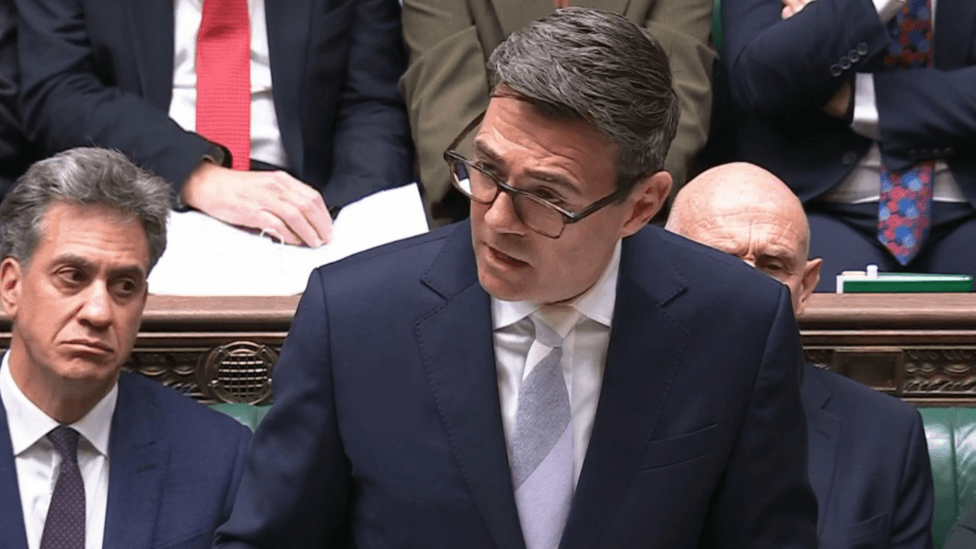
Prime Minister Andy Burnham has signalled his intention to pursue fresh agreements with the European Union at a summit scheduled for 20 November in Brussels, where he will meet European Council President António Costa and European Commission President Ursula von der Leyen to review progress since their initial gathering in May 2025.
In remarks to MPs, Burnham outlined his ambition to secure
"deeper cooperation"on several priority areas—youth mobility schemes, food and drink trade, and energy policy—arguing that such arrangements would strengthen economic growth across the UK. He characterised the forthcoming summit as an opportunity to address longstanding trade friction and reduce bureaucratic barriers that have hampered British businesses since the 2016 referendum.
The prime minister also raised concerns about the EU's proposed Industrial Accelerator Act, the formal name for the
"Made in Europe"scheme, warning that its protectionist measures designed to shield European industry from Chinese competition could pose
"a risk to UK manufacturing"and disrupt British supply chains. Burnham indicated he was actively negotiating
"an arrangement"that would protect UK interests while maintaining the EU partnership.
Despite his openness to closer EU ties, Burnham reaffirmed Labour's manifesto commitments to remain outside the single market, customs union, and freedom of movement arrangements—pledges he said would remain binding until the next general election. However, in interviews following the Labour party conference, he declined to rule out a future manifesto revision that could encompass EU membership, signalling potential flexibility on these red lines in the longer term.
What deals are on the table?
Burnham told MPs that a series of specific agreements would be presented at the November summit, covering agrifood rules, energy trading arrangements, and coordinated approaches to illegal immigration. According to official confirmation from EU and UK sources, the summit agenda will also address global issues and chart next steps in the bilateral relationship.
The prime minister claimed these agreements could add the equivalent of £10 billion annually to the UK economy by 2040, framing the negotiation as a matter of economic necessity. He argued it would constitute a
"dereliction of duty"to reject the opportunity to streamline trade procedures and reduce red tape affecting British exporters.
How severe is the current trade damage?
Burnham painted a stark picture of the practical consequences facing British food and agricultural producers.
"At present entire truckloads of plants or fresh produce can be destroyed because of a single missing stamp or a minor paperwork delay,"he said, highlighting the scale of waste affecting supply chains.
"Fresh meat and fish spoil while waiting in trucks, and tonnes of exports have to be written off."
He cited specific examples of the damage inflicted on key British export sectors. Scottish salmon, the nation's largest food export, faces a 100 per cent document-checking rate at EU borders, costing approximately £100 million in lost sales annually. British fresh meat products remain banned from EU markets, while seed potatoes from Scotland and shellfish from Wales face import restrictions.
"This is having a real impact on businesses and the agreement on the table could reverse some of that damage,"Burnham stated.
What is the government's broader strategy?
Economic growth and cooperation on illegal immigration have emerged as the twin pillars of No. 10's strategy for selling a closer relationship with the EU both at and beyond the November summit. The government is positioning these negotiations as pragmatic steps to restore prosperity rather than ideological reversals of the Brexit decision.
Burnham emphasised that
"the British public will be the boss,"and argued that
"public opinion currently supports a pragmatic approach like the one I am suggesting."He framed the immediate priority as securing a successful outcome at the November gathering, followed by
"a serious dialogue about the different options for our relationship in the long term."
According to reporting on the summit preparations, the proposed emissions-trading agreement is intended to help British businesses avoid EU carbon taxes, adding another dimension to the economic case for closer cooperation.
What is the opposition saying?
Conservative leader Kemi Badenoch attacked Burnham for
"unpicking the deal this country signed with the EU a decade after the referendum,"characterising the negotiating approach as a betrayal of the 2016 vote. She argued that Burnham would struggle to secure improved terms because the EU is a
"tough negotiator"and he has
"revealed his entire negotiating hand."
By contrast, Liberal Democrat leader Sir Ed Davey welcomed Burnham's acknowledgement of the
"damage"caused by Brexit but urged him to go further. Davey called on the government to abandon Labour's red lines and open formal negotiations on UK membership of the EU single market and customs union, positioning the Liberal Democrats as the party most willing to reverse Brexit-era restrictions.
What happens next?
The 20 November summit in Brussels will serve as the formal venue for presenting and discussing the proposed agreements. According to EU and UK officials, the gathering will review progress made since the May 2025 summit and establish the framework for ongoing dialogue about the future shape of the UK-EU relationship. The summit was originally scheduled for 22 July 2026 before being rescheduled following Burnham's appointment as prime minister.
The government's success in securing tangible agreements on food and drink, energy, and youth mobility will likely shape the political narrative around Brexit's consequences and the viability of negotiated solutions to post-referendum economic challenges. The outcome will also influence whether Labour's current manifesto red lines remain credible or whether a future electoral platform might encompass more substantial EU integration.

Key Facts
- The second UK-EU summit since Brexit will take place on 20 November in Brussels, hosted by European Council President António Costa and European Commission President Ursula von der Leyen.
- Burnham is seeking agreements on youth mobility, food and drink trade, energy policy, and immigration cooperation, claiming they could add £10 billion annually to the UK economy by 2040.
- Scottish salmon exports face 100 per cent document checks at EU borders, costing approximately £100 million in lost sales each year, while British fresh meat products and Welsh shellfish remain banned from EU markets.
- The government is pursuing an arrangement to address the EU's Industrial Accelerator Act, which aims to protect European industry from Chinese competition but risks disrupting British supply chains.
- Labour's manifesto commitments to remain outside the single market, customs union, and freedom of movement will remain in place until the next election, though Burnham has not ruled out future manifesto revisions.