A catastrophic power failure swept across Spain and Portugal on 28 April 2025, plunging both nations into darkness for several hours and triggering an urgent reassessment of industrial energy resilience across the Iberian Peninsula. The outage, later identified as the first full blackout in Spain's history and the first caused by overvoltage problems, exposed critical vulnerabilities in grid stability and left manufacturers scrambling to protect their operations from future disruption.
The blackout's impact on industrial production was immediate and severe. Across the region, factories fell silent as emergency systems proved inadequate to sustain operations. People retrieved lanterns and battery-powered radios while companies fought to salvage whatever production they could from the sudden shutdown.
How did the blackout affect major manufacturers?
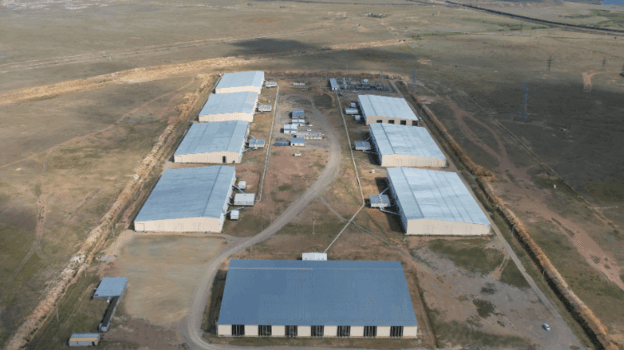
The Spanish meat processing firm Fribin, located in Binéfar in the north-eastern province of Aragon, was operating at full capacity when the power failed mid-morning shift. For Andrés Altabás, the company's technology and systems director, the situation proved catastrophic. Emergency backup systems lacked sufficient capacity to maintain full operations, forcing difficult choices about which functions to preserve.
Refrigeration was prioritised but all the lines had to be stopped,Altabás recalls. Many tonnes of meat in various stages of processing had to be discarded, resulting in losses totalling hundreds of thousands of euros.
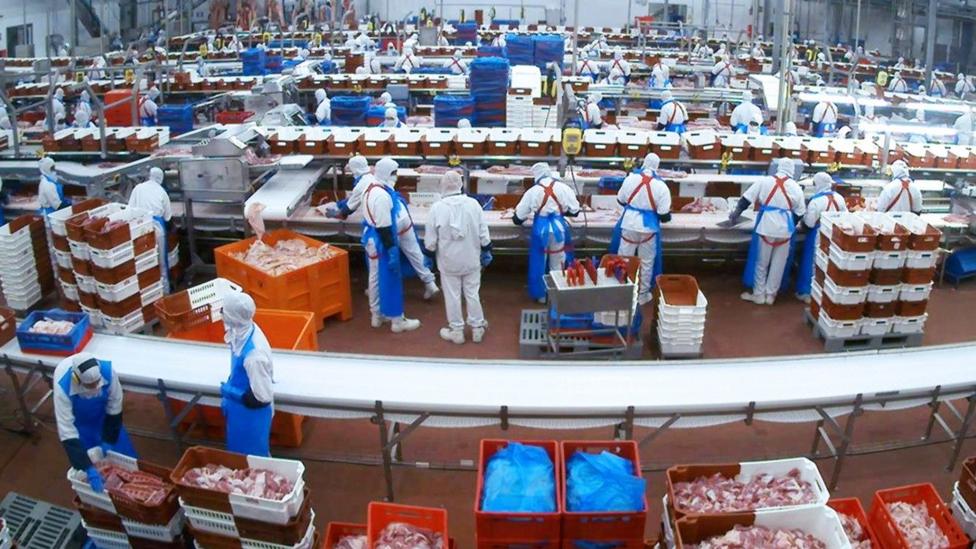
The experience fundamentally changed Fribin's approach to energy planning. The company's annual energy consumption exceeds 25 gigawatt-hours per year, with the majority dedicated to refrigeration systems. Although leadership had debated investing in battery backup for years, the cost had always seemed prohibitive.
And then came the blackout, and all of that together catalysed the investment,Altabás explains.
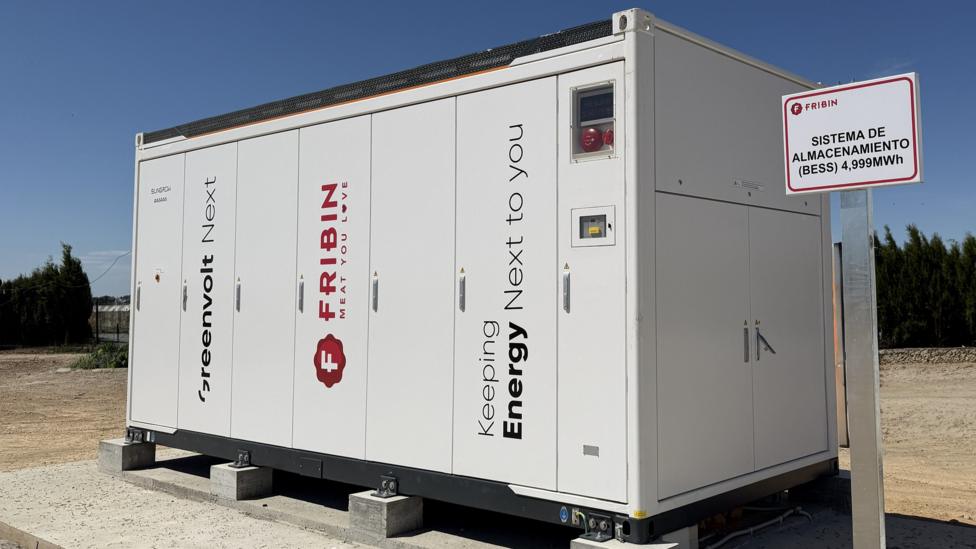
Fribin moved quickly to implement protection. The company purchased its first five megawatt-hour battery module in June 2025, followed by a second identical module ordered in early June 2026. The combined investment of approximately €1.5 million (£1.3 million; $1.7 million) received partial funding through the European Union's Next Generation recovery programme.
Portugal's Vista Alegre, the nation's oldest and largest porcelain manufacturer, experienced similar production losses during the blackout. The company had actually begun planning energy storage installation in 2022, taking advantage of generous funding available through the EU's Recovery and Resilience Plan. The April 2025 outage accelerated that timeline considerably.
The blackout ultimately served, above all, to accelerate this process,explains Emília Encarnação of Vista Alegre. The company's facilities in the coastal city of Ílhavo, in Aveiro province, now operate with approximately 2 megawatt-hours of battery storage capacity.

The blackout caused some irreparable losses, particularly at the plants operating on a continuous production basis, where sudden power interruptions have a direct impact on production processes,Encarnação recalls. Beyond protecting against future outages, the installed batteries also generate additional revenue by allowing the company to sell surplus energy back into the general network when market conditions prove favourable.
At Primus Ceramics, situated near Aveiro in central Portugal, a diesel generator provided crucial protection during the blackout. The company's roller kilns, which transport materials through every production phase inside industrial ovens, depend entirely on electric motors. The generator kept production rolling, minimising losses on what could have been a catastrophic day. Company CEO Paulo Almeida describes the stress of that evening:
We were at it until eight, nine at night, deciding whether we should stop, whether we should lower the furnace temperatures, or whether we'd take the risk and wait for the power to come back in time.The power did return before critical damage occurred, but the near-miss prompted immediate action.
Primus had already installed two battery units in 2022 to provide backup power and to capitalise on opportunities to sell electricity back to their energy supplier during favourable market windows. By the end of 2026, the company planned to more than double its battery storage capacity, allowing it to store greater quantities of energy generated by the factory's solar panels.
How widespread is the shift to battery storage?
The industrial sector has emerged as the earliest adopter of energy storage solutions across Europe, driven by the operational reality that production cannot tolerate abrupt interruptions. Miguel Matias, founder of Portuguese energy services company Self Energy, headquartered in the UK, observes that
The industrial sector has been one of the first to look at storage systems, since it can't have its production drop off too abruptly.He notes that
A backup for a few hours, or even minutes, might guarantee that machines don't get damaged.

Spain's response has been particularly dramatic. Battery storage capacity rose almost sevenfold between April 2025 and April 2026, climbing from approximately 28 megawatts to 193 megawatts, according to the grid operator Red Eléctrica. This expansion reflects both immediate responses to the blackout and longer-term strategic investments.
In December 2025, Spain's Institute for the Diversification and Saving of Energy (IDAE) awarded €827 million in EU funds to 133 energy storage projects with a combined capacity of 2,400 megawatts. Approximately 80 per cent of that capacity will be battery-based storage, representing a tenfold increase over the amount currently registered on the Spanish grid.
Portugal announced plans to invest approximately €400 million to strengthen its electricity system following the blackout, including a battery storage auction and critical-infrastructure backup measures. The government established an ambitious target of 750 megawatts of battery storage capacity, a dramatic increase from the roughly 13 megawatts installed at the time of the outage.
Additional incidents have reinforced the urgency of these investments. At the end of January 2026, Storm Kristin toppled thousands of electricity and telecommunications poles across central Portugal, severing power and communications to hundreds of thousands of people, with some areas remaining without service for weeks. Such events underscore the vulnerability of infrastructure dependent on a single power source.
What are battery suppliers experiencing?
Battery manufacturers are witnessing unprecedented demand growth alongside evolving customer expectations. Alberto Bodegas, representing battery storage company Sungrow, observes that
We are seeing not only an increase in demand, but also a clear evolution in customer requirements.
Historically, commercial and industrial clients sought either partial or complete backup solutions. Today's customers demand far more sophisticated capabilities. Seamless backup—where the transition from grid power to backup occurs instantaneously without any perceptible interruption—has become a standard requirement. This capability proves particularly critical for sensitive environments such as hospitals and data centres, where even momentary power loss can cause irreversible damage or endanger lives.
Delivery timelines have become equally pressing. Buyers operate under tight deadlines linked to EU funding programme requirements, and battery companies face mounting pressure to meet increasingly compressed delivery schedules. The combination of surging demand, heightened technical specifications, and accelerated timelines has created an exceptionally competitive market environment.
What triggered the blackout?
Investigation into the April 2025 outage revealed multiple contributing factors rather than a single point of failure. The blackout resulted from oscillations, voltage and reactive power control gaps, generator disconnections, and uneven stabilisation capability across the system. The incident exposed a critical gap: Spain and Portugal's electrical grids lacked sufficient battery capacity to provide the fast, localised grid services necessary to stabilise voltage during stress conditions.
In response, Spain announced a €137 million investment in grid operation and control systems, complementing the broader battery storage expansion. These measures address not only the immediate causes of the 2025 outage but also the structural vulnerabilities that made the system susceptible to cascading failure.
What happens next?
Portugal's government planned to place its National Energy Storage Strategy and the framework for a 750 megawatt battery auction into public consultation on 29 June 2026, with the auction itself scheduled to launch by the end of 2026. Spain's blackout-related reforms include a 750 megavolt-ampere battery storage auction, though no specific launch date has been announced for that procurement process.
The broader context reflects a fundamental shift in European energy strategy. Firms across the continent have been transitioning from fossil fuels to electricity for their industrial operations, encouraged by EU subsidies. While this transition reduces emissions of climate-warming gases, it has simultaneously made manufacturers more vulnerable to power disruptions. The April 2025 blackout demonstrated that vulnerability with painful clarity, catalysing investment in battery storage that will reshape the region's energy infrastructure for years to come.
Key Facts
- Spain's installed battery storage capacity increased 589 per cent in the year following the April 2025 blackout, rising from 28 megawatts to 193 megawatts by April 2026
- The Spanish government awarded €827 million in EU funding to 133 battery storage projects totalling 2,400 megawatts of capacity, representing approximately a tenfold increase over existing grid-registered storage
- Portugal committed €400 million to strengthen its electricity system, targeting 750 megawatts of battery storage capacity compared with 13 megawatts available at the time of the blackout
- Industrial manufacturers including Fribin and Vista Alegre invested €1.5 million and deployed 2 megawatt-hours of storage respectively, with additional capacity expansions planned through 2026
- The April 2025 outage was identified as Spain's first full blackout and the first caused by overvoltage problems, exposing gaps in voltage stabilisation and reactive power control