Computing infrastructure once dedicated to Bitcoin mining is rapidly being repurposed for artificial intelligence, as cryptocurrency firms seek more profitable uses for their vast data centres. Major players in the sector are signing multibillion-dollar contracts with AI companies, marking a fundamental shift in how they deploy their technical expertise and electrical capacity.
The pivot reflects a sharp decline in Bitcoin mining profitability. One Bitcoin reached approximately $124,000 in October 2025 but has since fallen significantly, though it has recovered to around $80,000 as of August 2026. Mining rewards have contracted alongside the price decline, making the economics of cryptocurrency extraction far less attractive than they were during the sector's boom years.
Companies that invested heavily in vast banks of specialised computers to earn Bitcoin are now redirecting that infrastructure toward AI infrastructure contracts. Riot Platforms, TerraWulf, Ionic Digital, Core Scientific, Iris Energy, Bitdeer, and Hut 8 are among the firms increasingly shifting investment and resources away from cryptocurrency and toward artificial intelligence.
The scale of these commitments is substantial. According to CNBC, Riot Platforms signed a 20-year agreement with Anthropic on 11 August 2026 valued at approximately $9.1 billion over the initial term, with potential additional revenue of up to $16.1 billion if both five-year extensions are exercised. The lease covers 191 megawatts at Riot's Rockdale, Texas facility, a capacity sufficient to power roughly 143,000 homes at any given moment.
In a separate development, HIVE Digital Technologies announced a five-year GPU cloud services agreement worth approximately $350 million through its BUZZ High Performance Computing subsidiary, representing a second major AI contract within two months for the company.
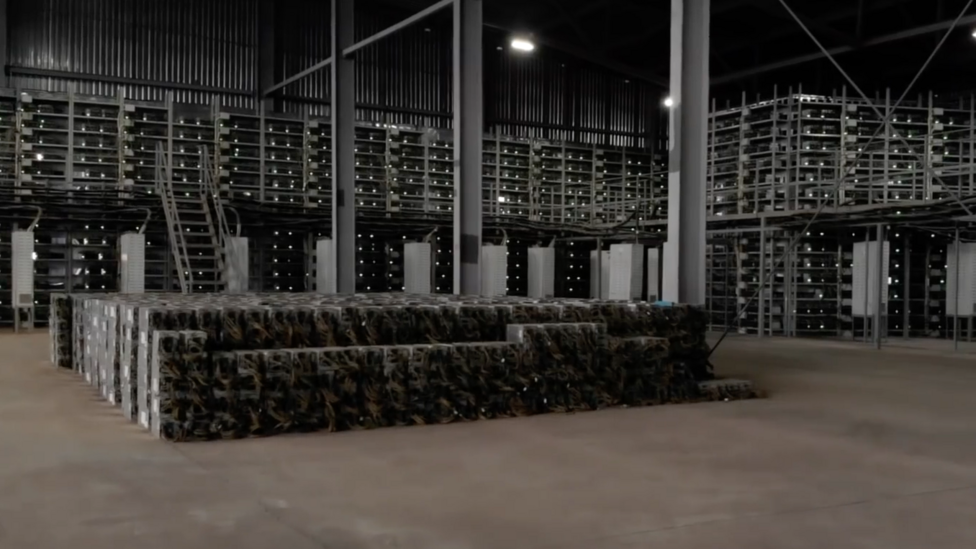
The shift reflects the expertise mining companies have accumulated over years of operating large-scale data centres. These firms possess deep knowledge of sourcing cheap electricity, managing cooling systems, and efficiently running networks of thousands of powerful computers—capabilities directly transferable to the infrastructure demands of artificial intelligence.
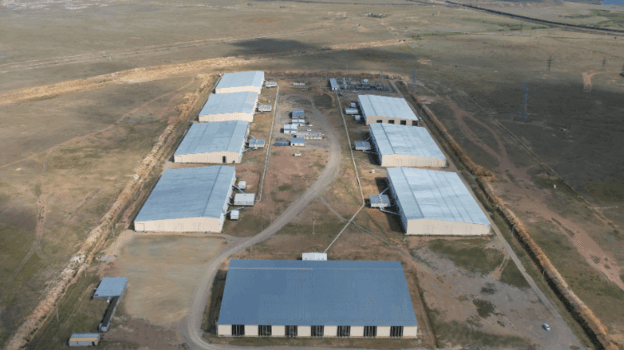
Corporate rebranding efforts underscore the permanence of this transition. Applied Blockchain has renamed itself Applied Digital to reflect its new focus. TerraWulf's website previously identified the company as an "infrastructure-focused bitcoin mining company" but now emphasises its focus on "next-generation AI and high-performance computing". Enegix, which opened a major Bitcoin mining facility in Kazakhstan in 2020 to considerable attention, is similarly repositioning itself.
Enegix's chief executive, Yerbolsyn Sarsenov, stated:
Today, we are moving confidently towards artificial intelligence and planning the gradual alignment of our energy and infrastructure capabilities, both in Kazakhstan and elsewhere, towards the development of AI infrastructure.The company is engaged in active discussions with AI and high-performance computing firms and plans to convert a "significant" portion of its operations toward AI infrastructure.

Why is the switch so difficult to reverse?
Once mining companies retrofit their infrastructure for AI workloads, reversing the decision becomes economically unfeasible. Long-term contracts with AI clients lock operators into sustained commitments that make returning to Bitcoin mining impractical. Wolfie Zhao, editor of The Energy Mag—a publication that rebranded from The Miner Mag to reflect industry trends—explained the irreversibility of the transition:
Once that multi-gigawatt power infrastructure has been retrofitted to AI or HPC colocation, there is no turning back. You can unplug from the Bitcoin network any time but signing a GPU colocation lease for 10 or 20 years means steady revenue and a commitment to keep the infrastructure up for the tenants.
Some companies have sold portions of their Bitcoin holdings to finance the infrastructure conversion, further cementing their commitment to the new direction.
Will Bitcoin mining recover?
Zhao predicted that major mining operators would continue reducing their Bitcoin hardware in the coming quarters, even as cryptocurrency prices have risen recently. However, he expressed hope that new entrants might enter the Bitcoin mining market as conditions improve, potentially offsetting the departure of established players.
Not all companies are abandoning cryptocurrency entirely. Bitdeer, which claims to be the world's largest Bitcoin miner, announced a 16-year deal to provide computing capacity to Anthropic but maintains its commitment to Bitcoin mining. The company's chief strategy officer, Haris Basit, suggested that many operators would ultimately pursue a hybrid model:
Bitcoin mining is particularly well suited to that model because it is flexible and interruptible, while AI workloads can provide longer-duration contracted revenues.
This dual-purpose approach allows companies to maintain cryptocurrency operations while capturing the higher-margin, longer-term revenue streams offered by AI infrastructure contracts.
What happens next?
Riot Platforms expects its initial deployment to commence in December 2027, with full build-out of the Anthropic facility targeted for June 2028. The phased rollout will begin with 96 megawatts coming online by the end of 2027, expanding to the full 191-megawatt capacity by mid-2028.
The broader context for these deals reflects intense competition among AI companies for computing resources. According to Bloomberg, Anthropic's agreement with Riot was part of a wider scramble among AI firms to secure sufficient computing power to meet growing customer demand. This competition has made mining companies' infrastructure assets suddenly valuable to a new set of buyers willing to commit to multibillion-dollar, multidecade contracts.
The stock market has responded positively to these announcements. Riot's share price jumped more than 20% in pre-market trading following disclosure of the Anthropic deal, signalling investor confidence in the company's strategic pivot.
Early adopters of the AI transition have already seen substantial returns. According to analysis, early movers including TerraWulf, IREN, and Cipher Digital have more than doubled in value over the past year, demonstrating the financial appeal of the shift away from traditional Bitcoin mining.