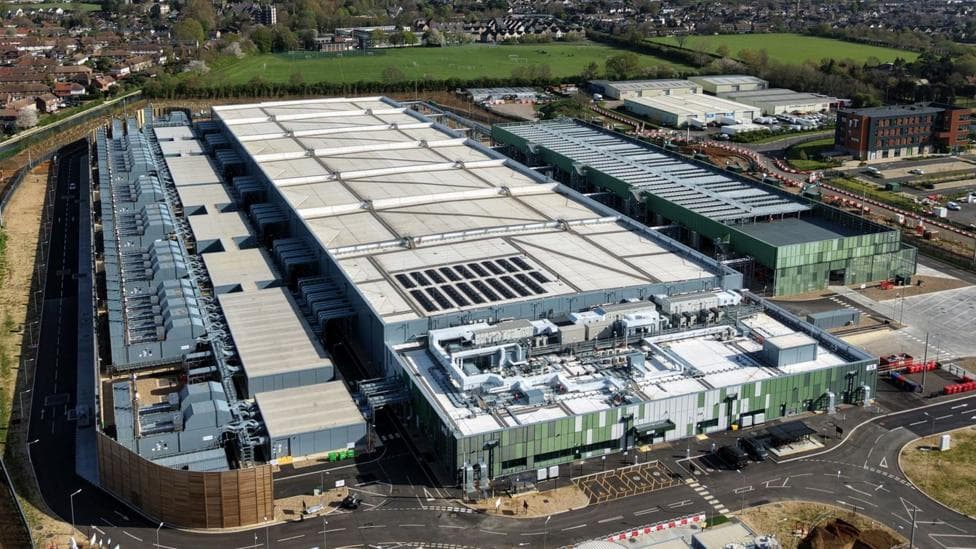
Behind every ChatGPT query, Google search summary and online banking transaction, a data centre operates invisibly. Scotland is now at the centre of a worldwide competition to construct vast numbers of these facilities at unprecedented scale.
The rapid growth of artificial intelligence has prompted technology companies to race toward building "hyperscale" data centres—some of which would rank among the planet's largest installations. At least 23 giant AI-powered data centres are in various stages of planning across the country.
Advocates argue these facilities represent essential infrastructure for the future, capable of attracting billions in investment and generating thousands of employment opportunities. Critics, however, worry about their physical footprint on surrounding communities, their enormous energy consumption, and the acoustic disturbance they will produce.
What exactly is a data centre?
Data centres resemble industrial warehouses or factories from the outside. Inside, thousands of indicator lights flash continuously while cooling fans operate as rows of computer servers process artificial intelligence workloads.
Technology corporations like Amazon develop some facilities, while other developers cite commercial confidentiality when questioned about their specific purposes. Scotland's existing centres remain relatively modest in scale, but several hyperscale proposals represent a dramatic increase in size.
The Auchtertool site in Fife ranks among the largest proposals. The development would cover 60 hectares (150 acres)—equivalent to approximately 84 football pitches.
What makes these proposals so contentious?
While artificial intelligence itself generates debate—some view it as humanity's most transformative invention, while others warn of existential risks—Scotland's data centre controversy centres on the facilities' sheer scale and their consequences for local areas.
Scotland's largest existing data centre, DataVita's installation in Airdrie, operates at 12MW capacity. The proposed new facilities represent an entirely different magnitude of development.
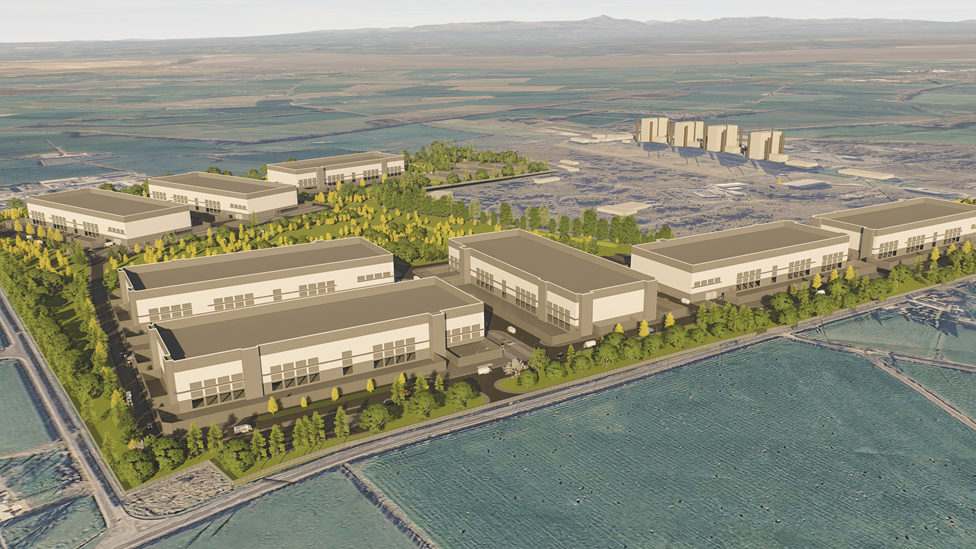
A proposal for Chapelcross in Dumfries and Galloway would deliver 1,000MW capacity if approved, positioning it among the world's largest data centres. CX Tech has submitted a planning-in-principle application for a £16.5bn campus at the former nuclear site, comprising eight data centres and a training facility, with individual buildings reaching approximately 120MW each and standing up to 40 metres high.
The Auchtertool proposal for a 600MW facility would match the scale of its neighbouring village. Community concerns focus on several interconnected issues:
The physical footprint and visual impact on the landscape; the enormous quantities of electricity required; the water needed for cooling systems; and noise generated by thousands of servers and mechanical cooling equipment.
The Scottish Greens and campaign organisations have demanded a moratorium on large data centre development, contending that such projects could compromise climate commitments and place additional strain on renewable energy infrastructure. The Scottish government has declined to implement a moratorium.

Why does Scotland attract data centre developers?
Scotland's renewable energy sector represents its strongest attraction for data centre investors. The country generates substantial electricity from wind power, with significant quantities currently wasted because grid infrastructure lacks sufficient capacity to transport electricity from generation points to consumption areas.
Specialists caution, however, that this renewable advantage does not guarantee data centres would operate entirely on clean energy. During periods of low wind or cloud cover reducing solar output, fossil fuel power stations may require activation to maintain server operations.
Do data centres consume significant quantities of water?
Beyond their substantial electricity demands, hyperscale data centres require enormous water volumes to prevent equipment overheating. Although the technology sector claims to be developing more efficient cooling mechanisms, industry sources indicated to a national broadcaster last year that the UK government's ambition to establish the nation as an "AI world leader" could strain already pressured drinking water supplies.
An analyst recently suggested Scotland's current data centres consume less water daily than the country's library system, yet substantial uncertainty surrounds water consumption should any hyperscale facilities receive approval. Data centres operate numerous cooling fans, and American residents living near such installations have reported persistent noise, with evidence suggesting wildlife displacement.

What advantages could data centres bring?
Many proposed data centres cluster in Scotland's central belt, including DataVita's expansion in North Lanarkshire. Developers emphasise participation in a crucial emerging technology alongside job creation prospects.
The UK government designated Lanarkshire an AI growth zone in January, with data centres as a central component. The announcement promised £8bn in investment and 3,400 jobs.
Employment composition has generated discussion. Approximately 800 positions would involve AI work, with 50 apprenticeships available, while remaining roles centre on construction. Apatura, the developer behind 10 of Scotland's hyperscale data centre proposals, emphasises its environmental credentials through renewable energy access and battery storage capabilities.
What is the political context?
With China and the United States competing for artificial intelligence dominance, the UK government fears falling behind in this technological race. The Scottish government similarly backs investment in the AI growth zone.
In August 2026, Scottish Ministers issued a direction requiring planning authorities to notify them within seven days of validating applications for data centres exceeding 50MW capacity, enabling monitoring of the development pipeline and infrastructure implications. A month later, the government rejected the Scottish Greens' request to pause applications pending new national guidelines, though it mandated environmental impact assessments for all proposals.
What happens next?
The Chapelcross application has advanced significantly. CX Tech projects the development could generate 750 construction jobs, with the application comment deadline set for 29 October 2026.
Residents can attend developer information sessions at Victoria Halls in Annan on 20 October 2026 and Creca Village Hall on 21 October 2026, both running from 16:00 to 19:00. The public consultation period for the Chapelcross proposal remains open until 29 October 2026 for comments and objections.