Three concurrent exhibitions opening at Michigan's Grand Rapids Art Museum this autumn present the work of artists who have experienced incarceration, each using their craft to document resilience, reclaim humanity and challenge viewers to confront the realities of America's criminal justice system. The shows feature Julie Green's monumental ceramic installation, Gary Tyler's textile narratives and Ray Materson's intricate embroideries, collectively examining how creativity becomes a lifeline in dehumanizing circumstances.
The United States holds nearly 2 million people in custody, a distinction that places the nation as the global leader in incarceration. When measured per capita, America maintains the highest rate among all independent democracies and ranks fourth worldwide overall, trailing only El Salvador, Cuba and Turkmenistan. Yet despite these stark figures, the machinery of imprisonment remains largely removed from public consciousness.
Our carceral system is something we as a society try to separate out from the everyday,observes Terra Warren, an assistant curator at the museum, who alongside curator Jennifer Wcisel has assembled these three solo presentations to prompt deeper examination of what prisons inflict on society and how artistic practice can prove transformative for those held within them.
What is Julie Green's monumental work?
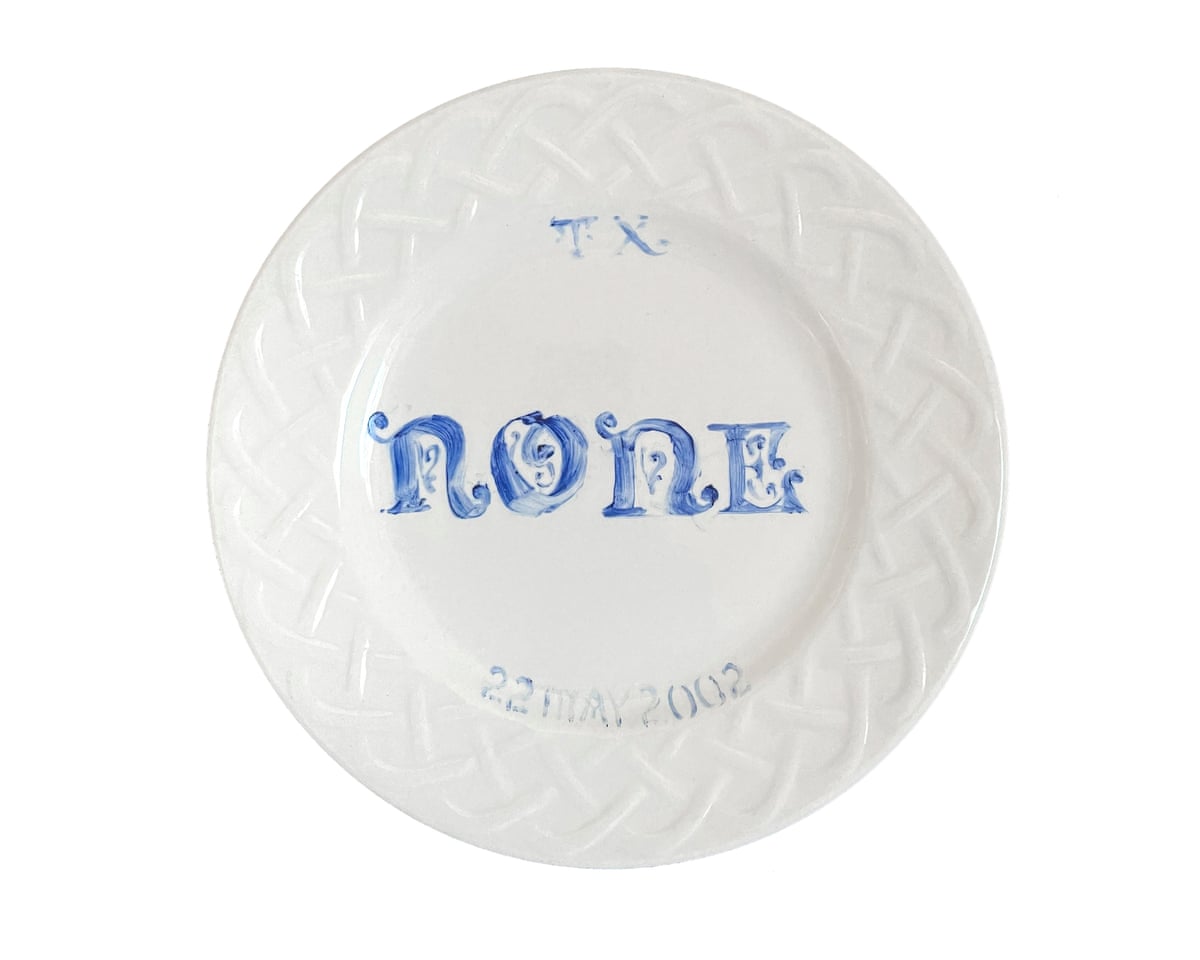
Green's exhibition presents The Last Supper, a rarely seen-in-full installation that consumed 22 years of the artist's practice and comprises nearly 1,000 individual plates. Each ceramic vessel documents the final meal requested by a person on death row before their execution. The plates were created using cobalt-blue mineral paint applied to found ceramics, then re-fired in a kiln, according to the museum's exhibition documentation. This will be only the second time all the plates have been exhibited together, marking a significant curatorial achievement.
Many plates bear a single word: "none," marking instances when an inmate declined to consume a final meal. The work forces viewers to confront the contradictions embedded in state execution—a system that simultaneously offers the dignity of a chosen meal while stripping away the humanity of those it condemns to death. By centering the act of breaking bread, a practice fundamental to human connection, Green creates space for compassion toward individuals rarely granted meaningful representation in public discourse.
Warren recalls specific plates that lodged in her memory.
There's one in particular where a prisoner opted to eat vending machine food with their family. There's another whose mother was allowed to come in and cook their last meal.Other plates reveal the system's cruelty toward the most vulnerable: one documents an execution of a person with an IQ of 61, indicating someone with serious intellectual disabilities was put to death. Another shows an inmate who saved part of their meal, unaware they would never eat again.
How did Gary Tyler's art emerge from death row?
Gary Tyler, now an author and artist, was charged with murder at age 16 in 1974 and convicted by an all-white jury, becoming the youngest person sentenced to death row in the United States. His case was compromised by police misconduct, and he is now widely regarded as wrongfully imprisoned. Though never formally exonerated, Tyler was released in 2016 following the Supreme Court's 2012 decision in Miller v. Alabama, which ruled that mandatory life sentences for juvenile offenders were unconstitutional.
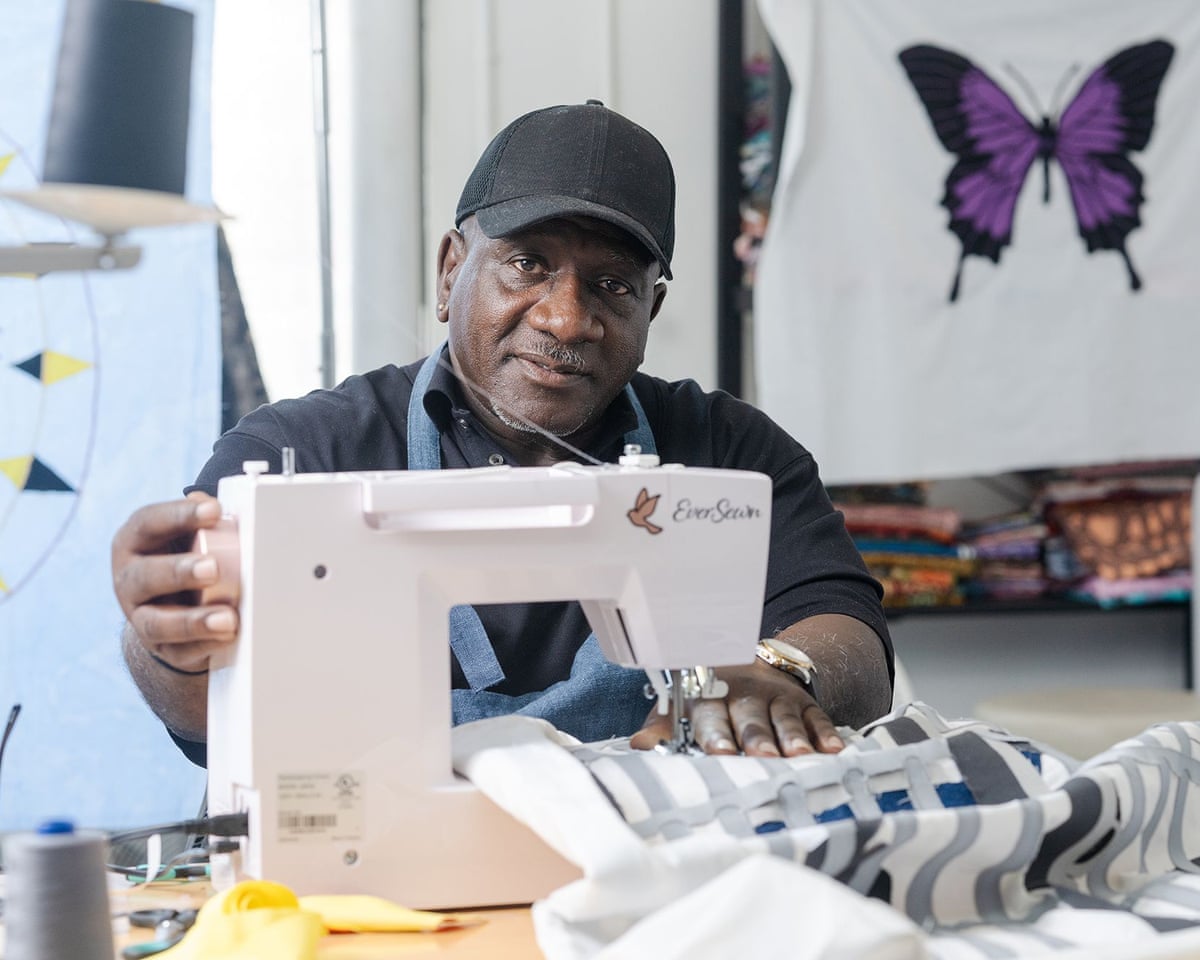
During four decades confined at Angola state prison in Louisiana—known as the Alcatraz of the South and currently the largest maximum-security facility in the United States—Tyler began crafting quilts to comfort dying inmates in the prison's hospice. Initially reluctant to work with textiles, he discovered the profound value his creations held for others.
I saw that I could help the men in the hospice, so it was something that I warmed up to. I realized we were doing something that would last for generations in the family. When our patients passed, the quilt was passed into their family, and it was really moving for me.
This volunteer work transformed Tyler's understanding of shared humanity and later informed his transition to fine art textile practice.
You realize that that could be you, and it will be you eventually, you're just as human as the individual you're taking care of. Being a hospital volunteer was one of the greatest things in my life. I never would have thought that I had the creative gene in me.His quilts typically feature static background colors interwoven with rich texture and repeating motifs—flowers in some works, abstract tear-shapes in others—depicting vivid and powerful scenes: a bull overturning a red table, a man struggling beneath the weight of the world, a child in shackles with their back turned to the viewer.
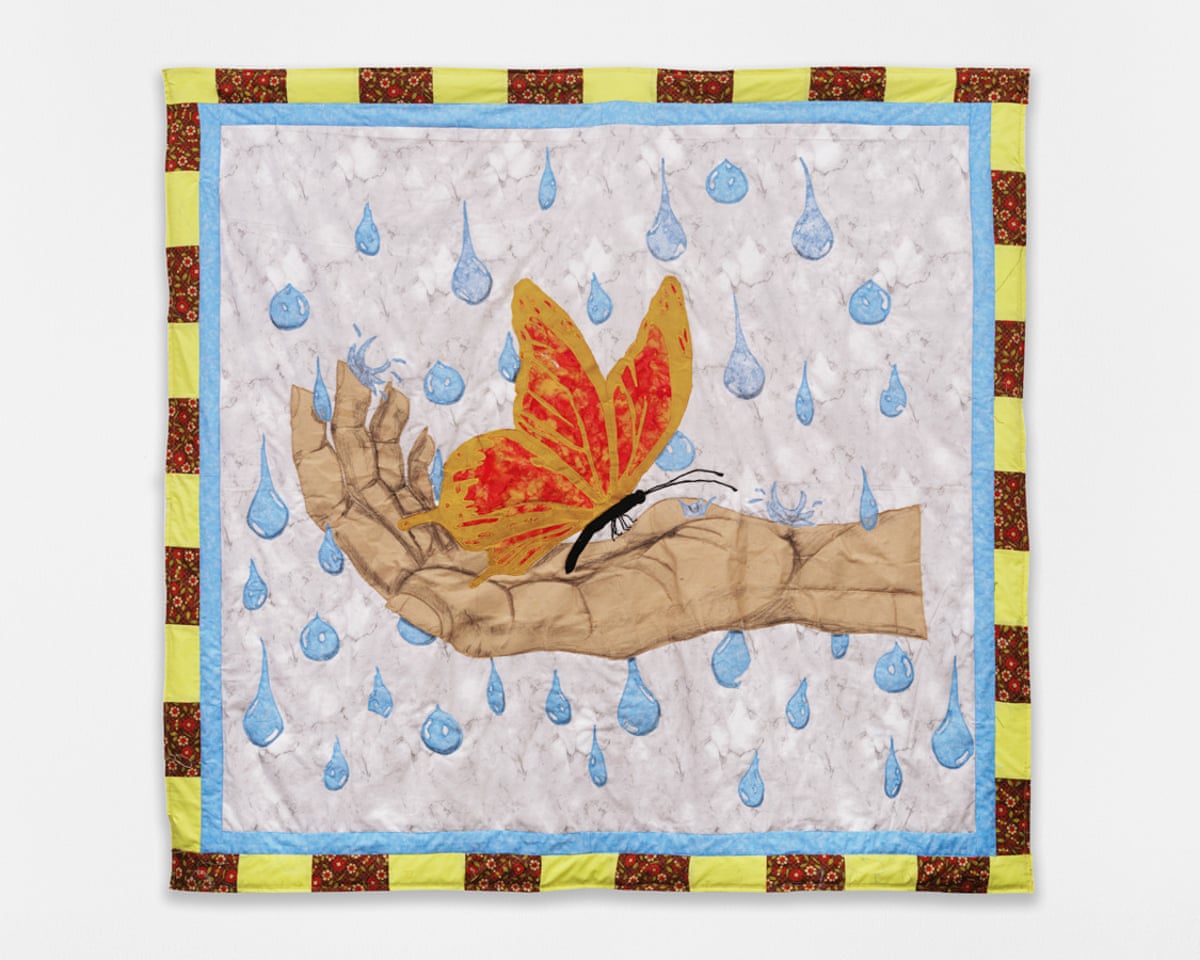
One composition holds particular significance for Tyler, depicting his moment of defiance at trial.
I got this surge of energy. I wanted to raise my hands in a fist, but I had handcuffs on, with deputies holding my arms, but I still managed to show defiance, that despite what happened I would continue to fight.The work captures the instant he was led from the courthouse in handcuffs while supporters cheered, a visual testament to resilience amid state violence.
How did Ray Materson develop his embroidery practice?
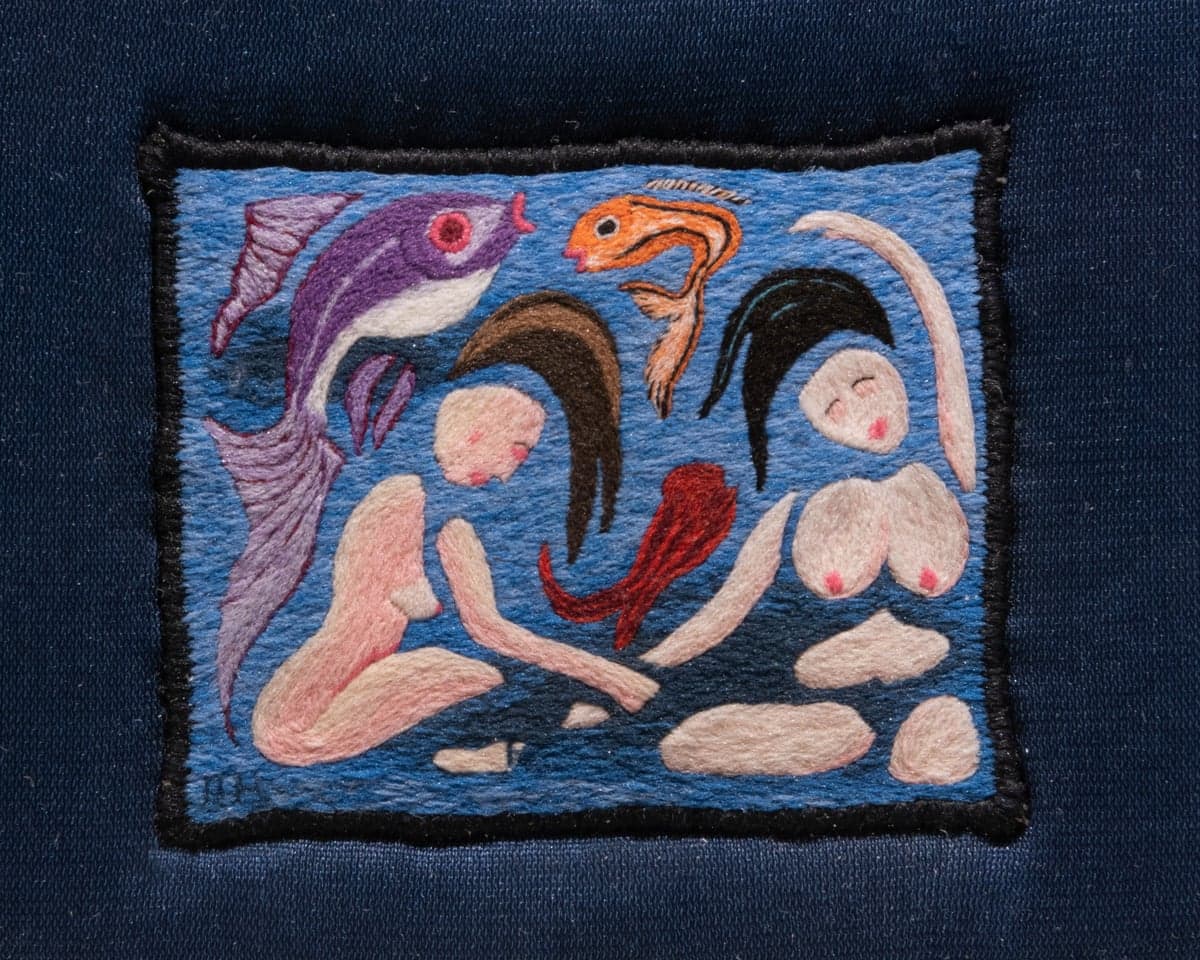
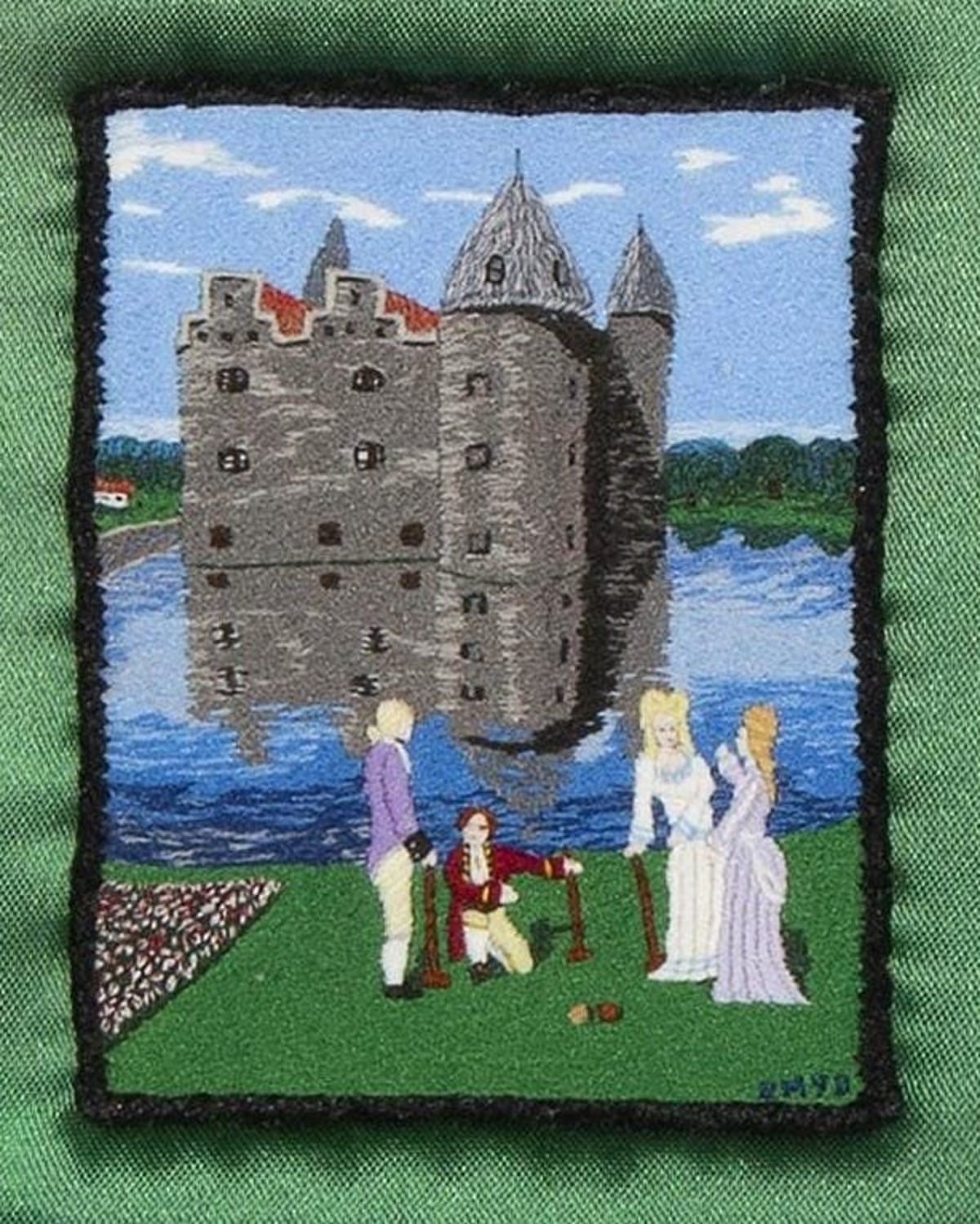
Ray Materson, an outsider embroidery artist, developed his signature technique through necessity while serving seven years in prison for drug-related offences. With access to boxer shorts and bedsheets providing white thread, Materson recognized that socks offered the color palette he required to create intricate scenes. He spent countless hours unraveling socks to obtain the materials his art demanded. Warren recalls Materson's reflection on incarceration:
Ray said to me one time: 'Your biggest enemy in prison is the clock.' For him to be able to spend days and days in this meditative act was such a saving gesture.
His growing reputation among fellow inmates led others to commission embroideries depicting loved ones or items of symbolic weight, such as national flags. These pieces granted Materson purpose and allowed other men to experience identity and selfhood in an environment designed to strip both away. Decades after his release, Materson continues sourcing vintage socks identical to those he used in the 1980s, valuing their nylon stretchability for his ongoing practice. His works, often measuring merely 2 inches by 3 inches, depict intense scenes drawn from Shakespeare, Ibsen and Chekhov, as well as historical figures including Queen Victoria and Catherine the Great, each composition dense with pathos and visual complexity.
What is the broader significance of these exhibitions?
The three presentations collectively explore how creativity fosters purpose, resilience and connection within restrictive circumstances, according to the museum's framing of the exhibitions. Warren articulates the dual impact she hopes the work will achieve:
This show brings a lot of shock at the facts of what's the reality for a lot of people, but they also bring a lot of hope. Ray was on a track of death through his addiction, but because of art his life turned around into something defined by creativity and giving.
The exhibitions demonstrate that artistic creation can be transformative not only for those incarcerated but for audiences encountering their work. By centering the voices and visions of people typically rendered invisible by the criminal justice system, these shows challenge viewers to recognize the humanity of those behind bars and to question the systems that confine them.
The exhibitions also connect to broader international efforts recognizing art's role in prisoner rehabilitation and wellbeing. Charitable initiatives have emerged supporting prisoner-created artwork, while creative programs in other nations have demonstrated how artistic outlets can provide purpose and identity within carceral settings.
When do the exhibitions open and what events are scheduled?
According to the museum's exhibition schedule, all three shows open on 3 October 2026. Julie Green: The Last Supper runs through 24 October 2027, while Gary Tyler: Rebirth and Ray Materson: Metamorphosis are scheduled through 3 January 2027. The museum will host a members' exhibition opening on 2 October 2026 from 7 to 10 p.m., providing early access to the presentations. On 3 October 2026, from 10:30 a.m. to noon, the museum will host a Member Coffee with the Artist featuring Ray Materson, offering visitors direct engagement with one of the featured artists.
Key Facts:
- The United States incarcerates nearly 2 million people, the highest rate per capita among independent democracies and fourth globally.
- Julie Green's The Last Supper comprises nearly 1,000 ceramic plates documenting final meals of death row inmates, created over 22 years using cobalt-blue mineral paint on found ceramics.
- Gary Tyler spent four decades at Angola state prison before his 2016 release following the Supreme Court's Miller v. Alabama ruling; he was 16 when sentenced to death row.
- Ray Materson developed his embroidery technique using unraveled socks while serving seven years for drug-related offences, creating works often measuring just 2 by 3 inches.
- The three exhibitions open 3 October 2026 at Grand Rapids Art Museum, with Green's show extending through October 2027 and Tyler's and Materson's through January 2027.