The 2026 US Open, which concluded on 13 September after running from 30 August through mid-September, will be remembered as one of the most problematic grand slam tournaments in recent years. While the competition itself produced moments of genuine sporting excellence, the event was marred by severe infrastructure failures, an invasion of social media influencers, and a continued inability to manage scheduling that pushed matches into the early hours of the morning.
The physical condition of Arthur Ashe Stadium became a symbol of the tournament's broader dysfunction. As spectators filed out following late-night matches, workers could be seen gathered beneath a hole in the ceiling of one of the tournament shops, attempting to prevent water from a burst pipe from destroying thousands of pounds worth of merchandise. This scene was far from isolated.
Upon arrival at Arthur Ashe Stadium, fans encountered signage reading: "Pardon our appearance while we write the next chapter of Arthur Ashe Stadium." The appearance was indeed troubling. Throughout the main building at one of tennis's most prestigious events, the infrastructure appeared to be deteriorating. Long plastic sheets hung from ceilings in the media centre, directing water into buckets positioned on the floor to catch leaks that appeared with regularity. In the workers' restaurant, a severe water burst from the ceiling forced a one-day closure. Photographers reported becoming ill after exposure to foul odours emanating from drains in the photo pit.
The infrastructure problems were not entirely unexpected. Arthur Ashe Stadium was in the middle of a major remodel for 2026, including a rebuilt interior below the mezzanine level, 40% more upper-concourse space, and an increase in courtside seats from 3,000 to 5,000. However, the USTA indicated that the full $800 million renovation would not be completed until 2027, with further construction scheduled to resume two weeks after the 2026 Open ended. The tournament occupied a temporary state, with many areas described as provisional solutions rather than permanent installations.
How did influencer culture affect the tournament experience?
The 2026 US Open became defined by an influx of social media influencers whose behaviour fundamentally altered the atmosphere inside Arthur Ashe Stadium. These individuals, united primarily by their talent for making events about themselves rather than the sport, brought ring lights to matches, filmed TikTok videos loudly during play, and repeatedly stood to take selfies during points. The noise generated by this group became so pervasive that at times it drowned out even Aryna Sabalenka's famously loud on-court screams. The widespread belief within tennis that everyone should help "grow the game" at all costs has created an environment where such behaviour goes largely unchecked, despite the obvious damage it causes to the viewing experience for other spectators and the concentration of competing players.
What made the women's competition exceptional?
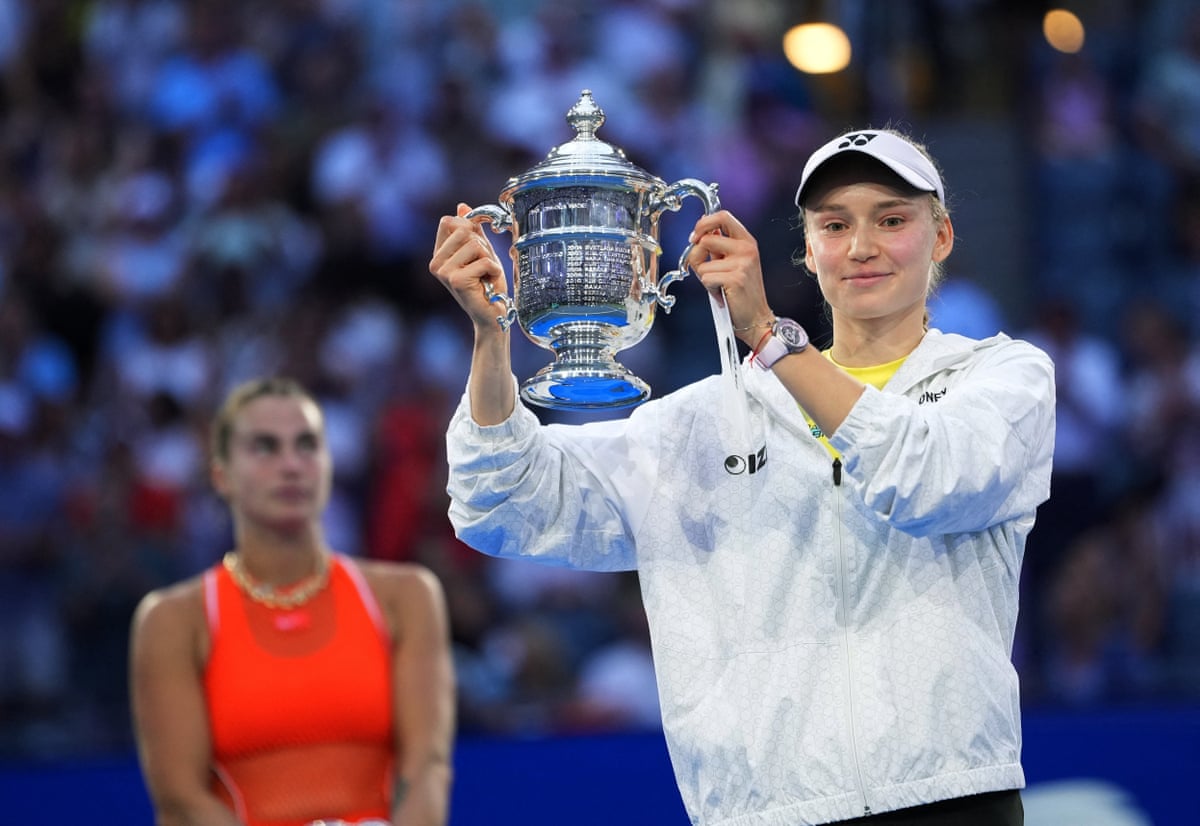
Women's tennis provided the tournament's most compelling narrative. The entire top six seeds reached the quarter-finals, and for the first time in 51 years, the top four seeds shut out all other competitors in the semi-finals. Elena Rybakina demonstrated remarkable resilience in reaching the final, overcoming the pressure of holding the No 1 ranking, managing an achilles injury, and navigating one of the tournament's most challenging draws. Her composed demeanour provided a striking contrast to the intense extroversion of Sabalenka.

Zheng Qinwen delivered two of the tournament's most astonishing performances. In her third-round match against Madison Keys, she recovered from 0-5 down to win 7-5 in the third set, then repeated this feat in the first set of a subsequent match. Her dramatic return to prominence after a difficult period justified the late nights required to complete these encounters. Iva Jovic and Alexandra Eala demonstrated that fierce competitive drive and genuine friendship could coexist as they battled deep into the night. Coco Gauff's semi-final appearance represented significant progress, particularly given that a year earlier her serve had deteriorated so severely that she wept on court.
What challenges confronted men's tennis at the tournament?
The men's draw was severely compromised by injuries affecting younger players throughout 2026. Jack Draper, Holger Rune, Lorenzo Musetti, Arthur Fils, and João Fonseca all missed substantial portions of the year, with their absences creating gaps in the competition. Even those who competed in New York were still managing the consequences of extended time away from competition.
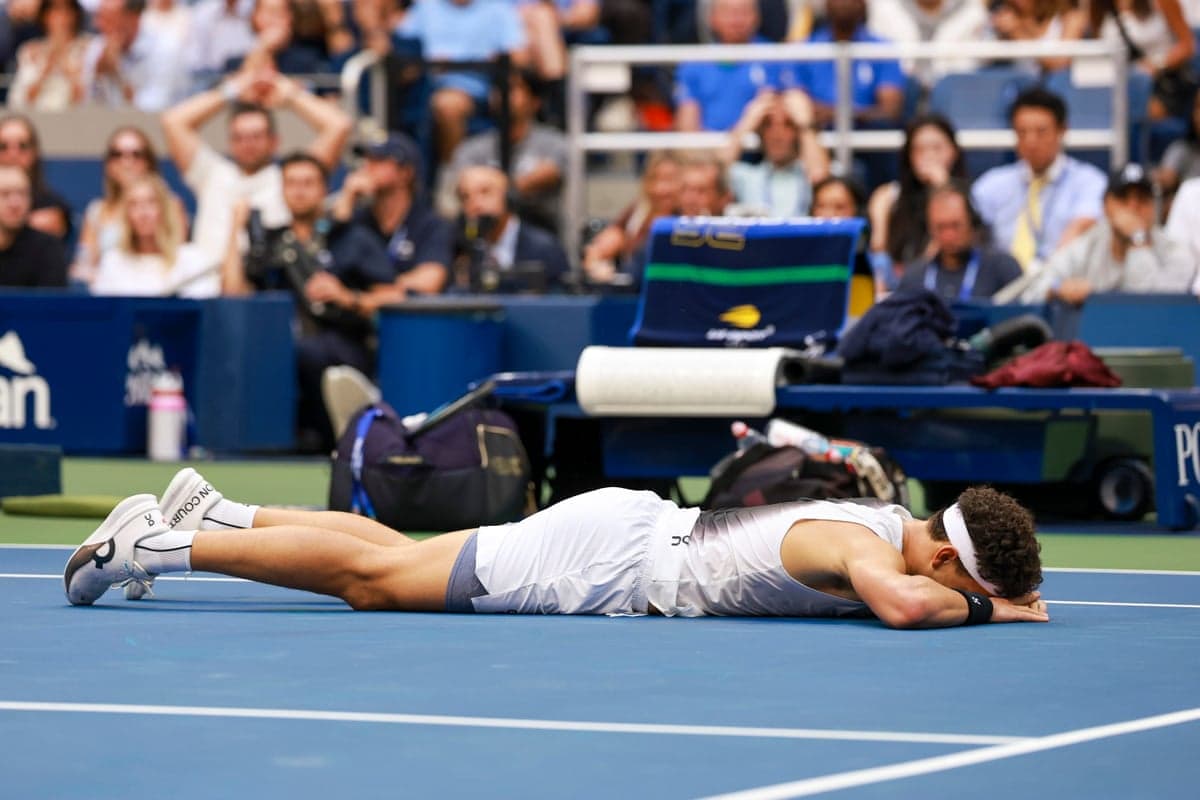
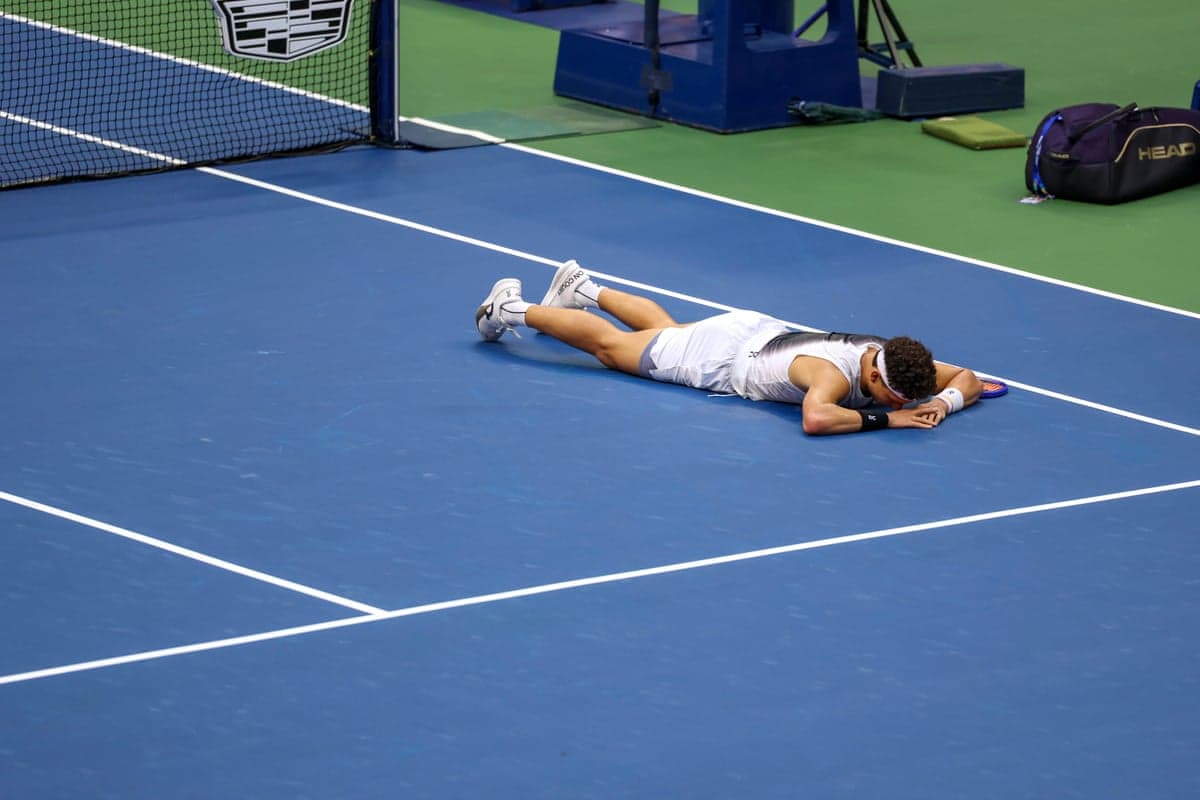
Despite these difficulties, the men's draw produced one of the year's most memorable sporting moments. At 3.40am on Wednesday, following Ben Shelton's monumental victory against Carlos Alcaraz, the Spaniard finally departed Arthur Ashe Stadium. Alcaraz had pushed himself to his physical limit for 4 hours and 28 minutes, vomiting repeatedly throughout the match, only to lose by narrow margins in a fifth-set tie-break. Having been absent for four and a half months due to a wrist injury and uncertain about how his body would respond upon his return, Alcaraz was simply grateful to compete again in the sport he loves. As he walked through the tunnel toward the locker room, his expression transformed into a wide, joyful smile—a moment that transcended the result of the match itself.
Alexander Zverev ultimately won the men's final in four sets over Ben Shelton, claiming the title on 13 September.
Why do scheduling problems persist at the US Open?
Although the 16 hours of tennis between 11.30am on Tuesday and 3.33am on Wednesday delivered one of the most spectacular quarter-final days in recent history, with four dramatic final sets across four matches, the continued occurrence of such extreme scheduling represents a clear failure of tournament management. The fact that organisers have still not prioritised finding a genuine solution to these early morning finishes demonstrates a troubling lack of commitment to the wellbeing of players, staff, and spectators. The infrastructure problems were exacerbated by a scheduling system that appears incapable of adapting to the realities of modern tennis.
What comes next for Arthur Ashe Stadium?
Construction at Arthur Ashe Stadium was expected to resume at the start of October 2026, after the site is fully closed out. The renovation program will continue through the 2027 US Open, when the stadium transformation is scheduled to be completed. The 2026 tournament served as an uncomfortable halfway point in a multi-year project, with temporary conditions and incomplete facilities creating an experience far below the standards expected at one of tennis's four major championships.
Key Facts
- The 2026 US Open ran from 30 August to 13 September, with the women's final on 12 September and the men's final on 13 September.
- Arthur Ashe Stadium was undergoing an $800 million renovation, with only partial completion by 2026 and full completion scheduled for 2027.
- Women's top seeds dominated the tournament, with the top four reaching the semi-finals for the first time in 51 years.
- Multiple infrastructure failures, including ceiling leaks and burst pipes, affected media facilities, retail spaces, and worker areas throughout the tournament.
- Extreme scheduling pushed quarter-final matches across a 16-hour window ending at 3.33am, continuing a pattern of unresolved early morning finishes.