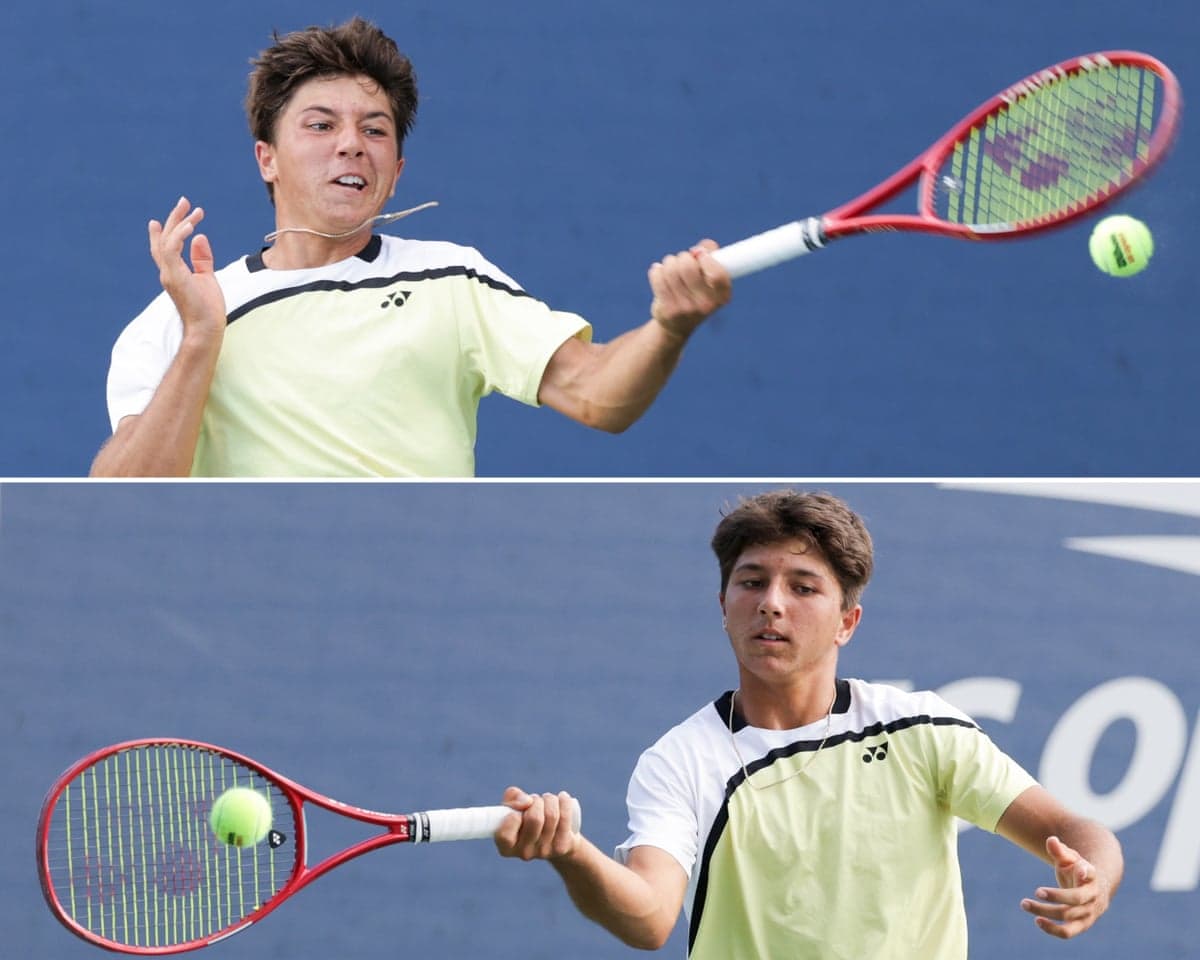
Teodor Davidov operates with a permanent advantage. The 16-year-old from Denver arrived at this year's US Open as the tournament's most unconventional competitor – the sole player among men, women and juniors who eschews backhands entirely. Yet this is no limitation born of inability. Davidov is ambidextrous by design, and he has chosen to weaponise both his forehand wings instead.
On September 7, 2026, Davidov made his US Open juniors debut as a wild card, stepping onto the court to face South Africa's Connor Doig in the boys' singles draw. The match itself ended in defeat – a 7-6(4), 6-3 loss – but the teenager's presence at the tournament represented something far larger than any single result. Here was a player whose entire technical foundation challenged everything the sport had accepted about how tennis should be played.
The ambidextrous teenager has been a source of fascination within tennis circles for half a decade, with online videos of his training sessions and match footage drawing millions of views. Yet those clips, often resembling algorithmic oddity, fail to capture the reality of watching him perform in person. At 5 feet 7 inches tall, Davidov drew crowds to Court 6 during his doubles competition, spectators drifting over between matches to witness something genuinely novel. The sight of him switching hands mid-rally – executing forehands, lobs and volleys from either wing – proved mesmerising to those who had only encountered him through screens.
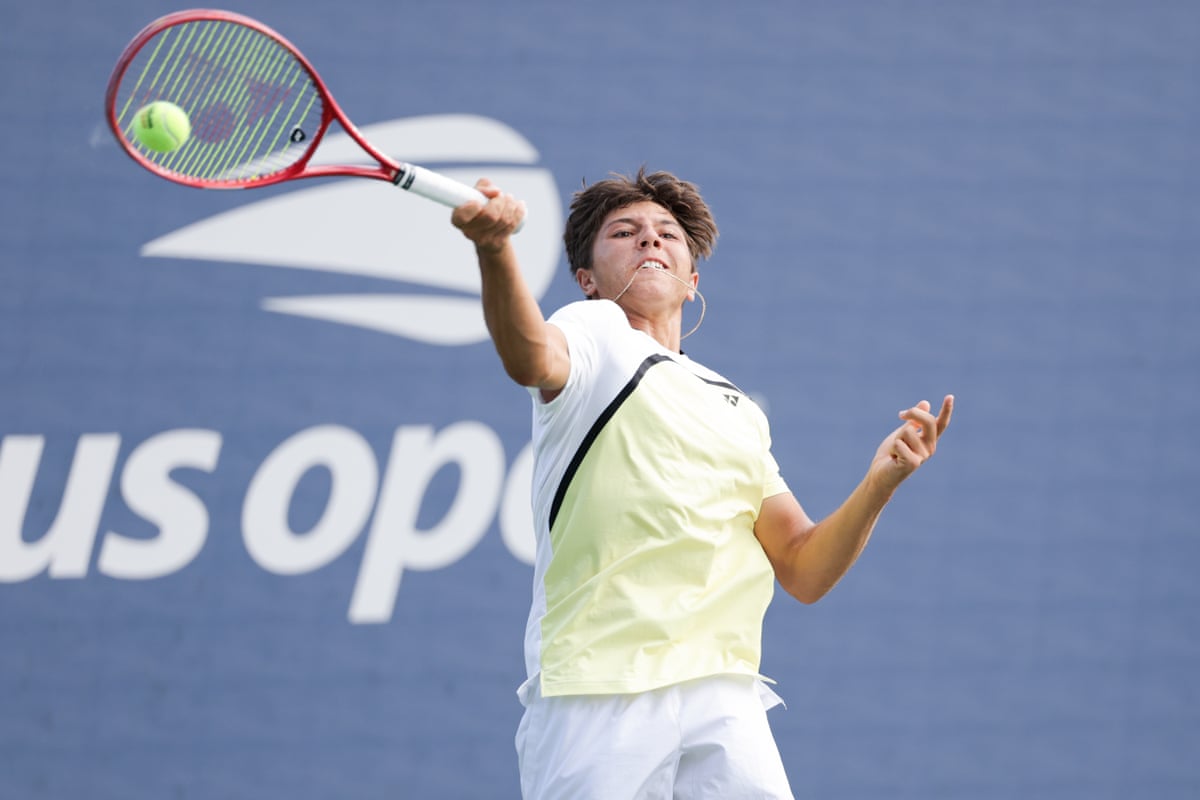
His serving, however, produced the most striking impression. Davidov serves left- or right-handed depending on the court side, using that to add unpredictability to his delivery. Standing on the deuce side, he might unleash a right-handed serve; shifting to the ad side, he switches to his left. The tactical implications are profound. An opponent returning serve faces uncertainty about which hand will deliver the ball, and consequently, which direction the serve might travel.
How does he explain his unconventional approach?
Davidov himself expresses appreciation for traditional tennis structure.
To be honest, I like the traditional backhand-forehand. I like the classiness of it. I like hitting backhands myself just to play around, just for fun.He does indeed strike backhands – from both sides – but only in practice or casual settings. In competition, the two-forehand system remains his exclusive framework.
When asked about his serving strategy, Davidov outlined his foundational approach with precision.
Obviously it depends on who I'm playing, but the general foundation is right hand on the deuce side and left hand on the ad. I've been mixing it up a lot more, different spins, different looks, just making it as hard as possible.This flexibility extends beyond mere novelty. The ability to vary spin, pace and placement from either hand creates genuine tactical complexity for opponents.
Early in his competitive journey, critics questioned whether hand-switching would prove impractical – whether Davidov would find himself caught out of position or unable to reach balls in time. He has addressed these concerns directly.
I'd say before the main speculation that people had with it, they'd say, I don't have time to switch hands. But I think now as time went on, they kind of see that it's not a problem. It almost never happens where I'm late for a ball because something goes wrong with the switching.
What does his US Open performance reveal?
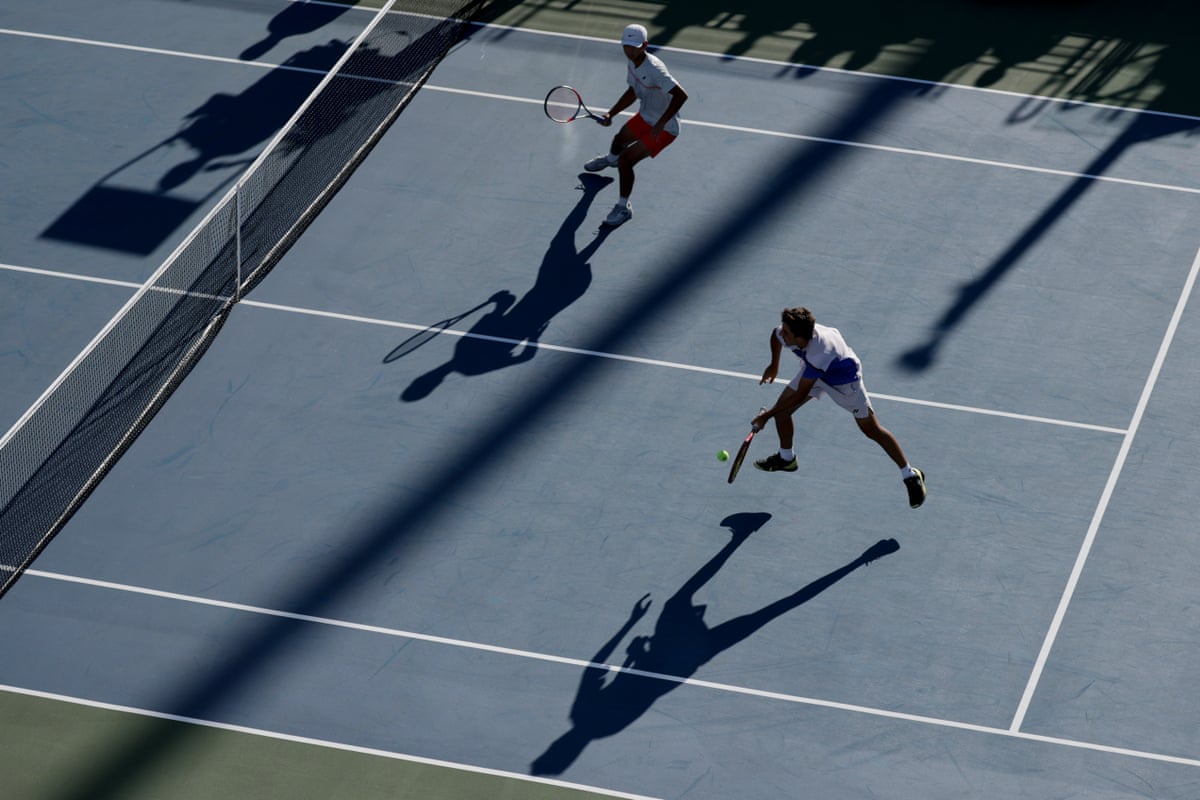
Davidov and Tyler Lee won their boys' doubles first-round match against Brazil's Pedro Henrique Chabalgoity and Leonardo Storck Franca, advancing to face the tournament's elite junior pairing. In the round-of-16 doubles encounter, they confronted a far steeper challenge: world No. 1 junior Luis Guto Miguel and world No. 4 Ziga Sesko, the reigning Australian Open singles and Wimbledon doubles champion.
The match revealed both the promise and the limitations of Davidov's system. In the opening exchanges, his unorthodox style appeared to unsettle his opponents. Sesko and Miguel, accustomed to conventional backhand-forehand patterns, seemed momentarily disoriented by the constant hand-switching. Yet adaptation came swiftly. The Brazilian and Slovenian settled into rhythm, deploying punishing groundstrokes and reflexive net play that overwhelmed the American pairing. The final scoreline – 6-2, 6-2 – compressed a more competitive contest than the numbers suggest, with the match lasting 42 minutes.
Davidov's singles campaign proved similarly instructive. Against Doig, he encountered a player whose conventional game and superior ranking proved decisive. The South African's experience and technical consistency prevailed over Davidov's experimental approach, resulting in the 7-6(4), 6-3 defeat. Yet Davidov extracted value from the experience.
I felt like we were close. We just had some loose points, we got broken. I missed a few volleys. But overall it was really fun and really cool to hear the crowd roar after crazy points.
The teenager reflected on his broader US Open experience with candour.
I'd say the first two days and when I lost my singles, it was so hectic. Everything felt like it was going wrong. But I'd say now, especially the last two, three days have been super enjoyable and I've gotten used to the courts, which are really fast compared to the ones I play on at home.His time in New York served primarily as a field test – an opportunity to validate his double-wing system against elite junior competition on the sport's biggest stages.

What is his competitive track record?
Davidov has not accumulated extensive junior tournament experience, yet his achievements suggest genuine competitive substance beneath the stylistic novelty. Earlier this year, he reached the semi-finals of an M15-level ITF event in Naples, earning his first career ATP ranking points as a 15-year-old. Last year, he became the first player born in 2010 to advance through qualifying at a professional M15 event. He also captured the boys' doubles title at Les Petits As, the prestigious French junior tournament.
His unconventional approach has attracted attention from established figures in professional tennis. Former world No. 5 Andy Roddick examined Davidov's potential on a recent podcast episode.
To have a guy who can effectively serve left-handed and right-handed at the same level, that is potentially game-changing. The serving aspect is what really interests me. It's like having a baseball pitcher who can throw equally well from both sides.Karue Sell, a former professional once ranked as high as No. 258 globally, faced Davidov in March and emerged questioning whether he had encountered something genuinely revolutionary.
How did his parents develop this playing style?
Davidov's journey began not through accident but through deliberate parental design. A Bulgaria native who immigrated to the United States while young, he started swinging at a suspended ball at age two under the guidance of his father Kalin and mother Elena – both possessing backgrounds in sports and holistic medicine. Kalin, influenced by philosophy and Chinese medicine, conceived the two-forehand system with a specific neurological objective in mind.
When Teodor approached his eighth birthday, Kalin made a calculated decision. According to his explanation when his son was 10 years old,
When Teo was about to turn eight years old, I decided he's going to start playing left-handed, to affect his right hemisphere of the brain. He's way too extroverted, too fiery, a little too imbalanced, so I just wanted to affect the right hemisphere of his brain, using the left part of his body.This neurological rationale underpinned what would become an intensive training regimen.
The childhood training schedule was demanding by any standard – 30 to 40 hours weekly, both on and off court, including specialised exercises such as breathing techniques focused on single-nostril respiration. In recent years, Davidov has supplemented this foundation with additional cardio and weight training to build stamina and develop a frame that remains slightly undersized compared to his peers.
Before I was just a little kid, and everyone was twice the size of me and way stronger than me. But now I'm kind of growing into my body a bit more.
How rare is ambidextrous tennis?
Players who compete using both hands represent an extreme rarity in professional tennis. American Luke Jensen achieved the most recent major success, winning the 1993 French Open doubles title alongside his younger brother Murphy while delivering 130 mph serves from either wing. Russia's Evgenia Kulikovskaya reached the top 100 in the early 2000s while employing a two-forehand system. Davidov's approach draws conceptual inspiration from Toni Nadal's decision to convert his nephew Rafael from right-handed to left-handed play – a conversion that produced one of the sport's greatest champions.
Davidov himself articulated the aspirational blueprint underlying his development.
The idea was for the leftie forehand to be more like Rafa and righty to be more like Fed. It's still a work in progress. I don't know if we're going to get there someday, but that's the hope.This statement reveals the ambition embedded within his technical framework – not merely to be ambidextrous, but to synthesise the stylistic strengths of two generational talents.
Is he purely a tennis specialist?
Despite the intensity of his tennis development, Davidov's parents have prioritised well-rounded athleticism. Beyond the court, he pursues skiing, hiking, basketball, American football and soccer. Golf represents an intriguing exception – a sport he initially played left-handed before recently switching to right-handed play.
I used to play left-handed, but I actually switched recently and started playing righty. On the range, it's definitely going farther.This willingness to experiment with hand dominance across different sports suggests genuine comfort with ambidextrous movement rather than rigid adherence to a single system.
What are his immediate plans?
Following his US Open appearance, Davidov intends to compete in a 300-level juniors tournament in Texas before evaluating potential professional opportunities. His longer-term path remains undecided. His doubles partner Tyler Lee has committed to Duke University, and Davidov has not ruled out collegiate tennis.
College [tennis] has gotten so much better lately,he acknowledged, suggesting genuine consideration of that pathway. Yet the alternative – bypassing university entirely to pursue professional competition – remains equally viable given his early ATP points and tournament success.
The possibility of further technical evolution has not been dismissed. When asked whether he might eventually add a conventional backhand to his arsenal, Davidov indicated openness to continued experimentation.
We were actually thinking about it, to have even more variety, playing like one point lefty. But I think we're kind of stuck to the two forehands. But we'll see.This measured ambivalence – neither ruling out future development nor committing to it – reflects the experimental nature of his entire approach.
Davidov's presence at the US Open, amplified by the tournament's official channels highlighting footage of his left- and right-handed serves as one of the event's social-media attention points, signals that tennis is beginning to take his experiment seriously. Whether his two-forehand system ultimately produces a top-ranked professional or remains a fascinating footnote in the sport's history depends on factors beyond technical innovation – physical development, mental resilience, and the evolution of his opponents' counter-strategies. For now, Teodor Davidov remains one of tennis's most compelling experiments in progress.