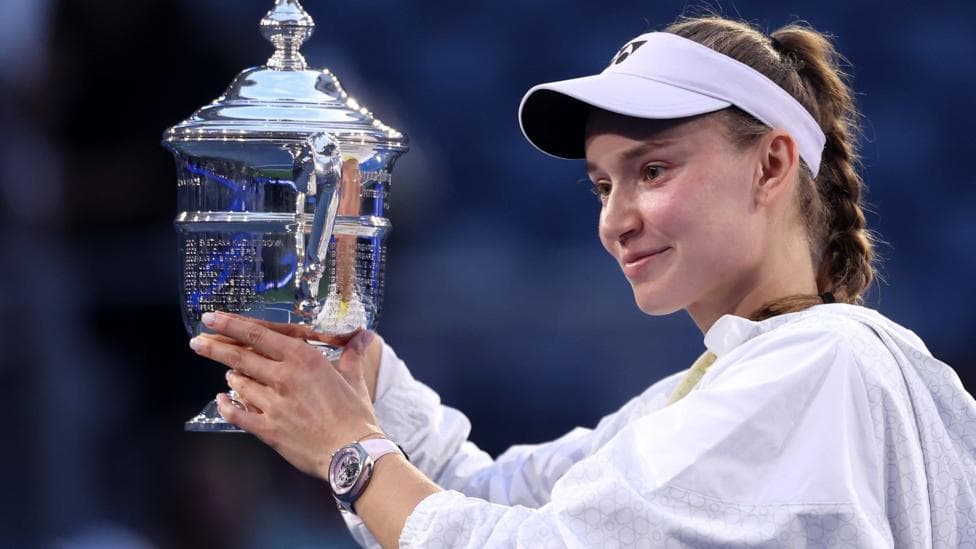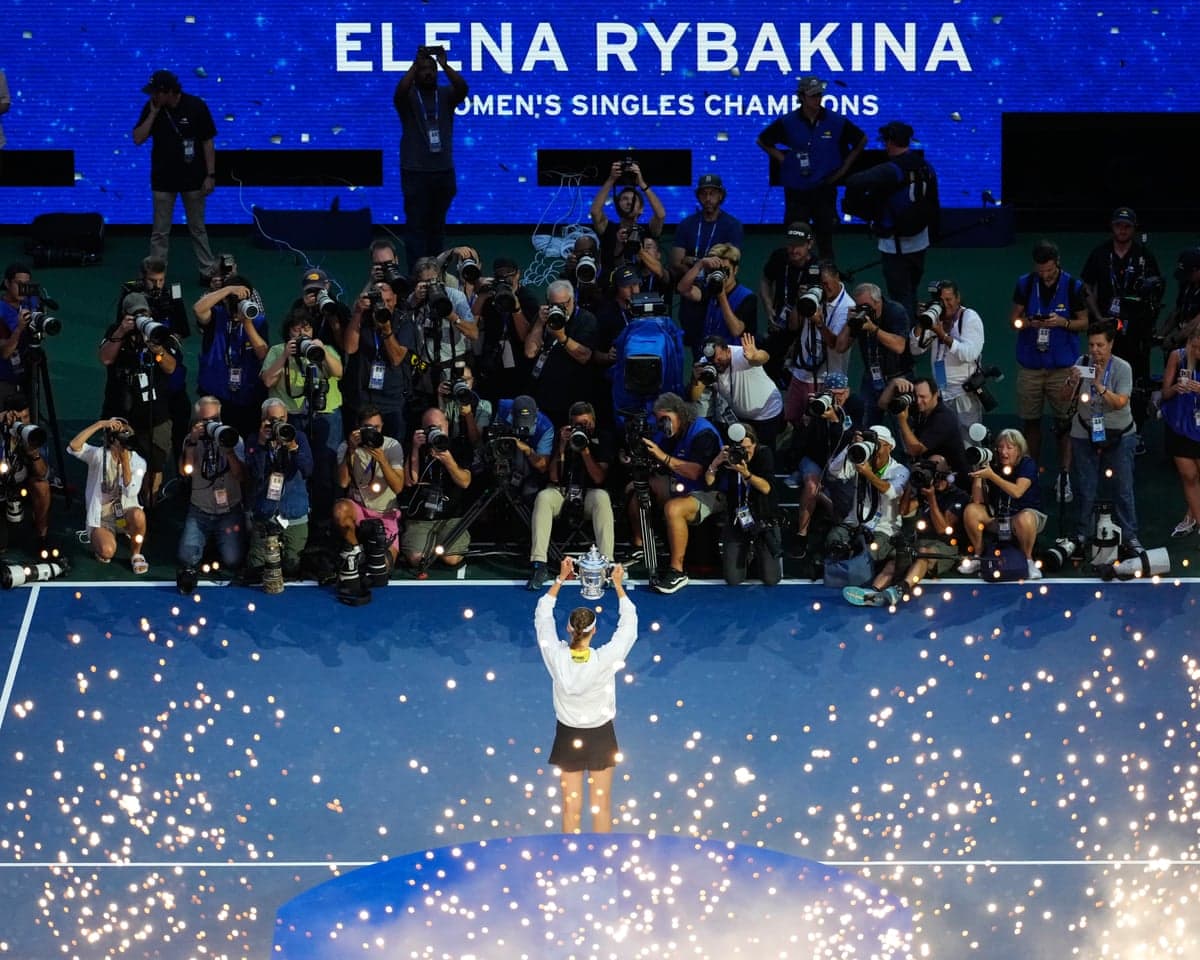
Elena Rybakina has undergone a remarkable transformation in the past year, ascending from a one-time grand slam title holder questioning whether she could sustain early success to a three-time champion and world No. 1. At 27 years old, she now stands just one French Open victory away from completing the career grand slam, a feat currently within reach for only a select few players including Iga Swiatek and Jannik Sinner. Yet as she continues her dominant run through 2026, questions persist about the role her previously banned coach has played in her meteoric rise.
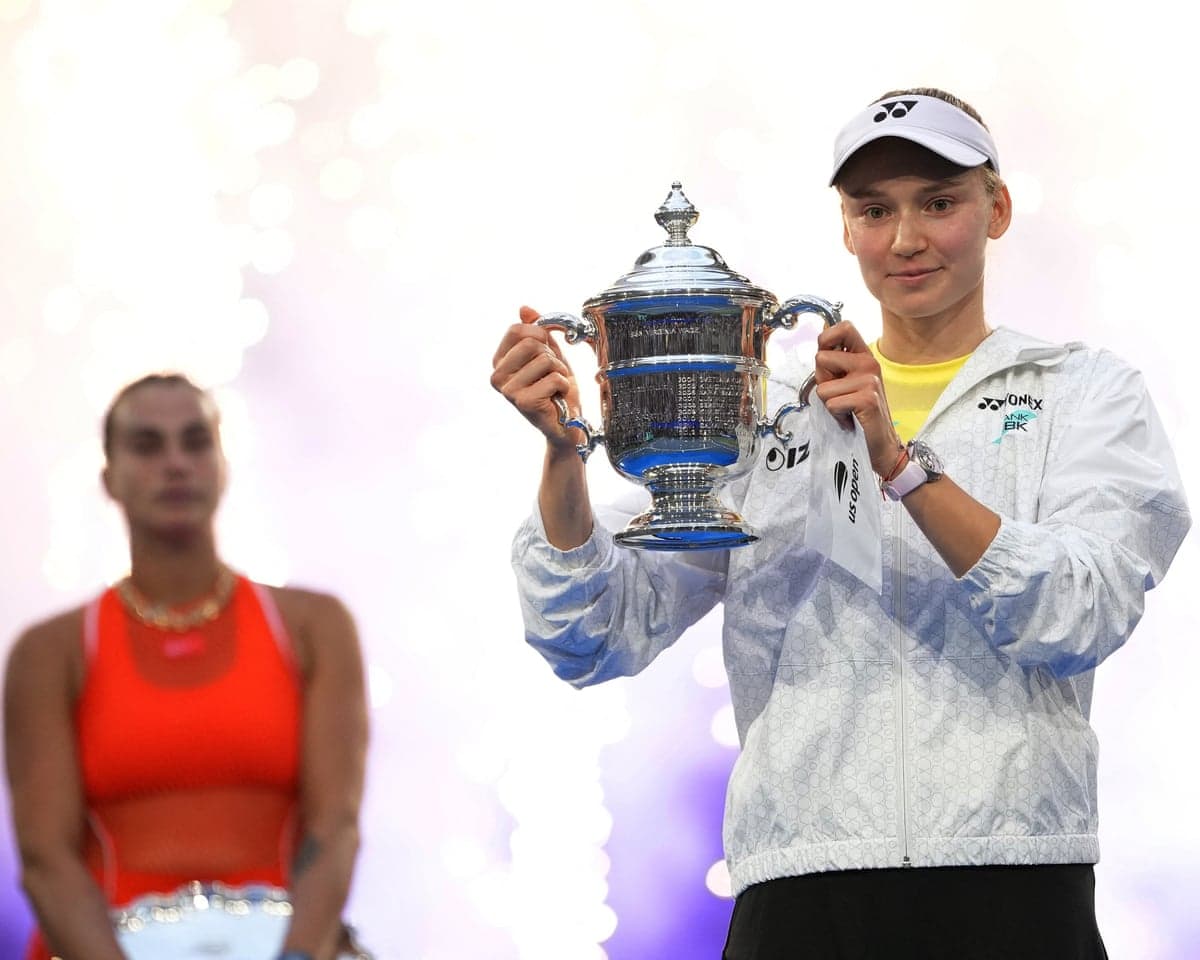
Rybakina's trajectory became unmistakable following her commanding performance at the WTA Finals in November of the previous year. After defeating Aryna Sabalenka in straight sets, Sabalenka—typically a formidable force on court—found herself overwhelmed. The Australian champion resorted to a Russian idiom to describe the experience:
Once a year, even a stick shoots, suggesting that Rybakina's exceptional form was a rare occurrence. That assessment proved premature. Over the subsequent twelve months, Rybakina has systematically dominated hard-court grand slam tournaments, defeating Sabalenka in multiple major finals and establishing herself as the sport's preeminent player.
The scale of Rybakina's ascent cannot be overstated. She has won three grand slam titles in rapid succession and claimed the world No. 1 ranking, a position she secured with a quarterfinal victory over Zheng Qinwen at the US Open. According to reports from the tournament, Rybakina's quarterfinal win ensured she would leave the competition at the top of the rankings regardless of her subsequent results.
At the 2026 US Open, Rybakina advanced to the final by defeating Coco Gauff 3-6, 6-4, 6-4 in a semifinal lasting 2 hours and 8 minutes on 11 September. According to the WTA, this victory set up a championship match against Sabalenka, who reached her fourth consecutive US Open final by defeating Jessica Pegula 7-5, 6-2 in her own semifinal on the same day. The two players were meeting in their third grand slam final, with Sabalenka holding a 10-7 head-to-head advantage entering the match.
Remarkably, the semifinal lineup featured all four top seeds—a distinction that had not occurred at any grand slam tournament since Wimbledon in 2009. For Sabalenka, the final represented a chance to become the first woman to win three consecutive US Open titles since Serena Williams accomplished the feat from 2012 to 2014.
How has Rybakina overcome previous obstacles?
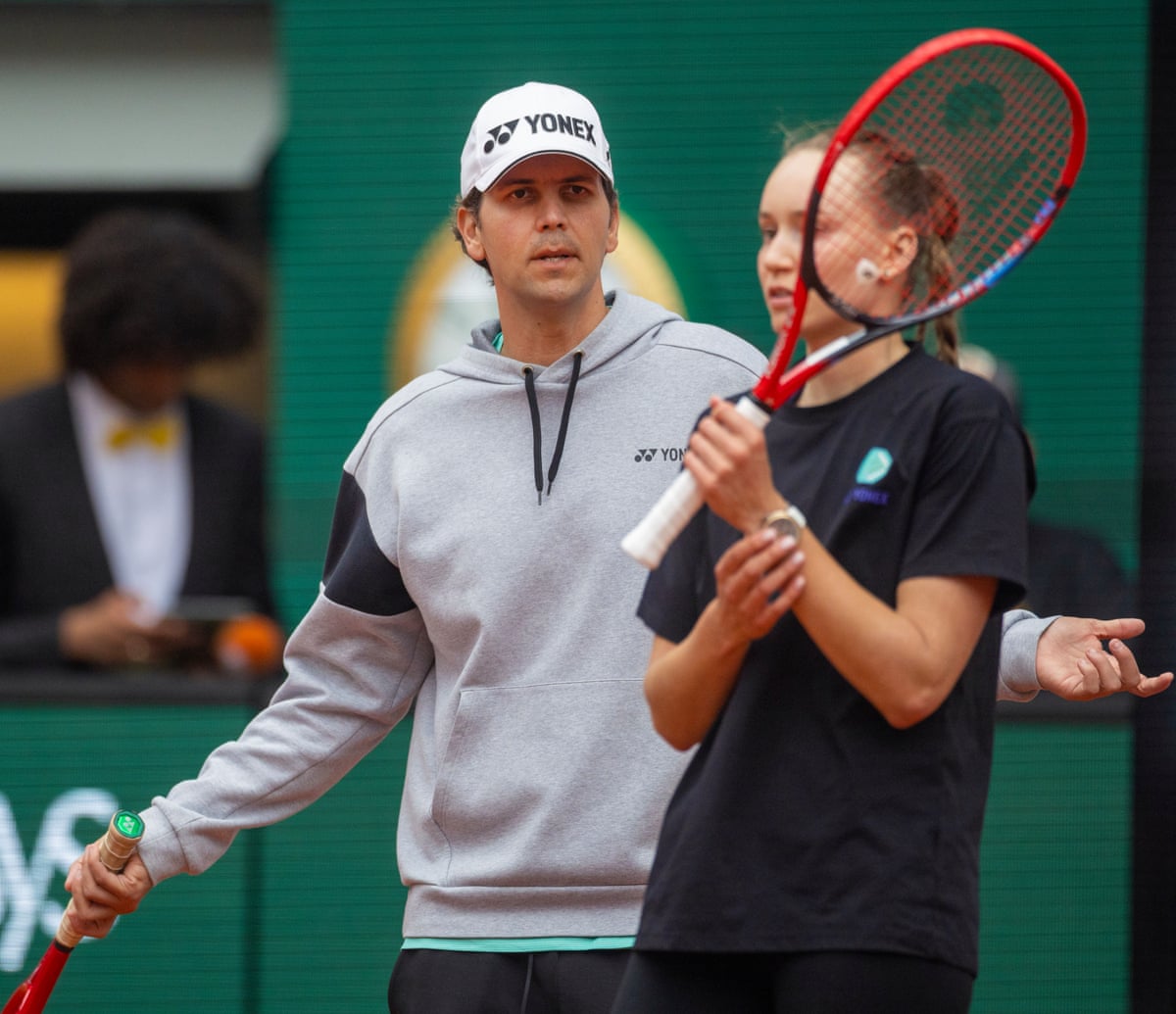
A crucial element of Rybakina's resurgence has been her recovery from the health issues and injuries that severely disrupted her career during 2024 and 2025. Throughout that period, she withdrew from numerous tournaments and retired from matches, creating uncertainty about whether she could return to her previous level. Her coach, Stefano Vukov, became a central figure in discussions about her struggles and eventual comeback.
Vukov was suspended from coaching at WTA tournaments following an investigation that concluded he had engaged in abusive conduct toward Rybakina. The provisional suspension began in January 2025, but Rybakina was permitted to continue working with him away from WTA events. In August 2025, Vukov's ban was overturned on appeal, allowing him to return to her team at official tournaments. Following her victory at the WTA Finals, Rybakina notably declined to pose for a photograph with then-WTA chief executive Portia Archer, a gesture widely interpreted as a protest against the organization's handling of the situation.

Throughout her career-best season, Rybakina has made oblique references to the circumstances surrounding Vukov's suspension and reinstatement, framing his return as instrumental to her success.
I think that now I have a very good team around me, good people. It definitely helps. It's been a lot going on in the previous year outside of the court. I think now all my focus was on tennis. I can't always perform at my best, there are always ups and downs, but I think we've been doing a very good job, right decision in certain situations, because every day is a challenge.
What has changed in Vukov's coaching approach?
Observers have noted a marked shift in Vukov's demeanor during matches since his return from suspension. Previously, his on-court interactions with Rybakina drew widespread criticism from commentators, analysts and former players, who found his approach excessively negative and relentlessly fault-finding. He frequently criticized her performance during matches, creating an uncomfortable atmosphere for viewers.
Since rejoining Rybakina's team, Vukov has adopted what appears to be a substantially different coaching style. He now emphasizes encouragement and constructive tactical guidance rather than criticism and nitpicking. Whether this reflects genuine reflection on the criticism of his previous methods or simply heightened awareness of courtside microphones remains unclear. The transformation is nonetheless evident to anyone observing their interactions during competition.
Why does uncertainty persist around Rybakina's team?
Despite Rybakina's extraordinary achievements, the lack of transparency from her camp complicates efforts to fully understand the dynamics surrounding her success. Sabalenka's team—including assistant coach Anton Dubrov, former player Max Mirnyi and coach Jason Stacy—held a press conference on Friday to preview the women's final, offering detailed insights into their preparation and strategy. By contrast, Rybakina's team maintained their customary silence, providing no public commentary before or after the championship match.
This communication gap is particularly notable given that Vukov is widely expected to be named the WTA's coach of the year award winner based on Rybakina's dominant season. The absence of any statement or interview from Rybakina or her team regarding Vukov's role, the circumstances of his suspension, or the broader context of their working relationship leaves significant questions unanswered. The public record contains no explanation from Rybakina herself about how she views the investigation's findings, whether she believes the allegations were justified, or how she and Vukov have moved forward together.
What lies ahead for Rybakina?
The women's singles final between Rybakina and Sabalenka was scheduled for Saturday, 12 September at 4 p.m. ET at Arthur Ashe Stadium. Based on her performance throughout the tournament and her dominance over Sabalenka in recent matchups, Rybakina enters as the favorite to claim her fourth grand slam title.
Regardless of the outcome at the US Open, Rybakina's trajectory toward completing the career grand slam appears inevitable. Her proven excellence on hard courts, combined with her demonstrated capability on clay—evidenced by her 2023 Rome WTA 1,000 victory and five additional clay-court titles—positions her as a genuine threat at Roland Garros whenever she next competes there. With her serve, court sense and mental resilience all operating at peak levels, the question is not whether she will win a French Open title, but when.
Yet as Rybakina continues to accumulate titles and accolades, the unresolved questions surrounding her coach and the circumstances that led to his suspension will likely remain a subject of scrutiny. Her team's refusal to engage with these issues publicly means that the full story of her remarkable rise—and the role various factors played in it—may never be completely told.