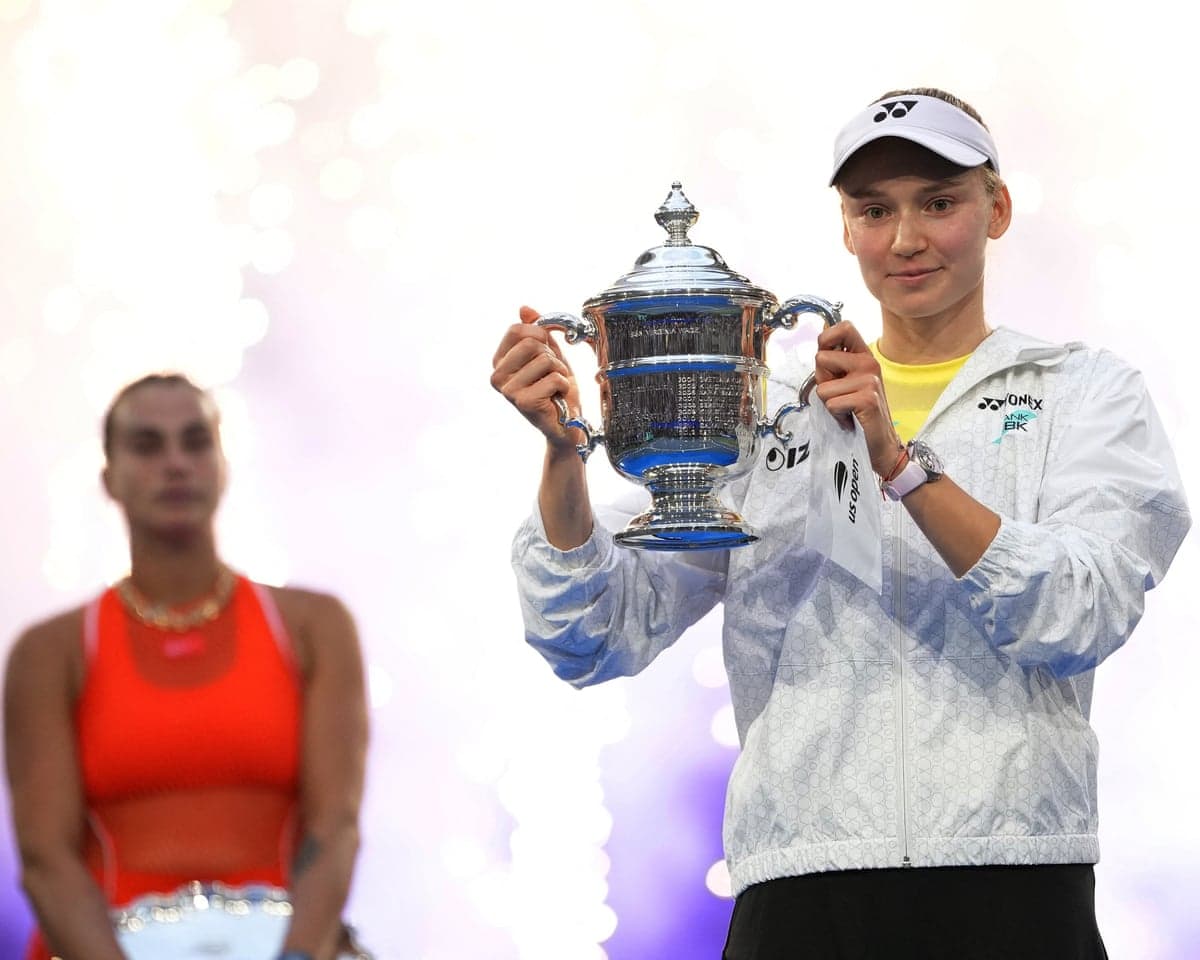
Elena Rybakina captured her first US Open championship on Saturday, September 12 at Arthur Ashe Stadium, defeating two-time defending champion Aryna Sabalenka 6-4, 5-7, 6-2 in a commanding performance that solidified her position as the world's leading player. The 27-year-old Kazakhstani overcame the second-ranked player in the world to claim one of tennis's most prestigious titles, demonstrating the composure and precision that define her game. Rybakina had already secured the world No. 1 ranking with her quarterfinal victory over Zheng Qinwen, ensuring she would finish the tournament atop the rankings regardless of the final's outcome.
The victory marked a remarkable turnaround in Rybakina's standing within elite tennis. Though long regarded as one of the sport's most destructive shotmakers and a threat on any surface, she had previously occupied a tier below the game's most mentally resilient and consistent competitors. Her triumph in New York established her as the undisputed standard-bearer of women's tennis heading into the final stretch of the season, replacing Sabalenka after the Belarusian's 99-week reign at the summit.
Rybakina had reached the final by rallying past Coco Gauff 3-6, 6-4, 6-4 in a semifinal lasting two hours and eight minutes on September 11, according to the WTA. Sabalenka advanced to her fourth consecutive US Open final by defeating Jessica Pegula 7-5, 6-2 in the other semifinal on the same day, positioning herself one victory away from becoming the first woman to win three straight US Open titles since Serena Williams accomplished the feat from 2012 to 2014.
The championship run represented the greatest mental achievement of Rybakina's career, accomplished under extraordinary circumstances. She had recovered from an Achilles injury that sidelined her for a week before the tournament began and left her uncertain whether she would compete at all. Beyond the physical challenge, she navigated the psychological weight of pursuing the world No. 1 ranking while being acutely aware of the precise results required to secure it. In the tournament's second week, she faced four consecutive Grand Slam or Olympic champions without faltering.
How did Rybakina overcome her serve struggles?
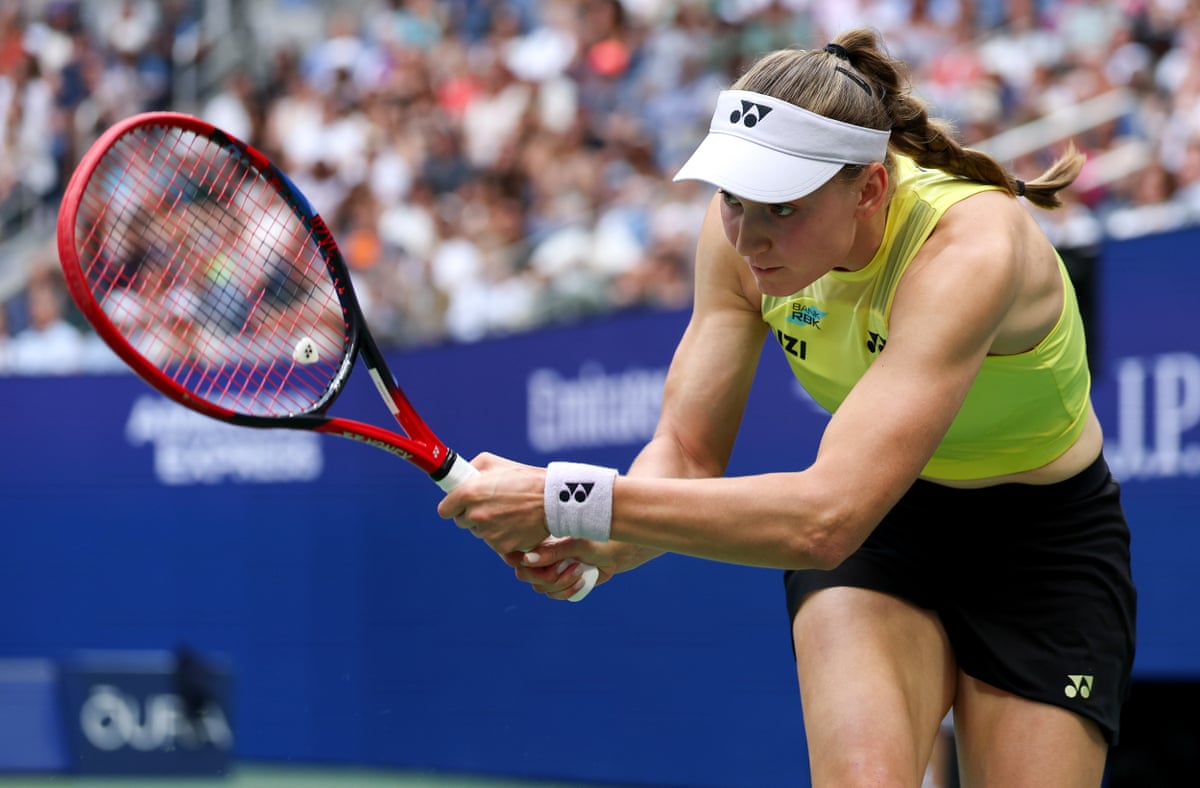
Rybakina's ice-cool composure proved decisive throughout the match, particularly when her most important weapon—her serve—malfunctioned severely in the opening set. She landed only 27 percent of her first serves, converting just eight of 30 attempts. Yet this apparent vulnerability masked her dominance elsewhere on the court. Her return of serve proved devastatingly effective against Sabalenka's delivery, her baseline exchanges were nearly flawless, and her backhand wing operated without error. She afforded her opponent minimal breathing room, staying calm and executing a devastating returning game that left Sabalenka frustrated.
Sabalenka, despite an impressive run to the final given the difficulties she had faced throughout the summer, appeared unsettled from the outset. After double-faulting to surrender the decisive break at 2-3 in the first set, she received a code violation warning for striking a ball into the crowd. Her tension was evident throughout, particularly in her failure to capitalize on the numerous second serves she faced. The opening set concluded 6-4 in Rybakina's favor.

What happened in the second set?
The second set saw Sabalenka mount a genuine challenge as her groundstrokes improved and Rybakina's level dropped slightly in a tighter contest. Improved serving rhythm allowed Sabalenka to find her footing, and although Rybakina's first serve percentage rose, the Kazakhstani's baseline consistency wavered. At 5-4, with pressure mounting on Rybakina's shoulders, Sabalenka seized her opportunity. She struck a down-the-line backhand return winner to earn her first break points of the match at double set point. Sabalenka squandered both opportunities on second serves, but the pressure on Rybakina's delivery had become relentless. At 6-5, after muscling her way to a third set point, Sabalenka powered another backhand return winner to force a deciding set.
How did Rybakina dominate the final set?
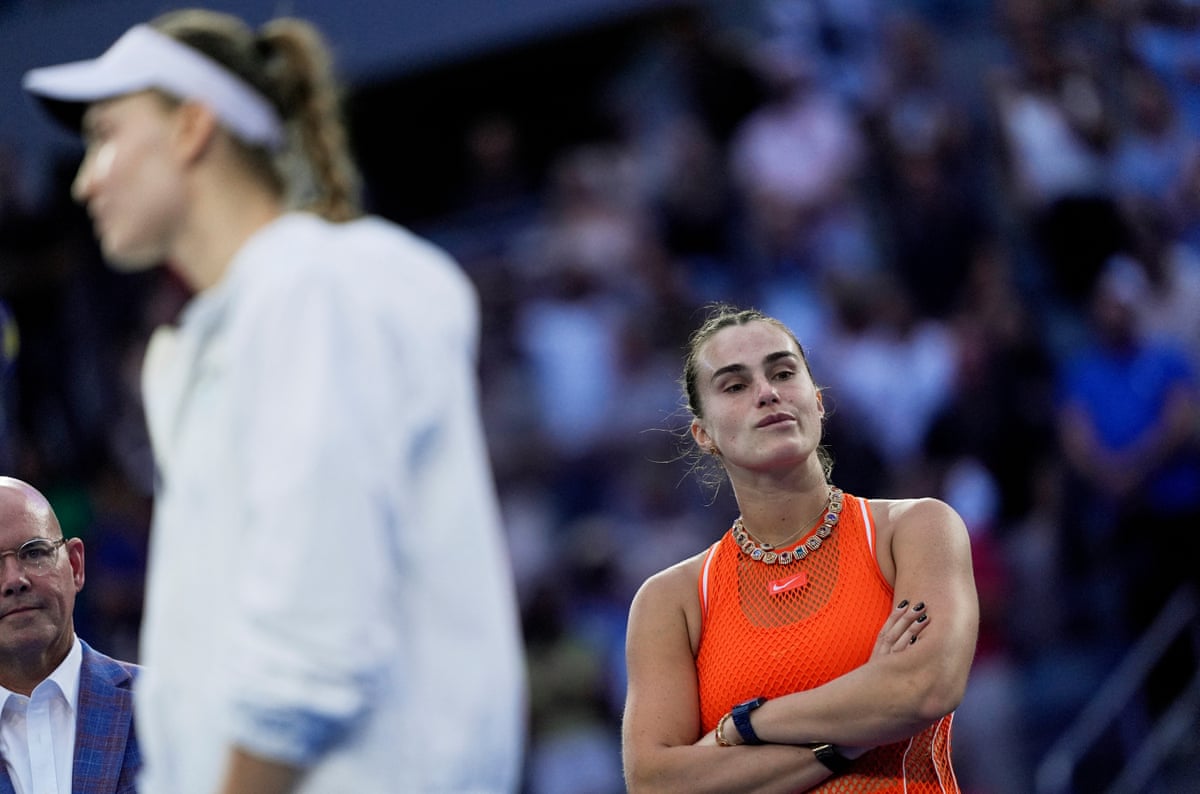
Rybakina's response to this setback demonstrated her mental fortitude and the contrasting temperaments that defined this rivalry. She reset immediately, and her serve—finally operating at its precise, destructive best—became a weapon Sabalenka could not manage. The Kazakhstani moved through her early service games in the third set with authority, firing aces and forcing her opponent into a desperate chase. Loose shots from Sabalenka reappeared as did the negativity, while Rybakina's deep returning pinned Sabalenka to the baseline and allowed the incoming world number one to grow in stature. There was a sign of nerves when Rybakina produced a double fault on her first championship point, but she reset admirably to hammer down an ace and underline her status as the best player in the world. Sabalenka, like numerous other players over the preceding year, simply could not keep pace.
What this victory means for Rybakina's legacy
By capturing the US Open title, Rybakina has now claimed the three most significant hard-court championships in women's tennis. She holds the Australian Open, the US Open, and the WTA Finals trophies. This achievement places her alongside Lindsay Davenport, Jennifer Capriati, Ash Barty, Angelique Kerber, and Virginia Wade as a three-time Grand Slam champion. Having previously won Wimbledon in 2022 and the 2026 Australian Open, she now stands one major championship away from completing the career Grand Slam—only the French Open remains.
The significance of this final
This championship encounter held historic weight. It marked only the second occasion in the 38-year history of the Australian Open and US Open both being contested on hard courts that the same two rivals had faced each other in both finals. The match represented a rare collision between the world's top two players with the ranking certain to change hands. According to the WTA, this was the third Grand Slam final between the two players, and their head-to-head record before the match stood at 10-7 in Sabalenka's favor.
The semifinal lineup itself had been historic. For the first time since Wimbledon in 2009, all four top seeds reached the semifinals of a Grand Slam tournament, according to Reuters. This concentration of elite talent at the tournament's business end underscored the competitive intensity of women's tennis in 2026.
Rybakina and Sabalenka have developed a strong rivalry built not only on their outstanding talent but their contrasting personalities. Rybakina's ice-cool composure stands in direct contrast to Sabalenka's more combustible nature, a difference that proved decisive in determining the outcome of their encounters.
Key facts
- Rybakina won 6-4, 5-7, 6-2 despite converting only 27 percent of her first serves in the opening set
- The victory gave Rybakina her third Grand Slam title and secured her position as world No. 1, replacing Sabalenka after her 99-week reign
- Sabalenka was attempting to become the first woman to win three consecutive US Open titles since Serena Williams (2012-2014)
- This was the third Grand Slam final between Rybakina and Sabalenka, with their head-to-head record at 10-7 in Sabalenka's favor before the match
- The final took place on Saturday, September 12 at Arthur Ashe Stadium in New York, with all four top seeds having reached the semifinals for the first time since Wimbledon 2009