

Rafael Jódar's impressive run at the Cincinnati Open came to an end on 19 August 2026, when the 19-year-old Spaniard lost 4-6, 7-6 (3), 6-3 to seventh seed Flavio Cobolli in the fourth round. The match lasted two hours and 31 minutes, according to tennistemple.com, with Jódar coming within two points of victory on several occasions before Cobolli, this year's French Open finalist, edged the contest.
As he left the court, Jódar could barely muster more than a brief wave to his supporters, visibly crushed by the manner of the defeat. Yet the result does little to dent what has been a remarkable rise for the teenager, who continues to be one of the most discussed figures on the ATP Tour this season.
How did Jódar reach the fourth round?
He arrived in Cincinnati as the No. 12 seed, facing a Cobolli side seeded seventh, according to a Cincinnati Enquirer report. Jódar's path to that stage included a gritty second-round comeback against Denis Shapovalov, in which he recovered from 5-1 down late at night to seal victory, and a dominant third-round win over 22nd seed Alejandro Tabilo. That win over Tabilo was emphatic: Jódar won 6-2, 6-1, striking 10 aces and winning 74% of his service points, per Rotowire statistics.
Cincinnati Open's own coverage noted that Jódar's run to the last 16 made him only the third teenager this decade to reach that stage at the tournament, joining Carlos Alcaraz and Ben Shelton, according to the tournament's official site. The same report added that Jódar has reached at least the quarter-finals in seven of his last eight tournaments since April, spanning Roland Garros and Masters 1000 events in Madrid, Rome and Montreal.
What did Cobolli have to overcome to reach this stage?
Cobolli's path to the fourth round was not straightforward either. His previous match, a win over Alexander Blockx, went the distance at 7-5, 4-6, 7-5 and took two hours and 28 minutes, according to tennistemple.com. That marathon effort set up the meeting with Jódar, with Tennis Majors reporting at the time that Cobolli was set to face the winner of the Jódar-Tabilo match.
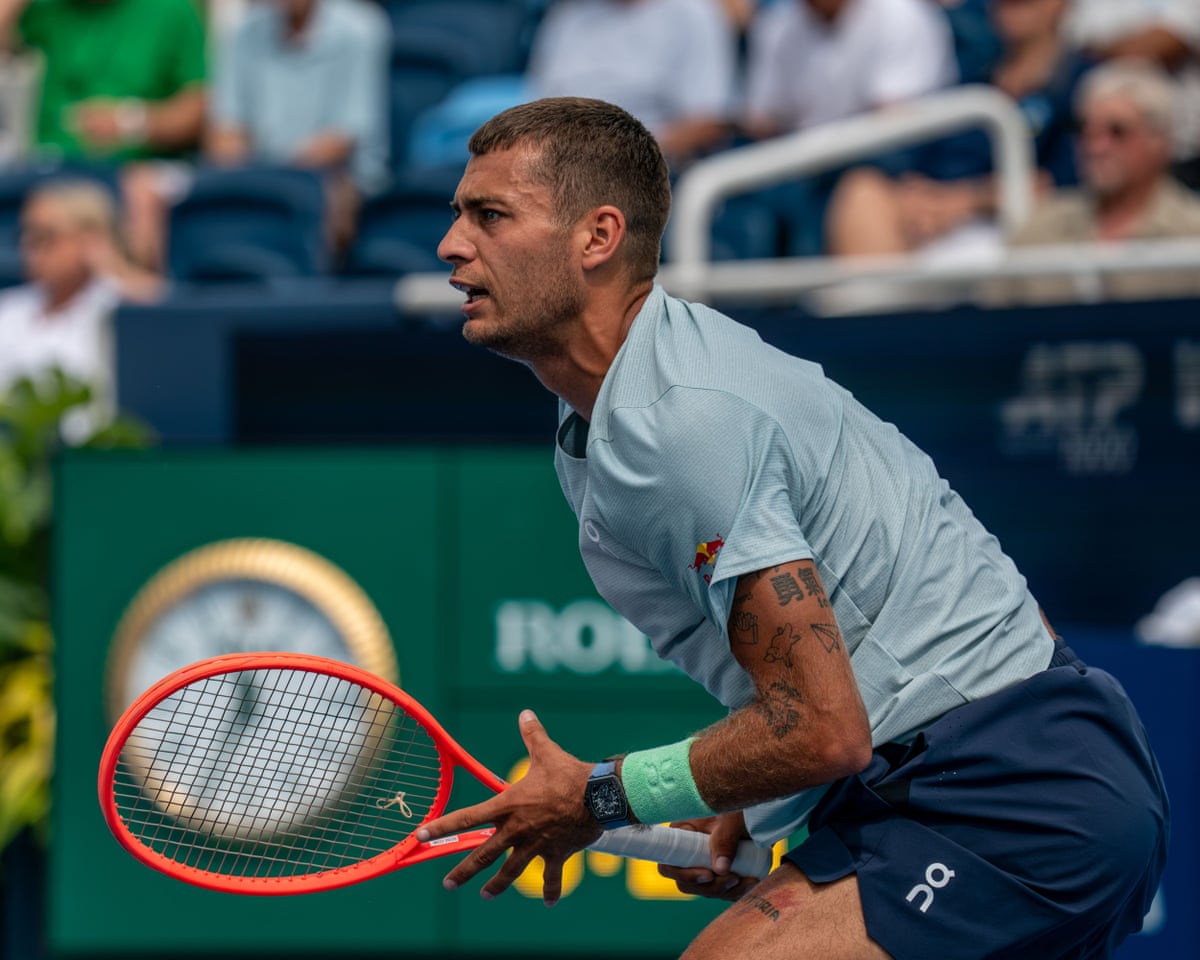
How has Jódar's ranking evolved this season?
The Spaniard's ascent has been extraordinarily rapid. Having competed briefly at the University of Virginia, he only began playing regularly on tour in May last year, when he was ranked No. 540. He started the 2026 season at No. 165 and has since climbed to a career-high position, reported as No. 11 by tennisstats.com, though other sources placed him at No. 15 after his run to the Washington final earlier this month, according to the official ATP rankings update. That Washington result marked his top-20 debut.
Jódar has already claimed his first ATP title in Marrakech, reached the Washington final, made his first Grand Slam final at Roland Garros, and reached a Masters 1000 semi-final along with two quarter-finals. Aside from a difficult grass-court swing hampered by an abdominal strain, his consistency across the season has been striking for a player only just establishing himself at the top level. He currently sits seventh in the ATP Race to Turin, putting him firmly in contention for a place at the season-ending ATP Finals in his first full year as a professional.

His breakout year has been chronicled in earlier coverage, including his emergence as a rising star during the grass-court season, when he was targeting success at Queen's and Wimbledon after reaching a French Open quarter-final. He went on to win a five-set battle against Pablo Carreño Busta on his Wimbledon debut. Earlier in the season he also recorded notable wins, including a straight-sets victory over Cameron Norrie in Barcelona, though he was unable to progress past Jannik Sinner when the pair met in the Madrid Open quarter-finals.
What makes Jódar such a dangerous player?
Standing at 6ft 3in, Jódar is already regarded as one of the most powerful shot-makers on tour, capable of generating significant pace off both wings. As with Jannik Sinner, much of that pace stems from exceptional timing rather than raw strength alone. His ability to redirect the ball off either side is considered elite, as is his return of serve, while his serve and movement continue to develop. According to the ATP Tour's own report on his Shapovalov comeback, Jódar carried a 14-3 record in deciding sets into that match, underlining his mental resilience under pressure.
Why has his conduct drawn criticism?
Jódar's rise has generated debate that goes beyond his tennis. Questions have been raised over his use of medical timeouts, including one during his Washington final against Taylor Fritz earlier this month, which drew criticism from observers. There have also been repeated, unusual delays caused by his shoelaces breaking mid-match, and scrutiny of how he interacts with ballkids and volunteers courtside.
At Roland Garros, an incident during his match against Alex Michelson was widely misread on broadcast footage as Jódar pushing a ballgirl aside as he left the court between sets. Closer review showed it was a case of overlapping camera angles: Jódar was gesturing with his arms at the same moment the ballgirl stumbled backward over sandbags positioned at the court's edge.
His win over Shapovalov drew as much attention for its accompanying drama as for the comeback itself, after he repeatedly paused play to change broken shoelaces, visibly frustrating his opponent. Two days later he returned to the court carrying a large transparent bag containing roughly a dozen pairs of Adidas shoes, a moment that added to the growing narrative around his on-court habits.
Suggestions that Jódar deliberately breaks his shoelaces to disrupt opponents' rhythm appear far-fetched, but his visible impatience with ballkids and other on-court helpers — most of them children or volunteers — has drawn fair criticism. He has developed a habit of throwing up his arms in frustration when a ballkid hands him an ice towel or ball a moment later than he expects, a reaction that reflects poorly regardless of intent.
Jódar is evidently single-minded and, at times, aloof, not always attuned to how his behaviour affects those around him. He is, however, still only 19, and as his game continues to mature, how his on-court demeanour evolves will remain a storyline worth following alongside his results.
What comes next for Jódar?
With his Cincinnati campaign over, attention turns to how Jódar's ranking will be reflected in the next official update, with current listings placing him at world No. 11 as of August 2026, according to tennisstats.com. His position seventh in the ATP Race to Turin keeps him in contention for a debut appearance at the season-ending ATP Finals, a target that will shape his remaining tournament schedule through the rest of 2026.
Key Facts
- Rafael Jódar, 19, lost to seventh seed Flavio Cobolli 4-6, 7-6 (3), 6-3 in the Cincinnati Open fourth round on 19 August 2026.
- Jódar entered the tournament as the No. 12 seed and beat Denis Shapovalov and Alejandro Tabilo (6-2, 6-1) in earlier rounds.
- He is only the third teenager this decade to reach the Cincinnati last 16, after Carlos Alcaraz and Ben Shelton.
- His ranking has risen from No. 540 in August 2025 to a current position of world No. 11, having started 2026 at No. 165.
- He sits seventh in the ATP Race to Turin, putting him in contention for the season-ending ATP Finals.


