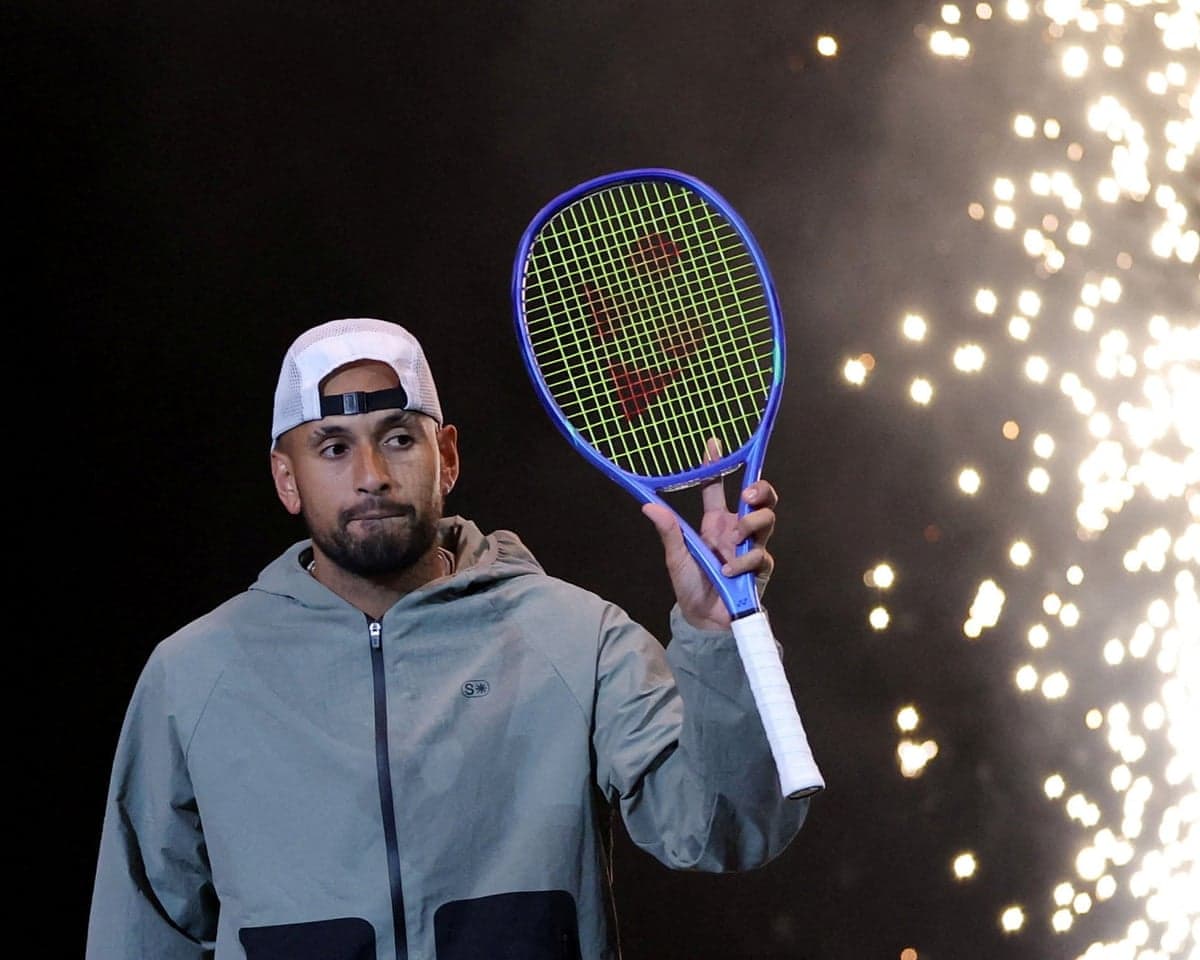
Australian tennis player Nick Kyrgios has entered a treatment program and accepted a one-month suspension following a positive test for cocaine at a Mallorca ATP event in June. The International Tennis Integrity Agency (ITIA) confirmed that his ban ended on 3 September 2026, clearing him to return to competition immediately.
Kyrgios tested positive for benzoylecgonine, a cocaine metabolite, during the ATP 250 tournament in Mallorca on 22 June 2026. A World Anti-Doping Agency (WADA)-accredited laboratory confirmed the positive result on 17 July. He had been provisionally suspended since 4 August while the case was investigated.
During interviews with ITIA investigators, Kyrgios explained that his cocaine use occurred socially during a night out, several days before he was scheduled to compete in Mallorca. The ITIA consulted an independent scientific expert at a WADA-accredited laboratory, who determined that his explanation was consistent with the level of cocaine detected in his sample. Based on this assessment, the ITIA accepted that the use took place outside of competition.
Under WADA regulations, the standard suspension for this type of breach is three months. However, the penalty can be reduced to one month if the athlete commits to an approved treatment program. Kyrgios agreed to enter such a program, which resulted in his sentence being shortened from the baseline three-month period to one month.
Kyrgios also forfeited €6,570 in prize money that he earned at the Mallorca tournament, where he lost in the first round to fellow Australian Adam Walton. The 2022 Wimbledon finalist had the option to appeal the provisional suspension but chose not to do so.
According to BBC reporting, Kyrgios announced he would spend the next 28 days stepping away from social media and public life to "focus on getting myself right." The ITIA confirmed that support services remain available to him during his recovery period.

In a statement posted to Instagram last month, Kyrgios acknowledged his mistake.
I recently failed a drug test in Mallorca after testing positive for cocaine. I made a huge mistake and I take full responsibility for it. I'm sorry to my fans, my family, my sponsors and everyone close to me. Above all, I'm sorry to the kids who follow me. I know the example this sets and I'm deeply disappointed in myself.
What led to the suspension?
Kyrgios was provisionally banned from all tennis activities—including playing, coaching, and attending tournaments sanctioned by the men's and women's professional tours and national-level events in Australia—following the positive test result. The investigation took place over several weeks before the ITIA reached its determination in late August.
The case represented a significant development in Kyrgios's troubled recent career. He had played only four official singles matches on the elite ATP Tour in 2026, having battled persistent knee and wrist injuries that have severely limited his competitive schedule. His last match before the suspension was a doubles appearance at Wimbledon on 2 July 2026, where he and partner Alexander Bublik lost in the first round.
Where does Kyrgios stand now?
According to BBC reporting, Kyrgios has fallen to No. 918 in the world rankings, a dramatic decline from his career peak of No. 13. His one-month ban ended on 3 September 2026, making him eligible to return to professional tennis immediately, though his ranking reflects the extended period away from competition.
The 31-year-old has largely conceded that his days as a singles force are behind him. Prior to the positive test, he had shown some signs of recovery, having won his first singles match in 15 months at Stuttgart in June before competing in Mallorca. However, the suspension and his ongoing physical struggles suggest a return to elite competition remains uncertain.
What happens next?
Kyrgios is now free to compete again from 3 September 2026. The treatment program he has committed to will continue during his return to tennis, with the ITIA providing ongoing support. Whether he will attempt to rebuild his career or pursue other interests remains to be seen, given the severity of his ranking decline and the persistent injuries that have plagued him in recent years.
The case also comes amid broader scrutiny of anti-doping enforcement in professional tennis. The ITIA's handling of the case demonstrated that athletes who test positive outside of competition and cooperate fully with investigators may receive reduced sentences compared to the maximum four-year ban that could have been imposed.